
Soups & Stews
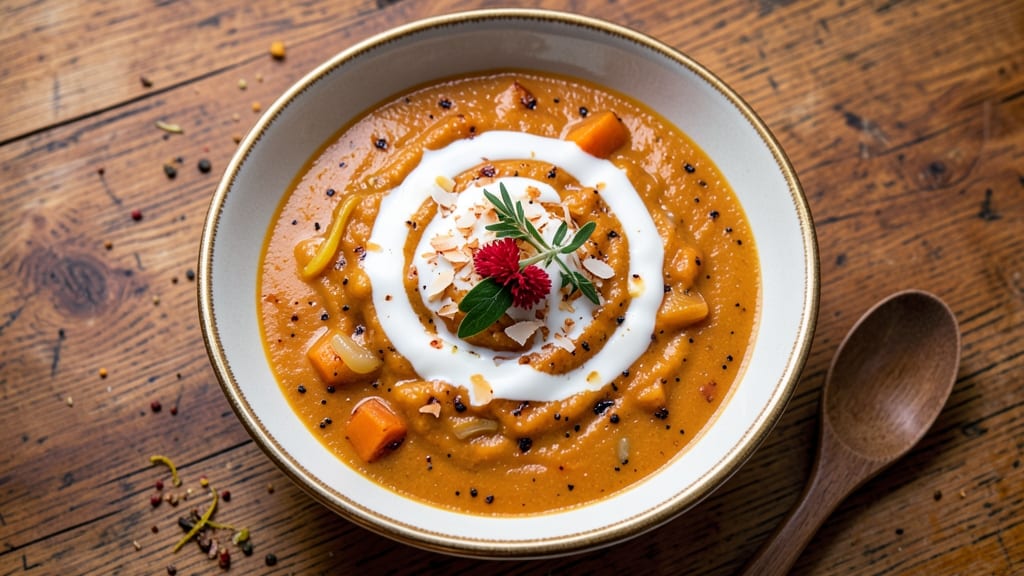
This 5-star pumpkin soup transforms humble ingredients into a velvety masterpiece—silky, spiced, and topped with crunchy toasted seeds that add texture and depth. The secret lies in roasting the pumpkin first, which caramelizes natural sugars and intensifies flavor without overpowering the dish.
Every spoonful delivers a perfect balance of creamy richness and aromatic warmth, making it a showstopper for fall gatherings or cozy weeknight dinners.
The recipe begins with a simple yet transformative technique: roasting the pumpkin until tender and golden, then blending it into a smooth velouté. A blend of warm spices—cinnamon, nutmeg, and ginger—infuses the soup with layers of complexity, while coconut milk (or heavy cream) ensures a luxuriously creamy finish.
The toasted pumpkin seeds, sprinkled on top, provide a satisfying contrast to the smooth soup, elevating it from ordinary to extraordinary.
What sets this apart is the attention to detail—from the slow simmer that develops deep flavor to the final garnish of seeds and a swirl of cream.
The result is a soup that's both comforting and refined, with a velvety texture that melts in your mouth and a spice profile that lingers. Perfect for impressing guests or treating yourself, this recipe delivers restaurant-quality results at home.
Whether you're serving it as a starter or a hearty main, this pumpkin soup stands out for its balance of simplicity and sophistication. The method is foolproof, the flavors are unforgettable, and the presentation is effortlessly elegant. Ready to make your own 5-star pumpkin soup?
Ingredients for 5 star pumpkin soup
Roasted pumpkin, aromatic spices, and velvety coconut milk create this restaurant-worthy velouté.
| Ingredient | Amount | Notes |
|---|---|---|
| Sugar Pumpkin (Sugar Pie Pumpkin) 🎃 | 2 lb | Peeled, seeded, cubed |
| Onion (Yellow) 🧅 | 1 whole | Medium, chopped |
| Garlic Cloves 🧄 | 4 cloves | Peeled, minced |
| Coconut Milk (Full-Fat) 🥥 | 1 can | 13.5 oz can, unsweetened |
| Heavy Cream 🥛 | ½ cup | Full-fat preferred |
| Vegetable or Chicken Stock 💧 | 4 cups | Homemade or quality store-bought |
| Ground Cinnamon 🌿 | 1 tbsp | Freshly ground preferred |
| Ground Nutmeg 🌿 | ½ tsp | Freshly grated preferred |
| Ground Ginger 🌿 | ½ tsp | Freshly ground preferred |
| Salt 🧂 | 1 tsp | Diamond Crystal kosher salt |
| Black Pepper 🌶️ | ½ tsp | Freshly ground preferred |
| Pumpkin Seeds 🥜 | ½ cup | Raw, unsalted |
| Extra-Virgin Olive Oil 🫒 | 2 tbsp | For roasting |
| Maple Syrup 🍁 | 1 tbsp | Grade B preferred |
The pumpkin is non-negotiable—sugar pie pumpkin delivers the sweetest, most velvety texture. Trader Joe's or Whole Foods carry pre-cut pieces, but if buying whole, roast it whole first for even cooking. The seeds? Save them—toast them separately for the perfect crunchy garnish. For stock, low-sodium options prevent over-salting, and homemade always tastes superior. Spices should be freshly ground; pre-ground blends lose potency quickly.
No coconut milk? Full-fat Greek yogurt or cashew cream works in a pinch, though texture will differ slightly. Substitute maple syrup with agave nectar at equal measure—both add depth without overpowering. For a lighter version, reduce coconut milk to ½ can and add 1 cup vegetable broth instead. The pumpkin seeds can be swapped for pecans or walnuts, but toast them first for maximum flavor. If you're avoiding dairy, omit the heavy cream entirely—coconut milk alone still yields a rich, velvety result.
Roasted pumpkin keeps 5 days refrigerated or 3 months frozen in airtight containers. Toasted seeds stay crisp for 1 week if stored in a sealed jar. For make-ahead convenience, prepare the soup through blending, then reheat gently with a splash of stock. The cream should be added last to maintain its silky texture—never boil it once incorporated. Garnish with seeds and a drizzle of olive oil just before serving for the best presentation.
Why You'll Love This Recipe
- No Chopping Nightmare: I swear by this recipe because that sugar pie pumpkin needs zero peeling or dicing—just halve, scoop, and blend. The onion and garlic caramelize while you stir, and suddenly you’ve got a velvety soup without the usual prep headache.
- Creamy Without Guilt: Here’s what sold me—the coconut milk and heavy cream blend into something dangerously rich, but the pumpkin’s natural sweetness keeps it from tasting heavy. Honestly? It’s the kind of soup that makes you forget it’s technically healthy.
- Leftovers That Beg: This soup actually improves the next day. The flavors meld, the texture gets even smoother, and I’ve caught myself reheating it straight from the fridge for lunch—no shame. (Yes, even on a Tuesday night.)
- Budget Crowd-Pleaser: A single sugar pie pumpkin stretches for four servings, and the rest of the ingredients are pantry staples. I’ve served this to picky eaters, health-conscious friends, and my grumpy uncle—everyone’s asked for seconds. That’s a win.
Step-by-step instructions for spiced pumpkin velouté
This method delivers velvety texture and deep spice infusion every time.
Roast the Pumpkin and Aromatics for Concentrated Flavor
Preheat your oven to 400°F. On a rimmed baking sheet, toss the 2 lb Sugar Pumpkin (Sugar Pie Pumpkin), 1 whole Onion (Yellow), and 4 cloves Garlic Cloves with 2 tbsp Extra-Virgin Olive Oil until evenly coated. Spread in an even layer and roast for 30-35 minutes, stirring once halfway through, until the pumpkin is tender when pierced with a knife and the edges are deep golden brown.
The roasting caramelizes the natural sugars in the pumpkin and onion, creating a rich, sweet base that forms the soul of this soup. You'll know it's perfectly roasted when the pumpkin yields slightly to gentle pressure and the aromatics smell intensely sweet and nutty. This step builds the flavor foundation that separates exceptional soup from ordinary.
Build the Spiced Base with Precision
Transfer the roasted pumpkin mixture to a large pot. Add 4 cups Vegetable or Chicken Stock, 1 tbsp Ground Cinnamon, 0.5 tsp Ground Nutmeg, 0.5 tsp Ground Ginger, 1 tsp Salt, and 0.5 tsp Black Pepper. Bring to a boil over medium-high heat, then immediately reduce to a simmer.
Simmer uncovered for 20-25 minutes, stirring occasionally, until the pumpkin breaks down completely and the soup thickens slightly. You want to see the spices dissolve fully and the mixture reduce enough to coat the back of a spoon. This simmering time is critical—it allows the spices to bloom and infuse without becoming bitter. Taste occasionally and adjust seasoning if needed, adding more stock if the soup becomes too thick.
Blend to Silky Perfection
Carefully transfer the soup to a blender in batches, leaving about ½ cup of liquid in the pot. Blend each batch until completely smooth, then return to the pot. Stir in 1 can Coconut Milk (Full-Fat) and 0.5 cup Heavy Cream until fully incorporated. The soup should now be velvety with a rich, creamy consistency.
This is where the soup transforms from good to exceptional. The coconut milk adds subtle sweetness and body, while the heavy cream elevates the texture to luxurious. If you prefer a lighter version, you can reduce the cream to ¼ cup and add more stock to maintain consistency. Return the soup to medium-low heat and stir in 1 tbsp Maple Syrup to balance any remaining bitterness from the spices.
Toast the Seeds and Finish the Soup
While the soup simmers gently, dry-toast the 0.5 cup Pumpkin Seeds in a small skillet over medium heat for 5-7 minutes, stirring constantly, until they're golden brown and fragrant. Remove from heat immediately and set aside.
Return the soup to a gentle simmer and let it cook for another 5 minutes to ensure all flavors are fully integrated. Taste and make any final adjustments—perhaps a pinch more salt or a dash of cinnamon to enhance the spice profile. The toasted seeds should be crisp and nutty, ready to add crunch and visual appeal when served. This final step ensures every spoonful delivers perfect balance between creamy texture and toasted seed contrast.
Serve with Artistic Presentation
Ladle the soup into warm bowls, then top each serving with a generous sprinkle of toasted pumpkin seeds. For an extra touch of sophistication, swirl a small spoonful of the reserved cream into each bowl using the back of a spoon, creating an elegant marbled effect that enhances both visual appeal and creamy texture.
The finished soup should have a vibrant orange hue with a smooth, velvety consistency that coats the spoon. Each bite should deliver a harmonious blend of sweet pumpkin, warm spices, and nutty seeds, with the cream swirl adding a luxurious finish. Serve immediately while the seeds are crisp and the soup is steaming hot—this velouté is best enjoyed fresh from the pot.
Pro Tips For Making 5 Star Pumpkin Soup
- Char the Onion Right: Cut your yellow onion into even slices—about ¼-inch thick—and cook them in a dry pot over medium-high heat until the edges turn deep golden brown, not just soft. I learned this the hard way: skipping the char means your soup will taste like it’s missing something, even if you add all the spices.
- Peel Pumpkin After Roasting: Skip peeling that sugar pie pumpkin raw—it’s a pain. Roast it whole at 400°F (200°C) for 45 minutes first, then scoop out the flesh straight from the skin. The heat softens the rind so it slides out clean, and the flavor’s deeper than if you peel it cold.
- Strain for Silkiness: After blending your soup, don’t just pour it into bowls—strain it through a fine-mesh sieve or cheesecloth to remove any fibrous bits. The coconut milk and heavy cream will look richer, and the texture will be velvety, not grainy. (Yes, even if you’re impatient like me.)
- Balance the Cream Early: Add half the heavy cream before the coconut milk to the pot while simmering—this prevents curdling later. If you dump all the dairy in at once, you risk breaking the emulsion, and your soup will split. Trust me, it’s worth the extra 30 seconds of stirring.
Common mistakes when making perfect results
Over-Roasting Pumpkin
Don’t let your pumpkin turn to mush or burn in the oven—this kills the natural sweetness and creates a bitter, watery soup. Roast at 400°F for 30-35 minutes max, stirring once halfway through.
The pumpkin is done when it’s tender but still holds its shape slightly when pierced with a knife. Over-roasting releases too much moisture, thinning your soup and making it bland. I’ve ruined a batch by leaving it in too long—trust your knife test! 🎃
Skipping the Simmer
Rushing the 20-25 minute simmer is a classic mistake that leaves your soup tasting flat and underseasoned. This step isn’t just about reducing—it’s about letting the spices bloom and the pumpkin’s natural sugars meld.
If you skip it, your soup will lack depth. Pro tip: Stir occasionally and taste as you go. Adjust salt and spices now, not later, because once blended, you can’t fix it. 🌶️
Blending Too Fast
Dumping hot soup into a blender and hitting pulse can create a lumpy mess or even cause the motor to overheat. Always leave ½ cup of liquid in the pot to prevent clogging, and blend in batches.
For extra smoothness, strain the soup through a fine-mesh sieve after blending. I’ve seen blenders explode from overloading—safety first! The goal is silky perfection, not a science experiment. ✨
Adding Cream Too Early
Stirring in the heavy cream or coconut milk while the soup is still boiling will cause it to curdle, turning your velvety soup into a grainy disaster. Wait until the soup is at a gentle simmer (medium-low heat) before adding dairy.
If you’re worried about curdling, whisk the cream into a cold cup of soup first, then pour it back into the pot. This trick saves the day every time. 🥛
Ignoring the Seeds
Toasted pumpkin seeds aren’t just garnish—they’re the soul of this soup’s texture contrast. Skipping them or using raw seeds means missing out on that satisfying crunch and nutty depth. Toast them in a dry skillet over medium heat for 5-7 minutes, stirring constantly, until golden.
Burnt seeds taste bitter and ruin the harmony. Store them in an airtight container to keep them crisp for up to a week. 🥜
Over-Salting Early
Adding all the salt at the beginning can make your soup inedible if you overdo it. Start with 1 tsp kosher salt and taste as you simmer—you can always add more, but you can’t take it out.
I’ve had to rescue soups by adding extra coconut milk or stock to dilute the saltiness. Adjust gradually, and remember: spices like cinnamon and nutmeg can enhance perceived saltiness, so go easy at first. 🧂
Nutrition facts
Frequently asked questions
Can I use butternut squash instead of sugar pumpkin?
Yes, butternut squash works beautifully—just adjust the roasting time to 40-45 minutes since it has a denser skin. The flavor will be slightly nuttier and less sweet, so you may want to add an extra ½ tsp maple syrup to balance. Peel and seed the squash first, as its skin is tougher than pumpkin's. The texture will still be velvety, but the natural sweetness will differ slightly.
How do I make this soup dairy-free?
Swap the heavy cream for ½ cup full-fat coconut cream (chilled overnight) and increase coconut milk to 1½ cans. For extra richness, blend in ¼ cup cashew butter with the coconut milk. The toasted seeds still add crunch, and the soup maintains its creamy texture. Taste as you go—you may need an extra pinch of salt to compensate for the coconut's natural sweetness.
Why does my soup taste bitter after blending?
Bitterness usually comes from over-roasting the pumpkin or using too much nutmeg (which can taste soapy when overused). For next time, roast at 400°F for no more than 35 minutes and reduce nutmeg to ¼ tsp. If it's already blended, balance the bitterness by stirring in 1 tsp maple syrup or a splash of coconut milk while reheating. A pinch of cinnamon can also help mask unwanted flavors.
Can I make this soup ahead of time?
Prepare the soup through blending, then store it in an airtight container in the fridge for up to 5 days. Reheat gently on the stove with a splash of stock to restore creaminess. Add the toasted seeds and cream swirl just before serving to keep them crisp and fresh. For freezer storage, cool completely first, then freeze for up to 3 months. Thaw overnight in the fridge before reheating.
What's the best way to reheat leftovers?
Reheat leftovers on the stove over low-medium heat with a splash of stock or water to prevent scorching. Never microwave directly from the fridge—this can make the soup watery. For best results, stir in 1 tbsp coconut milk or cream while reheating to restore richness. If the soup seems too thick, thin it with a little extra stock. Always add the toasted seeds fresh to maintain their crunch.