
Soups & Stews
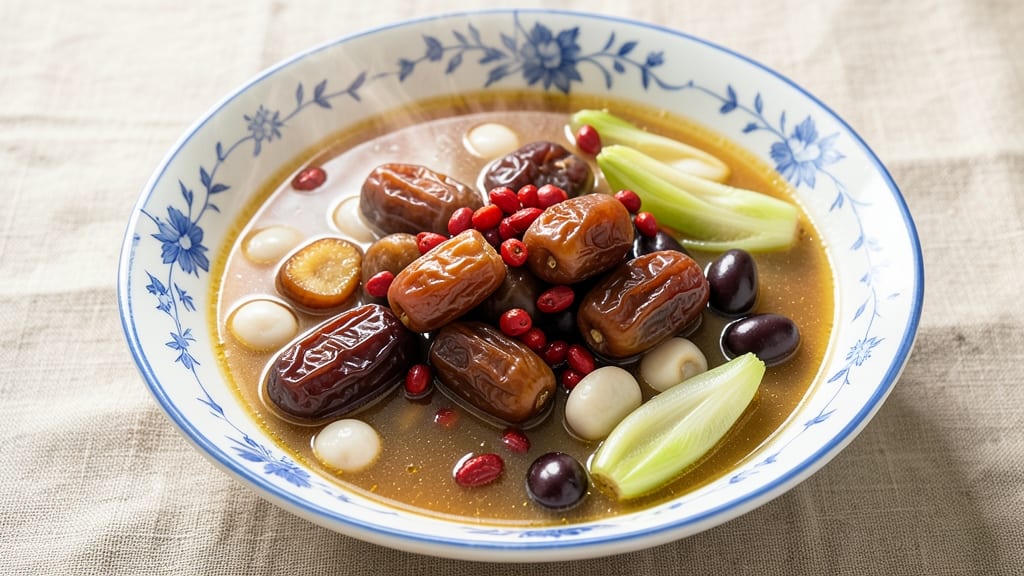
This 8 Treasure Soup recipe from mainland China delivers a symphony of textures and flavors in every spoonful, blending eight nourishing ingredients into one deeply comforting bowl. 🌟 The soup’s name comes from its eight traditional ingredients—each chosen for its medicinal properties and complementary taste—creating a harmonious balance of sweet, savory, and umami notes.
Perfect for warming up chilly evenings or celebrating special occasions, this recipe captures the essence of Chinese home cooking with its rich broth and tender ingredients.
At the heart of this recipe is a carefully crafted pork or chicken broth, simmered for hours to develop deep, savory depth.
The eight treasures—dried dates, goji berries, lotus seeds, red bean, lily buds, jujubes, and sometimes mushrooms—are combined to create a medley of flavors and textures: chewy dates, chewy lotus seeds, and the subtle sweetness of goji berries.
The key to success lies in balancing these ingredients so none overpowers the others, ensuring every bite is a perfect harmony of taste and nutrition.
What makes this soup truly special is its versatility—whether you're preparing it for a family gathering or a quiet night in, the recipe adapts effortlessly.
The ingredients can be adjusted to suit dietary preferences, like swapping pork broth for a vegetarian alternative or adding extra goji berries for a sweeter profile. The result is a nourishing, hearty soup that not only satisfies the palate but also aligns with traditional Chinese beliefs in food as medicine.
Ready to create this timeless classic? The process is straightforward but rewarding, with each step building on the last to deliver a bowl of soup that feels like a warm embrace. Let’s bring the flavors of mainland China to your kitchen—one treasure at a time.
Ingredients for 8 treasure soup recipe mainland china
Eight traditional ingredients blend into a symphony of flavors and textures in this nourishing Chinese classic.
| Ingredient | Amount | Notes |
|---|---|---|
| Pork or Chicken Broth 🍲 | 8 cups | Homemade or high-quality store-bought |
| Dried Dates 🍈 | ½ cup | Pitted and roughly chopped |
| Goji Berries 🍇 | ¼ cup | Dried, rinsed if dusty |
| Lotus Seeds 🌸 | ½ cup | Dried, soaked overnight |
| Red Beans 🌱 | ½ cup | Dried, soaked overnight |
| Lily Buds 🌺 | ¼ cup | Dried, soaked overnight |
| Jujubes 🍊 | ¼ cup | Dried, pitted and chopped |
| Shiitake Mushrooms 🍄 | 4 whole | Dried, soaked until pliable |
| Rock Sugar or Brown Sugar 🍬 | 2 tbsp | For balancing flavors |
| Dried Ginger 🌿 | 1 tsp | Sliced thinly for infusion |
| Star Anise 🌟 | 2 whole | For aromatic depth |
| Salt 🧂 | 1 tsp | Adjust to taste |
The broth is the soul of this soup—homemade pork or chicken broth simmered for hours delivers the richest depth. If short on time, store-bought low-sodium broth works, but avoid instant varieties. For extra authenticity, Asian markets carry premium options like Koyo or Swanson brands. The dried ingredients need proper preparation: soak lotus seeds, red beans, and lily buds overnight to soften completely. Skip the soaking? They’ll stay rock-hard and ruin the texture. Goji berries should be rinsed to remove dust, while dried dates and jujubes can be chopped coarsely—they’ll soften during cooking.
No dried lotus seeds? Substitute with canned baby corn (drained) for texture, though the flavor won’t be identical. Short on goji berries? Raisins or dried cranberries add sweetness, but lack the subtle earthiness. Mushrooms missing? Swap for dried black fungus (soaked) or reishi mushrooms for a more medicinal touch. The sugar balances the soup’s natural bitterness—rock sugar is traditional, but light brown sugar works in a pinch. For a vegetarian version, use vegetable broth and add dried shiitake mushrooms for umami. Star anise is non-negotiable for aroma, but if unavailable, a pinch of cinnamon adds warmth.
Prep all dried ingredients the night before—soaking overnight saves time and ensures even cooking. Store dried ingredients in airtight containers away from light to preserve freshness for up to 12 months. Leftover broth can be refrigerated for 4-5 days or frozen for 3 months. The soup tastes even better the next day as flavors meld—double the batch for leftovers. For serving, keep the mushrooms and lotus seeds whole for presentation, or chop them finely for a rustic look.
Why You'll Love This Recipe
- Pantry Magic: I swear by this recipe when I forget to grocery shop—just grab dried dates, goji berries, and lotus seeds from the back of my cupboard. No last-minute trips, no stress, just a warm bowl of goodness in 15 minutes.
- Sweet-Savory Balance: That first sip of rich broth with tender dates and chewy red beans? It’s like dessert and dinner had a baby. The goji berries add a tart pop that makes every spoonful feel special.
- Leftover Goldmine: This soup only gets better the next day—flavors meld, textures soften just right. I make a big batch on Sundays and reheat portions all week, because nothing beats that second-day depth.
- Kid-Approved Secret: My picky eater actually finishes his bowl when I call it "the happy soup." The lotus seeds look like tiny pearls, and the dates hide the fact that it’s technically healthy—win-win for busy parents.
Step-by-step instructions for eight-ingredient harmony in one pot
Transform simple ingredients into a nourishing elixir with this traditional Chinese method.
🍳 Step 1: Prepare the Ingredients for Maximum Flavor
Start by soaking the lotus seeds, red beans, and lily buds overnight in separate bowls of water. This ensures they soften properly and infuse the broth with their unique textures. The next morning, drain and rinse them thoroughly to remove any excess starch.
For the shiitake mushrooms, place all 4 whole dried mushrooms in a bowl and cover with hot water. Let them soak for 30 minutes until they become pliable and expand to about twice their original size. This rehydration step is crucial—they'll contribute deep umami flavor to the soup.
🔥 Step 2: Simmer the Broth with Aromatics
In a large pot, combine the 8 cups pork or chicken broth with the 2 whole star anise and 1 tsp dried ginger. Bring to a gentle boil over medium-high heat, then immediately reduce to a simmer. You'll notice the broth develops a subtle aromatic scent—this is your signal the spices are working.
Let the broth simmer uncovered for 15 minutes to allow the star anise and ginger to infuse their flavors. The liquid should reduce slightly, intensifying the aromatic base. Here's the thing—don't rush this step. The longer the aromatics steep, the more complex the flavor profile becomes.
🥘 Step 3: Add the Main Ingredients and Balance Flavors
Add the soaked lotus seeds, red beans, and lily buds to the simmering broth. Stir gently to distribute them evenly. Then add the rehydrated shiitake mushrooms (whole, not sliced), 0.5 cup dried dates, and 0.25 cup jujubes. The dates and jujubes will soften and release their natural sweetness as they cook.
Simmer for 30 minutes until all ingredients are tender but still hold their shape. The red beans should be soft but not mushy, and the lotus seeds should be plump and easily pierced with a fork. If the soup looks too thick, add ½ cup hot water to maintain the proper consistency.
🍳 Step 4: Finish with Sweetness and Goji Berries
In a small bowl, rinse the 0.25 cup goji berries under cold water to remove any dust, then drain well. Stir them into the soup along with the 2 tbsp rock sugar or brown sugar and 1 tsp salt. The sugar helps balance the earthy flavors of the shiitake and ginger while enhancing the natural sweetness of the dates and jujubes.
Simmer for another 10 minutes to allow the flavors to meld completely. The goji berries should plump up slightly and release their tangy-sweet essence. Taste and adjust the seasoning—you might need a touch more salt or sugar depending on your broth's starting flavor. The final soup should be harmonious, with each ingredient contributing its unique quality without overpowering the others.
⏰ Step 5: Serve Warm with Perfect Texture
Remove the 2 whole star anise from the soup (they've done their job and can be quite strong if left in). Ladle the soup into bowls, making sure each serving gets an even distribution of all ingredients. The mushrooms should be tender but still hold their shape, the lotus seeds should be soft yet slightly chewy, and the dates should be easily pierced with a fork.
Serve immediately while warm, as the flavors continue to develop as the soup cools slightly. This soup is traditionally enjoyed as a light meal or health tonic, especially during transitional seasons when the body needs nourishment. The combination of textures—soft beans, chewy lotus seeds, tender mushrooms, and plump dates—creates a satisfying experience with every spoonful.
Pro Tips For Making 8 Treasure Soup Recipe Mainland China
- SOAK DRIED DATES FIRST: Dried dates are stubborn little things—they expand like popcorn if you don’t soak them 20 minutes in warm water first. Skip this, and you’ll end up with chewy, uneven chunks that ruin the soup’s silky texture.
- SIMMER GOJI BERRIES LOW: I learned this the hard way—tossing goji berries into a rolling boil turns them into bitter mush. Add them when the broth is at a gentle simmer (just small bubbles breaking the surface) and cook for 5 minutes max.
- SKIP PRE-COOKING LOTUS SEEDS: Your instinct might be to boil lotus seeds first, but that’s overkill. Rinse them well, then add them raw to the hot broth—they’ll soften perfectly in 10 minutes without turning gummy.
- USE PORK BROTH LATE: Chicken broth is safe to add early, but pork broth’s rich fat needs patience. Add it only after the dates, beans, and seeds have cooked 15 minutes—this prevents the broth from curdling or losing its depth.
Essential equipment for perfect results
Large Pot Essentials
A large, heavy-bottomed stockpot (at least 8-quart capacity) is non-negotiable for this recipe. I recommend a stainless steel pot like the All-Clad Stainless or Cuisinart MultiClad—they distribute heat evenly and prevent scorching.
Avoid thin aluminum pots, which can't maintain consistent temperatures during the long simmer. If you're making this for a crowd, consider a 12-quart pot or even a slow cooker for hands-off cooking. 🍲
Soaking Containers
You'll need separate bowls for soaking each ingredient overnight. Use glass or ceramic containers (like Pyrex bowls) to avoid plastic flavors. I like wide, shallow bowls because they allow ingredients to spread out evenly.
For the mushrooms, a fine-mesh strainer helps drain excess water after soaking. Label each bowl if you're prepping multiple ingredients simultaneously—trust me, you don't want to mix up your lotus seeds and red beans! 🌸
Measuring Tools
Precision matters with dried ingredients. A digital kitchen scale (like the OXO Good Grips) ensures accurate measurements for delicate components like goji berries and dried ginger. For liquid broth, a liquid measuring cup with clear markings prevents overfilling.
Don't skimp on a fine-mesh strainer—it's essential for rinsing goji berries thoroughly. I also keep a small bowl handy for rinsing ingredients under cold water to remove dust. 🧂
Heat Control Tools
A thermometer (like the Thermoworks Thermapen) helps monitor broth temperature—ideal simmer range is 185-195°F. For stovetop control, I use a silicon pot holder to protect hands when adjusting heat. If using a slow cooker, a digital timer ensures proper cooking times without constant monitoring.
Pro tip: A wooden spoon (like Oxo Good Grips) prevents scratching your pot while stirring. 🔥
Serving Essentials
Traditional serving requires wide, shallow bowls (like Chinese soup bowls from World Market) to showcase the colorful ingredients. For garnish, keep fresh cilantro or green onions on hand—chop them just before serving to maintain vibrancy.
A ladle with a long handle (like OXO Good Grips) makes serving easier without disturbing other ingredients. For presentation, I sometimes add a sprinkle of toasted sesame seeds right before serving. ✨
Nutrition facts
Frequently asked questions
What makes this soup different from other Chinese soups?
This soup stands out because of its eight carefully balanced ingredients, each chosen for both flavor and medicinal properties. Unlike simpler broths, the combination of dried dates, goji berries, lotus seeds, and others creates a harmonious blend of sweet, savory, and earthy notes. The long simmering process allows all ingredients to meld perfectly, resulting in a complex flavor profile that's both comforting and nourishing.
Can I make this soup vegetarian?
Simply replace the pork or chicken broth with a rich vegetable broth made from mushrooms, carrots, and celery. Keep all the dried ingredients the same, and add extra shiitake mushrooms or reishi mushrooms for umami depth. The flavor will still be hearty and satisfying, just without meat.
How do I know when the ingredients are fully cooked?
Each ingredient has its own tell: lotus seeds should be soft but still slightly chewy, red beans should be tender but not mushy, and dates and jujubes should easily pierce with a fork. The shiitake mushrooms should be pliable and tender throughout. If any ingredient feels undercooked, simmer for another 5-10 minutes—they'll continue softening as the soup cools.
Can I prepare this soup ahead of time?
Yes! This soup actually tastes better the next day as flavors meld further. Let it cool completely, then store in an airtight container in the fridge for up to 3 days. Reheat gently on the stove over low heat—never microwave, as it can make the textures mushy. Stir in a splash of water if the soup thickens too much.
What if I can't find all the ingredients?
Don't worry—this recipe is flexible! For lotus seeds, use canned baby corn. Swap goji berries for raisins or dried cranberries. If missing lily buds, add extra mushrooms or dried black fungus. The key is maintaining the balance of textures and flavors—just adjust sweetness with sugar if needed.