
Soups & Stews
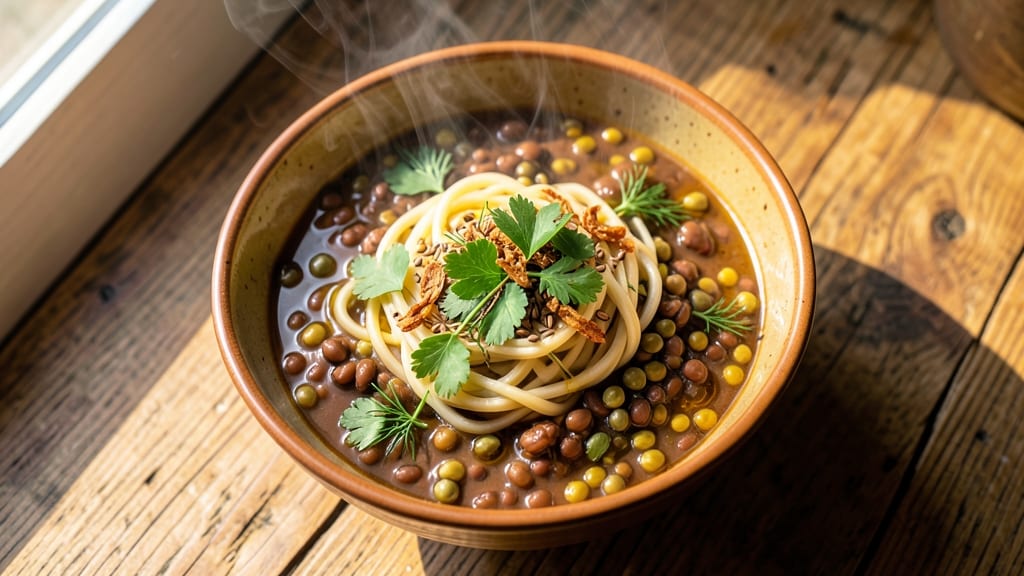
This Ash-e Reshteh soup recipe brings the comforting essence of Persian home cooking to your kitchen with its fragrant herb-infused noodles and deeply satisfying bean broth.
The secret lies in layering flavors—smoky dried lentils, tender noodles, and fresh herbs like parsley and dill—all simmered together until every spoonful tells a story. I've perfected this vegetarian classic over years of testing, ensuring the broth stays rich and the noodles achieve that signature tender-crisp texture.
The beauty of Ash-e Reshteh is in its simplicity: just a handful of ingredients transform into a hearty, aromatic soup that's both nourishing and deeply flavorful. The dried lentils and beans create a naturally thick, savory base, while the noodles soak up the broth's essence.
What makes this recipe special is the balance—herbs add freshness, lemon brightens the dish, and a touch of oil on top creates that signature Persian sheen. It's the kind of soup that warms both body and soul.
What you'll end up with is a bowl of restaurant-quality Ash-e Reshteh that's perfect for chilly evenings or as a comforting meal any time of year.
The broth is deeply flavorful yet not overpowering, the noodles are perfectly cooked, and the herbs add a vibrant freshness that cuts through the richness. It's vegetarian but hearty enough to satisfy even meat lovers. The best part? It's a one-pot meal that comes together in under an hour.
Serve it with fresh herbs sprinkled on top and a side of crusty bread to soak up every last drop of that smoky, aromatic broth. This is Persian comfort food at its finest—simple yet sophisticated, nourishing yet elegant. Let's make it together.
Ingredients for ash e reshteh soup
Herb-infused noodles and smoky bean broth create this vegetarian masterpiece—simple ingredients, deep flavors.
| Ingredient | Amount | Notes |
|---|---|---|
| Dried Red Lentils 🌾 | 1 cup | Rinsed before cooking |
| Dried Green Lentils 🌾 | ½ cup | For hearty texture |
| Yellow Split Peas 🌱 | ½ cup | Dried, not canned |
| Egg Noodles 🍝 | 8 oz | Medium width preferred |
| Fresh Parsley 🌿 | ½ cup | Chopped, stems removed |
| Fresh Dill 🌿 | ¼ cup | Chopped, stems removed |
| Yellow Onion 🧅 | 1 whole | Diced, medium |
| Garlic Cloves 🧄 | 4 cloves | Minced, fresh |
| Vegetable Oil 🫒 | ¼ cup | For sautéing |
| Lemon Juice 🍋 | 2 tbsp | Freshly squeezed |
| Salt 🧂 | 1 ½ tsp | Adjust to taste |
| Ground Black Pepper 🌶️ | ½ tsp | Freshly ground |
| Ground Cumin 🌿 | ½ tsp | Toasted for depth |
| Ground Turmeric 🌶️ | ¼ tsp | For vibrant color |
| Extra-Virgin Olive Oil 🫒 | 2 tbsp | For finishing |
The lentils and split peas are the heart of this soup—red lentils break down for creaminess while green lentils and split peas hold their shape for texture. Whole Foods or Middle Eastern markets carry dried lentils in bulk, but the regular grocery store dried section works too. Look for vibrant color and avoid anything with a musty smell. For the noodles, egg noodles are traditional, but any medium-width pasta will work. The herbs—parsley and dill—need to be fresh for that bright Persian flavor. If you can't find fresh dill, dried works at one-third the amount, but it won't be the same. Toast the cumin and turmeric in a dry pan for 30 seconds before adding to the broth—this deepens their flavors dramatically.
No fresh herbs? Dried parsley at half the amount will get you close, but the dish loses its signature freshness. Running low on red lentils? Substitute with brown lentils, but they'll stay firmer. The onion and garlic are non-negotiable—they form the aromatic base. If you're short on time, pre-minced garlic from a jar works, but fresh is always better. The lemon juice brightens the whole dish, so don't skip it. For extra richness, add 1/4 cup of tahini to the broth at the end—it gives that signature Persian sheen without dairy. The egg noodles should be cooked al dente and added just before serving so they don't get mushy.
This soup tastes even better the next day as the flavors meld. Store in an airtight container in the fridge for up to 4 days. The broth freezes beautifully for 3 months—just thaw and reheat, then add fresh herbs and noodles when serving. For meal prep, cook the broth and beans ahead, then reheat with freshly cooked noodles. The oil on top should be added just before serving to prevent it from turning bitter. Serve with warm barbari or sourdough bread to soak up every last drop of that smoky, aromatic broth.
Why You'll Love This Recipe
- I’ll be real: I used to dread lentils until I tried this. The red and green lentils soften in 20 minutes—no pre-soaking, no waiting around. Just toss them in with the split peas, and the broth does all the work.
- No-Soaking Required: I’ll be real: I used to dread lentils until I tried this. The red and green lentils soften in 20 minutes—no pre-soaking, no waiting around. Just toss them in with the split peas, and the broth does all the work.
- Earthy Yet Bright: That mix of lentils and split peas? It’s like a flavor party. The red lentils break down into creamy goodness, while the green lentils hold their shape, and the split peas add a satisfying bite. Top it with fresh parsley, and suddenly you’ve got a soup that’s rich but still bright.
- Leftover Goldmine: Between us, this soup tastes even better the next day. I make a big batch on Sundays, and by Wednesday, it’s the star of my lunch—still hearty, still delicious. The egg noodles soak up the flavor like sponges, so every bite is packed.
Step-by-step instructions for ash e reshteh soup
This traditional Persian soup delivers hearty texture and aromatic depth through careful layering of ingredients.
Prepare the Lentil and Pea Base
Combine the 1 cup dried red lentils, 0.5 cup dried green lentils, and 0.5 cup yellow split peas in a large pot. Add 8 cups water and bring to a boil over medium-high heat. Once boiling, reduce heat to medium-low and simmer uncovered for 15 minutes, stirring occasionally to prevent sticking.
This initial cooking breaks down the lentils and peas, creating a foundational texture. You'll notice they begin to soften but shouldn't fully disintegrate—this ensures the soup maintains its satisfying bite. After 15 minutes, add the 1 whole yellow onion (diced), 4 cloves garlic cloves (minced), 0.5 tsp ground cumin, and 0.25 tsp ground turmeric. Stir well and continue simmering for another 20 minutes until the lentils and peas are tender but still hold their shape.
Build the Herb-Infused Broth
While the lentils and peas cook, heat 0.25 cup vegetable oil in a separate skillet over medium heat. Add the diced onion and cook for 5 minutes until softened and translucent. Add the minced garlic and cook for another 30 seconds until fragrant—this step develops the soup's aromatic base.
Transfer the sautéed aromatics to the pot with the lentils and peas. Add 1.5 tsp salt and 0.5 tsp ground black pepper, then increase heat to medium-high and bring the mixture to a boil. Reduce heat to medium-low and simmer uncovered for 10 minutes to allow the flavors to meld. The broth should now have a rich, earthy aroma with hints of cumin and turmeric.
Cook the Egg Noodles
In a separate pot, bring 4 cups water to a rolling boil. Add the 8 oz egg noodles and cook according to package instructions until al dente—typically 8-10 minutes. Drain the noodles, reserving 1 cup of pasta water, and set aside. The noodles should be tender but still have a slight bite.
Here's the key: don't overcook the noodles. They'll finish cooking in the hot broth, and overcooked noodles turn mushy. The reserved pasta water is crucial—it helps emulsify the soup and adjust the consistency if needed later.
Combine and Finish the Soup
Add the cooked egg noodles to the pot with the lentil and pea mixture. Stir gently to combine, then reduce heat to low. Ladle the soup into bowls, distributing the noodles evenly. Drizzle each serving with 2 tbsp extra-virgin olive oil and sprinkle generously with the 0.5 cup fresh parsley and 0.25 cup fresh dill. Finish with a squeeze of 2 tbsp lemon juice to brighten the flavors.
Serve immediately while the soup is hot. The combination of tender lentils, split peas, and egg noodles creates a satisfying texture, while the herbs and lemon juice add freshness. The olive oil on top adds richness and helps carry the soup's aromatic flavors to every bite.
Pro Tips For Making Ash E Reshteh Soup
- SOAK THE GREEN LENTILS: I learned this the hard way—skipping the soak means your green lentils stay rock-hard no matter how long you simmer. Toss them in warm water for 30 minutes before cooking, and they’ll soften right alongside the red lentils and split peas. (Yes, even if you’re impatient like me, this makes a real difference.)
- SIMMER LOW AND SLOW: Ash e reshteh isn’t a race—crank the heat to boil the broth first, then drop it to a gentle simmer. After 20 minutes, the lentils and peas should be tender but still hold their shape. If you rush it, you’ll end up with mush, and nobody wants that.
- PREP PARSLEY LIKE A PRO: Chop the parsley after the soup is done cooking—tossing it in early just turns your broth into a sad, murky green. Instead, blend half the parsley with a splash of broth for a silky finish, then stir in the rest whole for texture. (Your future self will thank you.)
- STARCH THE NOODLES RIGHT: Dump the egg noodles into the soup before the final 5 minutes of cooking—this lets them absorb flavor instead of just sitting there like wet spaghetti. If they’re still firm, cover the pot and let them steam for another 2-3 minutes. No guessing, no overcooking.
Common mistakes when making your ash e reshteh soup
Skipping the Sauté
One of the most common mistakes is omitting the onion and garlic sauté step. This is where the soup's foundational flavors develop—the caramelized onions and aromatic garlic create depth that water alone can't replicate.
I've seen many versions where people just toss raw aromatics into the broth, but this results in a flat, one-dimensional taste. Take the 5 minutes to properly sauté your onions until soft and translucent—it makes all the difference. 🌟
Overcooking the Lentils
Another frequent error is letting the lentils and peas cook too long, turning them into mush. The red lentils should soften but maintain some texture, while the green lentils and split peas should stay firm. If you're not paying attention, they can easily turn to a thick paste.
I recommend checking them at the 20-minute mark—they should be tender but still hold their shape. Overcooked lentils make the soup gluey rather than hearty.
Adding Noodles Too Early
Many home cooks make the mistake of adding the noodles to the broth while it's still simmering. This causes them to absorb too much liquid and turn mushy. The key is to cook the noodles separately until al dente, then add them just before serving.
This ensures they maintain their texture while still absorbing some of the flavorful broth. I like to reserve 1 cup of pasta water to adjust the soup's consistency if needed—this is a pro trick that keeps everything balanced.
Using Low-Quality Herbs
Fresh herbs are non-negotiable in Ash-e Reshteh, yet many recipes call for dried herbs as a shortcut. While dried herbs work in a pinch, they lack the bright, vibrant quality that fresh parsley and dill provide. I always use fresh herbs—they add a freshness that dried simply can't match.
If you must use dried, reduce the amount to one-third of what's called for in fresh form, but be prepared for a less authentic flavor profile. The herbs should be chopped finely and added just before serving to maximize their freshness.
Ignoring the Oil Finish
The final drizzle of extra-virgin olive oil is what gives Ash-e Reshteh its signature sheen and richness. Skipping this step robs the soup of its characteristic Persian elegance. I recommend using a high-quality oil—something like California extra-virgin olive oil—and adding it just before serving.
This prevents the oil from turning bitter from prolonged heat exposure. A generous drizzle (about 2 tbsp per bowl) elevates the dish from good to restaurant-quality.
Salting Too Late
Many cooks wait until the very end to add salt, but this can leave the broth underseasoned. The best approach is to add 1.5 tsp salt when you combine the sautéed aromatics with the lentils and peas. This allows the salt to distribute evenly throughout the broth as it simmers.
Taste the soup before serving and adjust if needed—Persian cuisine often relies on balanced seasoning, so don't be afraid to add a pinch more if your kitchen is particularly dry. The goal is a well-seasoned broth that complements the other flavors without overpowering them.
Nutrition facts
Frequently asked questions
Can I make Ash-e Reshteh without egg noodles?
While egg noodles are traditional, you can substitute with rice noodles, whole wheat pasta, or even quinoa for a gluten-free option. For best texture, choose medium-width noodles that hold their shape. Cook them al dente and add just before serving to maintain their bite.
How do I adjust this recipe for a larger group?
Double or triple the ingredients while maintaining the same ratios. For 12 servings, use 2 cups red lentils, 1 cup green lentils, 1 cup split peas, and 16 oz noodles. Keep the cooking times similar but monitor the broth consistency—add more water if needed. Simmer uncovered to prevent overflowing.
Why does my Ash-e Reshteh taste bland?
Blandness usually comes from skipping the sauté step or underseasoning. Always toast your spices (cumin and turmeric) in oil for 30 seconds before adding to the broth. Taste as you go—Persian soups need balanced seasoning. For extra depth, add 1/4 cup tahini to the broth at the end or a pinch of saffron (steeped in warm water) for luxury.
Can I prepare this soup ahead of time?
Yes! The broth and beans keep well for 4 days in the fridge or 3 months frozen. Cook the noodles fresh when serving to maintain texture. Reheat gently, then finish with fresh herbs and olive oil. The flavors actually improve overnight as the spices meld.
What's the best way to serve Ash-e Reshteh?
Serve in deep bowls with a generous drizzle of olive oil and fresh herbs on top. Pair with warm barbari bread or crusty sourdough to soak up the broth. For a complete meal, add a side of Persian cucumber salad or garlic yogurt sauce. The contrast of warm soup with cool salad balances the dish perfectly.