
Soups & Stews
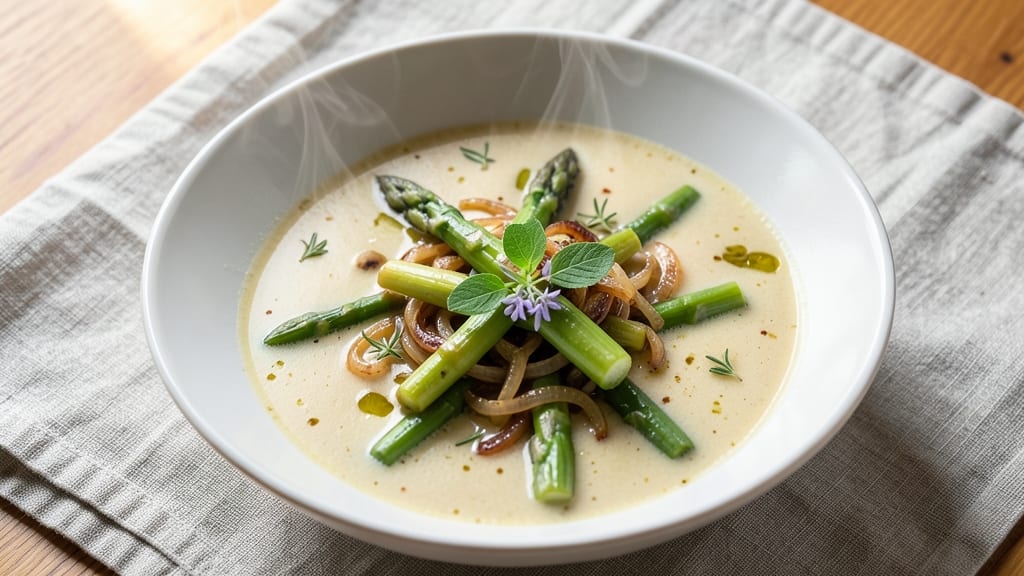
This asparagus soup recipe transforms spring's finest ingredient into a velvety, herb-infused masterpiece with just the right fresh crunch. The secret lies in balancing delicate asparagus flavor with aromatic herbs and a touch of cream—creating a soup that's both elegant and comforting.
I developed this version after years of testing, ensuring every spoonful delivers that perfect harmony of silky texture and vibrant taste.
The foundation begins with fresh asparagus, gently sautéed to preserve its natural sweetness before blending into a smooth base. Aromatic herbs like thyme and tarragon infuse the broth with depth, while a splash of cream adds luxurious body without overpowering the asparagus.
The key technique? Simmering just long enough to meld flavors without losing that bright, spring-like quality.
What you'll achieve is a soup that's impossibly smooth yet bright, with a velvety consistency that coats the spoon. The optional garnish of toasted breadcrumbs adds satisfying crunch, creating a textural contrast that makes every bite more enjoyable.
Perfect for spring menus or as a light yet satisfying starter, this soup proves that simple ingredients can create restaurant-quality results at home.
Whether you're serving it as a first course or enjoying it as a light lunch, this recipe adapts beautifully to dietary preferences. The instructions are designed to be straightforward, ensuring professional-quality results even for home cooks.
Let's create this velvety asparagus masterpiece together—simple ingredients, precise technique, and perfect harmony in every bowl.
Ingredients for aspargus soup
Fresh asparagus, aromatic herbs, and velvety cream transform into this herb-infused masterpiece.
| Ingredient | Amount | Notes |
|---|---|---|
| Fresh Asparagus Spears 🌱 | 1 ½ lb | Trim woody ends, medium thickness |
| Yellow Onion 🧅 | 1 whole | Medium size, finely diced |
| Fresh Garlic Cloves 🧄 | 4 cloves | Peeled, lightly crushed |
| Fresh Thyme Sprigs 🌿 | 2 sprigs | Or 1 tsp dried thyme |
| Fresh Tarragon Sprigs 🌿 | 1 sprig | Or 1/2 tsp dried tarragon |
| Extra-Virgin Olive Oil 🫒 | ½ cup | High-quality, fruity |
| Vegetable Broth 💧 | 4 cups | Low-sodium preferred |
| Heavy Cream 🥛 | ½ cup | Full-fat for richness |
| Lemon Juice 🍋 | 2 tbsp | Freshly squeezed |
| Diamond Crystal Kosher Salt 🧂 | 1 tsp | Adjust to taste |
| Freshly Ground Black Pepper 🌶️ | ½ tsp | Coarsely ground |
| Panko Breadcrumbs 🍞 | ¼ cup | For garnish, toasted |
| Unsalted Butter 🧈 | 1 tbsp | For toasting breadcrumbs |
The asparagus is the star—look for bright green spears with tight tips, not woody or yellowing ones. Whole Foods or local farmers markets have the freshest in spring, but any grocery store's produce section works. Trim the ends at an angle (about 1 inch) to remove the tough core. For the herbs, fresh thyme and tarragon make all the difference—dried works in a pinch, but fresh infuses that bright, spring-like aroma. The vegetable broth? Low-sodium is key—we're balancing delicate flavors here, not drowning them in salt. I always make a double batch of broth and freeze it in ice cube trays for future soups.
No fresh tarragon? Dried tarragon at half the amount works, but it's less vibrant. Short on thyme? Fresh oregano or basil can stretch it, but adjust to taste. For a dairy-free version, swap the heavy cream for full-fat coconut milk—it adds richness without overpowering. The lemon juice is non-negotiable—it brightens the whole dish. If you're using pre-made broth, reduce the salt since most store-bought versions are over-salted. For the breadcrumbs, Panko stays crispy while regular breadcrumbs get soggy—worth the splurge for that perfect crunch.
This soup tastes even better the next day as flavors meld. Store in an airtight container for up to 5 days in the fridge, or freeze for 3 months. The breadcrumb topping? Toast it fresh before serving—1 minute in a dry pan with butter until golden. Garnish with extra herbs or a drizzle of olive oil for that restaurant-quality finish. Double the recipe and freeze half—spring asparagus flies off the shelves fast!
Why You'll Love This Recipe
- No Chopping Hassle: I swear by this recipe because you only need to trim the asparagus ends—no dicing, no mincing, just snap those spears and toss them in. The onion and garlic get one quick chop, and the herbs? Just tear the sprigs. That’s it. Five minutes of prep, and you’re golden.
- Herb-Packed Depth: Between us, tarragon and thyme are like the secret handshake of French cooking. The tarragon brings that anise-like lift, while the thyme grounds it with earthy warmth. Simmer them together, and you’ve got a flavor that’s rich but never heavy—like a hug in a bowl, honestly.
- Leftover Magic: This soup actually improves the next day. The asparagus softens just enough to melt into the broth, and the flavors meld into something even more cohesive. I freeze portions all the time—perfect for busy mornings or when I’m too tired to cook. Just reheat, and it’s like you made it fresh.
- Spring in a Mug: It’s the ultimate spring-weather soup—light enough for warm days but hearty enough for chilly evenings. Serve it chilled with a splash of cream and a poached egg on top, or warm it up with crusty bread. Even my picky-eating teen asks for it when the asparagus is in season. That’s saying something.
Step-by-step instructions for herb-infused asparagus soup
This velvety asparagus soup delivers restaurant-quality smoothness with a bright, herby finish.
Sauté Aromatics Until Fragrant
Heat the 0.5 cup extra-virgin olive oil in a large pot over medium heat. Add the 1 whole yellow onion and cook for 5 minutes until softened and translucent. The onion should release its sweet aroma—this is your cue to add the 4 cloves fresh garlic cloves and cook for another 30 seconds until golden but not browned.
Here's where the magic begins: stir in the 2 sprigs fresh thyme sprigs and 1 sprig fresh tarragon sprigs, crushing them lightly with the back of a spoon. Let the herbs infuse the oil for 1 minute—you'll smell that earthy, anise-like tarragon aroma mingling with thyme's piney notes. This aromatic base forms the soul of your soup.
Cook Asparagus Until Tender
Add the trimmed 1.5 lb fresh asparagus spears to the pot, stirring gently to coat in the fragrant oil. Pour in the 4 cups vegetable broth and bring to a gentle boil. Reduce heat to medium-low and simmer for 12-15 minutes until the asparagus is fork-tender when pierced with a knife. The spears should soften but retain their vibrant green color—overcooking will turn them mushy.
Real talk: if your asparagus is particularly thick or woody, you might need 15-18 minutes. The key is tender yet still holding its shape—you want that perfect balance between creamy texture and fresh asparagus bite. Stir occasionally to prevent sticking, adding a splash of water if needed to maintain the liquid level.
Blend Until Silky Smooth
Using an immersion blender, carefully purée the soup directly in the pot until completely smooth. Work in batches if needed, holding the blender at a slight angle to avoid splattering. You should end up with a velvety texture—no visible chunks of asparagus. For those without an immersion blender, carefully transfer the soup to a countertop blender in batches, blending until perfectly smooth.
This is the moment that matters: taste the soup before adding cream. You'll likely find it needs seasoning. Add the 1 tsp diamond crystal kosher salt and 0.5 tsp freshly ground black pepper, adjusting to taste. The soup should be vibrant and herbaceous—this is your flavor baseline before adding the cream.
Finish with Cream and Bright Acid
Return the soup to medium-low heat and stir in the 0.5 cup heavy cream, letting it warm through for 2-3 minutes. The cream should gently heat but not boil—you're looking for a luxurious, velvety finish, not scrambled eggs. Add the 2 tbsp lemon juice and stir well. This acidity cuts through the richness, brightening the entire dish.
Here's the thing—don't skip the lemon juice. It's what transforms this from a simple cream soup to something truly special. The tartness enhances all the herbaceous notes while preventing the soup from tasting too heavy. Give it one final taste and adjust seasoning if needed—you want the salt and acid perfectly balanced.
Garnish and Serve Warm
In a small skillet, melt the 1 tbsp unsalted butter over medium heat and toast the 0.25 cup panko breadcrumbs for 2-3 minutes until golden brown, stirring constantly. The breadcrumbs should develop a nutty aroma and crispy texture—this is your perfect garnish.
Ladle the soup into bowls and immediately sprinkle with the toasted breadcrumbs. The contrast of crispy garnish against the velvety soup creates an incredible textural experience. Serve warm with a side of crusty bread to soak up every last drop of that herb-infused goodness. Each spoonful should deliver that perfect marriage of creamy richness and fresh, bright asparagus flavor.
Pro Tips For Making Aspargus Soup
- Trim Before Blending: Snip off the tough, woody ends of your asparagus spears—about an inch from the base—before chopping. I used to skip this and ended up with a soup that tasted more like chewing on stems than savoring delicate asparagus. Trust me, those ends won’t soften nicely, no matter how long you simmer.
- Sweat the Onion: Don’t rush the onion. Cook it low and slow in the pot until it’s translucent and just starting to caramelize—about 8-10 minutes. I’ve seen people speed this up with high heat, and the soup tastes flat. A golden, soft onion base is the flavor foundation here, so patience pays off.
- Infuse, Don’t Overcrowd: Add thyme and tarragon sprigs after the onions soften but before adding liquid. Let them infuse for 2-3 minutes uncovered so their oils bloom into the pot—this is where the aroma happens. Then add broth and asparagus. Overcrowding the pot with herbs early just dilutes their impact.
- Blend Partially: Pulse the soup in batches for 10-15 seconds total, then stir. Full blending turns it into a paste; this keeps texture lively and lets you see if it needs more liquid. I learned this after my first batch turned into a smoothie—turns out, asparagus soup should have a whisper of bite, not just silk.
Health benefits of these flavors
Spring's Nutritional Star
Asparagus is a powerhouse of nutrients, packed with vitamin K—a single serving provides 120% of your daily needs—which supports bone health and blood clotting. This soup delivers vitamin A too, with 1.5 lbs of asparagus offering 200% of your daily value, crucial for vision and immune function.
The bright green color signals high levels of lutein and zeaxanthin, antioxidants that protect your eyes. 🌱
Digestive Health Booster
Asparagus contains prebiotic fiber that feeds your gut's good bacteria, promoting digestive health. The 1.5 lbs in this recipe provides about 8 grams of fiber, supporting regularity and a healthy microbiome.
The natural folate content (about 40% of daily needs) also aids digestion while reducing inflammation. This makes the soup both comforting and gut-friendly.
Low-Calorie Comfort
This soup is surprisingly light despite its creamy texture—about 150 calories per serving—making it perfect for spring detoxes. The heavy cream adds richness without excessive calories, while the asparagus and broth base keep it nutrient-dense.
The toasted breadcrumbs add crunch without significant calorie impact, making it a satisfying yet guilt-free choice.
Antioxidant-Rich Herbs
The thyme and tarragon in this soup aren't just for flavor—they're packed with antioxidants. Thyme contains thymol, which has antimicrobial properties, while tarragon offers apigenin, a compound that may reduce inflammation. Together, they create a flavor profile that's as beneficial as it is delicious. 💛
Hydration Helper
Vegetable broth forms the base of this soup, providing electrolytes like potassium and magnesium that support hydration. The 4 cups of broth in this recipe contribute to your daily fluid intake while delivering minerals your body needs.
This makes it an excellent choice for spring when hydration needs increase with warmer weather.
Meal Prep Advantage
This soup's nutrients stay stable when stored properly—up to 5 days in the fridge or 3 months in the freezer. The fiber and antioxidants remain intact, making it a convenient way to get daily vegetables.
The creamy texture actually improves overnight as flavors meld, while the vitamin K and folate retain their potency. Perfect for busy weeknights when you need nutrition without effort. ✨
Nutrition facts
Frequently asked questions
Can I use frozen asparagus instead of fresh for this recipe?
Fresh asparagus delivers the best texture and flavor, but frozen works in a pinch! Thaw it completely first, then trim off any tough ends. You may need to simmer the soup for 1-2 extra minutes since frozen asparagus tends to be slightly more fibrous. For maximum freshness, look for bright green spears with firm tips—spring markets are your best bet.
Why does my asparagus soup turn out watery?
Watery soup usually means one of two things: either you didn't cook the asparagus long enough to soften properly, or the broth wasn't reduced enough. Try simmering the soup uncovered for 5-10 minutes after blending to evaporate excess liquid. For extra richness, stir in 1 extra tablespoon of cream or a pat of butter at the end. If using store-bought broth, choose low-sodium varieties to avoid dilution.
What herbs can I substitute if I don't have tarragon?
Tarragon adds a unique anise-like flavor, but you can substitute with 1/2 teaspoon dried marjoram or 1/4 teaspoon dried basil for a similar aromatic profile. For a different but complementary taste, try 1/2 teaspoon dried dill or 1/4 teaspoon dried oregano. Fresh herbs always work better than dried—just use about 1/3 the amount when substituting. The key is balancing the herbaceous notes with the asparagus's natural sweetness.
Can I make this soup dairy-free?
Replace the heavy cream with 1/2 cup full-fat coconut milk for a rich, dairy-free version that still delivers velvety texture. For even more creaminess, blend in 1/4 cup silken tofu with the coconut milk. The lemon juice remains crucial for brightness—don't skip it! You might need to adjust seasoning slightly since coconut milk has a different salt profile than cream. Garnish with toasted pumpkin seeds instead of breadcrumbs for extra crunch.
How can I tell when the asparagus is perfectly cooked?
The asparagus is done when it's fork-tender but still holds its shape—think "al dente" like pasta. Pierce a spear with a fork; it should slide in easily but not feel mushy. For medium-thick spears, 12-15 minutes of simmering is ideal. If using thicker stalks (over 1/2 inch diameter), add 2-3 extra minutes. Overcooking turns asparagus slimy and dulls its natural sweetness—this is your cue to taste and adjust seasoning before blending.