
Soups & Stews
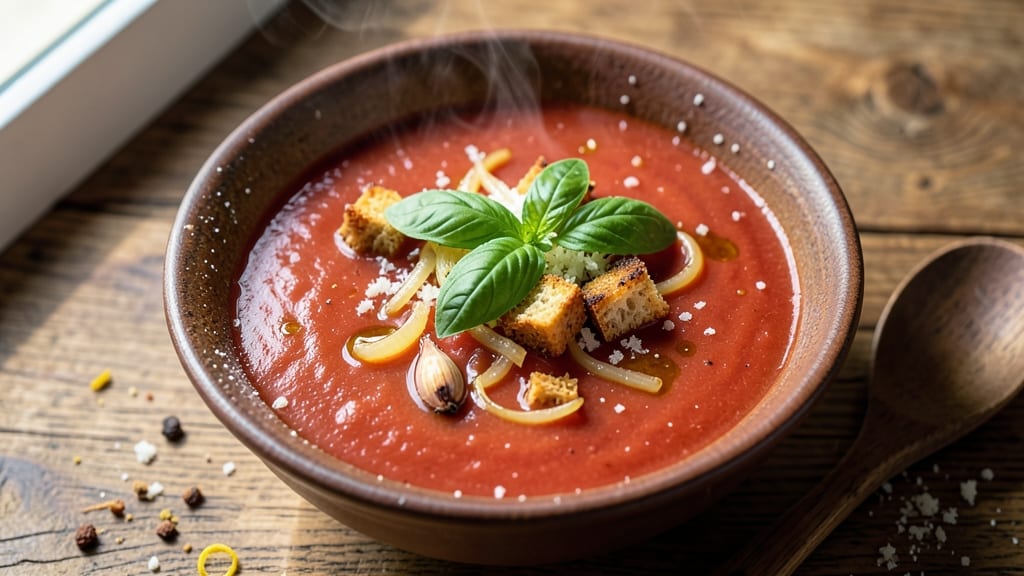
This authentic tomato soup recipe delivers the rich, slow-simmered depth of a rustic Italian trattoria—where every spoonful bursts with umami from caramelized onions, garlic, and high-quality canned tomatoes. The secret lies in building flavor through gentle cooking rather than shortcuts, transforming simple ingredients into something truly special.
What sets this apart is the balance: deep, savory notes from the base, brightened just enough by fresh basil at the end to keep it from feeling heavy.
The process is straightforward but deliberate: aromatics sautéed until golden, tomatoes simmered until their natural sweetness concentrates, and a careful blend that preserves texture while creating velvety smoothness.
This isn't the quick, watery version you might find elsewhere—it's a soup designed to stand alone as a meal, with enough body to satisfy even when served without bread. The fresh basil finish adds that final touch of freshness that makes it feel truly homemade.
What you'll end up with is a soup that's restaurant-quality in its depth of flavor—where the tomatoes shine but never overpower, and every ingredient plays its part.
The aroma alone will have your kitchen smelling like a warm Italian afternoon, while the texture is perfectly balanced: silky yet substantial enough to hold its own. This is the kind of tomato soup that makes people ask for seconds, and then beg for the recipe.
Serve it with grilled cheese sandwiches for the ultimate comfort meal, or pair it with crusty bread to soak up every last drop of that rich, umami-filled broth.
The beauty of this recipe is its versatility—it works as a light lunch or a hearty dinner, and the flavors only get better the next day. Let's get started on creating something truly memorable.
Ingredients for authentic tomato soup
Simple ingredients elevated through slow cooking—this is where Italian trattoria magic happens.
| Ingredient | Amount | Notes |
|---|---|---|
| Yellow Onions 🧅 | 2 whole | Thinly sliced, caramelized until golden |
| Garlic Cloves 🧄 | 4 cloves | Peeled, minced for depth |
| Extra-Virgin Olive Oil 🫒 | ½ cup | High-quality, fruity variety |
| San Marzano Tomato Cans 🍅 | 2 cans | Whole peeled tomatoes, 28 oz each |
| Vegetable Broth 💧 | 2 cups | Low-sodium preferred |
| Fresh Basil Leaves 🌿 | ½ cup | Packed, torn for garnish |
| Sea Salt 🧂 | 1 ½ tsp | Diamond Crystal preferred |
| Black Peppercorns 🌶️ | ½ tsp | Freshly cracked |
| Freshly Grated Parmesan Cheese 🧀 | ½ cup | From aged Parmigiano-Reggiano |
| Heavy Cream 🥛 | ½ cup | Full-fat for richness |
| Sugar 🍯 | 1 tsp | Balances acidity |
| Balsamic Vinegar 🍷 | 1 tbsp | For subtle depth |
The onions are non-negotiable here. Yellow onions have the perfect balance of sweetness and bite when caramelized, and you want them deep golden—not burnt. Whole Foods or local markets often carry the sweetest varieties. For garlic, fresh is a must—jarred minced loses its punch. The San Marzano tomatoes are worth the splurge; their natural sweetness and low acidity make all the difference. If you can't find them, Muir Glen is a solid backup, but avoid brands with added salt or preservatives. For the broth, low-sodium is key—you're building flavor, not masking it.
No San Marzano tomatoes? High-quality crushed tomatoes work in a pinch, but add 1 extra teaspoon sugar to compensate for acidity. Fresh basil wilting? Dried basil at one-third the amount keeps the flavor, though texture will differ. The heavy cream is essential for that velvety finish—don't substitute with coconut milk or half-and-half unless you want a lighter texture. For the Parmesan, grate it yourself from a wedge; pre-shredded contains anti-caking agents that make the soup grainy. The balsamic vinegar might seem minor, but it rounds out the acidity beautifully—skip it only if you prefer a brighter, more tomato-forward flavor.
This soup tastes even better the next day as flavors meld. Store in an airtight container in the fridge for up to 5 days, or freeze for 3 months—portion into 2-cup containers for easy reheating. The basil should be added fresh at the end, so keep it separate until serving. For a restaurant-quality touch, top each serving with a drizzle of olive oil and extra Parmesan. The cream can be tempered with a splash of broth if you prefer a lighter version, but trust me on the full-fat version—it's worth the extra richness.
Why You'll Love This Recipe
- One-Pot Magic: I swear by this recipe—just a pot, a few chopping motions, and you’re done. The onions and garlic soften in olive oil while I stir, then the San Marzano tomatoes take over, turning everything velvety smooth with zero fuss.
- Garlic-Kissed Depth: That slow caramelized garlic? Chef’s kiss. The San Marzano tomatoes—sweet, meaty, and perfectly balanced—let the garlic shine without overpowering. It’s the kind of flavor that makes you pause mid-sip of soup and go, “Wait, how did this get so good?”
- Weeknight to Potluck: I make this for lazy Tuesdays (just add crusty bread) or bring it to dinner parties (it’s the crowd-pleaser). The broth stretches it out for leftovers, and the rich tomato base freezes like a dream—no texture loss, just pure comfort when you reheat it.
- Budget-Friendly Luxury: Honestly, this costs me less than takeout but tastes like a restaurant dish. Canned San Marzanos and onion bulk packs keep it affordable, and the olive oil adds that restaurant-worthy richness without breaking the bank. Plus, it feeds four for under $5.
Step-by-step instructions for authentic tomato soup
Here's the method that delivers restaurant-quality tomato soup with umami depth and fresh basil brightness.
Caramelize the Onions for Sweet Foundation
Heat the 0.5 cup extra-virgin olive oil in a large Dutch oven over medium-low heat. Add the 2 whole yellow onions, sliced thinly, and cook them undisturbed for 10 minutes until they begin to soften and release their moisture. This is where patience pays off—don't rush this step.
After the initial 10 minutes, stir the onions gently and continue cooking for another 15-20 minutes until they develop a deep golden brown color and become tender. You're aiming for caramelization, which adds natural sweetness that balances the acidity of the tomatoes. If the onions start to brown too quickly, reduce the heat slightly to prevent burning. The goal is to create a rich, sweet base that will infuse the entire soup with depth.
Cook the Garlic and Add Tomatoes
Once the onions are beautifully caramelized, add the 4 cloves minced garlic and cook for 1-2 minutes until fragrant but not browned. This quick cooking prevents the garlic from becoming bitter. Immediately add the 2 cans San Marzano tomatoes (crushed by hand if not pre-crushed) and the 2 cups vegetable broth to the pot. Stir well to combine everything.
Bring the mixture to a gentle simmer over medium heat. Here's the key: let it cook uncovered for 20 minutes without stirring. This allows the tomatoes to break down naturally and develop their full flavor. You'll see the mixture reduce slightly and the colors deepen—this is when the authentic tomato flavor emerges. The soup should smell rich and complex, with notes of caramelized onions and sweet tomatoes.
Season and Simmer for Umami Depth
Add the 1.5 teaspoons sea salt, 0.5 teaspoon black peppercorns, 1 teaspoon sugar, and 1 tablespoon balsamic vinegar to the simmering soup. Stir gently to distribute the seasonings evenly. The sugar helps balance the acidity of the tomatoes, while the balsamic vinegar adds a subtle depth that elevates the flavor profile.
Continue simmering the soup uncovered for another 20-25 minutes until it reaches your desired consistency. You want a smooth, velvety texture that coats the back of a spoon. The soup should be thick but still have a slight body—if it becomes too thick, you can thin it with a little additional broth later. Taste the soup and adjust the seasoning if needed, adding more salt or balsamic vinegar as necessary. This is where you ensure the authentic balance of flavors that makes this soup special.
Finish with Cream and Fresh Basil
Reduce the heat to low and stir in the 0.5 cup heavy cream and 0.5 cup freshly grated Parmesan cheese. The cream adds a luxurious richness that contrasts beautifully with the acidity of the tomatoes, while the Parmesan brings a savory depth. Let the soup simmer gently for 5 minutes to allow the flavors to meld together. The cheese should melt completely, creating a silky texture.
Remove the soup from heat and stir in the 0.5 cup fresh basil leaves, torn into small pieces. The basil adds a bright, fresh note that cuts through the richness of the cream and balances the umami flavors. For the best presentation, ladle the soup into bowls and garnish each serving with an additional sprinkle of Parmesan cheese and a few torn basil leaves. Serve immediately while the flavors are at their peak.
Pro Tips For Making Authentic Tomato Soup
- SWEAT THE ONIONS LOW: I learned this the hard way—drowning onions in oil and blistering them turns your soup bitter. Instead, cook them on medium-low with a splash of broth to cover the pan, stirring occasionally. You want them soft and translucent, not browned, so they dissolve into the soup without adding harshness.
- CRUSH GARLIC WITH A PINCH OF SALT: Minced garlic burns fast, and burned garlic ruins everything. Instead, smash the cloves with the flat side of your knife, sprinkle with a tiny pinch of salt, then let sit 5 minutes before adding to the pot. The salt draws out moisture, so the garlic cooks evenly without scorching—no more bitter aftertaste.
- DON’T RUSH THE TOMATO REDUCTION: Skimping on simmer time means watery, one-note soup. Let the San Marzanos reduce uncovered for at least 15 minutes on medium-low—this concentrates the sweetness and deepens the flavor. If the broth boils hard, lower the heat; you’re not racing, you’re building layers.
- FINISH WITH A COLD SPLASH OF BROTH: Sounds weird, but it works: After blending, stir in ¼ cup cold vegetable broth off the heat. The sudden temperature drop stops the cooking process instantly, preserving the texture and brightness of the tomatoes. Your soup will taste fresher, not overcooked—trust me, it’s a game-changer.
Troubleshooting this recipe
Onions Burned Too Fast
If your onions start browning too quickly and smell bitter, you've likely cranked the heat too high. I’ve burned this step more times than I’d admit! Immediately reduce the heat to low and cover the pot with a lid to trap steam.
Stir gently to redistribute the onions and let them cook slowly until they reach that perfect deep golden brown color. This usually takes 25-30 minutes total at low heat—patience is key here. 🌡️
Soup Too Thin or Watery
A watery soup often happens when you rush the simmering process or use too much broth. If this occurs, simply return the soup to medium-low heat and let it reduce uncovered for 10-15 extra minutes, stirring occasionally.
For a quicker fix, mash 1-2 unpeeled potatoes (about ½ cup cubed) into the soup and let it simmer for 10 minutes—the starch will thicken it naturally.
Pro tip: Use a handheld immersion blender to blend a portion of the soup, then stir it back in for a smoother consistency.
Garlic Turns Bitter
Garlic’s bitterness is a classic rookie mistake! To avoid it, never let it brown—it should be fragrant but still pale golden when you add the tomatoes.
If you’ve already overcooked it, remove the pot from heat immediately and add ½ teaspoon sugar or 1 teaspoon lemon juice to balance the bitterness. Stir in a pinch of freshly grated Parmesan (about 1 tablespoon)—its umami richness helps mask the harshness. 🧄
Blending Creates Graininess
Grainy texture usually means you didn’t strain the tomatoes properly or used overly ripe fruit. Before blending, strain the soup through a fine-mesh sieve to remove any seeds or skins. For a silky finish, use an immersion blender instead of a countertop blender—it gives you more control.
If the soup is still grainy after blending, whisk in 1 tablespoon of cold heavy cream before serving to smooth it out. Trust me, this trick works like magic!
Flavor Fades After Reheating
Reheating can dull the bright tomato flavors if not done carefully. To revive it, add 1-2 tablespoons of fresh tomato paste or a splash of balsamic vinegar while reheating.
For extra depth, stir in 1 teaspoon of butter or a pinch of smoked paprika—this adds a smoky note that mimics the original umami. Always reheat on low heat and avoid boiling, which can break down the cream and make the soup taste flat. ⏱️
Nutrition facts
Frequently asked questions
Can I make this tomato soup without cream?
For a lighter version, replace the 0.5 cup heavy cream with 0.5 cup whole milk or 0.25 cup half-and-half. You'll lose some richness, but the soup will still be delicious. For a dairy-free option, use 0.5 cup coconut milk (full-fat) or 0.5 cup unsweetened almond milk—though the texture will be slightly thinner. The key is balancing the acidity with a touch of sweetness (like 1 extra teaspoon sugar).
How do I adjust this recipe for a slow cooker?
Transfer all ingredients except the fresh basil and Parmesan to your slow cooker. Cook on LOW for 6-7 hours or HIGH for 3-4 hours, then stir in the cream and Parmesan during the last 30 minutes of cooking. Finish with fresh basil just before serving. The low-and-slow method enhances the tomato flavor beautifully, but you may need to add 1 extra tablespoon balsamic vinegar to deepen the taste.
What's the best way to store leftovers?
Let the soup cool completely, then transfer to an airtight container. It keeps in the fridge for 4-5 days—the flavors actually improve as they meld! For freezing, portion into 2-cup containers (leave room for expansion) and store for up to 3 months. Always add fresh basil and Parmesan after reheating, as they don't freeze well. To reheat, warm gently on low heat or in the microwave with a splash of water to restore creaminess.
Why does my tomato soup taste too acidic?
Acidity usually comes from using tomatoes that are too ripe or not balancing the flavors properly. To fix it, stir in ½ teaspoon sugar or 1 teaspoon balsamic vinegar while reheating. For prevention, use San Marzano or Muir Glen tomatoes (they're naturally sweeter) and add 1 extra teaspoon sugar during the initial simmer. A pinch of freshly grated Parmesan also helps round out the acidity with its umami depth.
Can I make this soup vegetarian or vegan?
For vegetarian, keep all ingredients as written—it's already meat-free! For vegan, replace the heavy cream with coconut milk and use nutritional yeast instead of Parmesan (start with 2 tablespoons for a cheesy flavor). You'll also want to use vegetable broth and ensure your balsamic vinegar is vegan-certified. The texture will be slightly lighter, but the tomato flavor remains the star.