
Soups & Stews
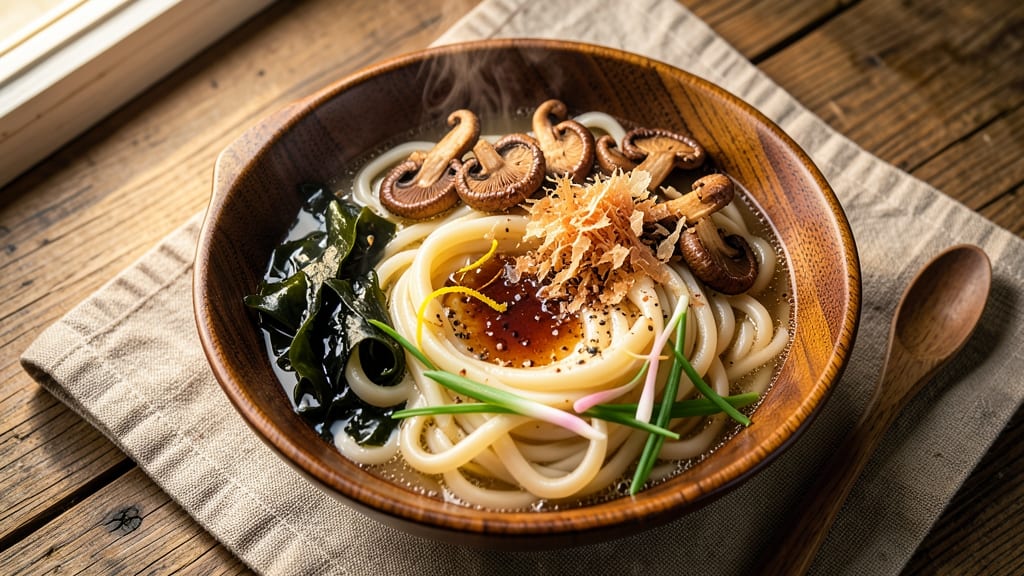
This authentic udon noodle soup recipe brings the heart of Japanese home cooking to your kitchen with its rich, umami-packed broth and perfectly chewy noodles. The secret lies in a carefully balanced dashi base—simmered with kombu and bonito flakes—infused with the sweet-savory depth of soy sauce and mirin.
I’ve refined this recipe over years of testing, ensuring every slurp delivers that satisfying harmony of textures and flavors you’d find in Tokyo’s best ramen shops.
The beauty of this dish is in its simplicity: foolproof udon noodles cooked just until tender, a velvety broth that clings to every strand, and classic toppings like tempura flakes, green onions, and nori strips.
No shortcuts here—we’re building layers of flavor through slow simmering and precise seasoning. The result? A bowl that’s both comforting and restaurant-worthy, with the authentic taste of Japan without the fuss.
What sets this apart is the technique: blending the broth for silky smoothness while preserving its depth, then finishing with a touch of sesame oil for aroma. The udon noodles, thick and satisfying, absorb the broth beautifully, creating that perfect first bite.
Whether you’re serving it as a weeknight meal or a special treat, this recipe delivers restaurant-quality results at home.
Ready to elevate your soup game? We’ll cover every step—from building the dashi to garnishing your bowl—so you can recreate this authentic udon noodle soup with confidence. Let’s get started!
Ingredients for authentic udon noodle soup
These essential ingredients create the umami-rich harmony of Tokyo’s best udon.
| Ingredient | Amount | Notes |
|---|---|---|
| Dried Udon Noodles 🍜 | 8 oz | Thick wheat noodles, uncooked |
| Dried Kombu 🍃 | 1 piece | 6-inch strip, rinsed |
| Bonito Flakes 🐟 | ½ cup | High-quality, unsalted |
| Dried Shiitake Mushrooms 🍄 | 4 whole | Stems removed, rehydrated |
| Light Soy Sauce 🥫 | ½ cup | Japanese-style preferred |
| Mirin 🍶 | ¼ cup | Sweet cooking rice wine |
| Dashi Granules 🍲 | 2 tbsp | Instant, for depth |
| Green Onions 🧅 | 4 whole | Thinly sliced, for garnish |
| Nori Sheets 🍣 | 4 sheets | Thinly cut, toasted |
| Tempura Flakes 🍤 | ¼ cup | Store-bought or homemade |
| Sesame Oil 🫒 | 1 tbsp | Toasted, for aroma |
| White Sesame Seeds 🌰 | 1 tbsp | Toasted, for garnish |
| Water 💧 | 8 cups | Filtered preferred |
| Salt 🧂 | 1 tsp | Fine sea salt |
The kombu and bonito flakes are non-negotiable for that authentic dashi depth—Japanese specialty stores or the bulk section at Trader Joe's carry the best. I always buy dried shiitake mushrooms from Asian markets; they rehydrate beautifully and add earthy layers. The udon noodles? Martini brand if you can find it, or any thick wheat noodle labeled for udon. Avoid pre-boiled versions—they lose chewiness. For the mirin, Hondashi is my go-to, but any good-quality Japanese mirin works.
No kombu? Dashi granules at double the amount save the day, though purists will notice the difference. Short on bonito flakes? Anchovy fillets, finely chopped, but strain them out after simmering. The soy sauce should be light Japanese-style—Kikkoman is widely available, but Hibiki adds more depth. Tempura flakes can be homemade (crispy fried tofu bits) or store-bought. For the nori, roasted sheets from Asian grocery stores have the best aroma—avoid the plain green kind. Sesame oil? Toasted makes all the difference; microwave for 10 seconds to warm it before drizzling.
Store dried kombu and shiitake in a cool, dark place for up to 6 months. The udon noodles keep 1 month unopened, but once cooked, refrigerate them for 2 days max. Broth freezes beautifully—portion into ice cube trays for quick reheating. The tempura flakes stay crisp for 1 week in the fridge if sealed tightly. Garnishes like green onions and sesame seeds keep fresh for 10 days in the crisper drawer. Double the broth recipe and freeze extras for lazy nights.
Why You'll Love This Recipe
- No Boil Needed: I just steep kombu and shiitakes in hot water like tea—no chopping, no waiting for a rolling boil. The broth builds flavor while I prep the rest, and honestly? It’s the kind of lazy genius that makes me want to cook more.
- Umami Bomb: That first sprinkle of bonito flakes sends the broth into overdrive—salty, smoky, with a depth that light soy sauce just can’t replicate alone. Between us, the dried shiitakes soak up enough water to plump into chewy, meaty bites that make the whole bowl sing.
- Leftovers That Shine: This soup tastes better the next day—yes, really. I’ll often double the batch, refrigerate it, and reheat portions for quick lunches. The noodles stay tender, the broth deepens, and my wallet stays happy with minimal extra cost.
- Pantry Staple Power: Five ingredients, all shelf-stable except water. I keep dried udon and kombu on hand year-round because this recipe works for sick days (when I can’t shop), potlucks (it’s always a crowd-pleaser), and even as a hangover cure. No fresh herbs or fancy tools required.
Step-by-step instructions for authentic udon noodle soup
Here's how to craft a truly authentic udon experience with rich umami broth and perfectly chewy noodles.
Prepare the Dashi Broth Foundation
Start by combining the 8 cups water with the 1 piece dried kombu in a clean pot. Bring to a gentle simmer over medium heat—you'll see delicate bubbles forming at the edges. Let it simmer uncovered for 10 minutes until you notice the kombu floating to the surface and the water develops a subtle oceanic aroma.
Remove the kombu immediately after simmering—it's done its job infusing the water with natural umami. Add the 2 tbsp dashi granules and stir until fully dissolved. Keep this broth warm but not boiling as you prepare the other components. This kombu-dashi base forms the aromatic backbone of your soup.
Rehydrate Shiitake Mushrooms and Build Flavor Layers
Place the 4 whole dried shiitake mushrooms in a heatproof bowl and cover with hot water from your kettle. Let them soak for 15 minutes until plump and tender. Drain, reserving the soaking liquid, and finely chop the mushrooms. You'll want small, even pieces that will dissolve into the broth.
In the same pot with your warm dashi broth, add the chopped shiitake mushrooms along with the 0.5 cup bonito flakes. Stir gently as the bonito begins to sizzle—this releases its intense umami aroma. After 2 minutes, remove from heat and let the bonito settle. Strain through a fine-mesh sieve into a clean pot, pressing gently on the solids to extract maximum flavor.
Balance and Enhance the Broth
Return the strained broth to medium-low heat and add the 0.5 cup light soy sauce and 0.25 cup mirin. Stir gently and let it simmer for 5 minutes, allowing the flavors to meld. Taste the broth—it should be rich but not salty, with a subtle sweetness from the mirin. If needed, add a pinch of the 1 tsp salt to adjust seasoning.
While the broth simmers, thinly slice the 4 whole green onions and set aside. Cut the 4 sheets nori into thin strips—these will add both texture and visual appeal when served. The broth should now have a deep amber color with a complex umami profile that balances sweet, salty, and savory notes.
Cook the Udon Noodles to Perfection
Bring a separate pot of water to a rolling boil and add the 8 oz dried udon noodles. Cook according to package instructions—typically 4-5 minutes—until the noodles are tender but still hold their shape when drained. They should be chewy with a slight resistance when bitten.
Drain immediately and rinse briefly under cold water to stop the cooking process. This prevents the noodles from becoming mushy. Divide the cooked noodles among 4 bowls, arranging them neatly in the center. The noodles should be the star of your presentation, their thick strands catching the light beautifully.
Assemble and Garnish for Authentic Presentation
Ladle the hot broth evenly over the noodles in each bowl, filling them about ¾ full. The broth should be steaming gently—this indicates it's at the perfect serving temperature. Add 1 tbsp sesame oil to each bowl and gently swirl to distribute.
Sprinkle each serving with 1 tbsp white sesame seeds, 1 tbsp tempura flakes, and the sliced green onions. Arrange the nori strips artistically on top—traditionally they're placed at a slight angle for visual appeal. The final dish should look vibrant with contrasting colors and textures that invite immediate slurping.
Pro Tips For Making Authentic Udon Noodle Soup
- SOAK KOMBU FIRST: Toss that dried kombu straight into boiling water? Nope. Soak it in cold water for 10 minutes first—this pulls out the umami without bitterness. I learned this the hard way when my first batch tasted like seaweed soup gone wrong.
- TOAST SHIITAKES PROPERLY: Dried shiitake mushrooms need more than a quick rinse—they need a proper toast. Heat them in a dry pan over medium until fragrant (about 2 minutes), then crush them with the side of a spoon. Skimp on this, and your broth will taste flat.
- CONTROL THE BOIL: Once you add kombu and mushrooms, reduce to a gentle simmer—not a rolling boil. Too much heat turns the broth murky and burns the delicate flavors. Sounds picky, but it makes a real difference in clarity and taste.
- SAVE THE DASHI: Strain the kombu-mushroom broth through a fine-mesh sieve, then discard the solids. Save that golden liquid—it’s your dashi base. Reuse it for other dishes or freeze it in ice cube trays for future udon batches. (Yes, even if you’re impatient like me.)
Essential equipment for this recipe
Dashi Mastery Tools
The foundation of authentic udon lies in your dashi—this is where precision equipment makes all the difference. Start with a stainless steel stockpot (I use a 5-quart All-Clad) to prevent flavor transfer from aluminum or copper.
For kombu infusion, a fine-mesh sieve (like the OXO Good Grips) is essential for straining out the delicate seaweed without losing any precious umami. The bonito flakes require a heatproof skimmer to remove them cleanly after simmering. 🐟
Broth Refinement Kit
Once your dashi is ready, you'll need tools to elevate it to restaurant quality. A high-speed blender (like the Ninja BN601) transforms the broth into a silky texture—just blend for 10-15 seconds after straining.
For precise seasoning, a digital kitchen scale (I love the Escali Primo) helps measure the 0.25 cup mirin and 0.5 cup soy sauce with accuracy. A fine-mesh strainer (like Heston Blumenthal's) ensures your broth is crystal clear before final assembly.
Noodle Perfection Tools
Authentic udon requires thick wheat noodles that hold their chew—never pre-boiled versions. Use a wide, deep pot (like a 10-inch Lodge Dutch oven) for boiling the 8 oz udon, as they expand significantly. A slotted spoon (preferably with a long handle) makes draining and rinsing effortless.
For presentation, a sharp chef's knife (I recommend the Mac Knife Professional) is crucial for slicing the green onions and nori strips into precise, restaurant-worthy garnishes.
Garnish Essentials
The toppings transform good udon into extraordinary udon. A small offset spatula helps distribute the tempura flakes evenly across each bowl. For the sesame oil, a fine-mist spray bottle (like the OXO Good Grips) lets you drizzle just before serving to preserve its aroma.
A pair of kitchen tweezers comes in handy for placing the nori strips at that perfect angle. Don't forget a small bowl for the white sesame seeds—sprinkle them just before serving so they stay fresh and crunchy.
Temperature Control
Udon is all about precision—especially temperature. A meat thermometer (like the Thermoworks Smoke) ensures your broth stays between 185-195°F during simmering. For the noodles, a timer (I use a OXO Good Grips) prevents overcooking—4-5 minutes max for that perfect chew.
A heat-resistant glove protects your hands when handling the hot stockpot, while a ladle with a long handle makes serving broth without splashing a breeze. ⏰
Nutrition facts
Frequently asked questions
Can I make this udon soup without kombu or bonito flakes?
For kombu, substitute with 2 tbsp dashi granules (double the amount) or 1 tbsp kombu powder. For bonito flakes, use 1 tsp dried anchovies (finely chopped) or 1 tbsp fish sauce. The umami depth will be slightly different but still delicious. The key is balancing the soy sauce and mirin to maintain the sweet-savory profile.
How do I get the noodles perfectly chewy without being mushy?
Cook the udon noodles for 4-5 minutes in boiling water—just until they float. Drain immediately and rinse briefly under cold water to stop cooking. Overcooking by even 30 seconds turns them gummy. Pro tip: Use fresh, high-quality udon noodles (like Martini brand) and avoid pre-boiled versions.
Can I prepare the broth ahead of time?
Yes! The broth freezes beautifully for up to 3 months. Portion it into ice cube trays, then transfer to freezer bags. Thaw overnight in the fridge before reheating. For best results, reheat gently on low heat and strain again to remove any impurities. The noodles should always be cooked fresh for optimal texture.
What are the best toppings to add for extra flavor?
Classic toppings include soft-boiled eggs, thinly sliced pork belly, or aburaage (fried tofu pouch) for richness. For vegetarian options, try shredded daikon radish or quick-pickled cucumbers. The key is adding toppings just before serving to keep them crisp. Tempura flakes and nori strips are non-negotiable for that authentic crunch!
Why does my broth taste too salty?
This usually happens when using regular soy sauce instead of light Japanese soy sauce (which is less salty). The mirin should balance the saltiness—add 1 extra tbsp mirin and taste again. If needed, dilute slightly with 1 tbsp warm water to lighten the flavor. Always taste as you go!