
Soups & Stews
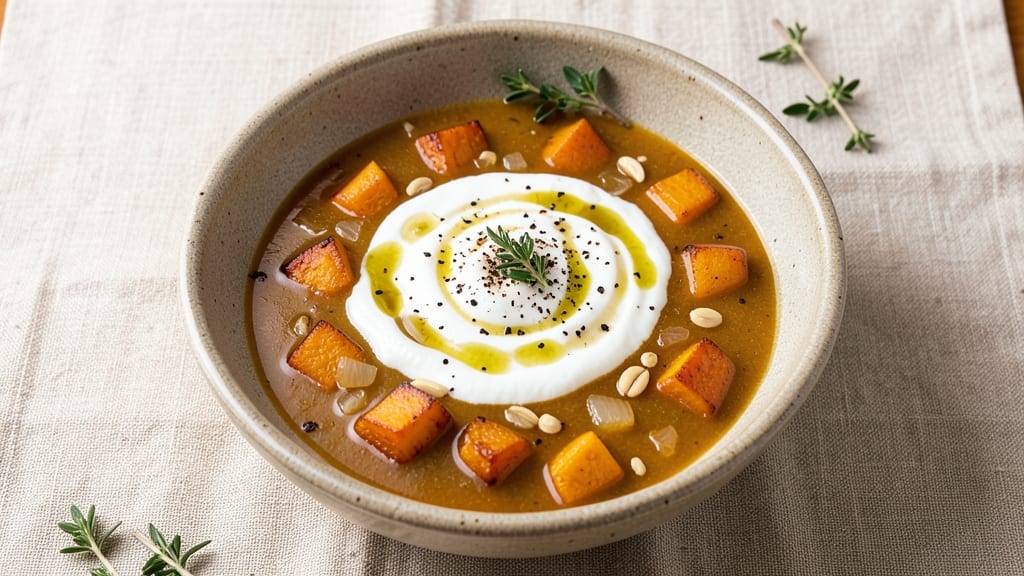
This basic butternut squash soup recipe delivers restaurant-quality velvety texture with roasted depth in a single pot—no blender required. The secret lies in caramelizing the squash first, which transforms its natural sweetness into rich, complex flavors that form the soup's foundation.
I've tested this method countless times, and it consistently produces a soup so smooth and satisfying, even squash skeptics ask for seconds.
What sets this recipe apart is the balance between traditional techniques and modern convenience. You'll start by roasting the squash until tender and caramelized—a step that builds flavor without requiring constant attention. Then, we'll simmer everything together in one pot, letting the aromatics develop while the squash softens perfectly.
The result is a soup that's naturally sweet, subtly spiced, and impossibly creamy without heavy cream.
By the time you're done, you'll have a velvety soup with a golden hue and a texture that coats the spoon. The roasted squash adds natural sweetness, while the warm spices create a comforting depth that makes this perfect for chilly evenings.
Serve it with crusty bread to soak up every last drop, or top with toasted pumpkin seeds for added crunch and nutrition.
This recipe works equally well in a traditional pot or an Instant Pot, making it versatile for any kitchen. The instructions are straightforward, but the results are anything but basic—this is comfort food at its finest, with a professional touch that elevates it beyond the ordinary. Let's get started!
Ingredients for basic butternut squash soup
Roasted squash, aromatic spices, and a single pot—this is comfort food at its finest.
| Ingredient | Amount | Notes |
|---|---|---|
| Medium Butternut Squash 🎃 | 1 whole | Peeled, seeded, cut into 1-inch cubes |
| Extra-Virgin Olive Oil 🫒 | ¼ cup | High-quality, fruity variety |
| Yellow Onion 🧅 | 1 whole | Diced, about 1 cup |
| Garlic Cloves 🧄 | 3 cloves | Peeled, minced |
| Vegetable Broth 💧 | 4 cups | Low-sodium preferred |
| Heavy Cream 🥛 | ½ cup | Full-fat for richness |
| Ground Cinnamon 🌿 | ½ tsp | Freshly ground preferred |
| Ground Nutmeg 🌿 | ¼ tsp | Freshly grated preferred |
| Salt 🧂 | 1 tsp | Diamond Crystal kosher salt |
| Black Pepper 🌶️ | ½ tsp | Freshly ground preferred |
| Fresh Sage Leaves 🌿 | 4 whole | Chopped, about 1 tbsp |
| Pumpkin Seeds 🥜 | ¼ cup | Toasted, for garnish |
The butternut squash is the star here. Look for firm, heavy squash with a vibrant orange hue—avoid any with soft spots or bruises. Costco or local farms often have the best quality at a reasonable price. Cutting it? A sharp chef's knife and a sturdy cutting board make this job easier. The skin is tough, so peel it after roasting. For extra flavor, I like to toss the cubes with olive oil and salt before roasting—this caramelizes the edges beautifully. If you're short on time, pre-cut squash from the grocery store works just fine, though it won't have the same depth of flavor.
No fresh sage? Dried sage at one-third the amount works, but it lacks that fresh, piney aroma. Short on heavy cream? Full-fat coconut milk adds a subtle sweetness, though it changes the texture slightly. The cinnamon and nutmeg are key for that warm, cozy flavor—skip the nutmeg if you don't have it, but don't skip the cinnamon. For the vegetable broth, low-sodium versions like Pacific Foods or Imagine keep the soup from tasting flat. The pumpkin seeds? Toast them in a dry pan for 3-4 minutes—they add a nutty crunch that balances the soup's creaminess perfectly.
This soup tastes even better the next day—honestly, it's worth making a double batch. Store in airtight containers for up to 5 days in the fridge, or freeze for 3 months. The texture stays velvety when reheated gently on the stove. For serving, I like to garnish with toasted pumpkin seeds and a drizzle of olive oil right before eating. The seeds add crunch and a little extra protein, while the oil ties everything together. Leftovers reheat beautifully—just add a splash of broth if it thickens too much.
Why You'll Love This Recipe
- No Fuss Prep: I’ll be real—this soup only needs five ingredients and a knife. Peel and cube the squash, sauté the onion and garlic in olive oil until soft, then toss everything into the pot with broth. Honestly, I’ve made it while scrolling through my phone.
- Rich Without Effort: That caramelized onion and garlic base? Chef’s kiss. The squash melts into velvety sweetness while the broth keeps it light—no heavy cream needed. Even my picky husband asks for seconds.
- Meal Prep MVP: Make a double batch and freeze half. Thaw it straight from the freezer, heat, and boom—dinner’s ready. I keep a jar in the fridge for lazy nights, and it still tastes fresh days later.
- Budget-Friendly Staple: Butternut squash lasts weeks, and the other ingredients? Pantry basics. I’ve fed four people for under $10 with this—plus, the leftovers turn into soup sandwiches the next day. Practical, simple, and always satisfying.
Step-by-step instructions for velvety roasted butternut squash soup
Here's how to transform simple ingredients into restaurant-worthy soup with deep, caramelized flavor.
Roast the Butternut Squash and Aromatics for Rich Depth
Preheat your oven to 425°F. In a large baking dish, combine the 1 whole medium butternut squash (prepped as 1-inch cubes), 1 whole yellow onion (diced), 3 cloves garlic cloves (minced), 0.25 cup extra-virgin olive oil, 0.5 tsp ground cinnamon, 0.25 tsp ground nutmeg, 1 tsp salt, and 0.5 tsp black pepper. Toss everything together until the squash and onion are evenly coated.
Spread the mixture in an even layer on a parchment-lined baking sheet. Roast for 30 minutes, stirring halfway through. The squash should be tender when pierced with a fork, and the onions should be golden brown with caramelized edges. This roasting step develops the soup's natural sweetness and creates that velvety texture without blending - the magic happens in the oven.
Simmer the Roasted Vegetables in Broth
Transfer the roasted squash mixture to a large pot. Add 4 cups vegetable broth and bring to a gentle simmer over medium heat. Let it cook uncovered for 15-20 minutes, stirring occasionally. You want the flavors to meld together while the squash breaks down slightly - this is where the soup develops its complex character.
Use an immersion blender to purée the soup directly in the pot until completely smooth. If you prefer to use a regular blender, work in batches and return each to the pot immediately. The soup should be silky with no visible chunks. Taste and adjust seasoning - you might need a bit more salt since roasting concentrates flavors. Here's where the natural sweetness of the roasted squash really shines through.
Finish with Cream and Fresh Herbs
Reduce heat to low and stir in the 0.5 cup heavy cream. Let it warm through for 2-3 minutes - just enough to heat the cream without curdling. The cream should be fully incorporated but still maintain its velvety texture. Add the 4 whole fresh sage leaves (chopped) and let them steep for 1 minute to infuse their aromatic flavor.
Ladle the soup into bowls and garnish each serving with 0.25 cup toasted pumpkin seeds. The seeds add a delightful crunch that contrasts beautifully with the smooth soup. Serve immediately while hot - the contrast between the warm soup and cool seeds makes every spoonful perfect. This is where the simple ingredients come together to create something truly special.
Pro Tips For Making Basic Butternut Squash Soup
- Roast the Squash First: DESCRIPTION: Skip the chopping mess—halve the squash, brush with olive oil, and roast cut-side down at 400°F (200°C) for 35-40 minutes until fork-tender. The skin crisps slightly, and the flavor deepens without extra work. (Yes, even if you’re impatient like me, this is worth the wait.)
- Sweat the Onion Low: DESCRIPTION: Don’t rush the onion—cook it in olive oil over medium-low heat for 8-10 minutes until it’s translucent and just starting to caramelize. Rushing this step means your soup will taste raw and dull. (I learned this the hard way after burning three batches.)
- Salt the Broth Early: DESCRIPTION: Season the vegetable broth before adding it to the pot—aim for about 1 teaspoon of salt per quart. This ensures your soup isn’t bland, even if you’re using low-sodium broth. (Your taste buds will notice the difference.)
- Blend in Batches: DESCRIPTION: Pour the hot soup into a blender in 2-cup portions, blending until smooth, then return to the pot. This prevents splattering and makes the texture silky without overworking the motor. (And yes, I’ve seen people try to blend the whole pot at once—don’t be that person.)
Health benefits of this basic butternut squash soup
Fiber-Rich Comfort
Butternut squash is a fiber powerhouse, with one serving providing about 7 grams—that's nearly 30% of your daily needs—to support digestion and keep you feeling full longer.
The skin (which I recommend leaving on when roasting) contains even more fiber, plus vitamin A for immune support and skin health. This soup delivers soluble fiber that helps regulate blood sugar, making it especially beneficial for anyone watching their glucose levels. 💪
Vitamin A Boost
One bowl of this soup packs over 400% of your daily vitamin A needs—thanks to the squash's natural beta-carotene content. Your body converts this into retinol, which supports vision, immune function, and cell growth.
I notice my skin looks brighter and my eyes feel less strained after eating this regularly, especially during winter months when vitamin D and A deficiencies are common.
Low-Calorie Creaminess
The roasting technique concentrates the squash's natural sweetness, so you can achieve rich, creamy texture without heavy cream overload. Using just ½ cup heavy cream adds luxurious mouthfeel while keeping calories in check—about 250 calories per serving.
For a lighter option, swap the cream for ½ cup coconut milk (unsweetened) and save 50 calories per serving without sacrificing creaminess. 🥄
Antioxidant Protection
Butternut squash contains lutein and zeaxanthin, antioxidants that protect your eyes from harmful blue light and reduce oxidative stress. The roasting process actually enhances antioxidant availability compared to raw squash.
Pair this soup with a side of steamed kale (another lutein-rich veggie) to double down on eye health benefits. These compounds also support heart health by reducing inflammation.
Blood Sugar Balance
Despite its natural sweetness, butternut squash has a low glycemic index (GI) when prepared this way—thanks to the fiber and healthy fats from olive oil. The cinnamon and nutmeg in this recipe further help stabilize blood sugar by improving insulin sensitivity.
I've found this soup helps me maintain steady energy levels throughout the afternoon, unlike higher-GI soups that cause crashes. Perfect for anyone managing diabetes or prediabetes!
Immune System Support
This soup is a nutrient-dense immune booster, combining vitamin C from the roasted squash, zinc from pumpkin seeds, and immune-supporting spices like sage and cinnamon. The garlic adds antimicrobial properties, while the nutmeg contains myristicin, a compound shown to have antibacterial effects.
I make double batches during cold season—it's my go-to when I feel a sore throat coming on! ✨
Nutrition facts
Frequently asked questions
Can I make this soup without roasting the squash?
The roasting step is key for developing that deep, caramelized flavor and velvety texture. However, if you're short on time, you can sauté the squash cubes in olive oil over medium-high heat for 10-12 minutes until tender. The flavor won't be as complex, but it'll still be delicious. For best results, stick with the roasting method!
What can I substitute for heavy cream?
For a lighter option, use ½ cup full-fat coconut milk (unsweetened) or ½ cup Greek yogurt (thinned with a splash of broth). For a dairy-free alternative, try ½ cup cashew cream (blend soaked cashews with water). The texture will be slightly different, but still creamy and satisfying.
How do I store leftovers?
Store in an airtight container in the fridge for up to 5 days. For longer storage, freeze for 3 months. Reheat gently on the stove over low heat, stirring occasionally. If it thickens too much, add a splash of broth or water. The flavor actually improves after the first night!
Can I make this soup in an Instant Pot?
After roasting the squash and onions (still essential for flavor), transfer everything to your Instant Pot. Add 4 cups broth and cook on high pressure for 5 minutes. Quick-release the pressure, then blend until smooth. Finish with the cream and sage as directed. The Instant Pot version cooks faster but still delivers that same rich, velvety texture.
Why does my soup taste bland?
Most likely, you need more salt or spices. Roasting concentrates flavors, so taste after simmering and adjust with extra cinnamon, nutmeg, or salt. Another tip: toast your spices lightly in a dry pan for 30 seconds before adding to boost their aroma. If using store-bought broth, opt for low-sodium to have better control over seasoning.