
Soups & Stews
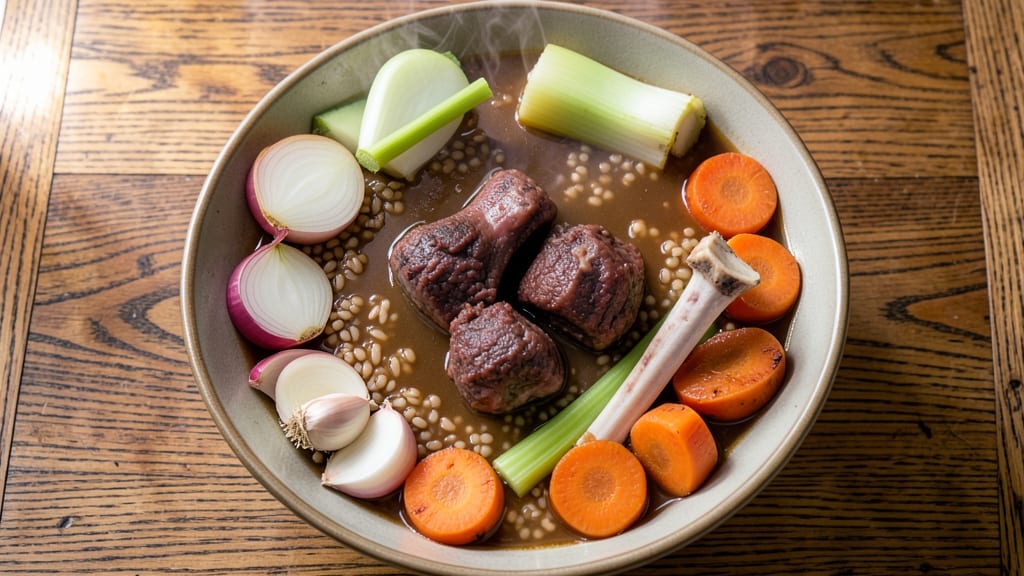
This beef barley soup recipe transforms humble ingredients into a deeply satisfying bowl of slow-simmered comfort—rich with the earthy nuttiness of pearl barley and the deep umami of beef bones.
The secret lies in toasting the barley first to eliminate bitterness, then letting it simmer for hours until tender and infused with flavor. What starts as a simple pot of broth and vegetables becomes a hearty, restaurant-quality meal that warms both body and soul.
The foundation is a robust beef broth built from bones and aromatics, while pearl barley soaks up the savory essence until it reaches perfect tenderness.
Unlike quick soups, this one rewards patience with layers of flavor that develop as it simmers—caramelized onions, tender beef, and vegetables that melt into the broth. The result is a soup that’s both nourishing and deeply satisfying, with a texture that’s creamy without needing heavy cream.
What sets this recipe apart is the balance of techniques: toasting the barley for nuttiness, browning the meat for depth, and simmering low and slow to develop complexity. The broth becomes velvety without reduction, and the barley absorbs just enough of the rich flavors to make every spoonful hearty.
This isn’t just soup—it’s a meal that feels like coming home after a long day.
The beauty of this recipe is its flexibility—adapt it to your schedule with a slow cooker or pressure cooker, or stick to the stovetop for traditional depth. Serve it with crusty bread to soak up every last drop, or pair it with a simple green salad for balance.
Once you taste the difference between this and store-bought, you’ll never go back.
Ingredients for beef barley soup recipe ingredients
Sixteen ingredients. One slow-simmered masterpiece. Beef bones, pearl barley, and aromatics transform into restaurant-quality comfort.
| Ingredient | Amount | Notes |
|---|---|---|
| Beef Bones (Kneecaps or Neck) 🦴 | 4 lb | For rich umami broth |
| Pearl Barley 🌾 | 1 ½ cups | Uncooked, unrinsed |
| Yellow Onions 🧅 | 3 whole | Medium size, peeled |
| Carrots 🥕 | 4 whole | Medium size, peeled |
| Celery Stalks 🌿 | 4 whole | With leaves included |
| Garlic Cloves 🧄 | 6 cloves | Peeled, smashed |
| Tomatoes 🍅 | 2 whole | Roma or vine-ripened |
| Beef Chuck Roast 🥩 | 2 lb | Cut into 1-inch cubes |
| Bay Leaves 🌿 | 2 whole | Fresh preferred |
| Thyme Sprigs 🌿 | 4 whole | Fresh or dried |
| Black Peppercorns 🌶️ | 1 tbsp | Freshly cracked |
| Salt 🧂 | 2 tsp | Kosher or sea salt |
| Olive Oil 🫒 | ½ cup | For toasting barley |
| Fresh Parsley 🌿 | ¼ cup | Chopped, for garnish |
The beef bones are non-negotiable here—they build that deep, velvety broth that sets this soup apart. Look for marrow bones or knuckle bones at your local butcher shop or Costco for the best flavor. If you can't find beef bones, beef marrow bones work too, but they won't give the same depth. The pearl barley needs to be unrinsed—this lets it absorb more flavor as it cooks. I always grab mine from the bulk section at Whole Foods or Trader Joe's—it's cheaper and fresher than the pre-packaged stuff. For the vegetables, organic carrots and celery make a difference in flavor, but conventional will work fine if that's what's available.
No beef bones? Beef bouillon cubes can bridge the gap, but you'll lose that authentic depth. Swap the pearl barley for wild rice or farro if you prefer a different texture. The tomatoes can be canned San Marzano if fresh aren't in season—just drain them well. For the thyme, fresh is ideal, but dried works at one-third the amount. If you're short on time, pre-cut vegetables from the grocery store save prep work, though they won't have the same freshness. The olive oil matters here—use extra-virgin for toasting the barley to bring out its nutty flavors.
This soup tastes even better the next day as flavors meld. Store in an airtight container in the fridge for up to 5 days, or freeze for 3 months in portions. I always make a double batch—one for dinner, one for lunches. The barley thickens as it cools, so add a splash of broth when reheating. For serving, keep the fresh parsley and black pepper handy—always finish with a sprinkle of both for brightness. The broth reduces slightly as it sits, so you might want to add a little water when reheating if it's too thick.
Why You'll Love This Recipe
- No-Chop Needed: I swear by the "mirepoix shortcut"—just toss in whole carrots, celery stalks, and an onion quartered. The bones do all the work simmering flavor into the broth while you stir in the barley later. Honestly, I’ve made this with pre-chopped veggies from the store, but the whole ones taste even richer.
- Rich Without Effort: Those beef kneecaps or neck bones? Pure magic. You brown them once, add water, and walk away. By the time the barley’s tender, the broth is so deep and savory it’ll make you forget about takeout. Between us, I’ve had this soup where the only seasoning was salt—it was still ridiculously good.
- Leftovers That Shine: This soup only gets better the next day. I make a double batch on Sundays because reheating it turns the barley into a perfect, chewy texture. (Yes, even on a Tuesday night.) My kids beg for it—no fancy plating, just hearty bowls that stick to your ribs.
- Budget-Buster Combo: Beef bones are cheap, and barley lasts forever. A single batch feeds four for dinner and two more for lunch the next day. I’ll be real: this is my go-to when grocery money’s tight, but somehow it still feels like a treat. The veggies stretch the flavor, and the bones give you that restaurant-quality depth without the price tag.
Step-by-step instructions for slow-simmered beef barley soup
This method transforms tough bones and barley into a deeply flavorful soup with rich, gelatinous broth.
Toast the Barley and Prepare the Bones
Heat a large Dutch oven over medium heat and add the 0.5 cup olive oil. Once shimmering, add the 1.5 cups pearl barley and toast for 3-4 minutes until lightly golden and fragrant. This step enhances the barley's nutty flavor and prevents it from becoming mushy during cooking.
While the barley toasts, rinse the 4 lb beef bones (kneecaps or neck) under cold water to remove any impurities. Pat them dry with paper towels. Place the bones in the Dutch oven with the toasted barley, add 2 cups water, and bring to a boil. Skim off any foam that rises to the surface using a fine-mesh strainer or spoon. This ensures a clear, clean broth.
Build the Vegetable Base and Brown the Meat
Add the 3 whole yellow onions, 4 whole carrots, and 4 whole celery stalks to the Dutch oven. Chop the vegetables into large chunks to prevent them from breaking down too quickly. Pour in 8 cups water and bring the mixture to a boil again. Reduce heat to medium-low and let it simmer uncovered for 20 minutes until the vegetables begin to soften.
In a separate large skillet, heat 1 tablespoon olive oil over medium-high heat. Add the 2 lb beef chuck roast cut into 1-inch cubes and brown on all sides for 4-5 minutes until deeply colored. This step develops a rich, meaty flavor that will infuse into the soup. Transfer the browned beef to the Dutch oven.
Simmer the Soup for Deep Flavor Development
Add the 6 cloves garlic cloves, 2 whole tomatoes (halved), 2 whole bay leaves, 4 whole thyme sprigs, 1 tablespoon black peppercorns, and 2 teaspoons salt to the Dutch oven. Stir everything together and bring the soup back to a gentle simmer. Cover the pot and let it cook for 2 hours on low heat.
After 2 hours, check the soup for tenderness. The beef should be fork-tender, and the vegetables should be soft but still hold their shape. If the barley isn't tender yet, continue simmering for another 30-45 minutes. The longer it simmers, the more flavorful and gelatinous the broth will become. Real talk: This is where the magic happens—don't rush it.
Finish and Adjust the Seasoning
Once the beef and barley are tender, remove the bay leaves and thyme sprigs from the soup. Taste the broth and adjust the seasoning with additional salt or black pepper if needed. The soup should be rich, savory, and well-balanced. If the soup is too thick, add 1 cup water or broth to reach your desired consistency.
Garnish each serving with 0.25 cup chopped fresh parsley just before serving. This adds a fresh, bright contrast to the deep, hearty flavors of the soup. Serve immediately while hot, and enjoy the satisfying depth of this slow-simmered beef barley soup.
Pro Tips For Making Beef Barley Soup Recipe Ingredients
- Blast the Bones First: Toss your beef bones (kneecaps or neck) in a 450°F oven for 15 minutes before adding to the pot. This caramelizes the surface and pulls out more collagen—your soup’s secret weapon for depth. (Yes, even if you’re impatient like me, wait the full time.)
- Soak Barley for 30 Minutes: Pearl barley swells and softens faster when soaked in cold water for 30 minutes first. Skipping this step means your soup will taste unevenly textured, and you’ll be left with chewy bits. Drain well before adding to the broth.
- Sweat, Don’t Burn Onions: Cook your onions on medium-low heat for 10 minutes until translucent, not golden. Browning them too fast adds bitterness that fights with the rich bone flavor. I learned this the hard way—my first batch tasted like overcooked pot roast.
- Chop Veggies Evenly: Cut carrots and celery into ½-inch pieces, not random chunks. Uniform size ensures they cook at the same rate, so your soup isn’t a mushy mess in some spots and al dente in others. (Use a mandoline if you’re tired of knuckles.)
Health benefits of this beef barley soup recipe ingredients
Protein Powerhouse
This soup delivers high-quality protein from both the beef bones and chuck roast, making it an excellent choice for muscle repair and satiety. A single serving (about 1.5 cups) provides roughly 30-35 grams of protein, which is perfect for post-workout recovery or a hearty lunch.
The slow-cooked beef becomes incredibly tender, making it easy to digest while still packed with flavor. 💪
Fiber-Rich Barley
Pearl barley is the star of this soup when it comes to fiber—1.5 cups dry barley (the amount in this recipe) provides about 18 grams of fiber, which is 72% of your daily needs.
This fiber supports digestion, helps regulate blood sugar, and keeps you full longer than refined grains. The toasting step not only enhances flavor but also preserves more of the barley's natural fiber content compared to boiling it raw.
Immune-Boosting Vegetables
The classic trio of onions, carrots, and celery—often called the "holy trinity" of soups—packs a nutritional punch. These vegetables provide vitamin C (for immune support), vitamin A (for eye health), and antioxidants that reduce inflammation.
The carrots alone contribute about 100% of your daily vitamin A needs per serving, while the onions add quercetin, a compound that may help lower blood pressure.
Bone Broth Benefits
The beef bones create a nutrient-dense broth rich in collagen, gelatin, and minerals like calcium and magnesium. This slow-simmered broth supports joint health, gut healing, and even skin elasticity.
The gelatin from the bones also helps thicken the soup naturally, creating that comforting, velvety texture without added thickeners. It's like getting a nutrient boost with every spoonful! 💫
Herbal Antioxidants
Fresh thyme and bay leaves aren't just for flavor—they're packed with antioxidants and anti-inflammatory compounds. Thyme contains thymol, which has been shown to support respiratory health, while bay leaves provide eugenol, a compound with potential antibacterial properties.
Using fresh herbs maximizes these benefits, though dried versions still contribute flavor and some nutritional value.
Low-Fat, High-Flavor
Unlike many rich soups, beef barley soup is surprisingly low in saturated fat while still being deeply satisfying. The fat comes primarily from the beef and olive oil, but the slow cooking process allows much of it to render out, creating a lighter broth.
This makes it a great option for those watching their fat intake but still craving a hearty, flavorful meal. The broth's richness comes from the umami depth of the bones and vegetables, not just fat. ✨
Nutrition facts
Frequently asked questions
Can I substitute pearl barley with another grain?
Yes! For a nuttier flavor, try farro or wild rice, but adjust cooking time—they absorb liquid differently. If you prefer a creamier texture, use half pearl barley and half ditalini pasta, but reduce simmering time to 45 minutes since pasta cooks faster. The key is maintaining a 1:3 grain-to-liquid ratio to avoid mushiness.
How can I make this soup faster without a pressure cooker?
Use a slow cooker on high for 6-7 hours or low for 8 hours—just skip the initial barley toasting. For stovetop, brown the meat and sauté veggies as directed, then simmer uncovered with less liquid (6 cups instead of 10) for 1.5 hours on medium-high heat. The barley will soften quicker with less water, but add broth later if needed.
Why does my barley turn mushy?
Overcooking or insufficient liquid are the usual culprits. Always toast the barley first to toughen its exterior. If using a slow cooker, add 1 extra cup of broth and check after 5 hours. For stovetop, keep the lid slightly ajar during the last 30 minutes to evaporate excess moisture. Pro tip: Rinse barley only if absolutely necessary—unrinsed barley absorbs more flavor.
Can I make this soup vegetarian?
Replace beef bones with mushroom stems or vegetable bouillon for umami depth. Use firm tofu or tempeh instead of beef chuck, pressing it to remove excess water first. Add 1 tbsp soy sauce or miso paste to compensate for the lost meaty flavor. The barley and bone broth substitutes will still create a hearty, nourishing base.
How do I store and reheat leftovers?
Store in an airtight container for up to 5 days in the fridge or 3 months in the freezer. Reheat gently on the stovetop over medium-low heat with 1/4 cup broth or water to restore thickness. Microwave reheating works but may make the barley gummy—stir in a splash of liquid after microwaving. Never reheat past 165°F to maintain food safety.