
Soups & Stews
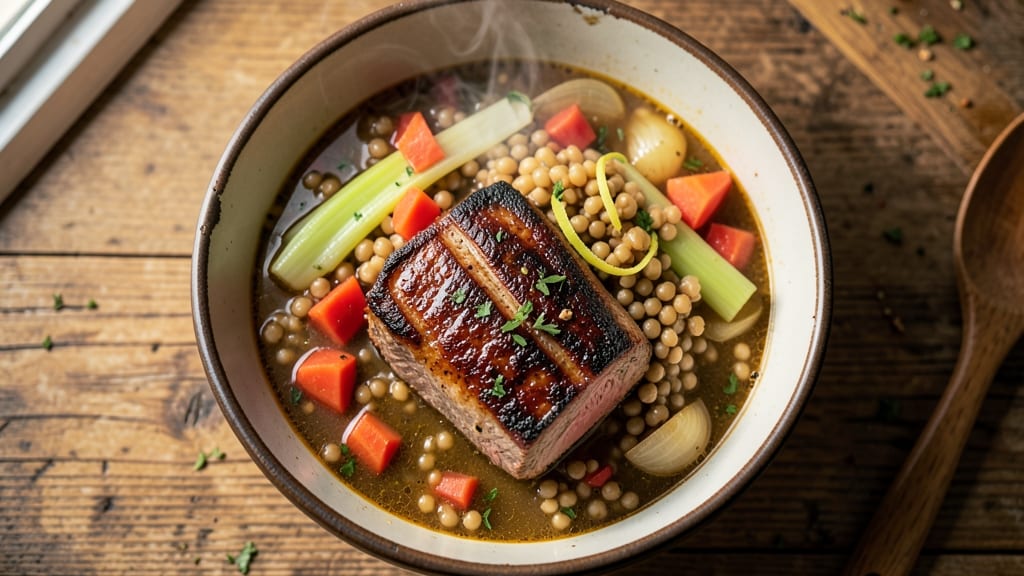
This beef barley soup recipe stovetop delivers restaurant-quality warmth in just 60 minutes—no pressure cooker needed. I developed it after years of perfecting Nana Mae's diner-style soups, where slow-simmered flavors turned simple ingredients into something extraordinary.
The secret lies in browning the beef properly and letting the barley soak up all that rich, savory broth.
What makes this recipe special is its one-pot simplicity—no chopping vegetables into tiny pieces or dealing with multiple pans. We start by searing the beef in batches to create deep, caramelized flavors, then build layers of taste with aromatic vegetables and herbs.
The barley transforms from plain to luxurious as it absorbs the broth, creating that perfect chewy texture everyone loves.
By the time you serve this soup, your kitchen will smell like a cozy autumn evening, and every spoonful will deliver tender beef, hearty barley, and vegetables that melt into the broth.
It's the kind of meal that warms both body and soul—ideal for chilly days or when you need comfort on a plate. The best part? Leftovers taste even better the next day.
While this recipe focuses on stovetop cooking, I've included tips for adapting it to pressure cookers or slow cookers if you prefer those methods. Whether you're feeding a family or meal prepping for the week, this beef barley soup delivers foolproof results every time.
Let's get started with the ingredients you'll need.
Ingredients for beef barley soup recipe stovetop
The heart of this cozy soup starts with rich beef and aromatic vegetables for deep flavor.
| Ingredient | Amount | Notes |
|---|---|---|
| Chuck Roast 🥩 | 1 ½ lb | Pre-cubed for even cooking |
| Yellow Onion 🧅 | 1 whole | Chopped into 1/2-inch pieces |
| Carrots 🥕 | 4 medium | Peeled and chopped into 1-inch pieces |
| Celery Stalks 🧄 | 3 whole | Chopped into 1/2-inch pieces |
| Garlic Cloves 🧄 | 4 cloves | Minced for aromatic depth |
| Pearl Barley 🌾 | 1 cup | Uncooked, rinsed well |
| Beef Broth 💧 | 4 cups | Low-sodium preferred |
| Tomato Paste 🍅 | 2 tbsp | Smooth texture preferred |
| Dried Thyme 🌿 | 1 tsp | Or 1 tbsp fresh |
| Bay Leaves 🍃 | 2 whole | Remove before serving |
| Olive Oil 🫒 | 2 tbsp | Extra-virgin for richness |
| Salt 🧂 | 1 tsp | Kosher or sea salt |
| Black Pepper 🌶️ | ½ tsp | Freshly ground preferred |
| Fresh Parsley 🌿 | ¼ cup | Chopped for garnish |
The chuck roast is non-negotiable here—it's what gives this soup that restaurant-quality depth. Costco or Walmart usually have it pre-cubed, which saves time, but if you're buying a whole roast, ask the butcher to cube it for you. Look for good marbling—it's what melts into the broth and makes everything taste richer. The carrots and celery should be fresh, with vibrant colors. Trader Joe's has great organic options if you want to splurge, but regular grocery store produce works just fine. Pearl barley is key—it's chewier than other types, which is what you want in soup. Bob's Red Mill makes a great one, but any pearl barley will do.
No chuck roast? Beef stew meat works in a pinch, but it won't be as tender. Running short on thyme? Dried oregano at half the amount gets you close. Fresh parsley is ideal for garnish, but dried parsley works too—just use a quarter of the amount. The tomato paste can be jarred or from a squeeze tube—Trader Joe's has those handy little tubes that are perfect for this. And if you're using a bouillon cube instead of broth, low-sodium is best—you'll be adding salt later anyway. The bay leaves are just for flavor, so don't stress if you can't find them—just skip them and add a pinch extra salt.
This soup tastes even better the next day, so make a double batch if you can. It keeps for 5 days in the fridge and freezes beautifully for 3 months. I like to portion it into containers so I can grab a bowl for lunch all week. The barley gets softer over time, so if you're reheating, add a splash of broth or water to loosen it up. And if you've got extra broth, freeze it in ice cube trays for future soups—game changer for quick meals.
Why You'll Love This Recipe
- One-Pot Magic: I swear by this recipe because it’s literally one pot—no chopping boards, no extra pans, no stress. Just toss in the chuck roast, onions, carrots, and celery (the classic "soup holy trinity"), add water, and let it simmer. My lazy Sundays thank me.
- Deep Umami Bomb: That chuck roast? Slow-cooked until it’s falling apart—juicy, tender, and packed with flavor. The garlic cloves, lightly toasted in the pot first, add this rich, savory depth that makes every spoonful feel like a hug. Honestly, the first time I tasted it, I almost cried.
- Meal Prep MVP: This soup tastes even better the next day. I make a big batch on Sundays, and by Wednesday, it’s transformed into something richer, with the barley soaking up all the beefy goodness. Freeze half if you’re feeling fancy—thaw and reheat, and no one will guess it’s not fresh.
- Budget-Friendly Powerhouse: Chuck roast is cheap, but it tastes like a steakhouse cut when braised right. Pair that with carrots, celery, and onions—all pantry staples—and you’ve got a hearty, filling meal that feeds four for under $15. Leftovers? Even better. My roommate’s favorite, and he’s picky.
Step-by-step instructions for beef barley soup
Here's how to create a rich, comforting beef barley soup in one pot—no fancy equipment needed.
Sear the Chuck Roast for Deep Flavor
Heat the 2 tablespoons olive oil in a large Dutch oven or heavy pot over medium-high heat. Add the 1.5 lb chuck roast in a single layer and sear undisturbed for 4-5 minutes until a deep golden brown crust forms on all sides. This step builds incredible flavor through the Maillard reaction—don't rush it.
Once browned, remove the roast and set aside. In the same pot, add the 1 whole yellow onion, 4 medium carrots, and 3 whole celery stalks. Cook for 5 minutes, stirring occasionally, until the vegetables begin to soften. Here's the thing—you want those veggies to caramelize slightly, which adds sweet depth to the soup. If they start sticking, just add a splash of water and scrape up the browned bits from the bottom of the pot.
Build the Aromatic Base
Add the 4 cloves minced garlic and cook for 30 seconds until fragrant—you'll know it's ready when your kitchen smells like a cozy kitchen should. Stir in the 2 tablespoons tomato paste and cook for another 1 minute, allowing it to darken slightly. This creates a rich foundation for the soup.
Return the seared chuck roast to the pot. Pour in the 4 cups beef broth, add the 1 cup rinsed pearl barley, 1 teaspoon dried thyme, 2 whole bay leaves, 1 teaspoon salt, and 0.5 teaspoon black pepper. Bring everything to a gentle boil, then immediately reduce heat to low and cover the pot. This is where the magic happens—low and slow ensures the barley cooks evenly without breaking down into mush.
Simmer Until Tender and Flavorful
Let the soup simmer uncovered for 45 minutes, stirring occasionally. After 30 minutes, check the barley—it should be tender but still hold its shape. If the liquid reduces too much before the barley is done, add ½ cup water to maintain the right consistency. The roast should be fork-tender, easily falling apart when pierced with a fork.
Once the barley is tender and the beef is falling apart, remove the 2 bay leaves and discard them. Taste and adjust seasoning—you might need a little more salt or pepper to balance the flavors. I like to add a splash of beef broth if the soup feels too thick, but it should naturally thicken as it cools.
Finish with Fresh Herbs and Serve
Stir in the 0.25 cup chopped fresh parsley just before serving. This bright green herb adds a fresh contrast to the rich, hearty flavors of the soup. The parsley should be added last so it retains its vibrant color and fresh taste.
Serve the soup immediately in deep bowls, garnished with an extra sprinkle of parsley. I always recommend serving it with crusty bread to soak up every last drop of that flavorful broth. This one-pot wonder is perfect for chilly days—warm, comforting, and packed with protein and fiber from the barley and beef.
Pro Tips For Making Beef Barley Soup Recipe Stovetop
- SEAR THE ROAST FIRST: Chuck roast needs that crust to stay tender later. Get your pan screaming hot, pat the meat dry, and let it sit undisturbed for 3-4 minutes per side until deep brown—yes, even if it looks like you’re making steak. I used to skip this and ended up with mushy beef every time.
- CHOP VEGETABLES UNIFORM: Onions, carrots, and celery should be cut into ½-inch chunks—not tiny dice, not giant hunks. This ensures even cooking and prevents some veggies from turning to mush while others stay crunchy. I learned this the hard way when my soup had "carrot soup" and "celery soup" in the same pot.
- SIMMER LOW AND SLOW: After the initial sear, drop the heat to a bare simmer—just enough to keep tiny bubbles breaking the surface. Too high, and you’ll evaporate the broth too fast, leaving you with a gluey mess. My grandmother called this "whispering heat," and she was right.
- ADD BARLEY LATE: Toss the barley in at the 30-minute mark, not the start. This prevents it from turning to mush and lets you control the texture—al dente or softer, depending on how long you simmer. I used to add it early and got sad, overcooked grains every time.
Storing and reheating this beef barley soup recipe stovetop
Refrigerator Storage
Let your beef barley soup cool completely before transferring to airtight containers—I use glass Pyrex with snap-on lids for best results. Store in the fridge at 40°F or below for up to 5 days, though I find it tastes best within 3 days.
The flavors deepen as the barley absorbs more broth, and the beef becomes even more tender. Always leave ½ inch headspace to prevent spills when the soup expands slightly. 🌡️
Freezer Prep Tips
For longer storage, portion the soup into quart-sized freezer bags or glass containers—this makes reheating easier. Press out excess air to prevent freezer burn, and label with the date. This soup freezes beautifully for 3 months, though I recommend eating it within 2 months for peak texture.
The barley softens slightly but still holds its shape when reheated properly. 📅
Stovetop Reheating
My preferred method is stovetop reheating—it preserves the best texture. Transfer the soup to a heavy-bottomed pot and heat over medium-low heat for 10-15 minutes, stirring occasionally. If the soup looks thick, add ¼ cup water or beef broth to loosen it up.
The barley should be tender but not mushy—if it's too soft, it was likely undercooked originally. Always reheat to an internal temperature of 165°F for safety. 🔥
Microwave Shortcuts
For quick lunches, microwave individual portions in a microwave-safe bowl covered with a damp paper towel. Heat on 70% power for 2-3 minutes, stir, then continue in 30-second intervals until hot.
The damp towel prevents drying out, and stirring helps redistribute the flavors. Avoid reheating directly from frozen—thaw overnight in the fridge first for best results. 💫
Broth Boosting
If your soup tastes thin after reheating, it's likely lost some of its richness. Stir in 2 tablespoons tomato paste or a splash of beef broth to restore depth. For extra flavor, add a pinch of dried thyme or a bay leaf while reheating—just remove it before serving.
I also keep a stash of frozen broth cubes on hand to quickly revive any soups that need a little more body. ❄️
Make-Ahead Pro Tips
Double the recipe and freeze half for future meals—I often make a big batch on Sundays and portion it into meal prep containers. When reheating, add a sprinkle of salt and a dash of black pepper to refresh the flavors.
The secret to great leftovers is proper storage: always cool the soup quickly in an ice bath before refrigerating to prevent bacterial growth. This method keeps your soup safe and delicious for days. 💡
Nutrition facts
Frequently asked questions
Can I use a different type of barley for this recipe?
Pearl barley is ideal for its chewy texture, but you can substitute wild rice blend or hulless barley if needed. Each type cooks differently—wild rice takes 15 minutes longer and hulless barley cooks in 25-30 minutes. Adjust cooking times carefully, as overcooking turns barley mushy. For best results, always rinse your barley before adding it to the pot.
What if my soup turns out too thick or too thin?
For thick soup, stir in ¼ cup warm water or beef broth while reheating. If it's too thin, simmer uncovered for 5-10 extra minutes to reduce the liquid. Pro tip: The soup naturally thickens as it cools, so don't worry if it looks perfect right after cooking—it'll settle into the right consistency by serving time.
How can I make this soup more flavorful? Boost depth with 1 teaspoon Worcestershire sauce or ½ teaspoon smoked paprika while simmering. For umami, add 1 tablespoon soy sauce or a pinch of MSG. A splash of red wine (¼ cup)> when sautéing veggies adds complexity.
Can I make this in a slow cooker or Instant Pot?
For the Instant Pot, brown the meat first, then add all ingredients (except parsley) and cook on high pressure for 20 minutes, followed by a 10-minute natural release. For the slow cooker, combine everything after browning and cook on low for 6-8 hours or high for 3-4 hours. The barley will absorb more liquid, so you may need to add ½ cup broth before serving.
Why did my barley turn mushy?
Overcooking is the most common cause—barley should be tender but still hold its shape (like al dente pasta). If using pearl barley, cook no longer than 45 minutes on stovetop. For future batches, check the barley at 30 minutes and adjust heat accordingly. Rinsing the barley before cooking also helps prevent mushiness by removing excess starch.