
Soups & Stews
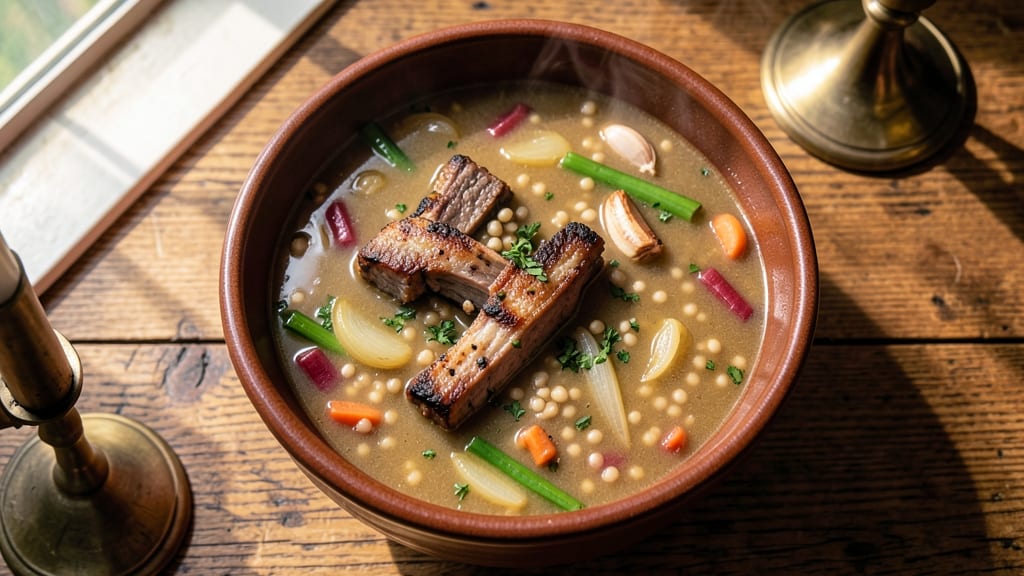
This beef barley soup recipe with prime rib bones delivers restaurant-quality depth in every spoonful, transforming simple ingredients into a hearty, umami-rich masterpiece. The secret lies in roasting prime rib bones until they develop a deep caramelized crust, unlocking layers of flavor that no store-bought broth can match.
What starts as a humble pot of bones and vegetables evolves into a velvety, savory broth that makes this soup feel like a home-cooked hug on a chilly day.
The beauty of this recipe is its simplicity combined with professional results. You'll roast the bones until they're dark and fragrant, then simmer them with aromatic vegetables and barley for hours, allowing all the flavors to meld together.
The prime rib bones infuse the broth with a rich, meaty essence that's impossible to replicate, while the barley adds satisfying texture and earthy notes. This isn't just soup—it's a complete meal that warms both body and soul.
What you'll end up with is a steaming bowl of golden barley soup with tender beef chunks, perfectly cooked vegetables, and a broth so flavorful it practically tastes like it's been simmering all day.
The aroma alone will have everyone gathering around your table, while each bite delivers that perfect balance of savory, sweet, and umami. This is the kind of comfort food that becomes a family tradition, passed down through generations.
The best part? This recipe makes enough for leftovers—because the flavors only get better as they sit. Serve it with crusty bread to soak up every last drop of that precious broth. Let's create this soul-warming masterpiece that will become your new signature dish.
Ingredients for beef barley soup recipe with prime rib bones
Prime rib bones and aromatic vegetables create the soulful foundation for this restaurant-worthy beef barley soup.
| Ingredient | Amount | Notes |
|---|---|---|
| Prime Rib Bones 🦴 | 3 lb | With meat still attached, cut into 2-inch pieces |
| Yellow Onions 🧅 | 2 whole | Medium size, cut into wedges |
| Carrots 🥕 | 4 whole | Medium size, peeled, cut into chunks |
| Celery Stalks 🌿 | 4 whole | Cut into 1-inch pieces |
| Garlic Cloves 🧄 | 8 cloves | Peeled, smashed slightly |
| Pearl Barley 🌾 | 1 ½ cups | Uncooked, rinsed well |
| Tomatoes 🍅 | 3 whole | Roma or vine-ripened, crushed |
| Beef Broth 💧 | 8 cups | Homemade or high-quality store-bought |
| Red Wine 🍷 | 1 cup | Dry, bold variety like Cabernet Sauvignon |
| Tomato Paste 🍅 | 2 tbsp | Smooth, not chunky |
| Fresh Thyme 🌿 | 2 sprigs | Or 1 tsp dried thyme |
| Fresh Parsley 🌿 | ¼ cup | Chopped, for garnish |
| Bay Leaves 🌿 | 2 whole | Dried, removed before serving |
| Salt 🧂 | 2 tsp | Kosher or sea salt, adjust to taste |
| Black Peppercorns 🌶️ | 1 tsp | Freshly cracked |
| Olive Oil 🫒 | 2 tbsp | Extra-virgin for roasting bones |
The prime rib bones are non-negotiable for that deep, meaty essence. Look for bones with good meat still attached—ask your butcher for prime rib ends or chuck bones if prime rib isn't available. Costco or high-end grocery stores like Whole Foods often carry them in the meat department. If you can't find them fresh, frozen works too—just thaw overnight in the fridge. The key is roasting them until they're dark and caramelized, which unlocks maximum flavor. For the barley, Bob's Red Mill or Pearl Barley from bulk bins are ideal—just make sure it's rinsed well before cooking to remove any dust.
No red wine? Dry sherry or beef broth with a splash of balsamic works in a pinch. Fresh thyme is best, but dried at one-third the amount gets you close. The tomato paste can be swapped for 1 cup crushed tomatoes, though it'll be slightly less concentrated. For the vegetables, don't stress about perfect cuts—roughly chopped works fine. If you're short on time, pre-cut frozen vegetables (like carrots and celery mixes) save steps. The bay leaves should be removed before serving, but don't skip them—they add subtle earthy depth that's hard to replicate.
This soup tastes even better the next day, so make a big batch—it reheats beautifully. Store leftovers in airtight containers in the fridge for up to 5 days or freeze for 3 months. For serving, I like to keep a small jar of the fresh parsley nearby to sprinkle on top right before eating. The barley softens as it sits, so if you're serving it immediately, you can reduce the cooking time slightly. The broth will thicken as it cools, so add a splash of water if it's too thick when reheating.
Why You'll Love This Recipe
- No-Chop Nightmare: I swear, the only knife work here is dicing onions—one onion—and even then, you can cry a little. The carrots and celery? Just rough chop, throw in, forget about it. The prime rib bones do all the heavy lifting while you sip wine and pretend you’re a chef.
- Rich Like Sunday: That first sip of broth? Chef’s kiss. The prime rib bones melt into the pot, turning water into liquid gold with just a splash of soy sauce and a bay leaf. The garlic? Oh, it’s there—layered in a way that makes you want to close your eyes and sigh.
- Leftovers That Lie: Between us, this soup tastes better the next day. Honestly, I make it on Sundays just to have it for lunch all week. Freeze half? Even better. Reheat it, and suddenly you’re hosting a dinner party without the stress.
- Budget Bone Magic: Prime rib bones might sound fancy, but they’re the secret weapon for stretching a meal. A single pound of bones feeds four, and the flavor? It makes cheap barley feel like a five-star side dish. My wallet and my taste buds thank me every time.
Step-by-step instructions for beef barley soup with prime rib bones
Here's how to transform prime rib bones into rich, flavorful broth while building a hearty soup.
Roast the Prime Rib Bones for Deep Flavor
Preheat your oven to 425°F and line a baking sheet with aluminum foil. Place the 3 lb prime rib bones on the sheet, meat-side up, and rub them generously with 2 tbsp olive oil. This creates a protective barrier that prevents drying while promoting browning.
Roast the bones for 25-30 minutes, turning them halfway through, until they develop a deep golden-brown crust. The aroma filling your kitchen signals the Maillard reaction is working—this is where all the rich, meaty flavors develop. Remove the bones and set them aside temporarily.
Build the Soup Base with Aromatics and Wine
In a large Dutch oven or heavy pot, heat the roasted bones over medium heat until they sizzle. Add the 2 whole yellow onions cut into wedges, 4 whole carrots in chunks, 4 whole celery stalks in 1-inch pieces, and the 8 cloves smashed garlic. Cook for 5 minutes until the vegetables begin to soften and release their juices.
Deglaze the pot with the 1 cup red wine, scraping up all the browned bits from the bottom. This step captures all the concentrated flavors that would otherwise burn. Let the wine simmer for 2-3 minutes until it reduces by half, intensifying its flavor profile.
Simmer the Broth with Barley and Vegetables
Add the 8 cups beef broth, 2 tbsp tomato paste, 2 sprigs fresh thyme, 2 whole bay leaves, and bring everything to a boil. Once boiling, reduce heat to low-medium and add the 3 whole crushed tomatoes and 1.5 cups rinsed pearl barley. Stir gently to combine.
Return the roasted prime rib bones to the pot. Cover and let it simmer for 1.5 hours, stirring occasionally. The barley should absorb the liquid and become tender, while the bones will continue to infuse the broth with their rich, gelatinous essence. You'll know it's ready when the barley is al dente and the bones can be easily separated from the meat.
Season and Finish the Soup
Remove the prime rib bones and discard them. Using a slotted spoon, transfer the cooked vegetables to a plate, leaving the broth and barley in the pot. Add 2 tsp salt and 1 tsp cracked black peppercorns, stirring well to season the soup. Taste and adjust the seasoning if needed—this is where you can fine-tune the balance of flavors.
Return the vegetables to the pot and simmer for an additional 10 minutes to allow all the flavors to meld together. The soup should be rich, hearty, and deeply flavorful. Ladle into bowls and garnish with 0.25 cup chopped fresh parsley just before serving.
Pro Tips For Making Beef Barley Soup Recipe With Prime Rib Bones
- Char the Bones First: I used to skip this step, thinking it was unnecessary—big mistake. Get those prime rib bones screaming hot in a dry pot for 5-7 minutes until they’re blackened in spots. This unlocks deep, caramelized flavors that turn your broth from good to "holy cow, why didn’t I do this sooner?"
- Slice Onions Paper-Thin: Yes, even if it feels tedious. Thinly sliced yellow onions (almost translucent) melt into the soup instead of sitting as chunks. Use a sharp knife and take your time—this isn’t the part where you rush. Trust me, your soup will thank you with silkiness.
- Don’t Crowd the Pot: I learned this after my first batch turned murky. When adding veggies (carrots, celery, onions), leave space between them. Overpacking steams instead of browning, and that’s when your soup starts tasting like sad, watery stew. Give them room to crisp.
- Deglaze with Red Wine: After charring the bones, hit them with ½ cup red wine (like Cabernet) and scrape like your life depends on it. The wine cuts through the fat, adds richness, and gives the broth a complexity that plain water or stock can’t match. (Yes, even if you’re not a wine drinker.)
Storing and reheating your leftovers
Refrigerator Storage
Let your beef barley soup cool to room temperature (about 30 minutes) before transferring it to airtight containers. I use glass Pyrex containers with snap-on lids—they keep the soup fresh and make reheating easier.
Store in the fridge at 40°F or below for up to 5 days, though the flavors actually deepen overnight. The barley continues to absorb the rich broth, creating an even more satisfying texture. 🥣
Freezer Preparation
For longer storage, portion the soup into quart-sized freezer bags or airtight containers, leaving 1 inch of headspace for expansion. I like to use heavy-duty freezer bags from Reynolds because they lay flat and save space.
Label with the date—this soup stays delicious for up to 3 months without losing its velvety texture or deep umami flavor. 🧊
Stovetop Reheating
My preferred method is reheating on the stovetop to maintain the soup's perfect consistency. Transfer the desired portion to a pot and heat over medium-low heat for 10-15 minutes, stirring occasionally.
If the soup thickens too much, add 2-3 tablespoons of water or beef broth to restore its original texture. Taste and adjust seasoning—it often needs a pinch more salt after reheating. 🔥
Microwave Method
For quick reheating, transfer the soup to a microwave-safe bowl and cover loosely with a microwave-safe lid or damp paper towel. Heat on 70% power in 2-minute intervals, stirring between each interval, until reaching 165°F internal temperature.
This gentle approach prevents the barley from becoming mushy while keeping the broth luscious. 💫
Reviving Leftovers
If your soup seems too thick after storage, simply add ¼ cup water or broth and simmer for 5 minutes to restore its original consistency. For extra richness, stir in 1 teaspoon butter or a splash of red wine before serving.
The prime rib-infused broth will always taste better the second time around—it's one of my favorite parts of this recipe! 💛
Freezing Tips
When ready to enjoy your frozen soup, thaw it overnight in the refrigerator. For faster thawing, place the sealed container in a bowl of cold water (change the water every 30 minutes).
Once thawed, reheat using either the stovetop or microwave method. The texture might be slightly softer after freezing, but the deep, meaty flavor remains intact—just like a cozy winter memory. ❄️
Nutrition facts
Frequently asked questions
Can I substitute prime rib bones with other beef bones?
Yes, but the flavor will differ. For best results, use beef chuck bones or marrow bones—they're rich in marrow and collagen, which create that velvety texture. Short ribs work too, though they're more fatty. Avoid lean bones like shank—they won't infuse as much flavor. If you must use chicken or pork bones, reduce simmering time to 1 hour to prevent toughness.
Why does my barley soup taste bland after simmering?
Bland soup usually means insufficient seasoning or flavor extraction. First, ensure you roasted the bones until deeply browned—this builds flavor. Taste the broth before adding salt; it should be rich and savory. If still flat, add a splash of red wine or a pinch of MSG (just ¼ tsp) to boost umami. Simmer uncovered for 10 extra minutes to concentrate flavors.
How do I prevent the barley from turning mushy?
Overcooking is the enemy! Start with al dente barley (cook time should be 1.5 hours total). If using pre-cooked barley, reduce simmering time to 1 hour. For extra insurance, drain and rinse the barley before adding it to the pot. If it still feels soft, stir in 2 tbsp cold water and simmer 5 minutes more—this firms it up.
Can I make this soup in a slow cooker?
Absolutely—it's perfect for hands-off cooking! Brown the bones and vegetables first, then transfer everything to your slow cooker. Use the low setting for 8 hours or high for 5 hours. Add the barley during the last 1.5 hours to prevent overcooking. The slow cooker's gentle heat extracts flavors beautifully, making the broth even more velvety.
What's the best way to serve this soup?
This soup is a complete meal! Serve it piping hot in deep bowls with a sprinkle of fresh parsley and a dollop of crème fraîche or sour cream. Pair with crusty sourdough bread or crusty garlic rolls for dipping. For extra richness, top with crispy fried shallots or a swirl of butter. The prime rib broth makes it hearty enough to stand alone.