
Soups & Stews
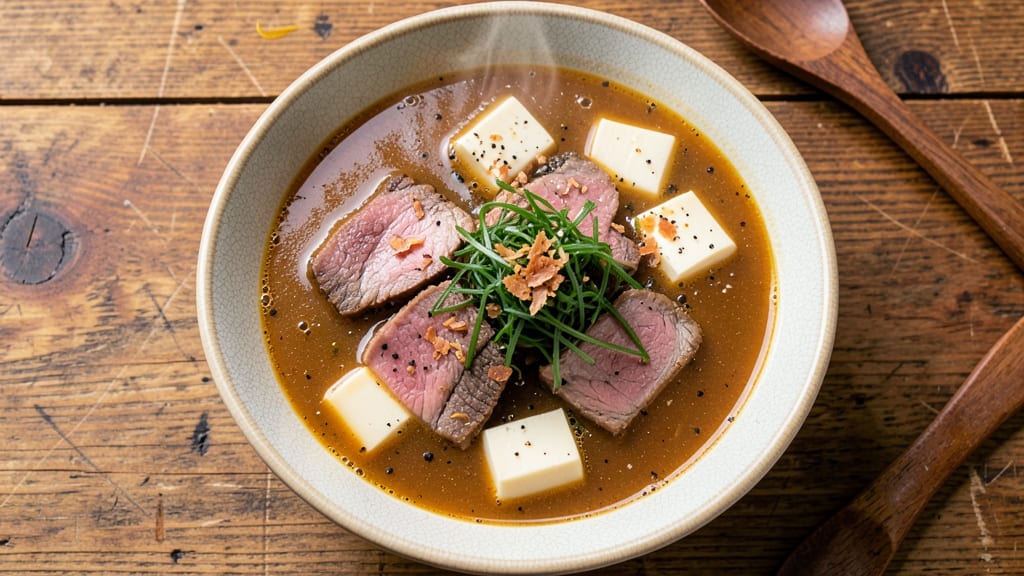
This beef miso soup recipe delivers the perfect balance of rich umami and comforting warmth in every bowl. 💛 The secret lies in a deeply flavorful dashi broth, silky tofu, and the earthy depth of wakame seaweed—all coming together through precise simmering techniques that develop complex layers of flavor without overpowering the ingredients.
What sets this recipe apart is the attention to traditional methods while offering practical shortcuts. We'll build the broth from scratch using kombu and bonito flakes for authentic depth, but store-bought dashi works beautifully for those short on time.
The beef gets seared first to lock in juices, while the tofu and wakame absorb the broth's flavors during gentle simmering.
By the time you serve this soup, you'll have a velvety broth infused with umami richness, tender beef slices, delicate tofu, and chewy wakame strands. Each spoonful delivers that perfect harmony of savory, slightly sweet, and briny notes that define great miso soup.
The aroma alone will have everyone gathering at the table.
This recipe serves four and comes together in about 45 minutes—ideal for a quick weeknight dinner or a comforting meal when you need something nourishing. The technique is straightforward but yields restaurant-quality results, making it perfect for both beginners and experienced cooks looking to elevate their miso soup game.
Ingredients for beef miso soup
Umami-packed ingredients that transform into velvety, restaurant-quality beef miso soup.
| Ingredient | Amount | Notes |
|---|---|---|
| Kombu Seaweed 🍃 | 1 piece | Dried, 4x6 inches |
| Bonito Flakes 🐟 | ¼ cup | Dried, high quality |
| Red Miso Paste 🍶 | ½ cup | Aged, smooth texture |
| Thinly Sliced Beef 🥩 | 1 lb | Sirloin or ribeye preferred |
| Silken Tofu 🍲 | 12 oz | Soft, unpressed block |
| Dried Wakame Seaweed 🍃 | 2 oz | Rehydrated before use |
| Green Onions 🧅 | ¼ cup | Thinly sliced, green parts only |
| Sesame Oil 🫒 | 1 tbsp | Toasted, for finishing |
| White Miso Paste 🍶 | ¼ cup | For tofu seasoning |
| Soy Sauce 🍶 | ¼ cup | Light or regular |
| Sake 🍶 | ½ cup | Dry, for broth depth |
| Dried Shiitake Mushrooms 🍄 | 4 whole | Rehydrated for broth |
| Neutral Oil 🫒 | 1 tbsp | For searing beef |
| Sesame Seeds 🌾 | 1 tsp | Toasted, for garnish |
The kombu and bonito flakes are your umami powerhouses—look for high-quality dried kombu (no slimy spots) and bonito flakes that smell nutty, not fishy. Asian markets have the best selection, but the grocery store dried seaweed section works too. For the beef, sirloin or ribeye slices thinly against the grain for tender bites. If you're using store-bought dashi, check the sodium content—some brands are shockingly salty. The miso paste? Red miso gives that deep, almost sweet-savory flavor, while white miso keeps things lighter. Grab a small tub of each—you'll want them for other dishes too.
No kombu? Dried nori sheets work in a pinch (crush them up), though the flavor won't be identical. Short on bonito? Dried shiitake mushrooms add earthy depth—just soak them first. The tofu needs to be silken, not firm—no substitutes here. For the wakame, rehydrate it in cold water for 10 minutes before adding to the soup. The dried shiitakes? Toss the soaking liquid too—it's packed with flavor. And if you're worried about sodium, reduce the soy sauce to 2 tbsp and add a splash of water instead.
Store the dried kombu and bonito flakes in an airtight container for up to 6 months—they'll keep indefinitely if frozen. Rehydrated wakame lasts 5 days in the fridge, so make extra for salads or wraps. The miso paste? Once opened, it's good for 3 months in the fridge, but I freeze mine in ice cube trays for single-use portions. Leftover soup tastes even better the next day—the flavors meld overnight. Portion it into containers for quick lunches, or freeze for up to 3 months. Just remember: never boil miso soup—simmer gently to preserve those delicate flavors.
Why You'll Love This Recipe
- No-Chop Necessary: I swear by this one—just slice that beef paper-thin (or grab pre-sliced if you’re really lazy) and toss it in. The kombu does all the work breaking down the broth while you sip your coffee.
- Umami Bomb: That red miso paste? It’s the MVP. Rich, salty, with a depth that makes you lean in closer—especially when you add the bonito flakes for that instant ocean-y punch. The tofu soaks up every last bit like a flavor sponge.
- Weeknight to Date Night: Same recipe, different vibes. Throw it together for a 15-minute lunch or let it simmer for hours as a cozy dinner. Add a splash of sake for fancy points, or keep it simple for a no-fuss weeknight staple.
- Leftovers That Don’t Suck: Honestly, this soup tastes better the next day. The flavors meld like old friends, and it reheats in minutes. Freeze half for those days when you’d rather microwave than cook—no guilt, just comfort.
Step-by-step instructions for beef miso soup
Here's how to create a rich, umami-packed broth that balances silky tofu and tender beef.
🔥 Step 1: Create the Umami-Packed Broth Base
In a large pot, add the 1 piece Kombu Seaweed and cover it with 8 cups water. Bring to a boil over medium-high heat, then reduce to a simmer for 10 minutes. This draws out the deep, oceanic flavors from the kombu—don't skip this step, it's the soul of your soup!
While the kombu simmers, rehydrate the 2 oz Dried Wakame Seaweed and 4 whole Dried Shiitake Mushrooms separately in small bowls of hot water for 15 minutes. Then drain, reserving the soaking liquid. Add both mushrooms and wakame to the kombu broth along with the 0.5 cup Sake and 0.25 cup Soy Sauce. Simmer for another 10 minutes—you'll see the broth develop that gorgeous golden color and rich aroma.
🍳 Step 2: Build Complexity with Miso and Bonito
In a small saucepan, gently heat 0.5 cup Red Miso Paste with 1 cup water over low heat until fully dissolved—this prevents the miso from developing bitter flavors. Stir in 0.25 cup Bonito Flakes and let them sizzle for 1-2 minutes until they puff up and turn golden. This creates a concentrated umami paste that will transform your broth.
Remove from heat and whisk this miso-bonito mixture into your simmering kombu broth. The broth should take on a deeper color and more intense aroma. Taste and adjust seasoning with a pinch more soy sauce if needed—this is where you balance all those rich flavors.
🥘 Step 3: Sear the Beef for Maximum Flavor
Heat 1 tbsp Neutral Oil in a separate skillet over high heat. Working in batches if needed, sear the 1 lb Thinly Sliced Beef for 1-2 minutes per side until deeply browned. This quick searing locks in juices and creates those beautiful caramelized bits that will dissolve into your broth, adding incredible depth.
As the beef cooks, prepare the tofu by cutting the 12 oz Silken Tofu into ½-inch cubes and mixing them with 0.25 cup White Miso Paste, 1 tbsp Sesame Oil, and a pinch of salt. Let this marinate while you finish cooking the beef.
⏰ Step 4: Combine and Simmer to Perfection
Add the seared beef to the simmering broth and cook for 5-7 minutes until just cooked through. Then gently add the marinated tofu cubes and simmer together for 3-4 minutes—just enough to warm through without breaking down the tofu's delicate texture. The broth should be hot but not boiling to preserve all those flavors you've built.
Stir in the 0.25 cup Green Onions just before serving. The bright green color and fresh flavor cut through the richness of the miso and beef. Ladle into bowls and finish each serving with a drizzle of 1 tbsp Sesame Oil and sprinkle of 1 tsp Sesame Seeds for that final aromatic punch.
Pro Tips For Making Beef Miso Soup
- Bloom the Kombu First: Toss a dry kombu sheet into cold water for 10 minutes before simmering—this releases umami without bitterness. I used to ignore this step and wondered why my soup tasted flat; the kombu’s magic happens in the soak.
- Slice Beef Against Grain: Cut the beef paper-thin against the muscle fibers for tender bites that dissolve in broth. I learned this the hard way with chewy strips—now I use a sharp knife and freeze the meat for 20 minutes first to stabilize it.
- Temper the Miso: Mix red miso paste with a splash of hot broth first, then stir into the pot to avoid clumping. After burning a batch of lumpy soup, I realized miso needs gentle coaxing—like waking a sleepy cat.
- Add Tofu Last: Drop silken tofu cubes into the finished soup to keep them silky, not soggy. I used to add it early and ended up with a watery mess—now I let the broth cool slightly first, too.
Serving suggestions for this beef miso soup
Bowl Presentation
Serve this beef miso soup in deep, wide bowls to showcase the rich broth and delicate ingredients. I love using ceramic bowls with slightly sloped sides—they make ladling easier and keep everything contained.
For an extra touch, place a small handwritten note on the table saying "Miso Magic" to set the cozy mood. 💛
Arrange the seared beef slices in a loose cluster at the center of each bowl, letting the silky tofu cubes float naturally around them. The wakame strands should be visible but not overcrowded—think of them as edible garnish that adds texture.
A few green onion threads fanned across the top adds freshness and color contrast.
Garnish Mastery
Finish each bowl with 1 teaspoon toasted sesame seeds and a drizzle of sesame oil—this adds both visual appeal and a nutty aroma that ties all the flavors together. I like to use a small spoon to dot the sesame seeds in a circular pattern for an elegant look.
For an extra layer, sprinkle crushed red pepper flakes if you want a subtle kick.
Fresh shiso leaves (if available) make a stunning garnish—their vibrant green color and citrusy aroma complement the umami perfectly. If shiso isn't accessible, thinly sliced cucumber ribbons work beautifully for a refreshing contrast. Always garnish at the table so the ingredients stay fresh and crisp.
Pairing Perfection
This soup pairs beautifully with steamed jasmine rice—the mild, slightly sweet rice absorbs the rich broth without overpowering it. For a heartier meal, serve with warm miso flatbread or garlic butter noodles on the side. The contrast of textures makes every bite more satisfying. 🍚
For beverages, green tea (especially sencha) enhances the umami flavors without competing. A crisp sake cocktail or even a light dry white wine like Pinot Grigio works wonderfully.
Avoid heavy reds—they can clash with the delicate broth. I often serve this soup with a small matcha latte for a comforting balance.
Make-Ahead Magic
One of my favorite tricks is preparing the broth base ahead of time—it actually tastes better the next day as the flavors meld. Store it in an airtight container in the fridge for up to 3 days or freeze for 3 months.
When reheating, warm gently on the stove over low heat—never microwave, as it can make the broth taste flat. 🔥
For tofu and beef, add them fresh when reheating to maintain texture. If you're prepping for a crowd, assemble everything except the green onions and sesame oil—add those just before serving so the garnishes stay vibrant.
This is perfect for meal prep Sundays or busy weeknights when you want restaurant-quality results with minimal effort.
Nutrition facts
Frequently asked questions
Can I use white miso instead of red miso for this beef soup?
White miso will give your soup a milder, slightly sweeter flavor with less depth. For this beef recipe, red miso is ideal because its aged, earthy notes complement the rich beef and umami broth. If you only have white miso, reduce the amount by 25% and add a pinch of sugar to balance the flavor. The broth will taste lighter but still delicious.
What's the best way to thinly slice beef for this recipe?
Use a sharp chef's knife and slice the beef against the grain for maximum tenderness. Freeze the beef for 30 minutes first to make slicing easier, then cut into ⅛-inch thick slices. For even results, use a meat slicer if available. Never pull the knife toward yourself—always slice away from your body for safety.
How do I fix bitter miso flavor in my soup?
Bitter miso usually means it was heated too quickly or boiled. To fix it, remove the pot from heat immediately and stir in 1 teaspoon sugar or ½ teaspoon honey to balance the bitterness. A splash of rice vinegar (1 teaspoon) also helps brighten the flavor. For next time, always dissolve miso in warm (not hot) water first before adding to the broth.
Can I make this soup vegetarian?
Replace the beef with extra-firm tofu pressed and pan-fried, or use shiitake mushrooms for a meaty texture. Boost umami with an extra ½ cup miso paste or 1 tablespoon soy sauce. The broth will still be rich and satisfying without the beef. For extra protein, add tempeh or edamame as garnishes.
Why did my tofu turn rubbery in the soup?
Rubbery tofu usually means it was overcooked or simmered too long. For silky texture, add tofu cubes to the broth only 3-4 minutes before serving and keep the heat at a gentle simmer (never boiling). Use silken tofu (not firm) and avoid pressing it—this removes too much moisture. If it's already rubbery, serve it as a side with extra sesame oil to mask the texture.