
Soups & Stews
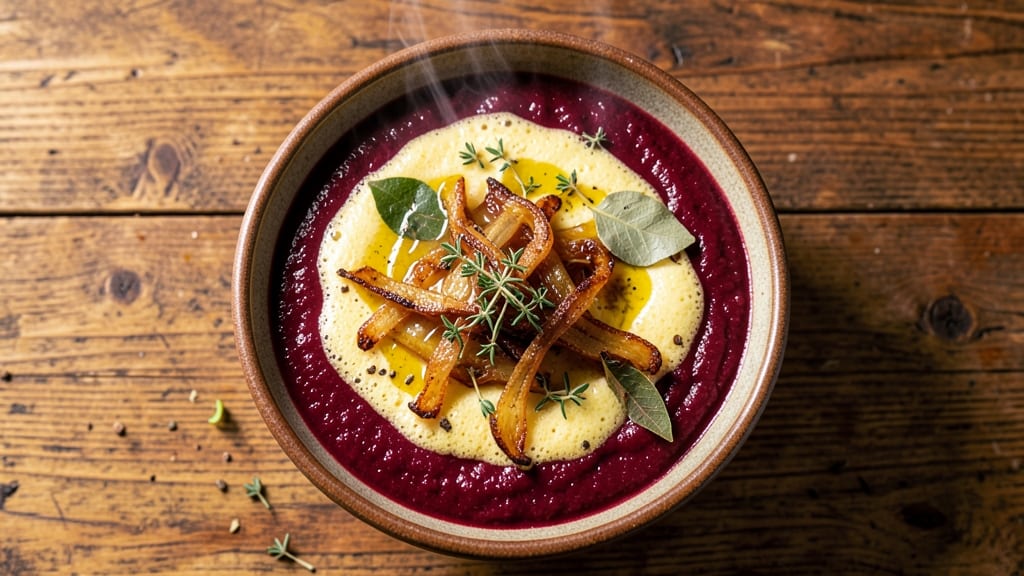
This beetroot and potato soup recipe delivers a velvety, earthy-sweet blend that transforms humble root vegetables into a restaurant-worthy dish. The secret lies in roasting the beets first—this caramelization deepens their natural sweetness while mellowing their earthiness, creating a perfect balance with the creamy potatoes.
Every spoonful offers that satisfying, hearty texture without relying on dairy or animal products.
What sets this soup apart is the two-step cooking process: roasting the beets intensifies their flavor, while simmering the potatoes creates a naturally thick, velvety base.
The result is a soup with rich depth—sweet from the beets, creamy from the potatoes, and subtly spiced with thyme and bay leaf. No heavy cream or butter needed; the vegetables themselves provide all the body and flavor.
By the time you finish blending, you'll have a soup that's smooth yet substantial, with just the right tang from apple cider vinegar to brighten the earthy sweetness. The texture is silky but still satisfyingly hearty, perfect for chilly evenings or as a comforting lunch.
Garnish with fresh dill or a drizzle of olive oil for an extra touch of elegance.
This recipe is vegan-friendly, budget-conscious, and packed with nutrients—ideal for meal prep or serving a crowd. The flavors develop beautifully over time, making it even more delicious the next day. Let's get cooking!
Ingredients for beetroot and potato soup
Roasted beets and waxy potatoes create this velvety, earthy-sweet vegan soup with restaurant-worthy depth.
| Ingredient | Amount | Notes |
|---|---|---|
| Medium Beets 🍠 | 2 lbs | Organic preferred, peeled and cubed |
| Yukon Gold Potatoes 🥔 | 3 lbs | Peeled and quartered, waxy variety |
| Yellow Onion 🧅 | 1 whole | Medium size, diced |
| Fresh Thyme 🌿 | ¼ cup | Stems removed, chopped |
| Bay Leaves 🍃 | 2 whole | Dried or fresh |
| Apple Cider Vinegar 🍎 | 2 tbsp | Raw, unfiltered preferred |
| Vegetable Broth 💧 | 4 cups | Low-sodium preferred |
| Extra-Virgin Olive Oil 🫒 | ½ cup | For roasting and finishing |
| Fresh Dill 🌿 | ⅛ cup | Chopped, for garnish |
| Salt 🧂 | 1 ½ tsp | Diamond Crystal preferred |
| Black Peppercorns 🌶️ | ½ tsp | Freshly cracked |
| Garlic Cloves 🧄 | 4 cloves | Peeled, smashed |
| Coconut Milk 🥥 | ½ cup | Full-fat for creaminess |
The beets are the star—roasting them first brings out their natural sweetness and deepens their flavor. Organic beets from Whole Foods or your local farmers market have the most vibrant color, but any medium beets will work. Look for ones that feel heavy for their size and have smooth, unblemished skin. Yukon Gold potatoes are ideal here—their waxy texture holds up beautifully when simmered. If you can't find them, Russets will work in a pinch, but they'll break down more. For the thyme, fresh is best, but if you're using dried, use about one-third the amount. The bay leaves add subtle earthiness that pairs perfectly with the beets.
No fresh thyme? Dried thyme at one-third the amount works, but it won't have the same bright flavor. Running low on apple cider vinegar? White wine vinegar or lemon juice will give a similar tang. The coconut milk adds creaminess without dairy—if you're avoiding coconut, cashew cream (blended soaked cashews and water) is a great alternative. For the vegetable broth, low-sodium is key—you don't want to overpower the natural flavors of the vegetables. The garlic can be roasted with the beets for a deeper, sweeter flavor—just toss the peeled cloves in the olive oil before roasting. And if you're feeling fancy, smoked sea salt on the garnish adds a nice depth.
This soup tastes even better the next day as the flavors meld together. Store leftovers in an airtight container in the fridge for up to 5 days. For freezing, portion it into containers and it'll keep for 3 months. The roasted beets can be prepped ahead and stored in the fridge for 3 days before simmering. Garnish with fresh dill and a drizzle of olive oil right before serving—it makes all the difference. If you're serving a crowd, double the batch—it reheats beautifully and tastes even richer the second time around.
Why You'll Love This Recipe
- One-Pot Magic: I swear by this recipe when I’m too tired to wash extra dishes—just toss the beets, potatoes, and onion into one pot with thyme and bay leaves, let it simmer, and boom. No strainer, no fuss, just creamy, earthy perfection with zero cleanup.
- Weeknight to Potluck: Between us, this soup is my secret weapon for everything. Need a quick weeknight dinner? Done. Bringing something hearty to a holiday gathering? Done. Even my picky-eater cousin asked for seconds—the thyme and bay leaves add just enough sophistication to make it feel special.
- Budget-Friendly Leftovers: I make a double batch on Sundays because it’s cheap (beets and potatoes stretch forever) and so much better the next day—like, the flavors meld into something even richer. Freeze half, and you’ve got a 5-minute meal when you’re running late. (Yes, even on a Tuesday night.)
Step-by-step instructions for roasted beetroot and potato soup
Here's how to build deep, caramelized flavors that make this soup unforgettable.
Roast the Vegetables for Maximum Flavor
Preheat your oven to 400°F and line two large baking sheets with parchment paper. Toss the 2 lbs medium beets and 3 lbs Yukon Gold potatoes with 0.5 cup extra-virgin olive oil, 1.5 tsp salt, and 0.5 tsp black peppercorns until evenly coated. Spread them in a single layer on the baking sheets.
Roast for 40-45 minutes until the edges are deeply caramelized and the vegetables are tender when pierced with a knife. The beets should develop a rich mahogany color while the potatoes turn golden in spots. This roasting step is what creates that sweet-tangy depth that separates good soup from extraordinary soup.
Build the Base with Aromatics and Vinegar
While the vegetables roast, heat 0.25 cup extra-virgin olive oil in a large Dutch oven over medium heat. Add the 1 whole yellow onion and cook for 8-10 minutes until softened and translucent. Stir in the 4 cloves garlic cloves and 0.25 cup fresh thyme, cooking for another 1 minute until fragrant.
Pour in the 2 tbsp apple cider vinegar and let it simmer for 2 minutes until the acidity mellows slightly. This step balances the sweetness of the roasted vegetables and adds brightness. The vinegar also helps break down any residual starches from the vegetables, creating a smoother soup base.
Combine and Simmer the Soup
Add the roasted vegetables to the Dutch oven along with the 4 cups vegetable broth and 2 whole bay leaves. Bring to a gentle boil, then reduce heat to medium-low and let it simmer for 15-20 minutes until the vegetables are completely tender and the flavors meld together.
Use an immersion blender to purée the soup until smooth, or carefully transfer it to a blender in batches. Return the puréed soup to the Dutch oven and stir in the 0.5 cup coconut milk to add creaminess. Taste and adjust seasoning with additional salt if needed. The soup should have a velvety texture with a perfect balance of sweet, tangy, and earthy flavors.
Finish and Serve with Fresh Herbs
Remove the 2 whole bay leaves from the soup and stir in the 0.125 cup fresh dill. Let the soup sit off the heat for 5 minutes to allow the flavors to settle. The dill adds a bright, fresh contrast to the deep, roasted flavors of the vegetables.
Ladle the soup into bowls and serve immediately, garnished with additional fresh dill if desired. The contrast between the warm, creamy soup and the bright herbs makes each spoonful feel like a perfect balance. This soup tastes even better the next day as the flavors continue to develop, so consider making a double batch.
Pro Tips For Making Beetroot And Potato Soup
- PEEL BEETS AFTER COOKING: I learned this the hard way—raw beet peels stain like war paint. Roast or boil them whole first, then slip off the skins with a paper towel. The texture stays intact, and your hands won’t look like you’re auditioning for a horror movie.
- SOFTEN ONIONS LOW AND SLOW: Yellow onions caramelize best at 300°F (150°C), not high heat. Let them sweat for 10 minutes uncovered first—this breaks down their structure so they melt into the soup instead of turning to mush. (Yes, even if you’re impatient like me.)
- SALT THE POTATOES BEFORE SIMMERING: Toss diced Yukon Golds with ½ teaspoon salt before adding them to the pot. It jump-starts flavor penetration and prevents blandness later. I skip this sometimes, and the soup tastes noticeably dull—your future self will notice.
- STRAIN AND REINFUSE: After blending, strain the soup through a fine-mesh sieve and return the liquid to the pot. Reheat it with a splash of broth or water, then stir in the solids back in. This smooths out the texture without losing heartiness—like giving the soup a second chance.
Troubleshooting this recipe
Overly Thick Soup Fix
If your soup turns out too thick after blending, don't panic—simply stir in 2-4 tablespoons of warm vegetable broth at a time until you reach your desired consistency. I've found that adding broth gradually prevents thinning the entire batch too much.
For a smoother texture, you can also blend in 1-2 tablespoons of coconut milk to restore creaminess without diluting flavors. 🥄
Grainy Texture Solutions
A grainy texture usually means the vegetables weren't cooked long enough before blending. Let your roasted vegetables simmer for an extra 10 minutes after they're fork-tender to break down completely.
For stubborn chunks, blend again with ¼ cup warm broth—this helps emulsify the mixture. If using a regular blender, work in batches and pulse thoroughly between transfers. 💫
Beet Staining Issues
Beetroot juice can stain your hands, bowls, and even clothes—especially when raw. To prevent this, wear rubber gloves while handling raw beets, and rinse any cutting surfaces immediately with cold water. For stubborn stains, soak them in lemon juice or vinegar for 10 minutes before washing.
I keep a bowl of cold water with a splash of vinegar nearby while prepping beets to minimize mess. 🧼
Flat or Bland Flavor
If your soup lacks depth, the roasting step might not have been long enough. Increase roasting time by 10-15 minutes and watch for deep caramelization on the edges. For extra richness, add 1 teaspoon of miso paste or ½ teaspoon of smoked paprika during the simmering phase.
A final drizzle of high-quality olive oil before serving also enhances flavor significantly. 🌶️
Burnt Vegetables
Burnt edges happen when vegetables overlap on baking sheets. Ensure your beets and potatoes are in a single layer with 1-inch spacing between each piece. For even cooking, rotate pans halfway through roasting.
If you notice burning, remove the tray immediately and let the vegetables cool before continuing. I always use parchment paper to prevent sticking and make cleanup easier. 🔥
Separation After Blending
When coconut milk separates from the soup, gently reheat the mixture over low heat while stirring constantly. For a smoother blend, add 1 tablespoon of cornstarch mixed with 2 tablespoons water and simmer for 2-3 minutes to thicken naturally.
Stirring vigorously while reheating helps re-emulsify the mixture. This technique works wonders for restoring that velvety texture. ✨
Nutrition facts
Frequently asked questions
Can I make this soup without roasting the vegetables?
Roasting is key for developing that deep, caramelized sweetness, but you can simmer them instead. Parboil the beets and potatoes for 10 minutes, then continue with the recipe. The flavor will be milder but still delicious. For extra richness, add 1 teaspoon of maple syrup during simmering to compensate for lost depth.
How can I make this soup spicier?
Add ½ teaspoon of smoked paprika or 1 teaspoon of chili flakes when sautéing the onions. For heat lovers, stir in 1 diced jalapeño with the roasted vegetables or add a dash of cayenne to the broth. Always taste before serving to adjust to your preference.
Can I substitute sweet potatoes for regular potatoes?
Yes, but the texture will be slightly sweeter and softer. Use 2 lbs sweet potatoes instead of Yukon Golds and reduce simmering time to 10 minutes—they cook faster. The natural sweetness pairs beautifully with the beets, but expect a slightly different flavor profile.
Is this soup suitable for meal prep?
This soup tastes even better the next day as flavors meld. Store in an airtight container in the fridge for 5 days or freeze for 3 months. Reheat gently on the stove, stirring occasionally to restore creaminess. The texture remains velvety when reheated properly.
What's the best way to serve this soup?
Garnish with fresh dill, a drizzle of olive oil, and cracked black pepper for brightness. Serve with crusty bread, a side salad, or roasted seeds for crunch. For extra depth, pair with a glass of dry white wine or sparkling water with lemon. The contrast of textures makes every bite satisfying.