
Soups & Stews
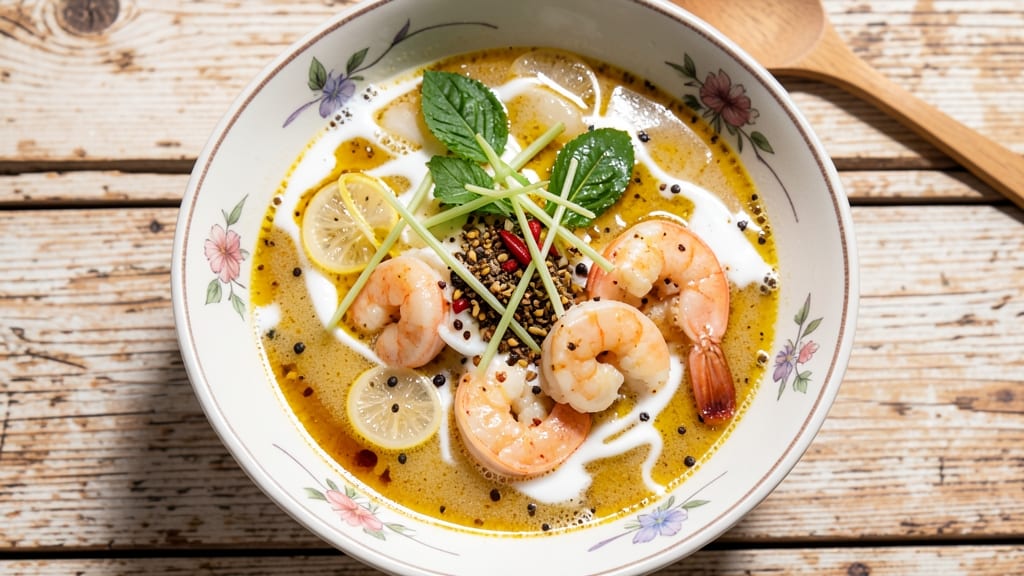
This Bengali Thai soup recipe blends two vibrant culinary traditions into one aromatic bowl of comfort. 🌟 The marriage of mustard oil's bold heat with lemongrass's citrusy freshness creates a broth that's both complex and deeply satisfying—perfect for chilly evenings or when you crave something that feels both familiar and excitingly new.
The foundation begins with a fragrant broth infused with Thai lemongrass and galangal, balanced by Bengali spices like panch phoron and a touch of mustard oil for that signature depth.
Coconut milk adds a velvety richness that bridges both cuisines seamlessly, while shrimp or tofu keeps the dish hearty yet adaptable to any dietary preference.
What emerges is a soup that's as visually striking as it is flavorful—golden broth flecked with fresh herbs, tender protein, and a garnish of crisp fried shallots that add a satisfying crunch.
The aromas alone will have everyone gathering around the table, and each spoonful delivers layers of warmth, tang, and umami that make this more than just a meal.
This recipe respects tradition while embracing modern convenience, using pantry staples and simple techniques to create something restaurant-worthy. Whether you're serving a crowd or treating yourself to a comforting bowl, the balance of flavors and textures ensures every bite feels like a celebration.
Ingredients for bengali thai soup
The aromatic core of this fusion soup begins with mustard oil and lemongrass—where bold Bengali flavors meet Thai brightness.
| Ingredient | Amount | Notes |
|---|---|---|
| Mustard Oil 🫒 | 2 tbsp | High-quality, light-colored preferred |
| Lemongrass Stalks 🌿 | 3 whole | Bruised, bottom 3 inches only |
| Galangal Slices 🧅 | 2 tbsp | Fresh, about 1-inch thick slices |
| Panch Phoron 🌶️ | 1 tsp | Bengali five-spice blend |
| Coconut Milk 🥥 | 1 cup | Full-fat, unsweetened |
| Shrimp 🦐 | 1 lb | Peeled, deveined, medium size |
| Tofu 🥬 | 14 oz | Firm, cubed if substituting |
| Vegetable Broth 💧 | 4 cups | Homemade or low-sodium |
| Fish Sauce 🍶 | 1 tbsp | Red Boat brand preferred |
| Lime Juice 🍋 | 2 tbsp | Freshly squeezed |
| Fresh Cilantro 🌿 | ¼ cup | Chopped, for garnish |
| Red Chili Flakes 🌶️ | 1 tsp | Adjust to taste |
| Fried Shallots 🧅 | 2 tbsp | Store-bought or homemade |
| Salt 🧂 | 1 tsp | Adjust to taste |
| Garlic Cloves 🧄 | 4 cloves | Minced |
Mustard oil is the soul of this dish—light-colored, high-quality is key for that signature aroma without overpowering. Indian grocery stores or specialty markets carry the best, but avoid dark varieties (they're too strong). Lemongrass and galangal? Asian markets have them fresh and prepped—look for stalks with vibrant green leaves and firm, white roots. If using dried panch phoron, toast it lightly in a dry pan for 30 seconds to wake up the spices. For the shrimp, frozen works fine—just thaw and drain well before cooking.
No fish sauce? Soy sauce at half the amount gets you close, though it won't have the same umami depth. Substituting tofu for shrimp? Extra-firm, pressed and cubed holds up best—marinate it in lime juice and a pinch of salt for 10 minutes first. The coconut milk should be full-fat for that creamy richness, but if you're watching calories, light coconut milk works in a pinch. For the broth, homemade is ideal, but low-sodium store-bought saves time without sacrificing flavor. Fresh herbs matter here—cilantro should be bright green, not wilted, and the fried shallots add that irresistible crunch (store-bought is fine if you're short on time).
This soup tastes even better the next day as flavors meld—store leftovers in airtight containers for up to 3 days. For longer storage, freeze portions in ice cube trays (great for quick bowls later). The fried shallots keep for 1 month in a sealed bag, and mustard oil lasts 6-12 months unopened. Garnish with extra lime wedges and cilantro just before serving—the acidity brightens everything.
Why You'll Love This Recipe
- Flavor Fusion Magic: The mustard oil hits first—bold, nutty, and just a little spicy—then the lemongrass and galangal weave in that bright, citrusy warmth. It’s the kind of soup where every slurp feels like a hug for your taste buds, and the coconut milk ties it all together so smoothly.
- Pantry-to-Pot Speed: Honestly, I can make this while scrolling through my phone. Toast the panch phoron in mustard oil, toss in the aromatics, and boom—you’re already halfway there. No chopping mountains, no fancy techniques, just layering flavors in under 25 minutes.
- Leftovers That Shine: This soup actually improves the next day. The galangal’s sharpness mellows, the coconut milk gets richer, and reheating it? Zero effort. I’ve had it cold with rice the morning after, and it’s still the star of the meal.
- Budget Bright Spot: Mustard oil and lemongrass might sound fancy, but they stretch across multiple meals. A little goes a long way, and the galangal (if you can’t find it fresh) works just as well dried. It’s my go-to when I need something hearty without breaking the bank.
Step-by-step instructions for fragrant lemongrass and coconut soup
This fusion dish combines Bengali aromatic oils with Thai coconut richness for a harmonious broth.
🔥 Step 1: Bloom the Aromatics in Mustard Oil
Heat the 2 tbsp mustard oil in a heavy-bottomed pot over medium-low heat. Add the 3 whole lemongrass stalks (bruised bottoms only) and 2 tbsp galangal slices - these will infuse the oil with their signature fragrance. Cook for 3-4 minutes until the oil becomes fragrant and slightly shimmering.
Next, add the 4 minced garlic cloves and 1 tsp panch phoron. Stir constantly for 30 seconds until the spices sizzle and release their aroma. This step is crucial - the spices should smell deeply aromatic, not burnt. If you notice any smoke, immediately reduce the heat to low and continue stirring gently.
🍳 Step 2: Build the Flavor Base
Pour in the 4 cups vegetable broth and bring to a gentle simmer. Add the 14 oz cubed tofu and 1 lb shrimp, then season with 1 tsp salt and 1 tsp red chili flakes. Simmer uncovered for 8-10 minutes until the shrimp turns opaque and the tofu is heated through.
Here's where the magic happens: taste the broth and adjust seasoning. The shrimp should be fully cooked, and the tofu should be heated but not falling apart. If the broth needs more depth, add 1 tbsp fish sauce now. The soup should have a balanced flavor - aromatic, slightly spicy, and umami-rich without being overpowering.
🥘 Step 3: Finish with Coconut and Brightness
Reduce heat to low and stir in the 1 cup coconut milk. Let it simmer gently for 3-4 minutes until the soup becomes creamy but not separated. The coconut milk should blend smoothly into the broth, creating a velvety texture without curdling.
Remove from heat and stir in the 2 tbsp lime juice. This final step brightens the soup and balances the richness. The lime juice should be freshly squeezed - bottled juice lacks the necessary acidity. Taste again and adjust salt or chili if needed, remembering that the fried shallots and cilantro will add additional flavor.
🍽️ Step 4: Garnish and Serve
Ladle the soup into bowls and immediately garnish with 2 tbsp fried shallots and 0.25 cup chopped fresh cilantro. The fried shallots add a delightful crunch that contrasts beautifully with the creamy broth, while the cilantro brings freshness to each spoonful.
Serve immediately with steamed jasmine rice or crusty bread. The soup should be hot but not scalding, with each bite delivering layers of lemongrass aroma, coconut creaminess, and shrimp sweetness. The perfect bowl should have a balance of textures - creamy broth, tender shrimp, firm tofu, and crisp fried shallots - all harmonizing in every spoonful.
Pro Tips For Making Bengali Thai Soup
- Bloom the Panch Phoron: Toast the whole spices in the mustard oil for exactly 10 seconds—no more, or they’ll burn and turn bitter. I learned this the hard way after my soup tasted like a smoky campfire instead of a fragrant Bengali classic.
- Bruise the Galangal: Smash the galangal slices with the side of your knife before adding them to the pot. This releases the oils and flavors without turning the soup into a mushy mess—trust me, your taste buds will notice.
- Low and Slow with Coconut: Simmer the coconut milk on the lowest heat possible, stirring every 2-3 minutes to prevent skin from forming. Skim it off if it does—nothing ruins a creamy soup faster than a film of burnt coconut.
- Reserve the Lemongrass: Strain out the lemongrass stalks after 15 minutes of simmering, but save one stalk to blend into the final soup for a bright, citrusy finish. (Yes, even if it looks like you’re overcomplicating things—it works.)
Wine and beer pairings for bengali thai soup
Thai-Inspired White Wine
For this fusion soup, a crisp Thai-inspired white wine like Riesling or Pinot Grigio works beautifully. The slight sweetness and acidity of a dry Riesling (such as Dr. Loosen Blue Slate) complements the coconut milk’s richness while cutting through the mustard oil’s boldness.
Serve it chilled—around 45-50°F—to let its citrus notes harmonize with the lemongrass. 🍷
Bengali-Inspired Beer
If you prefer beer, opt for a light lager or session IPA with herbal notes. A Thai-style lager like Singha or a hoppy but balanced IPA (such as New Belgium Fat Tire) bridges the two cuisines well.
The lager’s subtle maltiness pairs with the coconut, while the IPA’s bitterness balances the soup’s spice. Serve at 40-45°F to avoid overpowering the delicate flavors.
Non-Alcoholic Alternatives
For a refreshing non-alcoholic match, try sparkling lime soda (like San Pellegrino Aranciata) or hibiscus iced tea. The effervescence cleanses the palate between spoonfuls, while the tartness mirrors the lime juice in the soup.
For a warmer option, a ginger-infused iced tea (steep 2 slices fresh ginger in hot water, then chill) enhances the galangal’s warmth. ✨
Serving Temperature Tips
Wine and beer should be chilled but not ice-cold—around 45-50°F for whites and lagers—to preserve their aromas. If using beer, pour it into a wide-rimmed glass to let the hoppy notes breathe alongside the soup’s steam.
For non-alcoholic drinks, serve in clear glassware to showcase their vibrant colors, which contrast beautifully with the soup’s golden broth.
Nutrition facts
Frequently asked questions
What makes this soup different from traditional Thai or Bengali soups?
This fusion soup blends Bengali mustard oil and panch phoron with Thai lemongrass and coconut milk—creating a unique balance of smoky depth and citrusy brightness. Unlike traditional Bengali soups (like macher jhol), it incorporates coconut milk and galangal, while Thai-inspired elements like fish sauce and fried shallots elevate it beyond standard Thai tom yum flavors.
Can I substitute tofu with chicken or other proteins?
For chicken, use 1 lb boneless thighs (poached or shredded) instead of tofu. If using fish, opt for firm white fish like cod (add 5 minutes earlier to avoid overcooking). For vegan options, extra-firm tofu or chickpeas work well—just increase simmer time by 2-3 minutes to ensure tenderness.
Why does the recipe call for mustard oil if it's a Thai-inspired soup?
The mustard oil is the Bengali soul of this dish—it adds a signature nutty aroma and subtle heat that Thai cuisine lacks. Used sparingly (2 tbsp), it enhances the galangal and lemongrass without overpowering. For a milder version, reduce to 1 tbsp or swap for toasted sesame oil (though the flavor will differ slightly).
How can I make this soup spicier or milder?
For extra heat, add 1-2 extra tsp red chili flakes or a sliced Thai chili (remove before serving if preferred). To mellow it, reduce the chili flakes to ½ tsp or omit entirely. For a slow build of spice, stir in 1 tsp sambal oelek at the end—it adds depth without overwhelming. Always taste as you go!
Can I prepare this soup ahead of time?
Yes! The broth and aromatics can be made 1 day ahead—store in an airtight container in the fridge. Reheat gently on low heat (don’t boil) and add shrimp/tofu fresh. For the best texture, add fried shallots and cilantro just before serving. The flavors actually improve overnight as the spices meld!