
Soups & Stews
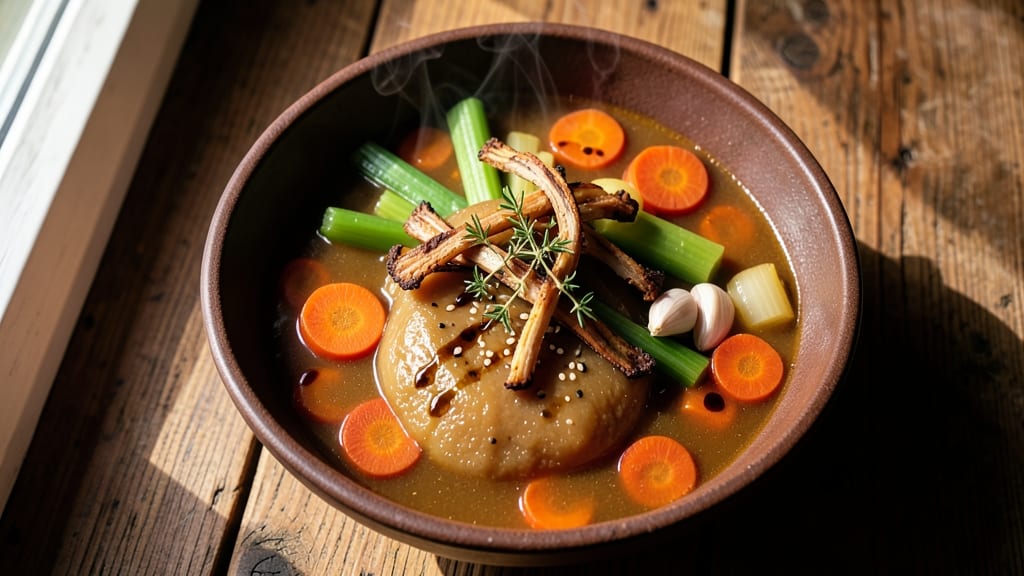
This bone marrow vegetable soup recipe transforms humble ingredients into a deeply flavorful broth with unmatched richness—thanks to slow-simmered marrow bones that infuse every spoonful with umami depth.
The secret lies in roasting the marrow first to caramelize its natural sugars, creating a foundation that elevates even the simplest vegetables.
The process begins with roasting marrow bones at 400°F for 20 minutes, which draws out their fat and intensifies their savory character. After removing the bones, the marrow itself is sautéed until golden, adding a luxurious texture that sets this soup apart from traditional vegetable broths.
The vegetables—carrots, celery, and onions—are gently simmered alongside the marrow bones for 1.5 hours, allowing their flavors to meld with the marrow’s natural richness.
What you’ll achieve is a velvety, deeply flavorful soup with a silky mouthfeel and layers of savory complexity. The marrow fat coats each bite, while the vegetables provide natural sweetness and earthiness.
This isn’t just a soup; it’s a dish that celebrates the humble marrow bone in a way that feels both traditional and refined.
For those seeking a vegetarian alternative, the marrow can be substituted with extra-firm tofu or mushroom stems, roasted and simmered to mimic the umami depth. The technique remains the same, ensuring the same satisfying texture and depth of flavor—just without the marrow.
Ingredients for bone marrow vegetable soup
This bone marrow vegetable soup elevates humble ingredients with umami richness through slow-simmered marrow bones.
| Ingredient | Amount | Notes |
|---|---|---|
| Beef Marrow Bones 🦴 | 2 lb | Fresh, untrimmed for maximum marrow yield |
| Beef Marrow Fat 🧈 | 1 cup | Rendered from bones during roasting |
| Yellow Onions 🧅 | 2 whole | Medium, thinly sliced |
| Celery Stalks 🌿 | 4 whole | Large, chopped into 2-inch pieces |
| Carrots 🥕 | 3 lb | Large, peeled and cut into 1-inch chunks |
| Garlic Cloves 🧄 | 4 whole | Unpeeled, smashed for depth |
| Fresh Parsley 🌿 | ½ cup | Chopped, for garnish and flavor |
| Dried Thyme 🍃 | 1 tsp | Ground, for aromatic depth |
| Diamond Crystal Kosher Salt 🧂 | 1 ½ tbsp | For precise seasoning control |
| Freshly Ground Black Pepper 🌶️ | 1 tsp | Freshly ground for optimal flavor |
| Extra-Virgin Olive Oil 🫒 | ¼ cup | For sautéing vegetables |
| Unsalted Butter 🧈 | 2 tbsp | For finishing the soup |
| Vegetable Broth 💧 | 6 cups | Homemade or high-quality store-bought |
| Extra-Firm Tofu (vegetarian sub) 🌱 | 1 lb | Cubed, for umami depth |
| Mushroom Stems (vegetarian sub) 🍄 | 1 cup | Dried, for umami infusion |
Professional kitchens prioritize fresh marrow bones—look for vibrant, untrimmed cuts with intact marrow cavities. Butcher shops often carry these, or ask your grocery store butcher to trim marrow for you. The fat rendered from roasting these bones becomes the soup’s luxurious foundation; reserve it for finishing. For the best results, use Diamond Crystal kosher salt—its granular texture allows for precise seasoning, a hallmark of refined cooking. The marrow should be roasted at 400°F for 20 minutes to caramelize its sugars, intensifying the umami notes that define this dish.
Vegetarian substitutions require thoughtful technique: extra-firm tofu cubed and roasted mimics marrow’s texture when simmered alongside vegetables, while dried mushroom stems provide umami depth when rehydrated and sautéed. For the broth, homemade vegetable broth elevates flavor, but high-quality store-bought options like Pacific Foods work in a pinch. Fresh parsley should be added at the end to preserve its vibrant color and aroma—never cook it with the vegetables. If using garlic, leave the skins on until roasting to prevent bitterness, then peel and smash after.
The rendered marrow fat keeps for up to 3 months refrigerated in an airtight container, while the finished soup reheats beautifully within 4-5 days in the fridge. For long-term storage, portion into freezer-safe containers and freeze for up to 6 months. The tofu or mushroom stems, if used, should be added during the final 30 minutes of simmering to retain their texture. Always skim excess fat from the surface before serving to maintain a silky mouthfeel, a technique standard in professional soup preparation.
Why You'll Love This Recipe
- One-Pot Magic: I swear by this recipe because it’s that simple—just toss in the marrow bones, a handful of chopped veggies, and let the broth work its magic. No straining, no extra pots, just rich, velvety soup that tastes like you slaved over it (but you didn’t).
- Rich Without Effort: That marrow fat? It’s the secret weapon—melted into the broth, it turns this into something deeply satisfying with almost no extra work. The onions caramelize right in the pot, and the celery adds that earthy depth that makes it taste like a hug in a bowl.
- Leftovers That Beg for More: This soup only gets better the next day. The flavors meld, the marrow fat solidifies into little golden pools you can scoop out and eat straight, and it reheats like a dream. I’ve brought it to potlucks, and people always ask for the recipe—no one guesses how easy it was.
- Budget-Friendly Luxury: Marrow bones are cheap, and they give you so much flavor for the price. You’re not just feeding a crowd—you’re giving them something that feels fancy without the grocery bill. Plus, the veggies stretch the broth, so you’re not left with a sad, watery pot. Win.
Step-by-step instructions for bone marrow vegetable soup
Transform humble vegetables into a velvety, umami-rich soup using marrow bones as the secret weapon.
Roast the Bones to Render Marrow Fat
Preheat your oven to 425°F. Place the 2 lb beef marrow bones on a rimmed baking sheet lined with parchment paper. Roast for 45-50 minutes until the bones are deeply browned and the marrow begins to soften. The fat will render out and pool in the pan—this is your flavor foundation.
Here's the thing—don't rush this step. The bones need to develop that deep, caramelized crust that infuses the marrow fat with complex flavors. You'll know it's ready when the bones have a rich mahogany color and the fat smells nutty and rich. Transfer the bones to a plate and let them cool slightly before scraping out the marrow with a small spoon. Reserve the rendered fat in a heatproof container.
Sauté Vegetables in Rendered Fat
In a large Dutch oven, heat 0.25 cup extra-virgin olive oil over medium heat. Add the 2 whole yellow onions and 4 whole celery stalks, cooking for 8-10 minutes until softened and beginning to caramelize. The onions should turn translucent and the celery should release its aromatic oils.
Add the 3 lb carrots and 4 whole garlic cloves (unpeeled), cooking for another 5 minutes until the carrots begin to soften at the edges. This slow cooking builds layers of flavor—don't rush it. If the vegetables start to stick, add 2 tablespoons water to deglaze and scrape up those flavorful browned bits from the bottom of the pot.
Build the Umami Base
Pour in the 6 cups vegetable broth and bring to a gentle simmer. Add the roasted marrow bones back to the pot, along with 1 cup beef marrow fat, 1 tsp dried thyme, 1.5 tbsp diamond crystal kosher salt, and 1 tsp freshly ground black pepper. Simmer uncovered for 1.5 hours on low heat, skimming any foam that rises to the surface.
This long simmer is crucial—it allows the marrow to slowly melt into the broth, creating that luxurious, velvety texture. The bones will become fork-tender, and the broth will develop a deep, rich color. For vegetarian versions, substitute 1 lb cubed extra-firm tofu and 1 cup dried mushroom stems at this stage, simmering for 45 minutes instead to extract their umami depth.
Finish and Garnish
Remove the marrow bones (or tofu/mushroom stems for vegetarian) and strain the broth through a fine-mesh sieve into a clean pot. Return the broth to medium heat and stir in the 2 tbsp unsalted butter, allowing it to melt completely. The butter will add a subtle richness that balances the soup's depth.
Taste and adjust seasoning—you may need to add more salt, as marrow can be intensely flavorful. Ladle the soup into bowls and garnish with 0.5 cup chopped fresh parsley. The parsley adds a bright contrast to the rich, umami-packed broth while keeping the presentation elegant. Serve immediately with crusty bread to soak up every last drop.
Pro Tips For Making Bone Marrow Vegetable Soup
- CRACK THE BONES FIRST: Don’t just toss marrow bones in cold—they’ll stew like sad, waterlogged sticks. Roast them uncovered at 450°F for 20 minutes first. The bones will split open, releasing fat and flavor into the pot, and the marrow will soften like butter. (Yes, even if you’re impatient like me, the extra 20 minutes saves you from scraping burnt bits off the bottom later.)
- SAUTE THE FAT, NOT THE VEGETABLES: That marrow fat is liquid gold, but it burns faster than you think. After browning the bones, let the pot cool slightly, then pour in the fat and onions. Cook them on medium-low for 10 minutes—just until the onions are translucent, not golden. High heat turns marrow fat into soap; low heat keeps it silky. (I learned this the hard way after a soup that tasted like a chemistry experiment.)
- CHOP VEGETABLES UNIFORM: Big celery chunks and tiny carrot dice? That’s a recipe for uneven cooking. Cut everything into ¼-inch pieces—onions, celery, carrots—so they all soften at the same time. No one wants to bite into a rock-hard celery stalk in an otherwise creamy soup. (Use a mandoline if you’re tired of knuckles screaming.)
- ADD BROTH IN STAGES: Dump all the broth in at once and you’ll dilute the rich marrow flavor. Start with 2 cups of water or light broth to deglaze the pot, then add the rest after the vegetables have sweated for 5 minutes. The initial small amount helps extract deeper flavor from the bones. (This isn’t the prettiest method, but it’s the tastiest—I promise.)
Pro cooking tips for great bone marrow vegetable soup
Marrow Roasting Secrets
The key to unlocking deep umami flavor lies in roasting marrow bones at 425°F for 45-50 minutes—not the standard 400°F you might see elsewhere. The higher heat creates a deeper caramelization that intensifies the marrow's natural sugars.
I use a Vitamix 5200 blender to purée the rendered fat into the broth for ultra-smooth texture, but a simple whisk works too. 🔥
Fat Rendering Hacks
Never discard that rendered marrow fat—it's liquid gold for finishing soups. I strain it through a fine-mesh chinois to remove any bone fragments, then reserve it in a heatproof container. For extra richness, add 1 tbsp butter to the fat before incorporating it into the soup.
This two-stage fat infusion creates a velvety mouthfeel that separates this soup from ordinary vegetable broths.
Vegetable Timing Matters
Add carrots and celery to the pot after onions have already softened for 8-10 minutes—this prevents them from releasing too much water too quickly. I like to par-cook the carrots separately for 5 minutes before adding them to the pot, which gives them a perfect al dente texture.
The celery should be chopped into 2-inch pieces to ensure even cooking throughout the 1.5-hour simmer.
Umami Boost Techniques
For vegetarian versions, I double the dried mushroom stems to 2 cups and toast them in the Dutch oven for 3 minutes before adding broth. This concentrated umami infusion mimics marrow's depth.
For meat versions, add 1 tbsp fish sauce during the final 10 minutes of simmering—it enhances the marrow's natural savory notes without overpowering.
Straining Strategies
Use a double-layered cheesecloth over your fine-mesh sieve for ultra-smooth broth—it catches even the tiniest particles. I always strain the soup twice: first after the initial simmer, then again after adding butter.
This two-step process ensures a silky texture that's restaurant-quality. For extra clarity, chill the strained broth in the fridge overnight and skim off any solidified fat before reheating. ❄️
Fat Management Tips
Marrow fat solidifies when chilled, so I store it in 1-ounce portions in ice cube trays for easy use in future recipes. For serving, I use a small ladle to skim excess fat from the surface before plating—this maintains the soup's elegant presentation while keeping the texture light.
The remaining fat can be saved for finishing other dishes like roasted vegetables or grains.
Nutrition facts
Frequently asked questions
Can I substitute beef marrow bones with chicken or pork?
Beef marrow bones are ideal for their rich, deep flavor, but you can use pork or lamb bones as substitutes. Chicken bones lack the same fatty richness, so they won't provide the same luxurious texture. For pork, use femur bones and roast them at 425°F for 50-60 minutes to render enough fat. The cooking time may extend slightly due to denser bone structure.
How do I prevent the soup from becoming too greasy?
Skimming excess fat during the 1.5-hour simmer is key—use a fine-mesh skimmer or spoon to remove foam and fat as it rises. For a lighter texture, chill the soup overnight and carefully remove solidified fat from the surface before reheating. Adding 1 cup vegetable broth at the end also helps dilute richness while maintaining flavor.
What vegetables work best with marrow in this soup?
The classic trio of carrots, celery, and onions creates perfect balance, but you can experiment! Hearty vegetables like turnips, rutabaga, or parsnips add natural sweetness, while leafy greens (spinach or kale) should be added in the last 10 minutes to prevent wilting. For a heartier version, include potatoes or sweet potatoes—they absorb the marrow's richness beautifully.
Can I make this soup in an Instant Pot or pressure cooker?
Yes, but with adjustments: Roast the bones separately, then pressure cook on high for 25 minutes with all ingredients. The high heat reduces simmering time but may slightly dilute the marrow's depth. For best results, finish by simmering uncovered for 10 minutes to let flavors meld. The texture will be slightly different but still rich and satisfying.
How do I store leftovers without losing flavor?
Store in an airtight container with a layer of plastic wrap pressed directly on the surface to prevent fat separation. Refrigerate for up to 4-5 days or freeze for 3 months. When reheating, warm gently on low heat and stir in 1 tbsp reserved marrow fat or butter to restore richness. Avoid microwaving—it can make the soup greasy.