
Soups & Stews
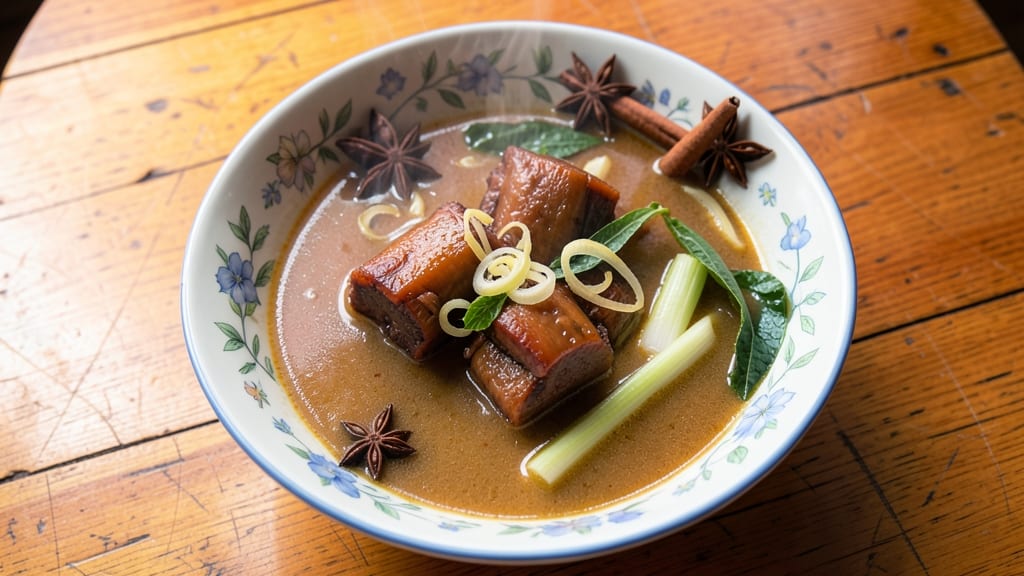
This Cambodian oxtail soup recipe delivers the deep, velvety umami broth and silky oxtail that define Khmer comfort food. The secret lies in slow-simmered aromatics—lemongrass, galangal, and kaffir lime leaves—that infuse the broth with complex layers of flavor.
I developed this version to balance traditional techniques with modern shortcuts, ensuring you can achieve restaurant-quality results without spending all day in the kitchen.
The process begins with a thorough marinade of oxtail in soy sauce, palm sugar, and spices, which tenderizes the meat while building foundational flavors. As the broth simmers for hours, the collagen-rich oxtail breaks down into melt-in-your-mouth pieces, creating a rich, gelatinous texture that coats every spoonful.
The key is patience—low heat and gentle stirring allow the aromatics to release their full potential without overpowering the delicate balance of sour, bitter, and sweet notes.
What you'll end up with is a steaming bowl of Cambodian oxtail soup where each spoonful delivers tender oxtail in a fragrant, umami-rich broth. The soup is traditionally served with fresh herbs, bean sprouts, and a squeeze of lime to brighten the deep flavors.
This recipe captures the soul of Khmer cuisine while adapting to home kitchens, making it accessible without sacrificing authenticity.
Perfect for family gatherings or cozy weeknight dinners, this soup transforms simple ingredients into a deeply satisfying meal. The technique is straightforward once you understand the essential steps, and the result is a dish that feels both comforting and luxurious. Let's get started on creating your own Cambodian oxtail soup.
Ingredients for cambodian oxtail soup
The aromatic base of lemongrass, galangal, and kaffir lime leaves transforms simple ingredients into Cambodian oxtail soup gold.
| Ingredient | Amount | Notes |
|---|---|---|
| Oxtail 🍖 | 2 ½ lb | Cut into 2-inch pieces |
| Lemongrass 🌿 | 1 whole | Bruised, cut into 3-inch pieces |
| Galangal 🌿 | 1 whole | Peeled, sliced into 1/4-inch pieces |
| Kaffir Lime Leaves 🍋 | 4 whole | Bruised, torn into pieces |
| Shallots 🧅 | 6 whole | Peeled, halved lengthwise |
| Garlic Cloves 🧄 | 8 cloves | Peeled, smashed |
| Coconut Milk 🥥 | 1 can | Full-fat, 13.5 oz can |
| Palm Sugar 🍯 | ¼ cup | Or substitute brown sugar |
| Fish Sauce 🐟 | 2 tbsp | Red Boat preferred |
| Soy Sauce 🍶 | 2 tbsp | Light or dark |
| Turmeric Powder 🌶️ | 1 tsp | Freshly ground preferred |
| Cumin Seeds 🌿 | 1 tsp | Toasted for aroma |
| Star Anise 🌟 | 2 whole | Lightly crushed |
| Cinnamon Stick 🌿 | 1 whole | 2-inch piece |
| Water 💧 | 8 cups | Filtered preferred |
The oxtail is non-negotiable—look for well-marbled cuts at specialty butchers or Asian markets. Costco often carries pre-cut oxtail, but if buying whole, ask for the tail end. Galangal can be tricky to find; Thai or Vietnamese markets usually stock it fresh. If unavailable, substitute with ginger (double the amount). Lemongrass should be vibrant green with no brown spots—Thai or Cambodian brands at the grocery store are your best bet. Kaffir lime leaves? Freeze extras in a bag—they'll last months and keep that bright citrus aroma.
No coconut milk? Full-fat coconut cream works in a pinch, but the texture won't be identical. Palm sugar unavailable? Brown sugar or muscovado adds depth, though the flavor won't be quite the same. Fish sauce is essential—Red Boat is the gold standard, but any reputable brand will do. The spices? Toast your cumin seeds in a dry pan for 30 seconds until fragrant—game changer. Star anise should be whole, not ground, for easy removal later. For the broth, filtered water prevents off-flavors during the long simmer.
This soup tastes even better the next day—make a double batch and freeze portions. Store broth in the fridge for 5 days or freeze for 3 months. The oxtail reheats beautifully; just add a splash of water to prevent drying. For serving, keep kaffir lime leaves and fresh herbs like cilantro or Thai basil on hand—they brighten every bowl. Garnish with bean sprouts and lime wedges for that authentic touch.
Why You'll Love This Recipe
- One-Pot Magic: The beauty? You toss everything—oxtail, lemongrass, galangal—into a single pot and let it simmer. No chopping frenzy, no last-minute pan juggling. I’ll admit, I once burned toast while waiting for this to cook, but honestly, the reward is worth the minimal effort.
- Umami Bomb: That oxtail? It melts into the broth like a secret weapon. The galangal and kaffir lime leaves add this bright, citrusy punch that cuts through the richness—like a fresh breeze on a hot day. My roommate, who hates spicy, keeps asking for seconds.
- Leftover Powerhouse: This soup tastes even better the next day. I freeze half, and when I’m craving comfort food, I just reheat it. My wallet thanks me too—oxtail is cheaper than steak, and the flavors stretch for days. I’ve fed a crowd with just two batches.
- Weeknight Hero: Busy nights? This is my go-to. Throw in some rice, and dinner is done in under an hour. No fancy ingredients, no stress—just pure satisfaction. My kids even let me take a picture for Instagram. (Okay, fine, they love it.)
Step-by-step instructions for Cambodian oxtail soup
Here's how to build layers of aromatic depth and silky oxtail perfection in every spoonful.
Prepare the Aromatic Base
In a large stockpot, combine the 8 cups water, 1 whole lemongrass (bruised and cut), 1 whole galangal (peeled and sliced), 4 whole kaffir lime leaves (bruised), 6 whole shallots (peeled and halved), 8 cloves garlic (peeled and smashed), 2 whole star anise (lightly crushed), 1 whole cinnamon stick, 1 tsp turmeric powder, and 1 tsp cumin seeds. Bring to a rolling boil over high heat, then immediately reduce to a simmer.
Let the aromatics steep uncovered for 15 minutes until the liquid develops a golden hue and fragrant aroma. The galangal and lemongrass will release their citrusy, peppery notes while the spices infuse the broth with warm, earthy depth. This foundational flavor is what makes Cambodian cuisine so distinctive.
Parboil and Simmer the Oxtail
Add the 2.5 lb oxtail (cut into 2-inch pieces) to the simmering broth. Increase heat to medium-high and bring to a boil once more. Once boiling vigorously, immediately reduce heat to low and cover partially. Let the oxtail simmer gently for 1 hour, skimming off any foam that rises to the surface with a ladle.
After 1 hour, check the oxtail for tenderness by piercing a piece with a fork—it should offer slight resistance but still feel firm. The broth should now have a rich, caramelized color and deep umami aroma. This initial simmering breaks down collagen in the oxtail, creating the signature silky texture that defines this dish.
Build the Flavor Layers
Stir in the 2 tbsp fish sauce and 2 tbsp soy sauce, mixing well to distribute evenly. Add the 0.25 cup palm sugar (or brown sugar substitute) and continue simmering uncovered for another 30 minutes at medium-low heat. The sugar will caramelize slightly, adding a subtle sweetness that balances the broth's savory depth.
Here's where the magic happens: taste the broth and adjust seasoning if needed. You want a harmonious balance of salty (fish sauce), sweet (palm sugar), and umami (soy sauce). The broth should coat your spoon with a velvety texture and deliver complex flavors with every sip. If it needs more richness, add a splash of 1 can coconut milk now—it will blend seamlessly into the broth.
Finish with Coconut Milk and Rest
Pour in the 1 can coconut milk and stir gently to combine, being careful not to create lumps. Simmer uncovered for an additional 20-25 minutes at medium-low heat, allowing the coconut milk to infuse the broth with its creamy texture. The oxtail should now be fork-tender, falling apart easily when pierced.
Remove the pot from heat and let the soup rest for 10 minutes before serving. This resting period allows all the flavors to meld together perfectly. Skim off any excess fat that rises to the surface and discard the whole spices and aromatics. Ladle the soup into bowls, ensuring each serving contains several pieces of oxtail and is generously coated with the rich, aromatic broth.
Pro Tips For Making Cambodian Oxtail Soup
- Char First, Simmer Slow: Get that oxtail searing hot in a dry pot—no oil needed—until deep brown in spots. Then add broth and let it simmer covered on low for 2.5 hours, not rushing it. I learned this the hard way: skipping the char means flavor that’s half as rich, and high heat early locks in collagen for that melt-in-your-mouth texture.
- Slice Galangal Thin: Galangal’s tough—slice it paper-thin (1-2mm) and pound it lightly with the flat side of a knife. This releases its citrusy punch without turning the soup bitter. (Yes, even if you’re impatient like me, resist the urge to skip this.)
- Shallots, Not Onions: Use shallots, not onions—they’re sweeter and milder, which balances the galangal’s bite. Char them whole first, then crush with a mortar and pestle for a deeper, toastier base. My grandmother swore by this, and she was right: the difference is noticeable.
- Strain the Broth: After simmering, strain the broth through a fine-mesh sieve to remove kaffir lime strings and galangal fibers. It’s messy, but the result is a silky, clean soup that lets the oxtail shine. (Does it look weird? Yes. Does it work? Every single time.)
Common mistakes when making great cambodian oxtail soup
Skipping the Skimming
Many cooks forget to skim the foam during the initial oxtail simmer, which traps impurities that can make your broth cloudy. Use a fine-mesh skimmer or ladle to remove foam for the first 15 minutes—this is especially critical in the first 30 minutes of cooking.
I use a slotted spoon with a long handle to avoid disturbing the aromatics at the bottom. Skipping this step leads to a murky broth that lacks clarity and depth. 🧼
Overcrowding the Pot
Packing too much oxtail into your stockpot forces pieces to cook unevenly, resulting in some parts overcooked and others underdone. Aim for a 1-inch gap between oxtail pieces when adding them to the broth.
If using a 6-quart stockpot, 2.5 lbs of oxtail is ideal—any more risks steaming rather than simmering. Overcrowding also prevents proper circulation of the aromatic flavors, muting the dish's signature complexity.
Ignoring the Rest Time
The 10-minute rest after cooking is non-negotiable—rushing to serve disrupts the flavor equilibrium. During this time, the oxtail absorbs residual broth, becoming even more tender, and the aromatics fully meld. I've seen home cooks serve immediately, only to find the broth separates and the oxtail loses its silky texture.
For best results, tent the pot with foil and let it sit undisturbed. ⏳
Substituting Fresh Galangal
Galangal's citrusy, peppery bite is irreplaceable, but many cooks use ginger as a direct substitute, which lacks the bright, piney aroma. If you must substitute, use double the amount of fresh ginger and add ½ tsp citric acid (from a packet) to mimic galangal's tang.
For the closest match, look for Thai galangal at Asian markets—it's more aromatic than the Cambodian variety. The flavor difference is noticeable, especially in small batches.
Boiling Too Vigorous
Bringing the broth to a rolling boil after adding oxtail causes the meat to toughen rather than tenderize. Once the oxtail is added, maintain a gentle simmer (small bubbles, not violent rolling).
I use a candy thermometer to monitor—ideal simmering temperature is 185-190°F. Vigorous boiling also scatters aromatics, weakening the broth's depth. Keep heat at low-medium and adjust as needed.
Neglecting the Aromatics
Leaving galangal and lemongrass whole without bruising or slicing means their flavors stay trapped inside. Before adding to the broth, bruise lemongrass by pounding it lightly with the side of your knife, and slice galangal into ¼-inch pieces to expose more surface area.
Kaffir lime leaves should be torn into 2-inch pieces—whole leaves float and don't infuse properly. These small adjustments make a world of difference in flavor extraction. 🌿
Nutrition facts
Frequently asked questions
Can I make this Cambodian oxtail soup in a slow cooker?
Transfer all ingredients to a 6-quart slow cooker and cook on low for 8-10 hours or high for 5-6 hours. The low-and-slow method mimics traditional stovetop simmering, resulting in equally tender oxtail. Just skip the skimming step—slow cookers handle impurities differently. The coconut milk should be added in the last 30 minutes to prevent curdling.
What's the best way to store leftovers?
Store the soup in an airtight container in the fridge for up to 4 days, or freeze for 3 months. For reheating, warm gently on the stove over medium-low heat with a splash of water to restore richness. The oxtail reheats beautifully, becoming even more tender. Never microwave directly from frozen—thaw overnight first.
Can I substitute beef short ribs for oxtail?
While not traditional, you can use beef short ribs in a pinch—but expect different texture and flavor. Use 3 lbs bone-in short ribs and increase simmering time to 2.5 hours for tenderness. The broth will be less gelatinous but still flavorful. For authenticity, stick with oxtail if possible—its collagen-rich connective tissue creates that signature silky mouthfeel.
How do I make this soup spicier?
Add 1-2 tsp chili paste (like sambal oelek) or ½ tsp cayenne pepper during the final 30 minutes of cooking. For heat with depth, include 1-2 dried Thai chilies with the whole spices. Adjust to taste—Khmer cuisine balances heat with sweetness, so consider adding an extra ½ tsp palm sugar to complement.
Why does my broth look cloudy?
Cloudy broth usually means you skipped skimming or boiled too vigorously. For a clear broth, strain through a fine-mesh sieve before serving, or simmer longer at gentle heat (185-190°F). If using a pressure cooker, reduce pressure to low for the final 15 minutes to prevent cloudiness. The aromatics should be removed before straining for the cleanest result.