
Soups & Stews
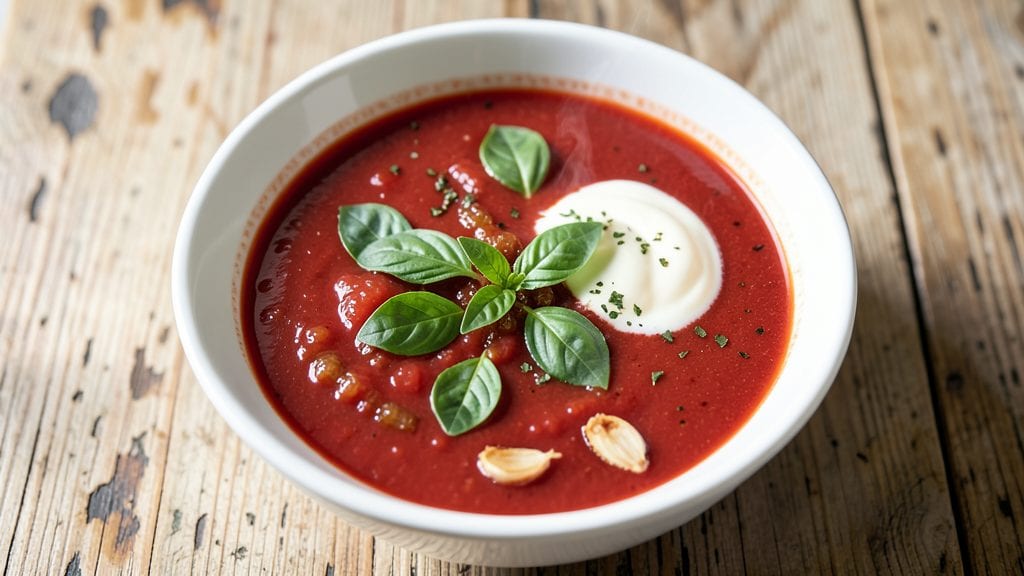
Creating a homemade tomato basil soup that rivals Campbell’s classic takes just 20 minutes of focused effort—but delivers restaurant-quality depth and freshness.
The secret lies in balancing canned tomatoes for convenience with fresh basil for that signature aromatic punch, while a touch of creaminess rounds out the flavors without overpowering the bright tomato base.
This recipe starts with sautéing onions and garlic until fragrant, then building a rich tomato base by simmering crushed tomatoes with herbs and spices. A quick blend transforms the soup into velvety perfection, while fresh basil added at the end ensures that bright, fresh flavor that canned versions can’t replicate.
The result? A soup that’s creamy yet light, tangy yet comforting—exactly what you’d expect from a classic, but with the freshness of homemade.
What sets this apart is the balance of simplicity and sophistication: no fancy techniques, just precise timing and layering of flavors. The onions caramelize slightly for depth, the tomatoes simmer until their natural sweetness emerges, and the basil infuses its signature aroma without overpowering.
Every spoonful delivers that familiar, comforting taste of Campbell’s—just made from scratch in your own kitchen.
The beauty of this recipe is its versatility—serve it as-is for a classic bowl of soup, or add grilled cheese for a cozy meal. It also freezes beautifully, so you can make a big batch and enjoy it all week.
Ready to recreate that nostalgic flavor with fresh ingredients? Let’s get started.
Ingredients for campbell's tomato basil soup
Pantry staples meet fresh herbs for that iconic Campbell's taste—just better.
| Ingredient | Amount | Notes |
|---|---|---|
| Yellow Onion 🧅 | 1 whole | Diced into small pieces |
| Garlic Cloves 🧄 | 3 cloves | Minced for aromatic base |
| Extra-Virgin Olive Oil 🫒 | 2 tbsp | High quality, fruity flavor |
| Canned San Marzano Tomatoes 🍅 | 28 oz | Crushed or whole, no salt added |
| Fresh Basil Leaves 🌿 | ½ cup | Packed, stems removed |
| Heavy Cream 🥛 | ¼ cup | Full-fat for creaminess |
| Chicken Broth 💧 | 1 ½ cups | Low-sodium preferred |
| Dried Thyme 🌿 | ½ tsp | Or 1 tsp fresh thyme |
| Salt 🧂 | 1 tsp | Diamond Crystal preferred |
| Black Pepper 🌶️ | ½ tsp | Freshly ground preferred |
| Sugar 🍚 | 1 tsp | Balances acidity |
| Red Wine Vinegar 🍷 | 1 tbsp | Brightens flavor profile |
| Fresh Basil Leaves 🌿 | ¼ cup | For finishing, torn |
San Marzano tomatoes are the gold standard here—Trader Joe's cans are my go-to for quality without the price tag. The fresh basil? Farmers markets have the best, but those little clamshells at the grocery store work in a pinch. For the broth, low-sodium is key—you don't want to over-salt the whole soup. The heavy cream should be full-fat (trust me on this), and if you're watching calories, use half-and-half instead. Onions and garlic? Yellow onions caramelize best, and peeling and mincing garlic ahead saves time later.
No San Marzano? Any good-quality crushed tomatoes will work—just taste first. Short on fresh basil? Dried basil at one-third the amount gets you close, but it won't be as vibrant. Heavy cream too rich? Greek yogurt thins it out while keeping that tangy brightness. The thyme can be swapped for Italian seasoning, but fresh thyme has a more complex flavor. And if you're out of red wine vinegar, lemon juice works too—just cut back slightly since it's more acidic.
This soup tastes even better the next day, so make a double batch if you can. Store leftovers in the fridge for 5 days, or freeze portions for up to 3 months. I like to portion it into mason jars—they're perfect for reheating and taking to work. For extra richness, stir in a pat of butter when reheating. And if you're serving it with grilled cheese? Sourdough bread is the ultimate pairing.
Why You'll Love This Recipe
- No-Panic Cooking: I toss everything into the pot—onion, garlic, tomatoes, basil—and let it simmer while I do other things. No fancy techniques, no stress, just a pot on the stove and a spoon stirring occasionally. The San Marzano tomatoes handle all the heavy lifting with their sweet, rich flavor.
- Chef’s Kiss Simplicity: That first bite? The garlic caramelizes just enough, the basil brightens it up, and the olive oil ties it all together. It’s not fancy, but it’s exactly what you need when you want something warm and satisfying without overcomplicating things.
- Leftover Legend: This soup tastes even better the next day. I double the batch on Sundays and freeze half—perfect for quick lunches or when I’m too tired to cook. Plus, it’s the kind of thing that gets better with time, like a good friendship.
- Budget-Friendly Comfort: A can of tomatoes, some garlic, and fresh basil? That’s all it takes to feed a crowd without breaking the bank. I’ve made this for potlucks, movie nights, or just because I wanted something cozy. It’s my secret weapon for when I need to impress without spending a fortune.
Step-by-step instructions for tomato basil soup
Here's the method to craft a restaurant-quality tomato basil soup that's richer than canned but faster than scratch.
Sauté the Aromatic Base
Heat the 2 tablespoons extra-virgin olive oil in a medium saucepan over medium heat. Add the 1 whole yellow onion and cook for 5 minutes until softened and translucent. Here's the thing—you want it to caramelize just slightly at the edges for deeper flavor without burning.
Add the 3 cloves minced garlic and cook for 30 seconds until fragrant. Don't walk away—garlic burns faster than you think. Immediately add the 0.5 teaspoon dried thyme and stir for 10 seconds to toast the spices. This aromatic base forms the flavor foundation for everything that follows.
Build the Tomato Base
Pour in the 28 ounces canned San Marzano tomatoes (crushed or whole) and bring to a gentle simmer. Add the 1.5 cups chicken broth, 1 teaspoon salt, 0.5 teaspoon black pepper, and 1 teaspoon sugar. The sugar balances the acidity while the salt enhances all flavors—don't skip this.
Simmer uncovered for 10 minutes until the mixture reduces slightly and the flavors meld. You'll notice the soup thickens naturally as it cooks. Here's where it gets fun—taste and adjust seasoning. If it needs more brightness, add the 1 tablespoon red wine vinegar now while it's still simmering.
Finish with Cream and Basil
Reduce heat to low and stir in the 0.25 cup heavy cream. The cream should warm through but not boil—this prevents curdling. Here's the moment that matters: add the 0.5 cup fresh basil leaves (packed, stems removed) and simmer for 2 minutes. The basil will soften slightly and infuse the soup with its signature aroma.
Use an immersion blender to purée until smooth, or carefully transfer to a blender in batches. This step ensures a silky texture without any basil strings. Return the puréed soup to the saucepan and warm through for 1 minute if needed.
Garnish and Serve
Ladle the soup into bowls and top each serving with 0.25 cup fresh basil leaves (torn, not chopped). The fresh basil adds a vibrant contrast to the creamy soup. Serve immediately while hot—this soup doesn't keep its peak texture when reheated.
For extra richness, pass warm crusty bread at the table. The soup's balance of sweet tomatoes, bright vinegar, earthy thyme, and creamy finish makes it a perfect comfort dish that's anything but basic. Real talk: this tastes like you spent hours simmering, but it's ready in under 20 minutes.
Pro Tips For Making Campbell'S Tomato Basil Soup
- SWIM THE ONION: Sauté the diced yellow onion in olive oil until it’s translucent and just starting to soften—about 5 minutes. I learned this the hard way: skipping this step leaves the soup tasting raw and sharp, no matter how long you simmer later. (Yes, even if you're impatient like me.)
- MINCE THAT GARLIC: Use a knife to finely mince the garlic cloves into a paste before adding them to the pot. This ensures even distribution and prevents those annoying, chewy garlic chunks that ruin the smooth texture. I was skeptical until I tried it—now I won’t go back.
- SIMMER LOW AND SLOW: After adding the canned tomatoes and broth, keep the heat at a gentle simmer (not a rolling boil) for at least 20 minutes. This lets the flavors meld properly without breaking down the basil’s delicate aroma. I used to rush it, and the soup always tasted flat.
- STIR IN BASIL LATE: Add the fresh basil leaves only in the last 5 minutes of cooking, or even after removing the pot from heat. Overcooking turns them bitter, and you’ll end up with a sad, muddy flavor instead of that bright, herbaceous finish. (Your future self will thank you.)
Storing and reheating your leftovers
Refrigerator Storage
Let your soup cool completely before transferring to an airtight container—I prefer glass mason jars with screw lids for easy reheating. Store in the fridge at 40°F or below for up to 5 days, though the flavors actually deepen overnight.
The cream may separate slightly, but a quick stir restores its velvety texture. 🥫
Freezer Prep Tips
For long-term storage, portion the soup into freezer-safe containers or silicone ice cube trays (perfect for single servings). Leave ½-inch headspace to prevent expansion cracks, and label with the date. This soup freezes beautifully for up to 3 months—just thaw overnight in the fridge before reheating.
I avoid ice crystals by using plastic wrap directly on the surface before sealing. ❄️
Stovetop Reheating
My preferred method is gentle reheating on the stovetop. Pour the chilled soup into a saucepan and heat over medium-low for 5-7 minutes, stirring occasionally. Add 1-2 tablespoons water or broth if it thickens too much.
Avoid boiling—just warm until steaming throughout. A splash of heavy cream (1-2 tbsp) at the end restores richness if needed. 🔥
Microwave Safety
For quick reheating, transfer soup to a microwave-safe bowl and heat on medium power in 1-minute intervals, stirring between each. This prevents hot spots and maintains texture.
Cover loosely with a microwave-safe lid to retain moisture. If the soup looks too thick after reheating, thin with a splash of chicken broth or water. 💡
Reviving Texture
If your reheated soup seems watery, stir in 1 tablespoon cornstarch mixed with 2 tablespoons cold water and simmer for 2 minutes until thickened. For extra richness, whisk in 1 tablespoon butter or 2 tablespoons cream at the end.
The key is patience—never rush the heating process, or the basil will turn mushy. ✨
Garnish Refresh
After reheating, always finish with fresh basil leaves and a drizzle of extra-virgin olive oil to restore that restaurant-quality presentation. A pinch of salt and black pepper brightens flavors that may have mellowed during storage. Serve with crusty bread or grilled cheese for the ultimate comfort meal. 🥖
Nutrition facts
Frequently asked questions
Can I make this soup without fresh basil?
Use 1 teaspoon dried basil instead of fresh, but it won't have the same vibrant aroma. For a closer match to Campbell's classic flavor, try ½ teaspoon dried basil plus ¼ teaspoon dried oregano. The key is balancing the herbs—too much dried basil can make the soup taste bitter.
Why does my homemade soup taste different from Campbell's?
Campbell's uses concentrated tomato paste and added seasonings for consistency. Your homemade version will have brighter, fresher flavors from real tomatoes and herbs. The creaminess comes from heavy cream rather than their proprietary blend. To mimic it closer, add ½ teaspoon sugar and ¼ teaspoon onion powder while simmering.
Can I make this soup vegetarian or vegan?
For vegetarian, use vegetable broth and coconut milk instead of heavy cream. For vegan, replace cream with silken tofu blended with 1 tbsp nutritional yeast and use vegan butter when reheating. The tomatoes and basil will still shine, but the texture will be slightly lighter.
What's the best way to store leftovers?
Transfer cooled soup to airtight containers and refrigerate for up to 5 days. For freezing, use freezer-safe containers with ½-inch headspace. Reheat gently on low heat—never microwave directly from frozen. The cream may separate, but stirring restores it. Label containers with dates!
Can I add pasta or croutons to this soup?
Yes! For pasta, use small shells or orzo cooked separately (they'll soften in the soup). For croutons, toast day-old bread cubes with olive oil until crispy. Add them last to maintain texture. The soup's creaminess pairs perfectly with both—just don't overcook the pasta or it'll turn mushy.