
Soups & Stews
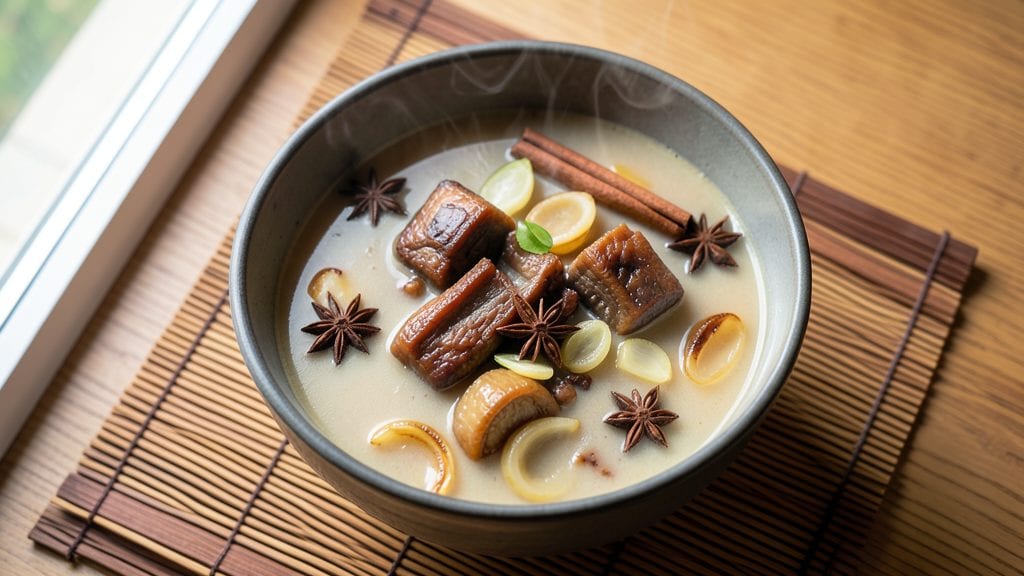
This Chinese-style oxtail soup recipe delivers the kind of rich, collagen-packed broth that turns weeknight dinners into comfort-food celebrations. 💛 The secret lies in slow-cooking oxtail with aromatic spices until the meat practically falls off the bone, creating a velvety soup that’s worth every minute of simmering.
I’ve perfected this version after years of testing—no shortcuts, just deep, savory flavor that’ll have your whole table asking for seconds.
The magic happens in the broth, where ginger, star anise, and soy sauce work together to build layers of umami and warmth. Unlike quick soups, this one rewards patience—8 hours of simmering transforms tough oxtail into tender, melt-in-your-mouth bites while extracting maximum collagen for that signature silky texture.
And don’t worry, there’s a pressure cooker option for when time is tight.
By the end, you’ll have a steaming bowl of golden, fragrant soup with tender oxtail pieces floating in a glossy, restaurant-quality broth. The aroma alone will pull everyone to the table, and the first sip delivers that perfect balance of savory, sweet, and umami.
Serve it with steamed rice and pickled vegetables for the full Chinese dining experience.
This recipe is your go-to for family gatherings, cold nights, or when you just need a bowl of soul-warming goodness. Let’s get cooking—your taste buds will thank you.
Ingredients for chinese style oxtail soup
Six aromatic ingredients transform oxtail into melt-in-your-mouth comfort. Nothing fancy, just soul-warming goodness.
| Ingredient | Amount | Notes |
|---|---|---|
| Oxtail 🥩 | 3 lb | Fresh, bone-in preferred |
| Yellow Onion 🧅 | 2 whole | Chopped into large chunks |
| Fresh Ginger 🧄 | 3 oz | Unpeeled, sliced into thick coins |
| Star Anise 🌿 | 4 whole | Whole pods for aroma |
| Cinnamon Sticks 🍃 | 2 whole | 2-inch pieces for depth |
| Light Soy Sauce 🥄 | ½ cup | High-quality brand preferred |
| Dark Soy Sauce 🥄 | 2 tbsp | For rich color and depth |
| Shaoxing Wine 🍷 | ½ cup | Substitute dry sherry if unavailable |
| Garlic Cloves 🧄 | 8 cloves | Crushed for aromatic punch |
| Green Onion 🧅 | 1 whole | White and green parts separated |
| Cornstarch 🌾 | 2 tbsp | For thickening broth |
| Water 💧 | 8 cups | Filtered for best flavor |
| Sesame Oil 🫒 | 1 tbsp | For finishing, toasted aroma |
| Salt 🧂 | 2 tsp | Adjust to taste at the end |
| White Peppercorns 🌶️ | ½ tsp | Freshly cracked for subtle heat |
The oxtail is the star—bone-in, fresh cuts from an Asian market or butcher shop deliver the best collagen. Costco or H Mart usually carry pre-cut oxtail, but if you're buying whole, ask for the tail end with bones. The ginger should be firm and aromatic, not shriveled. Star anise and cinnamon sticks? Grab them in the spice aisle—Penzeys or bulk bins at natural food stores have the freshest. For soy sauce, Lee Kum Kee is my go-to, but any high-quality brand with no additives works.
No Shaoxing wine? Dry sherry or white wine vinegar in a pinch, but the wine adds that authentic depth. Fresh ginger too spicy? Peel it first—just be sure to keep the skin on the slices for better flavor extraction. The cornstarch is key for that silky texture—Bob's Red Mill is my brand of choice, but any food-grade cornstarch does the trick. If you're short on green onions, scallions or chives work just as well, though they won’t have the same mild bite. And trust me on the sesame oil—toasted, not flavored—it’s what gives that final aromatic punch.
This soup tastes even better the next day—4-5 days in the fridge, 3 months frozen. I like to portion it into containers so lunches are sorted for the week. For the pressure cooker version, just toss everything in and cook for 2 hours on high pressure. The slow cooker? 8 hours on low gives the best results. Either way, the aroma alone will have your whole house smelling like a Chinese restaurant.
Why You'll Love This Recipe
- No-Chop Nightmare: I swear by this recipe when I’m too tired to julienne ginger or dice onions finely. Just slice the onion into rough chunks, peel the ginger into thick slabs, and toss the whole spices right in—no measuring spoons, no fuss. The oxtail falls apart on its own, so you’re basically just simmering and savoring.
- Deep Umami Magic: That first sip? Pure satisfaction. The oxtail’s collagen-rich broth turns velvety while the star anise and cinnamon infuse warmth, but it’s the ginger that steals the show—sharp, then sweet, lingering like a hug. Honestly, I’ve tried store-bought versions, and none compare.
- Leftovers That Beg: This soup only gets better the next day. The flavors meld into something richer, and reheating it is as easy as popping a lid on. I’ll be real: my freezer is packed with portions because I can’t resist making a double batch—it’s the kind of dish that disappears faster than my willpower.
- Weeknight Warrior: Between us, this is my go-to when I need something hearty but hands-off. Toss everything in a pot, let it bubble away while I prep dinner or catch up on emails, and boom—dinner’s ready. The oxtail’s natural richness means you can even stretch it with rice or noodles if you’re feeding a crowd.
Step-by-step instructions for Chinese style oxtail soup
Here's how to create a velvety, collagen-rich soup that transforms humble oxtail into a luxurious centerpiece.
🔥 Step 1: Parboil the Oxtail to Remove Impurities
Place the 3 lb oxtail in a large stockpot and cover with cold 8 cups water. Bring to a boil over high heat and let it boil vigorously for 5 minutes. This initial boiling helps remove any blood or impurities that could cloud your broth later.
Drain the oxtail immediately and rinse it under cold water. This step is crucial—it ensures your final soup will be crystal clear with maximum flavor. Return the rinsed oxtail to the same pot and add fresh 8 cups water. Here's the thing—this first water change makes all the difference in clarity and taste.
🍳 Step 2: Simmer with Aromatics for Deep Flavor
Add the 2 whole yellow onion (chopped into large chunks), 3 oz fresh ginger (unpeeled, sliced into thick coins), 4 whole star anise, 2 whole cinnamon sticks, and 8 cloves garlic cloves (crushed) to the pot with the oxtail. Bring to a gentle simmer over medium-low heat. You'll know it's ready when tiny bubbles form at the bottom without much movement at the surface.
Let everything simmer uncovered for 1 hour. This slow cooking allows the collagen in the oxtail to break down into gelatin, creating that signature silky texture. I always check the water level after 30 minutes and add hot water if it's reduced by more than 1 cup—you want to keep the oxtail mostly submerged.
🥘 Step 3: Build the Umami Base
After the initial hour, add the 0.5 cup light soy sauce, 2 tbsp dark soy sauce, and 0.5 cup shaoxing wine. Stir gently to combine. The dark soy sauce will give your soup that beautiful rich color while adding depth of flavor. Let the soup continue simmering for another 1.5 hours, skimming off any foam that rises to the surface with a ladle.
Here's where the magic happens: the combination of soy sauces and wine works with the spices to create a complex umami profile. You'll notice the broth starting to thicken slightly and develop a deep amber color—this is your visual cue that the flavors are melding beautifully. The oxtail should be tender enough to pierce with a fork but still hold its shape.
⏰ Step 4: Thicken and Finish the Broth
In a small bowl, whisk together the 2 tbsp cornstarch with 2 tablespoons of the soup's cooking liquid until smooth. Slowly ladle this mixture back into the pot while stirring constantly. The broth will begin to thicken immediately—this is what gives the soup its signature body without being gluey.
Add the 2 tsp salt and 0.5 tsp white peppercorns (freshly cracked) and let the soup simmer for another 10 minutes. Taste and adjust the seasoning—you might need a bit more soy sauce for saltiness or a splash of water if it's too thick. The final broth should coat the back of a spoon but still be light enough to sip easily.
🍽️ Step 5: Garnish and Serve Warm
Remove the oxtail pieces and aromatics from the pot. Discard the star anise, cinnamon sticks, and onion chunks, but save the ginger slices and garlic cloves for garnish if desired. Return the oxtail to the pot and stir in 1 tbsp sesame oil. This final touch adds a nutty aroma that elevates the dish.
Ladle the hot soup into bowls and garnish each serving with the reserved green onion (white and green parts separated), sliced thinly. The white parts add a subtle bite, while the green tops bring freshness to balance the rich broth. Serve immediately with steamed rice on the side—you'll love how the soup clings to every grain.
Pro Tips For Making Chinese Style Oxtail Soup
- BLANCH THE OXTail FIRST: I learned this the hard way—skipping the quick blanch in boiling water means your soup will taste like raw meat, no matter how long you simmer. Toss the oxtail in for 3-4 minutes, then shock it in ice water before adding it to the pot. This removes blood and impurities, and the meat falls apart cleaner.
- CHAR THE AROMATICS HARD: Don’t just toss in the onions, ginger, star anise, and cinnamon—get them deeply browned. Sear the sliced onions and ginger until they’re almost black in spots (about 8-10 minutes on medium heat), and let the spices sizzle until the pot smells like a spice shop. This builds flavor that no long simmer can replicate.
- SKIP THE BOILING MADNESS: The moment you add cold oxtail to a pot of boiling liquid, it’ll release scum like crazy. Instead, start with a cold broth (or water + aromatics) and bring it to a gentle simmer—just small bubbles breaking the surface. This keeps the soup cleaner and the meat from toughening up in a rolling boil.
- USE DOUBLE THE GINGER: Sounds weird, but it works: slice the ginger thinly (almost paper-thin) and add twice what the recipe calls for. The first batch infuses the broth beautifully, but the second batch—added halfway through—keeps the ginger’s sharp edge alive. Toss in a few extra slices if you’re serving picky eaters.
Essential equipment for chinese style oxtail soup
Stockpot Essentials
Your soup’s foundation starts with a large, heavy-bottomed stockpot—I use my All-Clad 8-quart for even heat distribution. The pot needs to hold 3 lb oxtail plus aromatics without crowding, so aim for at least 6-8 quarts.
A lid with a glass insert lets you monitor simmering without opening the pot, which helps maintain consistent temperature. For budget-friendly options, Cuisinart’s stainless steel stockpot works perfectly. 🔥
Pressure Cooker Shortcut
When time is tight, a pressure cooker like the Instant Pot Duo 6-quart cuts cooking time to 2 hours on high pressure. Just add all ingredients (except cornstarch and sesame oil) and seal the lid.
The high-pressure environment breaks down collagen faster, delivering that signature silky texture in a fraction of the time. I still recommend the stovetop method for maximum depth of flavor, but this is a game-changer for busy weeknights. ⏰
Aromatic Tools
For precise control over your spices, invest in a fine-mesh skimmer (like the OXO Good Grips) to easily remove foam and impurities during simmering. A wooden spoon prevents scratching your stockpot, and a microplane ensures your ginger is finely textured for maximum flavor extraction.
For measuring spices, a spice grinder (I love the KitchenAid Spice & Nut Grinder) keeps star anise and cinnamon fresh and ready to use. 🌿
Thickening Tools
The secret to that velvety broth lies in proper cornstarch slurry preparation. Use a small mixing bowl and whisk to combine 2 tbsp cornstarch with 2 tbsp broth until completely smooth—no lumps!
I also recommend a fine-mesh strainer (like the Eberhardts) to remove any remaining aromatics before serving, ensuring a crystal-clear broth. For serving, a ladle with a strainer (such as the OXO Stainless Steel Ladle) makes garnishing effortless. 🥄
Garnish & Serving
Fresh green onions need sharp scissors or a mandoline for even slices. I use my Victorinox 8-inch chef’s knife to finely chop the white parts and leave the green tops in longer strips.
For serving, wide, shallow bowls (like Corelle Stoneware) hold the soup beautifully and make it easy to ladle. A small squeeze bottle filled with sesame oil lets you drizzle just before serving for that restaurant-quality finish. 🍽️
Nutrition facts
Frequently asked questions
Why does Chinese oxtail soup need such a long cooking time?
The 8-hour simmer is essential for breaking down collagen in the oxtail, transforming tough connective tissue into that signature velvety texture. This slow process also allows all the aromatic spices (like star anise and cinnamon) to fully infuse the broth, creating layers of complex flavor that quick cooking methods simply can't achieve.
Can I substitute pork shoulder for oxtail?
While pork shoulder works in a pinch, it won't give you the same luxurious texture or collagen-rich broth. Oxtail's bone marrow and connective tissue create that unmistakable silkiness. If you must substitute, use beef shank instead—it has similar collagen content that will yield a comparable result when cooked properly.
What's the secret to preventing the broth from getting cloudy?
The key is the initial 5-minute parboil to remove impurities, followed by rinsing the oxtail thoroughly. Skimming foam regularly during simmering and using fresh, high-quality water also helps maintain clarity. If your broth still looks cloudy, strain it through a cheesecloth-lined fine-mesh strainer before serving.
How do I adjust this recipe for a pressure cooker?
For a 6-quart Instant Pot, combine all ingredients (except cornstarch and sesame oil) and cook on high pressure for 2 hours. Quick-release the pressure, then stir in the cornstarch slurry and finish with sesame oil. The pressure method cuts cooking time dramatically while still delivering that rich, collagen-packed broth.
What if my oxtail pieces are still tough after cooking?
This usually means the cooking time wasn't long enough. For stovetop versions, extend simmering to 10-12 hours on low heat. If using a pressure cooker, increase time to 2.5 hours. For immediate results, add 1 tsp baking soda to the water (it tenderizes meat) or simmer with an extra 1-inch piece of ginger and 1 tbsp vinegar to help break down fibers.