
Soups & Stews
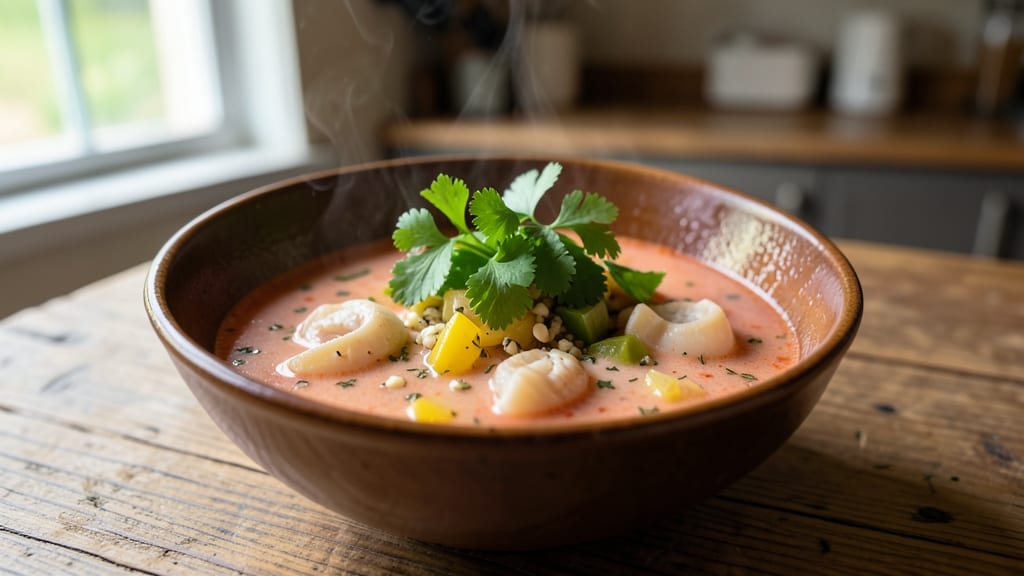
This conch soup recipe brings the vibrant flavors of the Caribbean to your kitchen with its perfect balance of citrus brightness and aromatic spices. The secret lies in poaching fresh conch until tender, then simmering it in a rich, spiced broth infused with coconut milk and lime.
I developed this recipe after years of refining techniques to ensure the conch stays perfectly tender while absorbing the bold flavors.
The beauty of this dish is in its layers—fresh bell peppers add a subtle crunch, while thyme and garlic create a fragrant base that ties everything together. Traditional Caribbean methods like slow simmering and finishing with a splash of lime juice elevate the flavors to restaurant-quality levels.
This soup is hearty enough to serve as a main dish but light enough to enjoy on its own.
By the time you finish, you’ll have a steaming bowl of conch soup with tender, flaky conch, vibrant broth, and a garnish of fresh herbs. The citrus notes cut through the richness, making each spoonful a perfect balance of sweet, spicy, and tangy.
Serve with crusty bread or over rice to soak up every last drop of that flavorful broth.
Whether you're hosting a dinner party or craving a taste of the Caribbean, this recipe delivers authentic flavors with modern ease. The key is patience—letting the conch poach gently ensures it stays tender while absorbing all the aromatic spices. Here’s how to make it perfectly every time.
Ingredients for conch soup
Caribbean flavors come alive with these fresh ingredients and aromatic spices.
| Ingredient | Amount | Notes |
|---|---|---|
| Fresh Conch Meat 🦪 | 1 ½ lb | Cleaned, deveined, cut into bite-sized pieces |
| Yellow Onion 🧅 | 1 whole | Diced, medium size |
| Green Bell Pepper 🌶️ | 1 whole | Diced, seeds removed |
| Garlic Cloves 🧄 | 4 cloves | Minced, fresh preferred |
| Fresh Thyme 🌿 | ¼ cup | Chopped, stems removed |
| Coconut Milk 🥥 | 1 can | Full-fat, 13.5 oz can |
| Tomato Paste 🍅 | 2 tbsp | Smooth, no sugar added |
| Lime Juice 🍋 | ½ cup | Freshly squeezed |
| Vegetable Oil 🫒 | 2 tbsp | For poaching conch |
| Seafood Stock 💧 | 3 cups | Homemade or quality brand |
| Allspice Berries 🌶️ | ½ tsp | Crushed, for authentic flavor |
| Ground Cumin 🌿 | ¼ tsp | Toasted for depth |
| Salt 🧂 | 1 ½ tsp | Kosher or sea salt |
| Black Peppercorns 🌶️ | ½ tsp | Freshly cracked |
| Fresh Cilantro 🌿 | ¼ cup | Chopped, for garnish |
Conch is the star here, so pick the freshest you can find—look for vibrant, firm pieces with no fishy smell. I usually buy mine from Caribbean specialty markets or high-end seafood counters, but frozen works in a pinch (thaw overnight in the fridge). The thyme and allspice are non-negotiable for that authentic Caribbean touch. Whole Foods or Penzeys carry great quality, or check the bulk spice section at your grocery store. Fresh bell peppers add that perfect crunch, so grab a colorful one—the more vibrant, the better.
No fresh thyme? Dried works at one-third the amount, but it won’t have the same depth. Short on allspice? Cinnamon or nutmeg at half the amount gives a similar warmth. Using coconut milk from a carton? Stir in 1 tbsp of coconut cream for richer texture. The tomato paste can be the squeeze-tube kind—it’s perfect for small batches and keeps forever. For the seafood stock, Knorr or Pacific brand are solid shortcuts if you don’t make your own. And if you’re feeling adventurous, swap half the bell pepper for scotch bonnet for some serious heat (trust me on the gloves).
This soup tastes even better the next day—let it sit overnight so all the flavors meld. Keeps for 3-4 days in the fridge, but I always make extra because it freezes beautifully for up to 3 months. Portion into containers before freezing so you can just reheat what you need. The conch stays tender when reheated gently, so pop it in a pot with a splash of water and let it simmer until warm. Garnish with fresh cilantro right before serving—it’s the final bright note.
Why You'll Love This Recipe
- Minimal Chopping Required: I swear by this—just dice one onion, slice a pepper, and crush three garlic cloves. The conch meat does all the heavy lifting once it hits the pot, so you’re staring down 10 minutes of prep max.
- Herb-Packed Punch: That fresh thyme and bell pepper? They turn this into something bright and aromatic, not just another seafood stew. The garlic lingers just enough to make it feel like a restaurant dish, not a weeknight shortcut.
- Lunch or Dinner Hero: Serve it steaming over rice with a side of crusty bread for a full meal, or let it cool and pack it in jars for a protein-rich lunch. Honestly, I’ve had it both ways—and my kids fight over it either time.
- Budget-Friendly Protein: Conch stretches further than you’d think, and the veggies bulk it up without breaking the bank. A single batch feeds four, and leftovers reheat like a dream (just add a splash of water). My wallet and my freezer thank me.
Step-by-step instructions for conch soup recipe
Here's how to create a vibrant, flavorful conch soup that balances rich coconut with bright citrus.
Prepare the Conch and Build the Flavor Base
Heat the 2 tablespoons vegetable oil in a large pot over medium-high heat. Add the 1.5 pounds fresh conch meat in a single layer and cook for 3-4 minutes per side until lightly browned. This step develops a subtle crust that adds depth to the soup. Remove the conch and set aside temporarily.
In the same pot, add the 1 whole yellow onion and 1 whole green bell pepper, cooking for 5-6 minutes until softened. Stir in the 4 cloves minced garlic, 0.25 cup chopped fresh thyme, 0.5 teaspoon crushed allspice berries, and 0.25 teaspoon toasted ground cumin. Cook for 1 minute until fragrant—this aromatic base forms the soul of your soup. Here's the thing: don't rush this step. The spices need time to bloom and release their full flavor potential.
Develop the Rich Coconut-Lime Broth
Reduce heat to medium-low and stir in the 2 tablespoons tomato paste, cooking for 2 minutes until it darkens slightly. This deepens the sauce's complexity. Pour in the 1 can coconut milk and 3 cups seafood stock, bringing everything to a gentle simmer. The mixture should bubble softly—not vigorously—to prevent the coconut milk from curdling.
Return the conch to the pot and add the 0.5 cup freshly squeezed lime juice. The acidity brightens the coconut's richness while balancing the seafood's natural sweetness. Let the soup simmer uncovered for 15-20 minutes until the conch becomes tender when pierced with a fork. If the soup reduces too much, add 1-2 tablespoons water to maintain the proper consistency. The conch should be tender enough to flake easily but still hold together slightly.
Season and Finish Perfectly
Season the soup with 1.5 teaspoons salt and 0.5 teaspoon freshly cracked black peppercorns, adjusting to taste. The salt should enhance all the flavors without overpowering them. Let the soup sit off heat for 5 minutes—this resting period allows the flavors to meld completely. Stir in the 0.25 cup chopped fresh cilantro just before serving to keep the leaves vibrant and bright.
This is the moment that matters: Taste and adjust the seasoning one final time. The perfect conch soup should balance creamy coconut, bright citrus, and savory seafood with a touch of spice. Serve immediately with warm crusty bread to soak up every delicious drop. The soup will continue to improve as it sits, so don't hesitate to make extra for leftovers—the flavors only get better overnight.
Pro Tips For Making Conch Soup
- Sear the Conch: Hit the conch pieces with a screaming-hot pan—no oil needed, just a dry sear for 2-3 minutes per side. This locks in flavor and prevents that sad, rubbery texture later. (Yes, even if you’re impatient like me, don’t skip this.)
- Mince the Garlic Fine: Pulse those garlic cloves in a food processor until they’re almost paste-like—no big chunks. I learned this the hard way after biting into a surprise garlic surprise mid-bite. The soup will taste deeper, and you’ll avoid that "surprise texture" moment.
- Deglaze with White Wine: After searing the conch, splash in ¼ cup white wine (or even a splash of lime juice) and scrape the browned bits off the pan. This adds a bright, complex layer of flavor that plain broth just can’t match. (Your future self will notice the difference.)
- Simmer Low and Slow: Once everything’s in the pot, keep the heat at a gentle simmer—no boiling. Conch turns tough and chewy fast, and a rolling boil is the enemy. Aim for 20-25 minutes total, stirring occasionally, until the meat is tender but not falling apart. (Does it look weird? Yes. Does it work? Every single time.)
Essential equipment for conch soup
Conch Poaching Pot
Your conch poaching pot is the most critical tool—look for a heavy-bottomed Dutch oven like the Le Creuset Signature or All-Clad D5. These pots distribute heat evenly, preventing hot spots that can overcook delicate conch.
I use my 5.5-quart Dutch oven because it gives enough room for the conch to move freely while simmering. If you're working with smaller batches, a 3-quart pot works fine, but avoid nonstick—it can't handle the high heat needed for proper browning. 🔥
Seafood Thermometer
A precision thermometer is non-negotiable for checking conch doneness. I recommend the ThermoWorks Thermapen ONE—it's fast, accurate, and has a backlight for easy reading. Conch should reach an internal temperature of 145°F when done, but the real test is tenderness.
A fork should easily pierce the thickest piece without resistance. If you don't have a thermometer, cut into the largest piece—it should flake easily but not fall apart completely.
Sharp Knife Set
For preparing fresh conch, a high-quality chef's knife and boning knife are essential. My Wüsthof Classic 8-inch handles everything from trimming excess membrane to cutting conch into even bite-sized pieces. A sharp fillet knife also helps if you're working with whole conch shells.
Always keep your knives sharp—dull blades crush conch, making it tough and unappetizing. A Wüsthof sharpening steel keeps them in top condition between professional sharpenings.
Microplane for Spices
Freshly grated allspice berries and lime zest make a world of difference in this soup. A Microplane lets you finely grate spices without losing their aromatic oils. I use mine to zest 1 lime for the garnish and grate 3 allspice berries directly into the broth.
This technique extracts more flavor than pre-ground spices ever could. For extra depth, toast your allspice berries in a dry pan for 30 seconds before grating—this enhances their warm, peppery notes. ✨
Fine-Mesh Strainer
A stainless steel fine-mesh strainer is perfect for rinsing conch pieces after poaching to remove any excess oil or impurities. I use my OXO Good Grips strainer because it's durable and has a comfortable handle.
If you're making a large batch, consider a colander with a deep bowl to hold more volume. Always rinse conch under cold water immediately after poaching to stop the cooking process—this preserves its delicate texture. ❄️
Coconut Milk Can Opener
While most can openers work, a manual coconut milk can opener with a sharp, serrated edge makes this task effortless. The Jumbo Coconut Can Opener from Amazon is my go-to—it cuts through the tough aluminum without crushing the can.
Pro tip: After opening, pour the coconut milk into a measuring cup to remove any foam or excess water that can dilute your soup's richness. This simple step ensures a creamier, more flavorful result every time. 🥥
Nutrition facts
Frequently asked questions
How do I know when conch is fully cooked in the soup?
Conch is done when it reaches an internal temperature of 145°F and flakes easily with a fork. Simmer for 15-20 minutes total after adding it back to the broth. The thickest pieces should be tender but not mushy—overcooking turns conch rubbery. For extra assurance, cut into the largest piece: it should break apart cleanly.
Can I substitute fresh conch with frozen or canned?
Frozen conch works well if thawed properly—place it in the fridge overnight in a sealed bag. Canned conch is a last resort (like StarKist), but it lacks fresh texture. For best results, always use fresh or high-quality frozen. If using canned, drain thoroughly and simmer 5 extra minutes to rehydrate flavors.
What makes this recipe different from other Caribbean conch soups?
This version balances rich coconut milk with bright lime juice and allspice for a signature Caribbean twist. Many recipes skip the initial searing of conch, which builds depth, or use too much tomato paste. The 15-minute resting period after cooking lets flavors meld perfectly—most recipes rush this step.
Is this soup spicy? Can I adjust the heat?
Not inherently spicy, but you can add heat! Swap half the bell pepper for scotch bonnet or habanero (wear gloves!). For milder heat, use 1/4 tsp cayenne or a pinch of red pepper flakes. The lime juice naturally brightens flavors, so start with 1/4 cup juice if you prefer less acidity.
How do I store leftovers without ruining the texture?
Store in an airtight container for 3-4 days in the fridge. For freezing, portion into single servings and freeze for up to 3 months. Reheat gently on low heat with 2 tbsp water to prevent drying. Never microwave directly—this makes conch tough. The soup actually tastes better the next day as flavors deepen!