
Soups & Stews
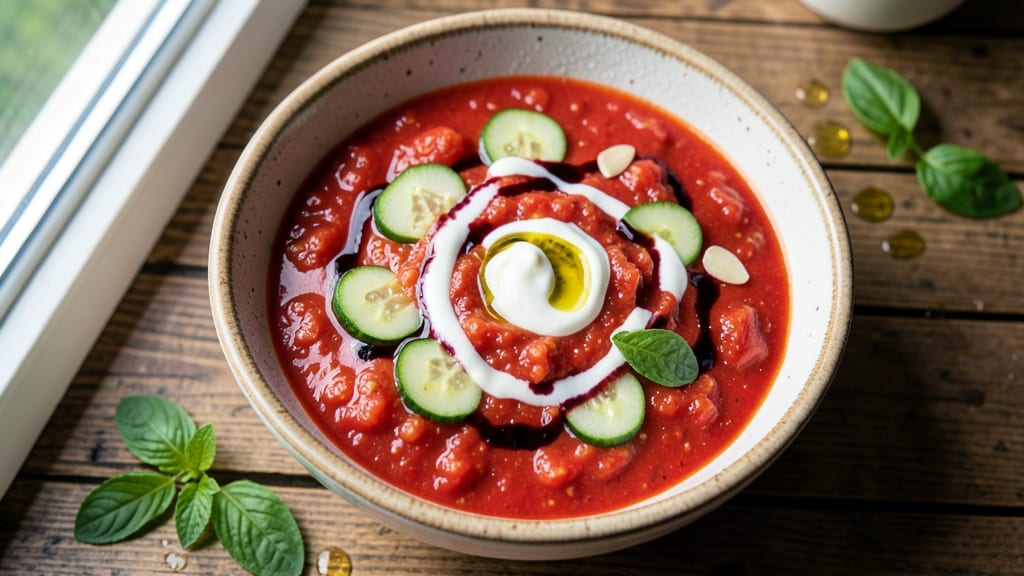
This gazpacho soup recipe with canned tomatoes proves you don’t need fresh tomatoes to create a vibrant, restaurant-quality chilled soup in just 15 minutes. The secret lies in balancing canned tomatoes with crisp cucumber, garlic, and olive oil to achieve that signature Spanish brightness—without the summer tomato hunt.
I developed this version after realizing most traditional gazpacho recipes assume fresh ingredients, leaving home cooks out in the heat.
The beauty of this recipe is its simplicity: no special equipment, no blender required (though it helps), and just five core ingredients that transform into a refreshing, tangy soup perfect for summer.
The canned tomatoes provide depth while maintaining that bright acidity, and the olive oil and vinegar create a silky texture that stays cool for hours. It’s the ideal solution for hot days when you want something light but satisfying.
What you’ll end up with is a smooth, velvety soup with a crisp edge that’s impossible to resist—especially when garnished with fresh herbs or a drizzle of olive oil. The flavor develops as it chills, becoming more complex with each hour in the fridge.
This isn’t just a quick fix; it’s a foolproof method for capturing summer’s essence in a bowl, no matter the season.
Serve it as a starter, a light lunch, or a refreshing side for grilled dishes. For extra richness, stir in a spoonful of vegan mayo or top with avocado slices. The possibilities are endless, but the base recipe stays true to its roots—simple, vibrant, and utterly refreshing.
Ingredients for gazpacho soup recipe with canned tomatoes
Five core ingredients transform into vibrant gazpacho—no fresh tomatoes needed.
| Ingredient | Amount | Notes |
|---|---|---|
| Canned San Marzano Tomatoes 🍅 | 1 can | 28 oz can, crushed by hand |
| English Cucumbers 🥒 | 1 whole | Peeled, seeded, chopped fine |
| Garlic Cloves 🧄 | 4 cloves | Fresh, peeled, minced finely |
| Extra-Virgin Olive Oil 🫒 | ½ cup | High-quality, fruity variety |
| Red Wine Vinegar 🍷 | ¼ cup | Dry, aged for brightness |
| Ice Water ❄️ | 2 cups | For adjusting consistency |
| Sea Salt 🧂 | 1 ½ tsp | Fine grain, adjust to taste |
| Fresh Basil Leaves 🌿 | ¼ cup | Packed, chopped for garnish |
| Vegan Mayo 🥫 | 2 tbsp | Optional, for richness |
| Avocado Slices 🥑 | ½ whole | Optional, for garnish |
The San Marzano tomatoes are the foundation—look for the 28 oz cans at Whole Foods or Trader Joe's for the sweetest flavor. Avoid crushed tomatoes; whole peeled tomatoes give better texture. Fresh garlic is non-negotiable here—pre-minced jars lack the punch. For cucumbers, English varieties stay crisp longer than Persian types. The olive oil should be fruity and peppery—California or Spanish varieties work best. If you're using vinegar from a bottle, let it sit at room temperature for 10 minutes to mellow out any harshness.
No red wine vinegar? Apple cider vinegar or lemon juice works in a pinch, though the flavor profile shifts slightly. Short on basil? Fresh parsley or cilantro adds brightness, though basil’s anise notes are signature. Want extra richness without mayo? Add 1 tbsp tahini or a drizzle of vegan yogurt. The avocado should be ripe but firm—Hass varieties hold up best when sliced thin. For a smoky twist, add ½ tsp smoked paprika to the base. If you're making this ahead, hold off on adding the vegan mayo until serving to prevent browning.
This gazpacho tastes better chilled for at least 2 hours, so plan ahead. Store in airtight containers for up to 3 days in the fridge. The longer it sits, the more complex the flavors become—48 hours is ideal. Garnishes like basil and avocado should be added fresh just before serving. For a smoother texture, strain through a fine-mesh sieve before chilling. If it gets too thick after refrigeration, thin with 1-2 tbsp ice water. Freezing isn't recommended as it alters the texture.
Why You'll Love This Recipe
- No-Chop Nightmare: Honestly, I dump the canned tomatoes right in, peel the cucumbers in seconds, and smash a couple of garlic cloves—no dicing, no fuss. The food processor does the rest while I drink my coffee.
- Sunshine in a Bowl: That first sip of cold, garlicky tomato with a sharp vinegar kick? It’s summer in a spoon. The San Marzano tomatoes give it a depth that’s almost sweet, while the cucumber keeps it light—like a hug from your favorite garden.
- Lunchbox Legend: Between us, this is my go-to for picnics, office lunches, or feeding a crowd without stress. Pack it in jars, and it stays crisp for days—no soggy sandwiches here. (Yes, even on a Tuesday night.)
- Budget Bright Spot: A single can of tomatoes, a couple cucumbers, and a bottle of vinegar stretch into so many meals. I’ve made this for four people for under $8, and the leftovers? Even better the next day. My wallet and my taste buds thank me.
Step-by-step instructions for gazpacho soup with canned tomatoes
This method delivers a vibrant, refreshing gazpacho in record time using simple techniques.
Prep and Blend the Base Ingredients
Start by crushing the 1 can Canned San Marzano Tomatoes by hand using your fingers or a heavy spoon. This breaks down the tomatoes into a chunky texture while preserving their natural sweetness. Transfer the crushed tomatoes to a food processor or high-powered blender.
Add the 1 whole English Cucumbers (peeled, seeded, and chopped fine), 4 cloves Garlic Cloves (peeled and minced finely), and the 0.5 cup Extra-Virgin Olive Oil to the blender. Pulse until the mixture is smooth but still retains some texture. The olive oil helps emulsify the soup, creating a silky consistency. Here's the thing—don't skip the olive oil. It's essential for that velvety finish and balances the acidity from the vinegar.
Season and Adjust Consistency
With the blender running, slowly drizzle in the 0.25 cup Red Wine Vinegar and add the 1.5 tsp Sea Salt. Taste the mixture and adjust the salt or vinegar to your preference—this is where you fine-tune the flavor. The soup should be tangy but not overly sharp, with a well-rounded acidity that cuts through the richness of the olive oil.
Once seasoned, add the 2 cups Ice Water gradually while blending. The ice water prevents the soup from becoming too warm and helps achieve the perfect chilled consistency. You want a smooth, drinkable texture—like a thick soup but still easy to sip. If it's too thick, add a splash more ice water. If it's too thin, blend for an extra 10 seconds to thicken it slightly.
Finish with Fresh Herbs and Garnish
Transfer the gazpacho to a large bowl and stir in the 0.25 cup Fresh Basil Leaves (chopped). The basil adds a bright, aromatic finish that elevates the dish. Let the soup sit for 5 minutes to allow the flavors to meld together. This resting period is crucial—it lets the basil infuse fully and ensures the soup tastes cohesive, not disjointed.
Serve the gazpacho immediately in chilled bowls. For garnish, top with 0.5 whole Avocado Slices and a drizzle of the 2 tbsp Vegan Mayo if using. The avocado adds a creamy contrast, while the mayo (if included) introduces a subtle richness. The soup should be served ice-cold—place the bowls in the freezer for 10 minutes before serving if needed. This step guarantees a refreshing, restaurant-quality experience every time.
Pro Tips For Making Gazpacho Soup Recipe With Canned Tomatoes
- Blister the Garlic: Toss whole garlic cloves in olive oil and toast them in a dry pan until they’re deep golden and smell like a Mediterranean market—this adds a nutty depth that raw garlic can’t match. I used to skip this, and the soup always tasted flat; now it’s the thing that makes people ask for seconds.
- Strain Twice: Run the soup through a fine-mesh sieve first to catch big chunks, then press the pulp with a spoon for a silky texture. The first strain gets the obvious bits, but the second squeeze extracts all the juicy goodness—no one wants a watery gazpacho. (Yes, even if you’re impatient like me.)
- Salt the Tomatoes: Sprinkle a pinch of salt directly into the canned tomatoes before blending—it softens their acidity and balances the vinegar. I learned this the hard way after a batch tasted too sharp; now I add it early and let it sit for 5 minutes before blending.
- Chill Before Serving: Let the soup sit in the fridge for at least 2 hours (overnight is better) to let flavors meld and the acidity mellow. Serving it cold and fresh from the blender? It’ll be bright but unrefined—like a song missing its final notes. (Your future self will thank you.)
Flavor customization for this dish
Spicy Kick
For a fiery twist, add 1-2 tsp of hot sauce (like Tabasco or Cholula) or ½ tsp cayenne pepper directly to the blender. This transforms your gazpacho into a spicy gazpacho that’s perfect for those who love heat.
I like to balance it with a touch of honey or agave—just 1 tsp—to sweeten the acidity. 🌶️
Smoky Depth
Infuse smoky flavors by adding ½ tsp smoked paprika or ¼ tsp liquid smoke to the base. For extra depth, char a red bell pepper over an open flame or under a broiler, then peel, seed, and blend it in.
This adds a subtle charred sweetness that pairs beautifully with the tangy vinegar. 🔥
Creamy Avocado Boost
Blend in ½ ripe avocado directly with the base ingredients for a lusciously creamy texture. The avocado adds healthy fats that balance the acidity, making the soup even more satisfying. If you prefer to keep it chunky, mash the avocado separately and swirl it into individual bowls before serving. 🥑
Herb-Forward Variations
Swap out basil for fresh dill or cilantro for a different herbal profile. Dill adds a bright, almost citrusy note, while cilantro brings a fresh, slightly earthy flavor. For a Mediterranean twist, blend in 2 tbsp fresh mint leaves—it’s unexpected but works beautifully. 🌿
Citrus Brightness
Zest and juice from ½ lemon or lime add a refreshing citrus note that cuts through the richness. I recommend using the zest in the blender and the juice at the end to preserve brightness.
For a tropical variation, add ½ cup pineapple juice and a pinch of ground ginger for a summery twist. 🍋
Extra Vegetable Add-Ins
Blend in ½ cup chopped bell peppers (red, yellow, or orange) for natural sweetness and color. For a heartier version, add ½ cup cooked quinoa or white beans to make it more substantial. Both options work well and add texture without overpowering the original flavors. 🥕
Nutrition facts
Frequently asked questions
Can I make this gazpacho without a blender?
For a chunkier texture, simply mash the crushed tomatoes, cucumber, and garlic with a fork in a bowl. Stir in the olive oil, vinegar, and salt, then thin with ice water until smooth. The result will be rustic but still delicious—perfect for a quick summer meal.
How long will this gazpacho keep in the fridge?
This gazpacho stays fresh for up to 3 days when stored in an airtight container. The flavors actually deepen as it chills, making it taste even better after 24 hours. Just hold off on adding avocado or vegan mayo until serving to prevent browning.
What if my gazpacho tastes too acidic?
Balance the acidity by adding 1 tsp honey or agave to sweeten it slightly. You can also stir in 1 tbsp extra olive oil to mellow the sharpness. Taste as you go—most people prefer a bright tang, but these adjustments help if it's too intense.
Can I use regular canned tomatoes instead of San Marzano?
Yes, but San Marzano tomatoes are ideal because they're sweeter and less acidic. If using regular canned tomatoes, reduce the vinegar to 2 tbsp and add ½ tsp sugar to balance the flavor. The texture will still be great, though the taste might be slightly sharper.
Is this gazpacho vegan-friendly?
Completely! This recipe relies on plant-based ingredients like tomatoes, cucumber, olive oil, and vinegar. Just ensure your vegan mayo (if using) is certified plant-based. The dish is naturally gluten-free and dairy-free, making it perfect for vegan diets.