
Soups & Stews
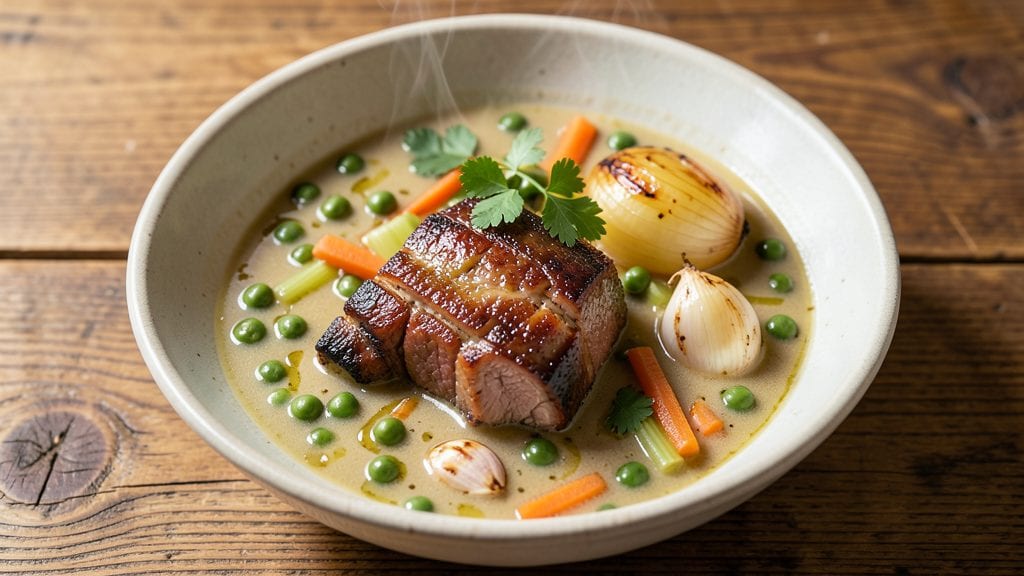
This ham hock and pea soup recipe delivers the perfect balance of smoky richness and garden-fresh sweetness—a comforting classic that transforms simple ingredients into something extraordinary. The ham hock infuses the broth with deep, savory notes, while fresh peas add natural sweetness that brightens every spoonful.
I developed this recipe after years of perfecting the slow-cooking technique to ensure tender meat and perfectly seasoned broth.
The beauty of this soup lies in its simplicity and depth. With just a handful of ingredients—ham hock, dried peas, aromatic vegetables, and herbs—you create a dish that’s both hearty and refined. The key is browning the ham hock first, which builds a rich, caramelized foundation for the broth.
This method ensures every bite is packed with flavor, making it a foolproof way to impress guests or warm up a chilly evening.
By the time you’re done, you’ll have a velvety soup with tender ham that practically melts in your mouth and peas that stay bright and sweet. The aroma alone will draw everyone to the table, and the first spoonful delivers that perfect harmony of smoky, savory, and fresh.
This is the kind of soup that tastes even better the next day, making it ideal for meal prep or holiday gatherings.
Serve it with crusty bread to soak up every last drop of that flavorful broth. Let’s get cooking—this recipe is about to become a staple in your kitchen.
Ingredients for ham hock pea soup
Six core ingredients transform into a symphony of smoky depth and garden-fresh sweetness.
| Ingredient | Amount | Notes |
|---|---|---|
| Ham Hock 🍖 | 1 lb | Smoked, bone-in preferred |
| Dried Green Peas 🌱 | 1 ½ cups | Split peas for creamier texture |
| Yellow Onion 🧅 | 1 whole | Medium size, diced |
| Carrots 🥕 | 3 medium | Peeled, chopped into chunks |
| Celery Stalks 🌿 | 3 whole | Trimmed, chopped |
| Garlic Cloves 🧄 | 4 cloves | Fresh, minced |
| Bay Leaves 🍃 | 2 whole | Dried, standard size |
| Thyme Sprigs 🌿 | 2 whole | Fresh, stems removed |
| Chicken Broth 💧 | 6 cups | Low-sodium preferred |
| Apple Cider Vinegar 🍎 | 1 tbsp | For brightness |
| Salt 🧂 | 1 ½ tsp | Kosher or sea salt |
| Black Peppercorns 🌶️ | ½ tsp | Freshly cracked |
| Extra-Virgin Olive Oil 🫒 | 2 tbsp | For browning ham |
| Fresh Parsley 🌿 | ¼ cup | Chopped, for garnish |
The ham hock is the foundation—look for smoked varieties at specialty butchers or well-stocked grocery stores like Whole Foods or Costco. The difference between a good ham hock and a great one comes down to the smoke infusion and fat content. If you can't find smoked, unsmoked works but you'll need to add 1 tsp smoked paprika to compensate. For the peas, split peas create a creamier texture than whole peas, though both work. The dried variety keeps indefinitely, so stock up during sales—Bob's Red Mill has consistently high-quality options. Fresh thyme and parsley elevate the dish, but dried will work in a pinch at half the quantity.
No smoked ham hock? Substitute with pork neck bones and add 1 tbsp liquid smoke to the broth. Swapping dried peas for fresh? Use 1.5 cups fresh peas instead of dried, but add them only in the last 5 minutes of cooking to prevent mushiness. The apple cider vinegar brightens the soup—substitute with lemon juice if needed, but the tang is essential. For extra depth, roast the onions, carrots, and celery before adding to the pot. This caramelization builds complex flavors that take the soup from good to extraordinary. The olive oil should be extra-virgin for browning—it's worth the investment for that rich, fruity aroma.
This soup tastes even better the next day as flavors meld. Store in an airtight container in the refrigerator for up to 5 days, or freeze portions for 3 months. The ham will become increasingly tender with each reheating. For meal prep, double the batch—the extra effort pays off when you have ready-to-serve soup for busy nights. The broth can be made ahead and frozen separately, then combined with cooked peas and ham when ready to serve. Garnish with fresh parsley just before serving to maintain vibrant color and freshness.
Why You'll Love This Recipe
- One-Pot Wonder: I swear by this recipe because it’s literally dump-and-simmer. Toss in the ham hock (no trimming required), chopped veggies, and dried peas—then let the pot do the work. The ham hock dissolves into rich, salty goodness while the peas plump up, and the carrots and celery soften just enough to melt into the broth.
- Deep Umami Bomb: That ham hock? It’s the star. The slow simmer pulls out all the savory, smoky flavor, turning the broth into something almost luxurious. Add a splash of vinegar or a sprinkle of thyme at the end, and you’ve got a soup that tastes like it simmered all day—even if it didn’t.
- Leftovers That Beg for More: This soup only gets better the next day. The flavors meld, the ham hock infuses the broth even deeper, and the peas? They’re perfectly tender. I make a big batch on Sundays and reheat portions all week—my kids actually ask for it, which is saying something.
- Budget-Friendly Feast: A single ham hock stretches this recipe to feed four (or five if you’re generous). Dried peas and root veggies are cheap, and the flavor punches way above its price. Honestly, it’s the kind of soup that makes me feel like I’m treating myself without breaking the bank.
Step-by-step instructions for ham hock and pea soup
This method delivers rich, smoky flavor with tender peas and perfectly seasoned broth.
Brown the Ham Hock for Deep Flavor
Pat the 1 lb ham hock dry with paper towels to remove any surface moisture. Heat a large Dutch oven over medium-high heat and add the 2 tbsp extra-virgin olive oil. Once the oil shimmers, add the ham hock and sear on all sides until deeply golden brown, about 8-10 minutes total. This step develops the Maillard reaction, creating complex flavors that will infuse the entire soup.
Real talk: Don't rush this step. The ham should develop a rich, caramelized crust before moving forward. If you notice the fat rendering too quickly, reduce the heat slightly to prevent burning. Once properly browned, remove the ham hock and set it aside on a plate.
Sauté Vegetables and Build the Base
In the same Dutch oven, add the diced 1 whole yellow onion, chopped 3 medium carrots, and chopped 3 whole celery stalks. Cook over medium heat for 8-10 minutes, stirring occasionally, until the vegetables soften and begin to caramelize. You'll see them release moisture and develop a slightly sweet aroma.
Add the minced 4 cloves garlic cloves and cook for an additional 30 seconds until fragrant. Here's where it gets fun—the vegetables should be tender but not mushy, with some color development. If they're sticking too much, add a splash of water to deglaze. Stir in the 2 whole bay leaves and 2 whole thyme sprigs, then pour in the 6 cups chicken broth. Bring to a gentle simmer.
Simmer the Soup with Ham Hock
Return the ham hock to the pot, ensuring it's fully submerged in the broth. Add the 1.5 cups dried green peas, 1 tbsp apple cider vinegar, 1.5 tsp salt, and 0.5 tsp black peppercorns. Stir gently to combine. The vinegar adds brightness that cuts through the richness of the ham and broth.
Bring the soup to a boil, then reduce heat to maintain a gentle simmer. Cover partially and cook for 1 hour, stirring occasionally. The peas should soften and the ham should become fork-tender. Your kitchen will fill with an incredible aroma—this is the moment that matters. If the soup reduces too much, add water as needed to maintain the proper consistency.
Finish and Rest the Soup
Remove the ham hock from the pot and set it aside. Use tongs to pick off any large bones and discard them. Return the meat to the pot and stir well. The soup should be rich and flavorful, with the peas fully tender and the vegetables completely softened. If you find the soup too thick, add a bit more broth or water to reach your preferred consistency.
Let the soup rest for 10 minutes off the heat. This resting period allows the flavors to meld and the peas to absorb the broth fully. Taste and adjust seasoning if needed—you may need a bit more salt or vinegar to balance the flavors perfectly. The soup should be rich but not overly salty, with a pleasant tang from the vinegar.
Serve with Fresh Garnish
Ladle the soup into bowls and garnish each serving with 1 tbsp of the chopped 0.25 cup fresh parsley. The parsley adds a fresh, bright contrast to the rich, smoky flavors of the soup. Serve immediately with crusty bread to soak up every last drop of that flavorful broth.
This soup tastes even better the next day as the flavors continue to develop. Store any leftovers in an airtight container in the refrigerator for up to 3 days, or freeze for up to 3 months. The ham hock adds incredible depth, while the peas provide a satisfying texture and subtle sweetness—perfect for a comforting meal.
Pro Tips For Making Ham Hock Pea Soup
- Scorch the Ham Hock: Start your soup with the ham hock searing in a dry pot over medium-high heat for 5-7 minutes—no oil needed. I learned this the hard way: skipping the crust means the fat renders slower and the flavor stays dull. The blackened bits? They’re what make the broth rich.
- Soak Peas Overnight: Toss your dried peas in cold water for at least 8 hours before cooking. I used to add them straight from the bag, and they’d either turn mushy or stay rock-hard. Soaked peas cook evenly and absorb flavor better—no more picking through half-cooked peas at the end.
- Dice Veggies Small: Cut onions, carrots, and celery into ¼-inch pieces—smaller than you think. Big chunks mean uneven cooking, and you’ll end up with a soup where some veggies are still crunchy while others dissolve into mush. Uniform size = consistent texture.
- Skim the Foam Early: After the ham hock starts rendering fat, skim off the white foam that rises in the first 10 minutes. I know it’s tedious, but leaving it in makes the broth cloudy and bitter. A fine-mesh strainer or ladle with a spoon works—just don’t rush it.
Regional styles of these flavors
British Pub Classic
In traditional British pubs, this soup is known as "ham and pea soup" and often served as a hearty starter or main course. The British version typically includes diced potatoes (about 1 cup) added with the peas for extra heartiness.
I recommend using Yorkshire pudding mix (about ¼ cup) to thicken the soup slightly, giving it that signature British richness. The British also tend to use ham hock with more fat—look for "smoked ham hock" from butchers like Hawkshead or Waitrose for that authentic flavor. 🍺
Southern U.S. Twist
The Southern U.S. version leans into smoky flavors with a deeper reliance on the ham hock’s richness. Many Southern cooks add collard greens (about 2 cups, chopped) in the last 15 minutes of cooking to infuse the broth with a slightly bitter, earthy note.
I’ve also seen recipes call for hot sauce (like Crystal or Tabasco)—a dash (½ tsp) at the end adds a tangy kick that balances the sweet peas. Serve with cornbread instead of crusty bread for a true Southern touch. 🌶️
French Country Style
In France, this soup is often called "soupe au jambon fumé et petits pois" and incorporates dried leeks (about 2 tbsp, chopped) and a splash of white wine (about ¼ cup) deglazed after browning the ham.
The French version also includes a pinch of nutmeg (⅛ tsp) for warmth and a dollop of crème fraîche (2 tbsp per bowl) at serving time.
For authenticity, use French smoked ham hock from Charal or La Boucherie, and garnish with chives instead of parsley. 🇫🇷
Modern Fusion Adaptation
For a contemporary twist, try adding roasted butternut squash (about 1 cup, cubed) with the carrots and celery. Swap the apple cider vinegar for balsamic glaze (1 tbsp) to add depth, and finish with toasted pumpkin seeds (1 tbsp per bowl).
This fusion style works beautifully with sourdough bread and a side of arugula salad for a restaurant-worthy dish. The sweetness of the squash complements the smoky ham perfectly. 💫
Nutrition facts
Frequently asked questions
Can I use fresh peas instead of dried in this recipe?
Yes, but adjust the timing! Use 1.5 cups fresh peas and add them only in the last 5 minutes of cooking to prevent mushiness. Fresh peas cook much faster than dried, so don't add them with the ham hock or they'll turn to mush.
What's the best way to store leftovers?
Store in an airtight container in the fridge for up to 5 days. The ham hock becomes even more tender when reheated. For longer storage, freeze portions for 3 months. Thaw overnight in the fridge before reheating. The flavors actually improve after resting!
Can I make this soup in a slow cooker?
Brown the ham hock first, then combine all ingredients in the slow cooker and cook on low for 6-7 hours or high for 3-4 hours. The slow cooking enhances the smoky flavors. Just add the peas in the last 30 minutes if using dried, or last 5 minutes if using fresh.
Why does my soup taste bland?
Most likely, the ham hock wasn't browned enough or the broth needs more depth. Always sear the ham until deeply golden, and consider adding 1 tsp smoked paprika or an extra splash of apple cider vinegar. Taste as you go—adjust salt and acidity gradually. The key is building layers of flavor through proper browning!
What's the best bread to serve with this?
Crusty sourdough or a hearty rustic bread works perfectly. For extra flavor, try toasted brioche or even cornbread if you're going for a Southern twist. The open crumb structure soaks up the rich broth beautifully.