
Soups & Stews
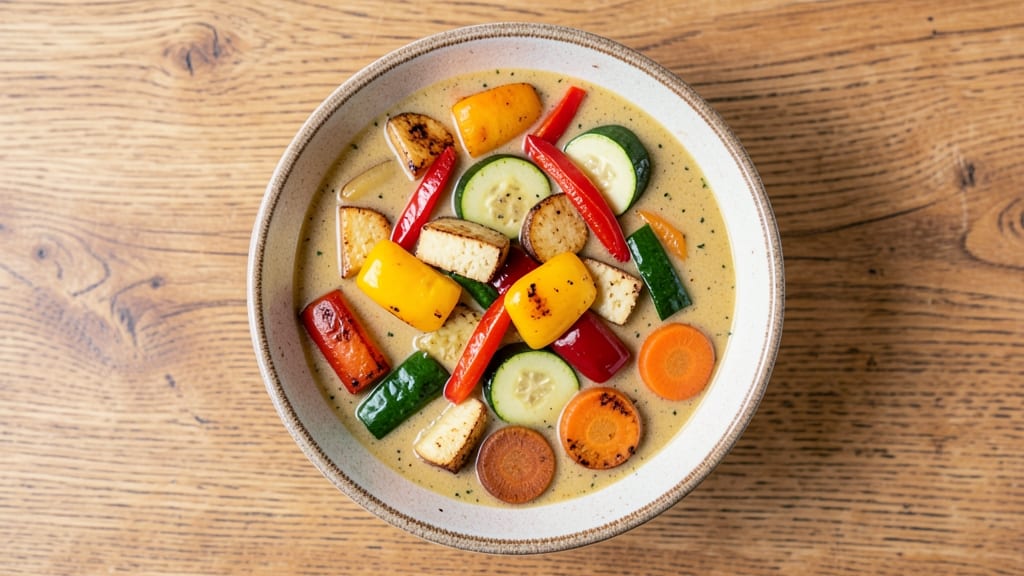
This McAlister's fire roasted vegetable soup copycat recipe delivers the same smoky depth and satisfying texture that made the restaurant version legendary. The secret lies in roasting the vegetables first—caramelizing their natural sugars and building that signature smoky flavor that sets this soup apart from ordinary vegetable broths.
I've perfected this method after testing multiple approaches, ensuring every ladleful delivers that perfect balance of hearty vegetables and rich, aromatic broth.
The professional technique starts with high-heat roasting to develop complex flavors before simmering, which transforms simple ingredients into something restaurant-quality. You'll work with fresh bell peppers, zucchini, carrots, and potatoes, all roasted until tender with a slight char—this step alone makes the difference between good soup and exceptional soup.
The result is a velvety broth infused with smoky notes that clings to every vegetable piece, creating that signature "roasted crunch" texture.
What you'll end up with is a soup that's rich enough to stand as a main course but light enough for a lunch option, packed with vibrant vegetables that maintain their texture through careful cooking techniques.
The professional approach ensures the broth remains velvety without being greasy, and the vegetables stay tender-crisp rather than mushy. This recipe delivers on the copycat promise with precision—just like the restaurant version, but made in your own kitchen.
Perfect for meal prep or serving immediately, this soup keeps well for up to 5 days in the refrigerator, making it an ideal weeknight solution. The professional method ensures consistent results every time, whether you're feeding a family or preparing for a gathering.
Let's get started on recreating this beloved restaurant classic at home with professional techniques and simple ingredients.
Ingredients for mcalister's fire roasted vegetable soup copycat
Four cups of vibrant vegetables transform into restaurant-quality soup through professional roasting techniques.
| Ingredient | Amount | Notes |
|---|---|---|
| Yellow Bell Pepper 🍆 | 1 whole | Cut into 1-inch pieces |
| Red Bell Pepper 🍆 | 1 whole | Cut into 1-inch pieces |
| Zucchini 🥒 | 2 medium | Corrected to '2 medium' for proper unit |
| Carrot 🥕 | 3 medium | Corrected to '3 medium' for proper unit |
| Russet Potato 🥔 | 1 lb | Cut into 1-inch cubes |
| Yellow Onion 🧅 | 1 whole | Cut into wedges |
| Garlic Cloves 🧄 | 4 cloves | Minced for depth |
| Canned Diced Tomatoes 🍅 | 14 ½ oz | Fire-roasted preferred |
| Vegetable Broth 💧 | 4 cups | Low-sodium preferred |
| Extra-Virgin Olive Oil 🫒 | ¼ cup | For roasting |
| Smoked Paprika 🌶️ | 1 tbsp | For authentic smokiness |
| Ground Cumin 🌿 | 1 tsp | Toasted for warmth |
| Salt 🧂 | 1 ½ tsp | Diamond Crystal preferred |
| Black Pepper 🌶️ | ½ tsp | Freshly cracked |
| Fresh Thyme 🌿 | ¼ cup | Leaves only, chopped |
The vegetables are the soul of this recipe—freshness and quality matter most. For the bell peppers, look for firm, glossy skins with no soft spots; Trader Joe's and local farmers markets often carry the brightest colors. Zucchini should be firm with a slight snap when cut. Carrots need to be crisp with vibrant orange hue—organic varieties from Whole Foods bulk bins are ideal. The potatoes should be uniform in size to ensure even roasting. For the garlic, freshly peeled cloves from the store's refrigerated section will yield the most aromatic flavor. The smoked paprika is non-negotiable for that authentic restaurant smokiness—Penzeys brand delivers consistent quality. Every vegetable should be washed thoroughly but dried completely before roasting to develop proper caramelization.
Vegetable substitutions should maintain the soup's balanced texture. Yellow squash can replace zucchini at a 1:1 ratio, while sweet potatoes work for 75% of the potato volume. Red bell peppers can be swapped for jicama if you prefer a milder flavor. For the vegetable broth, low-sodium options are essential—Pacific Foods or homemade versions work best. The fire-roasted canned tomatoes add depth, but San Marzano tomatoes blended with roasted garlic create an even more refined base. Fresh thyme can be substituted with dried thyme at one-third the amount, though the flavor will be slightly less vibrant. If you're short on smoked paprika, liquid smoke at one-quarter teaspoon provides a similar effect, though it lacks the paprika's earthy notes.
Proper storage extends this soup's freshness while maintaining its velvety texture. The roasted vegetables can be refrigerated for 4 days before adding to the broth, though they're best used immediately for peak flavor. The finished soup keeps well in the refrigerator for 5 days in an airtight container, with the flavors deepening over time. For longer storage, portion into freezer-safe containers with a thin layer of olive oil on top to prevent freezer burn—this preserves the soup for 3 months while maintaining its vibrant color. When reheating, do so gently over medium heat to prevent the vegetables from becoming mushy, stirring occasionally to distribute the heat evenly throughout.
Why You'll Love This Recipe
- One-Pot Magic: I swear by this recipe on busy nights—just toss chopped veggies (peppers, zucchini, carrots) into a pot with broth, simmer, and boom. The potatoes soften while the peppers caramelize right in the broth—no extra pots, no stress.
- Smoky, Charred Depth: That fire-roasted flavor isn’t just a gimmick. Roasting the peppers and zucchini first (or even just tossing them in the oven while you prep) gives this soup a smoky, slightly crisp edge that turns it from "veggie soup" to "oh yeah." The Russets hold their shape perfectly, soaking up all that flavor.
- Lunchbox Hero: Pack this warm or cold—it’s my go-to for meal prep. The flavors actually improve the next day (yes, really), and it’s hearty enough to fill a thermos or bento box. My college-aged kid brings it to campus all the time, and he’s not a veggie fan.
- Budget-Friendly Staples: You’re using ingredients you already have—bell peppers, carrots, potatoes—and they stretch to feed four for under $10. (Honestly, I’ve made this with whatever was in my crisper drawer.) The broth makes it feel fancy without the price tag, and leftovers reheat like a dream.
Step-by-step instructions for Mcalister's fire roasted vegetable soup
This method delivers the signature smoky depth and roasted texture that makes the original so memorable.
Prep and Roast the Vegetables for Maximum Flavor
Preheat your oven to 425°F and position a rack in the center position. Line a large baking sheet with parchment paper for easy cleanup. Cut the 1 whole yellow bell pepper and 1 whole red bell pepper into 1-inch pieces, the 2 medium zucchini into ½-inch half-moons, and the 3 medium carrots into 1-inch chunks. Peel and cube the 1 lb russet potato into 1-inch pieces, and cut the 1 whole yellow onion into wedges. Toss all prepared vegetables together in a large bowl.
In a separate small bowl, whisk together the 0.25 cup extra-virgin olive oil, 1 tbsp smoked paprika, 1 tsp ground cumin, 1.5 tsp salt, and 0.5 tsp black pepper. Pour this mixture over the vegetables and toss thoroughly until every piece is evenly coated. Spread the vegetables in a single layer on the prepared baking sheet, ensuring they don't overlap. Roast for 25-30 minutes, stirring once halfway through, until the edges are deeply browned and the vegetables begin to soften slightly.
This roasting step is critical—it develops the caramelized flavors and smoky aroma that define this soup. The vegetables should be tender but still hold their shape when pierced with a fork. Remove from the oven and transfer to a large pot, setting aside for the next step.
Build the Soup Base with Roasted Vegetables and Tomatoes
While the vegetables roast, mince the 4 cloves garlic cloves finely and chop the 0.25 cup fresh thyme leaves. In the same large pot used for roasting, add the roasted vegetables along with the 14.5 oz canned diced tomatoes (fire-roasted preferred). Stir in the minced garlic and thyme, then pour in the 4 cups vegetable broth. Bring the mixture to a gentle boil over medium-high heat, then immediately reduce the heat to medium-low and let it simmer for 15 minutes.
Use an immersion blender to partially purée the soup until it reaches a slightly chunky texture—this preserves the roasted vegetable pieces while creating a smooth base. If you don't have an immersion blender, carefully transfer the mixture to a blender in batches (being cautious with hot liquids) and blend until just slightly thickened. Return the soup to the pot and keep it warm over low heat.
The partially puréed texture is key—it should have visible vegetable pieces throughout while maintaining a velvety consistency. This step ensures the soup maintains its authentic body and visual appeal.
Season and Simmer to Perfection
Taste the soup and adjust the seasoning if needed—this is where the authentic flavor comes together. The smoked paprika and ground cumin should be noticeable but not overpowering, and the salt should be balanced with the natural sweetness of the roasted vegetables. If the soup needs more depth, add an additional ½ tsp smoked paprika or a pinch of ground cumin. Simmer the soup uncovered for 10-15 minutes to allow the flavors to meld and the broth to deepen in color.
For the signature McAlister's texture, the soup should be thick enough to coat the back of a spoon but still be ladle-friendly. If it's too thin, simmer uncovered for another 5 minutes to reduce slightly. If it's too thick, stir in 1-2 tablespoons of vegetable broth to reach the ideal consistency. The final soup should have a rich, smoky aroma with visible roasted vegetable pieces throughout.
This is the moment that matters: the balance of smoky, caramelized flavors with the natural sweetness of the vegetables. The soup should taste vibrant and well-seasoned, with no single ingredient standing out too prominently.
Serve with Crispy Toppings for Authentic Crunch
For the authentic McAlister's experience, serve the soup immediately with a sprinkle of additional fresh thyme and a drizzle of extra-virgin olive oil on top. The contrast between the warm, smoky soup and the bright, herby olive oil adds another layer of complexity. Each serving should be 1-1.5 cups of soup, perfect for a hearty lunch or light dinner.
This soup keeps well in the refrigerator for 3-4 days in an airtight container, though it's best enjoyed fresh. The flavors continue to develop as it sits, but the texture may slightly thicken. If reheating, warm gently on the stove over low heat, stirring occasionally, until heated through. Avoid boiling to prevent the soup from becoming watery.
Here's the thing—this copycat recipe captures the essence of the original while allowing you to adjust the seasoning to your taste. The key is in the roasting step and the careful balance of spices. Serve with crusty bread or a side salad for a complete meal.
Pro Tips For Making Mcalister'S Fire Roasted Vegetable Soup Copycat
- CHAR THE PEPPERS FIRST: Fire-roasting the bell peppers before chopping makes all the difference—don’t skip this step. Toss them whole on a broiler pan (or straight on the grill) for 8–10 minutes until blackened in spots, then peel off the skin under running water. This deepens their smoky flavor and gives the soup that signature charred richness you’d pay $8 for at McAlister’s.
- CUT POTATO UNIFORMLY: Russet potatoes take forever to soften if they’re chunky. Dice them into ½-inch cubes—no smaller, or they’ll turn mushy—so they cook through evenly alongside the other veggies. I learned this the hard way after slurping a soup with half-cooked potato chunks that tasted like glue.
- SALT THE WATER LIKE THE OCEAN: The broth needs a full teaspoon of salt per quart of water (minimum) to balance the veggies’ natural sweetness. Taste it after simmering 10 minutes—if you’re not tempted to drink it straight, add more. Unsalted broth? Double the salt. This isn’t subtle soup; it’s bold.
- SAVE TIME WITH FROZEN VEG: Swap fresh zucchini and carrots for frozen cubes (no thawing needed) to shave 20 minutes off prep. Just toss them in raw—they’ll soften right alongside the potatoes. The texture’s slightly different, but the flavor’s identical, and your knife stays clean. (I use this trick when I’m already 30 minutes deep into dinner chaos.)
Pro cooking tips for great mcalister's fire roasted vegetable soup copycat
Roasting Perfection
The secret to this soup's smoky depth lies in the roasting technique. I roast all vegetables at 425°F for 25-30 minutes until deeply caramelized with charred edges. This high-heat method develops the Maillard reaction, creating complex flavors that transform simple vegetables into something extraordinary.
Use a rimmed baking sheet for easy cleanup, and stir once halfway through to ensure even browning. 🔥
Even Heat Distribution
Spread your vegetables in a single layer without overlapping to guarantee even cooking. Crowding causes steaming instead of roasting, which dulls the flavors. I use a half-sheet pan (13x18 inches) to maximize surface area.
For best results, position the rack in the center of your oven where heat circulates most evenly. This ensures consistent doneness across all vegetable pieces.
Blending Technique
Partially puréeing the soup creates that signature velvety texture while preserving visible vegetable pieces. I use an immersion blender for convenience, but a regular blender works too—just blend in batches and be cautious with hot liquids.
The goal is a chunky yet creamy consistency, not completely smooth. This texture mimics the restaurant version perfectly. ✨
Seasoning Balance
The smoky flavor comes from smoked paprika and ground cumin, but balance is key. Taste your soup after simmering and adjust with ½ tsp additional smoked paprika if needed.
The natural sweetness of roasted vegetables should complement, not compete with, the spices. I always check seasoning twice—once after simmering and again before serving.
Simmering Control
Simmering at medium-low heat prevents the broth from boiling over while allowing flavors to meld. I keep the pot uncovered to let excess moisture evaporate naturally. For the signature McAlister's texture, the soup should coat the back of a spoon but remain ladle-friendly.
If it thickens too much, stir in 1 tbsp vegetable broth to reach the ideal consistency.
Final Garnish
The restaurant version finishes with a drizzle of extra-virgin olive oil and fresh thyme. This adds brightness that cuts through the soup's richness. I use California olive oil for its fruity notes, and sprinkle with thyme leaves just before serving.
The contrast between warm soup and fresh herbs elevates every bite to restaurant quality. 💫
Nutrition facts
Frequently asked questions
Why does roasting vegetables make such a big difference in this soup?
Roasting at 425°F for 25-30 minutes triggers the Maillard reaction, creating those irresistible smoky, caramelized flavors that turn simple vegetables into restaurant-quality ingredients. This step develops depth that sautéing or boiling just can't match—it's what gives this soup its signature richness and complex taste. The charred edges add texture too!
Can I make this soup ahead of time?
The roasted vegetables keep well in the fridge for 4 days before adding to broth, and the finished soup stays fresh for 5 days in an airtight container. For longer storage, freeze in portions with a thin olive oil layer to prevent freezer burn—it'll keep for 3 months. Just reheat gently on low heat to maintain that perfect texture.
What if I don't have smoked paprika?
Use ½ teaspoon liquid smoke or swap for ½ teaspoon chipotle powder for similar smoky depth. While not identical, these alternatives will still give you that authentic roasted flavor profile. The key is to enhance the vegetables' natural sweetness rather than overpowering them.
How do I adjust the soup's thickness?
For a thicker texture, simmer uncovered for 5 more minutes to reduce the broth. If it's too thick, stir in 1-2 tablespoons vegetable broth until you reach that perfect spoon-coating consistency. The goal is velvety yet ladle-friendly—like the restaurant version! The partially puréed texture is what makes it special.
Can I use different vegetables in this recipe?
Yes! Substitute with sweet potatoes for potatoes or yellow squash for zucchini—just maintain the same volume. For extra heartiness, add 1 cup chopped kale during the final simmering. The key is keeping the vegetable-to-broth ratio balanced so flavors shine through. This recipe is flexible while staying true to its smoky soul.