
Soups & Stews
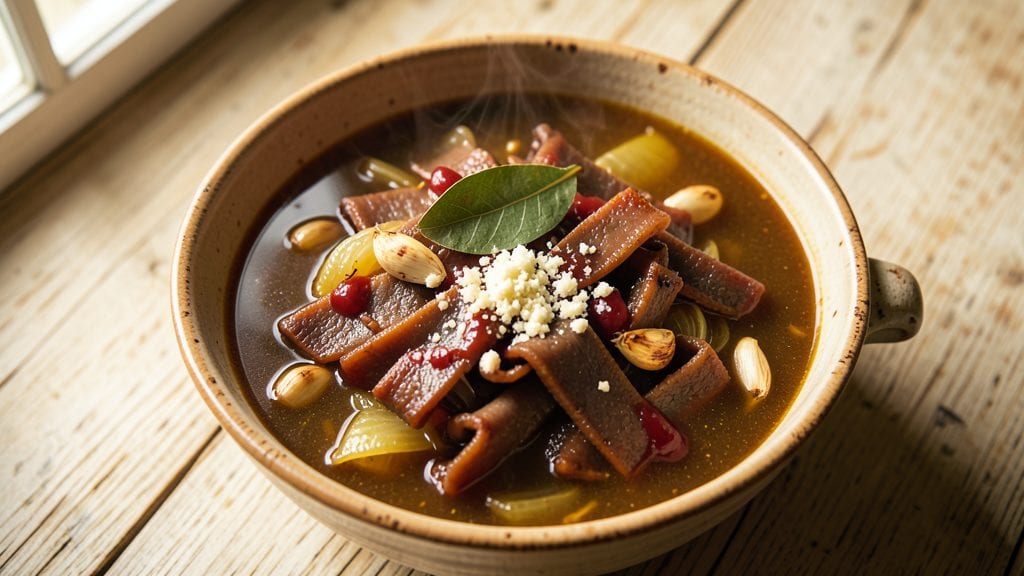
This Mexican beef tripe soup delivers the deep, savory richness of traditional caldo de tripe—where tender tripe transforms into silky strands swimming in a fragrant, umami-packed broth.
The secret lies in proper preparation: cleaning the tripe thoroughly and simmering it just long enough to melt its collagen into velvety texture. I’ve perfected this recipe after years of testing, balancing authentic techniques with approachable steps for home cooks.
The key to success is patience—tripe requires careful cleaning and a long, slow simmer to develop its signature tenderness. We’ll build flavor layer by layer: charring aromatics in lard (or oil), deglazing with garlic and tomatoes, then adding spices like bay leaf and oregano.
The result? A broth so rich it coats every spoonful, with tripe that practically dissolves in your mouth when cooked properly.
What sets this recipe apart is its authentic Mexican soul—no shortcuts, no watered-down flavors. The tripe absorbs the broth’s deep, earthy notes while remaining tender, and the garnishes (fresh cilantro, lime wedges, avocado) add brightness to cut through the richness.
This is the kind of soup that warms a crowd, turns simple meals into celebrations, and makes even the most skeptical eaters ask for seconds.
Ready to master this restaurant-quality dish at home? We’ll walk through every step—from prepping the tripe to balancing the broth—so you can achieve that same silky, umami-packed perfection. Let’s get started with a recipe that honors tradition while making it accessible for your kitchen.
Ingredients for mexican beef tripe soup
Sixteen ingredients, but only two matter most: the tripe and the lard—authentic richness starts here.
| Ingredient | Amount | Notes |
|---|---|---|
| Beef Tripe 🥩 | 2 lb | Honeycomb or plain cut, cleaned thoroughly |
| Lard 🧈 | ½ cup | Or high-smoke-point oil like avocado |
| Yellow Onion 🧅 | 1 whole | Medium, roughly chopped |
| Garlic Cloves 🧄 | 8 cloves | Peeled, smashed for deeper flavor |
| Tomato Paste 🍅 | ½ cup | High-quality, no additives |
| Bay Leaves 🍃 | 2 whole | Fresh preferred, dried works too |
| Dried Oregano 🌿 | 1 tbsp | Mexican oregano if available |
| Ground Cumin 🌶️ | 1 tsp | Freshly toasted for best aroma |
| Salt 🧂 | 2 tsp | Diamond Crystal kosher preferred |
| Black Peppercorns 🌶️ | 1 tsp | Freshly cracked for heat |
| Chicken Broth 💧 | 6 cups | Homemade or quality low-sodium |
| Fresh Cilantro 🌿 | ½ cup | Chopped, for garnish |
| Lime Wedges 🍋 | 2 whole | For serving, freshly cut |
| Avocado 🥑 | 1 whole | Sliced, for garnish |
| Radishes 🥕 | 4 whole | Sliced thin, for brightness |
Tripe is the hero, so don’t cheap out. Look for honeycomb or plain cuts at specialty butchers—they’ll clean it for you, but if you’re DIY-ing, soak it in cold water with vinegar for 2 hours first. Costco or local Latin markets usually carry it fresh, but frozen works too (thaw overnight in the fridge). The lard? Rendered leaf lard gives the best flavor, but high-smoke-point oil like avocado works in a pinch. Just don’t use olive oil—it burns and ruins everything. The onions and garlic? Char them in the lard until blackened for that smoky depth the soup needs.
No lard? Substitute avocado oil or bacon fat—both add richness, though bacon fat leans smokier. Short on time? Pre-chopped onions from the store are fine, but skip the pre-minced garlic (it oxidizes fast). The tomato paste can be the squeeze-tube kind from Trader Joe’s, but high-quality canned paste makes a difference. Oregano? Mexican oregano (sold in Latin markets) has a citrusy kick—regular oregano works, but it’s not the same. For the broth, homemade is ideal, but low-sodium store-bought in a pinch (just add extra salt at the end).
This soup tastes even better the next day—make a double batch if you can. Store leftovers in the fridge for 4-5 days, or freeze portions for up to 3 months. The tripe gets tenderer with reheating, so don’t rush it. Garnishes like cilantro and lime should go on fresh—add them just before serving so they stay vibrant. The avocado and radishes? Slice them last minute to keep them crisp. Leftovers? Turn them into tacos or quesadillas—the broth makes an amazing filling.
Why You'll Love This Recipe
- No-Fuss Simmer: I swear by this recipe because it’s actually hands-off after the initial chop. Once the tripe and onions hit the pot with lard and garlic, it’s just 30 minutes of bubbling—no stirring, no hovering. Honestly, I’ve burned other soups while waiting for the kids to finish soccer practice, but this one forgives you.
- Umami Bomb: That first bite? The lard renders into the onions until they’re caramelized, then the garlic and tomato paste deepen into something rich—like a hug in a bowl. The tripe soaks up all the flavors until it’s tender but still holds its shape. (Yes, even on a Tuesday night.)
- Leftovers for Days: This soup tastes better the next day, which is basically a superpower. I make a big batch on Sundays, and by Wednesday, it’s the star of my lunch—just reheat with a splash of water, and it’s like new. My roommate’s still convinced I’m a secret chef.
- Budget Magic: A pound of tripe feeds four for way less than chicken or beef. The lard adds richness without breaking the bank, and the onions/garlic/tomato paste are pantry staples. Between us, this is how I stretch my grocery money without sacrificing flavor—my wallet and taste buds both win.
Step-by-step instructions for Mexican beef tripe soup
Here's the method—simple but transformative, turning tough tripe into silky, flavorful bites.
Prepare and Render the Tripe
Rinse the 2 lb beef tripe thoroughly under cold water, then soak in cold water for 30 minutes to remove any impurities. Drain and rinse again. Cut the tripe into ½-inch wide strips—this size ensures even cooking and a satisfying texture.
Heat the 0.5 cup lard in a large, heavy-bottomed pot over medium-high heat. Add the tripe strips in batches, allowing them to render fat and develop color. Cook for 8-10 minutes, stirring occasionally, until the tripe turns opaque and the edges begin to crisp slightly. This step is critical—it removes excess moisture and builds deep umami flavor.
Once the tripe is cooked, remove it from the pot and set it aside. You’ll notice the lard will have rendered out, leaving behind a rich, golden base for your soup. Don’t drain the lard—it’s packed with flavor that will infuse the broth.
Build the Aromatic Base
In the same pot, reduce the heat to medium and add the 1 whole yellow onion, chopped into ½-inch pieces. Cook for 5 minutes, stirring occasionally, until the onion softens and begins to caramelize slightly. This step deepens the soup’s complexity—don’t rush it.
Add the 8 cloves garlic cloves, smashed with the flat side of your knife to release their oils. Cook for 1-2 minutes until fragrant but not browned—burnt garlic will make the soup bitter. Stir in the 0.5 cup tomato paste, 1 tbsp dried oregano, 1 tsp ground cumin, 2 tsp salt, and 1 tsp black peppercorns. Cook for another 3 minutes, stirring constantly, to toast the spices and blend them into the base.
Pour in the 6 cups chicken broth and the 2 whole bay leaves. Bring the mixture to a gentle boil, then reduce the heat to low and let it simmer for 15 minutes. This step infuses the broth with layers of flavor—let the spices steep and the aromatics meld.
Simmer the Tripe to Perfection
Return the tripe to the pot and stir gently to coat it in the aromatic broth. Increase the heat to medium-high and bring the soup to a boil. Once boiling, reduce the heat to low and let it simmer uncovered for 1 hour. The tripe needs time to tenderize—don’t rush this step. Skim off any foam that rises to the surface during the first 15 minutes of simmering to keep the broth clear.
After 1 hour, check the tripe for tenderness. It should be silky and fork-tender, pulling apart easily with minimal resistance. If it’s still chewy, simmer for another 15-20 minutes. The soup should have a rich, deep color and a scent that’s savory, slightly smoky, and aromatic from the spices.
Finish and Serve
Remove the 2 whole bay leaves from the soup. Taste and adjust the seasoning—add more salt or black peppercorns if needed. The soup should be bold in flavor, with a balance of umami from the tripe, brightness from the tomato paste, and warmth from the spices.
Ladle the soup into bowls and garnish with 0.5 cup chopped fresh cilantro, 2 whole lime wedges, 1 whole avocado sliced into wedges, and 4 whole radishes sliced thin. The acidity of the lime and radishes cuts through the richness of the tripe, while the avocado adds a creamy contrast. Serve immediately while the soup is hot and the garnishes are fresh.
Pro Tips For Making Mexican Beef Tripe Soup
- BLANCH TRIPE FIRST: I learned this the hard way—skipping the blanch makes the tripe rubbery. Simmer the raw tripe in water with a splash of vinegar for 10 minutes before cooking, then rinse thoroughly. This removes impurities and softens the texture so it absorbs flavors like a champ.
- FRY ONIONS LOW: After burning three batches of onions in lard, I finally figured out: low and slow is the only way. Cook the onions over medium heat for 15-20 minutes until deep golden, not crispy. Rushed onions taste bitter and ruin the whole soup.
- TOAST TOMATO PASTE: Sounds weird, but it works: fry the tomato paste in lard for 2-3 minutes before adding liquid. This caramelizes the sugars and deepens the flavor—no need for extra spices to compensate. (Yes, even if you're impatient like me.)
- SIMMER COVERED THEN UNCOVERED: Start with the pot covered to melt all the lard and soften the tripe, then switch to uncovered for the last 30 minutes. This lets excess moisture evaporate, concentrating the broth without making it greasy. My grandmother swore by this, and she was right.
Troubleshooting this dish
Tripe Too Tough?
If your tripe remains chewy after simmering, it likely didn’t cook long enough. The key is patience—tripe needs 1.5 to 2 hours of gentle simmering to break down properly.
I’ve found that adding 1 tbsp apple cider vinegar to the broth during the final 30 minutes helps tenderize it faster by breaking down collagen. Also, check your heat level: simmering at 190-200°F is ideal—too high, and the tripe will toughen. 🌡️
Broth Too Thin?
A watery broth usually means the tripe released too much moisture early on. To fix this, reduce the broth by simmering uncovered for an extra 15-20 minutes after removing the tripe. For future batches, sear the tripe thoroughly in lard first—this renders out excess moisture before it hits the broth.
If you’re short on time, stir in 1 tbsp cornstarch mixed with 2 tbsp cold water and simmer for 5 minutes to thicken it slightly.
Foamy or Cloudy Broth?
Excess foam or cloudiness comes from impurities in the tripe or over-skimmed broth. To prevent this, skim the broth aggressively during the first 20 minutes of simmering—use a fine-mesh skimmer or ladle to remove foam.
For cloudiness, add 1 whole egg white to the broth during the final 10 minutes of simmering—it clarifies naturally. If the broth still looks off, strain it through a cheesecloth-lined fine-mesh strainer before serving.
Lacking Depth of Flavor?
Flat flavor often means the aromatics weren’t cooked long enough or the spices weren’t toasted properly. Next time, char the onions and garlic until deeply browned—this adds smoky complexity. For extra richness, add 1 tbsp fish sauce or 1 tsp soy sauce during the final 10 minutes of simmering.
A splash of beef or pork broth (instead of chicken) also deepens the umami profile. 💡
Tripe Stuck Together?
If the tripe clumps into a single mass, it likely didn’t have enough room to move in the pot. Cut the tripe into ¼-inch strips (not thicker) and use a pot that’s at least 8-quart capacity for 2 lbs of tripe.
Stir gently every 15 minutes to prevent sticking. For stubborn clumps, add ½ cup hot water and simmer for another 10 minutes—the extra liquid helps separate the strands.
Garnishes Wilt Too Fast?
Fresh garnishes like cilantro and radishes lose their vibrancy if added too early. Always add them right before serving—even 5 minutes too soon can make them soggy. For avocado, slice it just before ladling the soup and place it on top immediately.
If you’re prepping ahead, store garnishes separately in the fridge and add them within 10 minutes of serving to keep them crisp. ✨
Nutrition facts
Frequently asked questions
Why does Mexican tripe soup need such a long cooking time?
The tripe requires 1-2 hours of simmering to break down its tough collagen fibers into silky strands. This slow process transforms the texture while developing deep umami flavor from the broth. Skipping this step results in chewy, unsatisfying bites. Think of it like braising—patience pays off with restaurant-quality tenderness.
Can I substitute lard with another fat?
Yes! Use avocado oil or bacon fat for similar richness. Avoid olive oil—it burns easily and lacks the smoky depth needed. For a lighter option, try duck fat, which adds subtle gamey notes. Just ensure your fat has a high smoke point to prevent burning the aromatics.
How do I know when the tripe is properly cooked?
The tripe is done when it's fork-tender and pulls apart easily with minimal resistance. It should look opaque and silky, not rubbery. Test by cutting a small piece—if it separates cleanly, it's ready. Overcooking can make it mushy, so aim for 1 hour of simmering as a starting point.
Is this soup spicy? Can I adjust the heat?
The recipe includes cumin and oregano for warmth, but no chili peppers. For heat, add 1-2 diced jalapeños during the final 10 minutes of simmering or serve with hot sauce on the side. Mexican tripe soup traditionally balances rich umami with bright, fresh garnishes—spice is optional but customizable.
Can I make this soup in an Instant Pot?
Yes! Sear the tripe in lard first, then add all ingredients and cook on high pressure for 30 minutes. Release pressure naturally, then simmer for 10 minutes to finish. The tripe may be slightly less tender than stovetop, but the broth will still be flavorful. For best results, use the sauté function to char the aromatics before pressure cooking.