
Soups & Stews
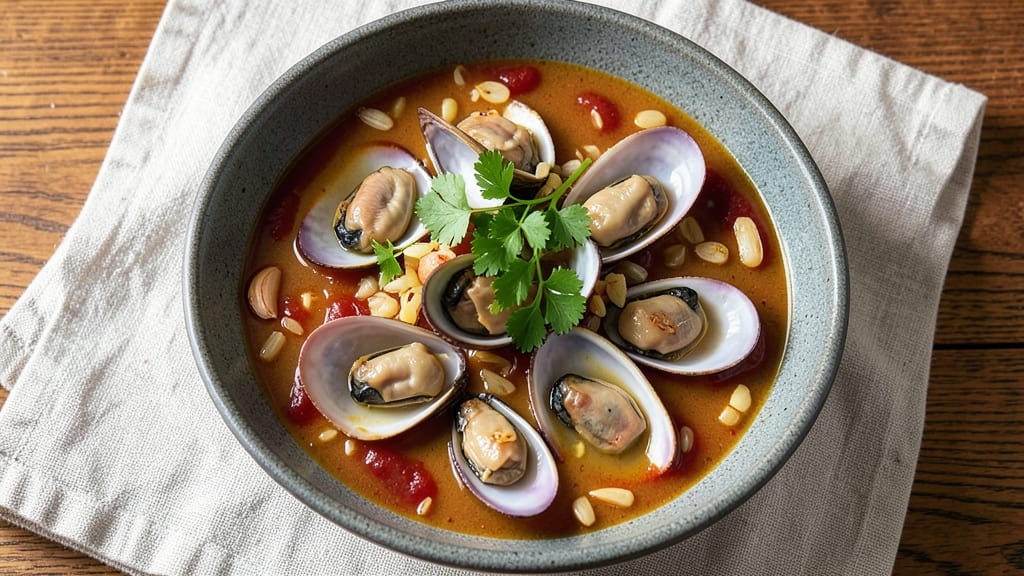
This mussel soup recipe transforms simple ingredients into a briny, aromatic masterpiece that tastes like a coastal escape. The secret lies in balancing the natural sweetness of mussels with bold garlic, white wine, and fresh herbs—creating a broth so rich it feels like a hug in a bowl.
I perfected this during a chilly evening when I needed comfort food with minimal effort, and it became an instant family favorite.
The process is straightforward but precise: sautéing garlic and shallots until fragrant, deglazing with white wine to build depth, then simmering mussels until they open naturally. A touch of tomato paste adds subtle sweetness, while parsley and thyme brighten the final broth.
The result is a velvety, flavorful soup that’s hearty enough for a main dish but light enough for any meal.
What makes this recipe special is how it captures the essence of coastal dining—briny seaflavor meets garlicky comfort—without requiring fancy ingredients. The mussels steam open in their own juices, releasing their natural sweetness into the broth, while the aromatics infuse every spoonful with layers of flavor.
It’s the kind of dish that transforms a simple weeknight into a memorable experience.
Serve with crusty bread to soak up every last drop of that aromatic broth, or pair it with a crisp white wine for the full coastal experience. The recipe scales easily, so whether you're cooking for two or feeding a crowd, this mussel soup delivers restaurant-quality results at home.
Ingredients for mussel soup
Fresh mussels, aromatic garlic, and crisp white wine create this briny, comforting soup.
| Ingredient | Amount | Notes |
|---|---|---|
| Fresh Mussels 🦪 | 2 lbs | Live, scrubbed and debearded |
| Garlic Cloves 🧄 | 6 cloves | Minced, for aromatic base |
| Shallots 🧅 | 2 whole | Minced, for subtle sweetness |
| White Wine 🍷 | 1 cup | Dry, like Sauvignon Blanc |
| Tomato Paste 🍅 | 1 tbsp | For subtle sweetness balance |
| Fresh Parsley 🌿 | ¼ cup | Chopped, for bright finish |
| Fresh Thyme 🌿 | ½ tbsp | Leaves only, for herbal depth |
| Extra-Virgin Olive Oil 🫒 | ¼ cup | For sautéing aromatics |
| Vegetable or Chicken Stock 💧 | 2 cups | Homemade preferred, low-sodium |
| Lemon Juice 🍋 | 1 tbsp | Freshly squeezed, for acidity |
| Salt 🧂 | 1 tsp | Kosher or sea salt |
| Black Pepper 🌶️ | ½ tsp | Freshly ground, for warmth |
| Crusty Bread 🍞 | 1 whole | For serving, optional |
The mussels are the star—look for fresh, live mussels with tightly closed shells. Whole Foods or local seafood markets are best for quality, but any reputable fishmonger will have them. The garlic and shallots should be bright and firm, not sprouting or soft. For the white wine, Sauvignon Blanc or Pinot Grigio work perfectly—they add acidity without overpowering. The parsley and thyme should be fresh; dried herbs won't give the same bright finish. If you can't find fresh thyme, dried at one-third the amount will work, but it won't be as vibrant.
No mussels? Clams or scallops can work in a pinch, though the texture will differ. Short on white wine? Dry vermouth or even more stock will bridge the gap, but the wine adds essential acidity. The tomato paste can be swapped for a splash of pasta sauce if needed, though it won't be as balanced. For the stock, low-sodium is key—you don't want to over-salt the soup. If you're using a bouillon cube, half the recommended amount is plenty. The bread is purely for serving; any crusty loaf will do—baguette or sourdough are ideal.
Mussels release their juices quickly, so use them within 2 days of purchase for the best flavor. Store them in the fridge, unwashed and in a damp towel, until ready to use. The soup reheats beautifully—just warm gently on the stove and adjust seasoning as needed. It keeps for 3-4 days in the fridge, though the mussels won't last that long. For leftovers, strain the broth and freeze it separately for future use—it's even more flavorful the next day.
Why You'll Love This Recipe
- One-Pot Magic: I swear by this recipe because it’s literally one pot—no chopping boards, no extra pans, just mussels steaming in their own broth. The garlic and shallots soften into a fragrant base while you’re still opening the wine, and by the time the mussels plump open, the kitchen’s half-cleaned.
- Wine-Infused Richness: That splash of white wine? It’s not just for show—it cuts through the brininess of the mussels and lets the tomato paste deepen into a velvety, slightly sweet backbone. Honestly, the first sip feels like a little coastal escape, even if you’re eating it in sweatpants.
- Leftovers That Shine: Between us, the second day of this soup is better. The flavors meld into something even richer, and it reheats like a dream—just a quick simmer with a splash of water. I keep a jar of the broth in the fridge for pasta or grains; it’s my secret weapon for lazy nights.
- Budget-Friendly Luxury: Fresh mussels are cheaper than you think, especially if you buy them in season, and this recipe stretches them far. A pound feeds four easily, and the aromatics (garlic, shallots) are dirt cheap. It’s fancy enough for guests but won’t break the bank—my kind of win.
Step-by-step instructions for mussel soup recipe
Here's how to create a hearty, comforting mussel soup with rich seaflavor and aromatic depth.
Prepare the Mussels and Aromatics
Start by scrubbing the 2 lbs fresh mussels thoroughly under cold running water to remove any grit or debris. Use a stiff brush if needed, focusing on the hinged sides where sand often collects. Pull off and discard any mussels that are open or don't close tightly when tapped—these should be discarded as they may be spoiled.
While the mussels soak, finely mince the 6 cloves garlic cloves and 2 whole shallots using a sharp knife. I like to pulse them briefly in a food processor for even consistency, but a fine dice works perfectly by hand. Set these aside in a small bowl—they'll form the aromatic foundation of your soup.
Build the Flavor Base in Olive Oil
Heat the 0.25 cup extra-virgin olive oil in a large, heavy-bottomed pot over medium heat. Add the minced garlic and shallots, stirring constantly for 3-4 minutes until they become fragrant and just begin to soften. This step develops the soup's signature garlicky depth—don't rush it, or you'll burn the aromatics.
Stir in the 1 tbsp tomato paste and cook for another 1 minute, allowing it to darken slightly. This creates a subtle sweetness that balances the briny mussels. Immediately pour in the 1 cup white wine, scraping up any browned bits from the bottom of the pot. Let this mixture simmer for 2-3 minutes until the wine reduces by about half and becomes slightly syrupy.
Simmer the Mussels in Stock
Add the 2 cups vegetable or chicken stock and bring the mixture to a gentle boil. Carefully add the prepared mussels, working in batches if needed to avoid overcrowding. The soup should return to a simmer immediately—if it boils too vigorously, the mussels won't open properly. Cover the pot and cook for 5-7 minutes, checking occasionally.
You'll know the mussels are done when they've all opened. Discard any that remain closed after this time, as they won't absorb the flavors. The broth should now have a rich, briny character with visible mussel juices infusing the liquid. Remove the pot from heat and stir in the 0.5 tbsp fresh thyme leaves and 1 tsp salt. Let the soup sit off the heat for 2 minutes to allow the flavors to meld.
Finish with Herbs and Acid
Stir in the 0.25 cup chopped fresh parsley and 1 tbsp lemon juice, adjusting the seasoning with additional salt or 0.5 tsp black pepper if needed. The lemon juice brightens the dish and cuts through the richness of the mussels. Taste the soup—it should be perfectly balanced between the briny mussels, garlicky aromatics, and herbal notes.
For serving, ladle the hot soup into bowls, ensuring each portion contains several mussels. The broth should be rich and flavorful, with the mussels easily slipping from their shells. Serve immediately with 1 whole crusty bread on the side for dipping—its crust will soak up every last drop of that comforting, aromatic broth.
Pro Tips For Making Mussel Soup
- Steam, Don’t Boil: Mussels release their briny sweetness when steamed gently—not when they’re tossed into a rolling boil. Start with a shallow layer of liquid (about 1 inch) and bring it to a simmer before adding the mussels. If the soup starts to bubble wildly, lower the heat immediately. I learned this the hard way when I ended up with rubbery mussels and a cloudy broth.
- Scrub, Don’t Rinse: Mussels trap sand and grit in their folds, but rinsing them just washes away their natural juices. Instead, scrub each one under cold running water with a stiff brush—focus on the hinge and the beard—then give them a final wipe with a damp paper towel. This keeps the broth clear and the flavor intact.
- Deglaze Before Adding Wine: The fond stuck to your pot after cooking shallots and garlic is flavor gold—don’t ignore it. Splash in the white wine after removing the pan from heat and let it bubble for 30 seconds to lift those browned bits. Then return to the stove and stir in the tomato paste. This step makes a real difference in depth of flavor.
- Taste the Wine First: Not all white wine is created equal, and cheap or overly oaky varieties will overpower your soup. Pick a dry, crisp wine you’d actually drink (think Sauvignon Blanc or Pinot Grigio) and taste it plain before cooking. If it’s too harsh or sweet, swap it for something more neutral—your soup will thank you. (Yes, even if you’re impatient like me.)
Essential equipment for great mussel soup
Heavy-Bottomed Pot
A 5-6 quart enameled cast iron Dutch oven like the Le Creuset Signature is my go-to for mussel soup. The thick base distributes heat evenly, preventing hot spots that could cook the mussels unevenly.
I avoid thin stainless steel pots—they heat too quickly and make it hard to maintain a gentle simmer. For budget-friendly options, a Calphalon stainless steel pot with a heavy bottom works well too. 🔥
Sharp Knife and Cutting Board
Mincing 6 garlic cloves and 2 shallots finely is crucial for flavor development. I use a Wüsthof Ikon chef’s knife—its razor-sharp edge makes quick work of aromatics. A Japanese santoku knife also works well for this task.
Pair it with a non-slip silicone mat to keep your cutting board stable while chopping. Fresh herbs like parsley and thyme should be chopped on a separate board to avoid cross-contamination.
Fine-Mesh Strainer
After cooking, you’ll want to strain the broth for serving or storage. A stainless steel fine-mesh strainer like the OXO Good Grips removes debris while keeping the broth intact.
For mussel soup, I strain the broth separately from the mussels—this lets you serve the broth as a consommé while keeping the mussels intact for dipping bread. A colander won’t work as well; it leaves behind fine particles that can make the broth cloudy.
Wooden Spoon and Ladle
A heat-resistant wooden spoon (I prefer Oxa-Base) is essential for stirring the soup without scratching the pot. Wood helps distribute heat evenly and prevents sticking. For serving, a stainless steel ladle with a long handle—like the Chicago Metallic—lets you scoop soup without burning your hands.
Avoid plastic utensils; they can melt or absorb flavors over time.
Instant-Read Thermometer
While mussels don’t require precise temperature monitoring, an instant-read thermometer like the Thermoworks ThermoPop ensures your stock reaches a safe 165°F if you’re reheating leftovers. It’s also handy for checking the internal temp of any added proteins (like shrimp or sausage) if you’re customizing the recipe.
For mussel soup specifically, it’s more about timing than temperature—just ensure the broth is simmering gently.
Damp Towel or Clean Kitchen Towels
Store your 2 lbs fresh mussels in a bowl lined with a damp towel until ready to use. This keeps them moist and prevents them from drying out. I also keep a stack of clean kitchen towels nearby to pat down any excess moisture before cooking.
This simple step ensures the mussels steam open properly without sticking to the pot. A paper towel won’t work as well—it absorbs too much moisture and can make the mussels tough.
Nutrition facts
Frequently asked questions
Why do some mussels stay closed after cooking?
Mussels that remain closed after 5-7 minutes of simmering are either spoiled or dead before cooking. Always tap them first—they should close tightly when tapped. If any stay closed after cooking, discard them immediately to avoid foodborne illness. Fresh mussels should smell clean and briny, never fishy or sour.
Can I substitute clams or scallops for mussels?
Yes, but textures will differ. Clams work well—they open similarly and have a briny flavor. Scallops are sweeter but won’t steam open in broth. For scallops, sear them separately after simmering the broth. Avoid frozen shellfish unless thawed completely first, as ice crystals can make shells tough.
How do I store leftover mussel soup?
Cool the soup to room temperature within 2 hours, then refrigerate in an airtight container for up to 3 days. For longer storage, freeze the broth separately (strain and discard mussels) for 2 months. Reheat gently on the stove—never microwave—adding a splash of water if it thickens too much. The broth tastes even better reheated!
What white wine works best for this recipe?
Dry whites like Sauvignon Blanc or Pinot Grigio add acidity without overpowering. Avoid oaky Chardonnay—it can make the soup taste buttery. If you don’t have wine, use dry vermouth or extra stock with a splash of lemon juice. The key is acidity to balance the briny mussels.
Can I make this soup spicier?
Add ½ tsp red pepper flakes when sautéing the garlic or stir in 1 tbsp hot sauce at the end. For heat lovers, toss in 1 sliced jalapeño with the mussels. Just remember: mussels absorb flavors quickly, so add spices gradually and taste as you go.