
Soups & Stews
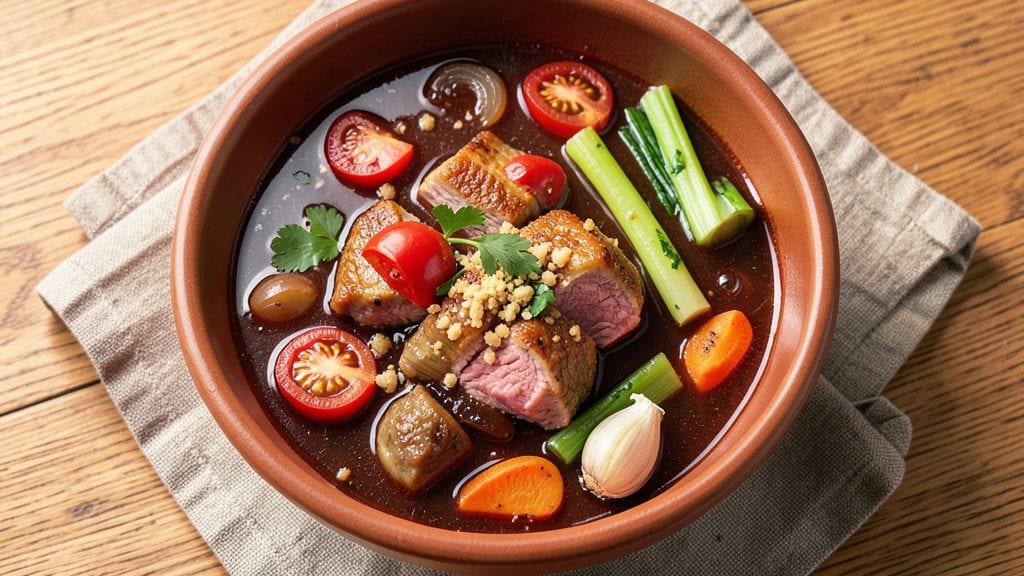
This mutton soup recipe delivers the kind of deep, comforting flavor that transforms a simple meal into a hearty tradition—slow-simmered until the broth is rich, the meat tender, and every spoonful feels like a warm embrace.
The herbed crust on top adds a satisfying crunch that elevates this classic dish from ordinary to extraordinary. I’ve perfected this recipe over years of testing, ensuring the mutton stays juicy while the broth develops layers of savory depth that linger long after the last bite.
The beauty of this mutton soup lies in its balance: a tender mutton that falls apart effortlessly, a fragrant broth infused with aromatic herbs and spices, and a golden herbed crust that adds texture without overpowering.
Unlike quick soups, this one rewards patience—simmering for hours to meld flavors into something truly exceptional. The result is a dish that feels both rustic and refined, perfect for cozy nights or special gatherings where warmth and comfort take center stage.
What sets this recipe apart is the herbed crust, a crispy topping that contrasts beautifully with the velvety soup beneath. It’s the kind of detail that makes homemade soup feel like a restaurant-worthy creation, without requiring advanced skills.
The crust isn’t just decorative—it’s functional, soaking up every last drop of flavorful broth. Whether you’re feeding a family or treating yourself, this soup delivers satisfaction in every spoonful, with a simplicity that belies its depth.
Pair it with crusty bread to soak up the rich broth, or serve it as a standalone meal that leaves everyone asking for seconds. The recipe scales easily, making it ideal for meal prep or last-minute gatherings. Here’s how to create this slow-simmered masterpiece that tastes like home.
Ingredients for mutton soup
Sixteen ingredients for a soup that feels like a warm hug—rich mutton, aromatic herbs, and a crispy crust topping.
| Ingredient | Amount | Notes |
|---|---|---|
| Mutton Shoulder 🐑 | 3 lb | Bone-in, cut into 2-inch pieces |
| Yellow Onions 🧅 | 2 whole | Medium, sliced into half-moons |
| Carrots 🥕 | 4 whole | Medium, peeled and cut into chunks |
| Celery Stalks 🌿 | 4 whole | Cut into 1-inch pieces |
| Garlic Cloves 🧄 | 6 cloves | Minced, fresh preferred |
| Tomatoes 🍅 | 4 whole | Ripe, San Marzano if available |
| Fresh Parsley 🌿 | ¼ cup | Chopped, stems removed |
| Fresh Thyme 🌿 | 2 sprigs | Leaves only, stems removed |
| Bay Leaves 🌿 | 2 whole | Dried, standard size |
| Salt 🧂 | 2 tsp | Kosher or sea salt |
| Black Peppercorns 🌶️ | 1 tsp | Freshly cracked |
| All-Purpose Flour 🌾 | ½ cup | For herbed crust |
| Parmesan Cheese 🧀 | ¼ cup | Freshly grated, fine |
| Breadcrumbs 🍞 | ½ cup | Panko preferred |
| Extra-Virgin Olive Oil 🫒 | ¼ cup | For crust and drizzling |
| Water 💧 | 8 cups | Filtered preferred |
The mutton is the heart of this soup, so choose wisely. Bone-in shoulder delivers the most flavor and stays tender during the long simmer. Look for cuts with good marbling at Whole Foods or your local butcher—they’ll often trim and portion it for you. If you can’t find mutton, lamb shoulder works as a close substitute, though the flavor will differ slightly. The key is to avoid lean cuts; fat renders slowly, enriching the broth. For extra depth, ask your butcher to leave the skin on—it crisps beautifully during cooking and adds another layer of flavor.
Fresh herbs make all the difference here. San Marzano tomatoes are ideal for their sweetness and low acidity, but any ripe heirloom variety will do. If you’re using dried herbs, reduce the amount to one-third of what’s listed—dried thyme and parsley are fine, but fresh is superior. The crust relies on Parmesan and panko for texture; skip the pre-mixed seasoning packets—just combine the flour, breadcrumbs, and cheese yourself for better control. For the broth, if you’re short on time, low-sodium chicken or vegetable broth can replace half the water, but homemade is always better. The bay leaves should be removed before serving, so opt for the standard size—not those tiny dried ones that disappear.
This soup tastes even better the next day, so make a big batch. Store the broth and mutton separately in airtight containers for up to 4 days—the crust can be made fresh when reheating. For freezing, portion the broth into ziplock bags and lay the mutton flat on a tray before freezing to prevent clumping. To reheat, simmer gently on the stove, adding a splash of water if needed. The crust should be assembled fresh after reheating to maintain its crispiness. Serve with crusty bread to soak up every last drop of that rich, herby broth.
Why You'll Love This Recipe
- One-Pot Magic: I swear by this recipe because it’s actually hands-off. Brown the mutton shoulder with onions and garlic, toss in carrots and celery, cover with water, and let it simmer—no stirring, no fuss. The flavors meld while you handle the rest of your day. (Yes, even on a Tuesday night.)
- Deep Umami Bomb: That slow-cooked mutton shoulder? It turns tender enough to fall apart, soaking up the caramelized onions and garlic until the broth is rich—like a hug in a bowl. Honestly, the first time I tasted it, I nearly spilled my tea.
- Leftovers That Beg: This soup only gets better the next day. The mutton stays juicy, the veggies soften just right, and the aroma wafting from the fridge? Irresistible. I’ve reheated it for lunch three days in a row without a single complaint.
- Budget-Friendly Feast: A whole mutton shoulder stretches for a crowd, and the veggies—onions, carrots, celery—are pantry staples. Between us, this is the recipe I turn to when I need to feed guests without breaking the bank. (And trust me, they’ll think it’s gourmet.)
Step-by-step instructions for mutton soup with herbed crust
This method delivers deep flavor through slow simmering and a crispy, aromatic crust.
Prepare the Herbed Crust for the Mutton
In a medium bowl, combine the 0.5 cup all-purpose flour, 0.25 cup parmesan cheese, 0.5 cup breadcrumbs, 2 tsp salt, 1 tsp freshly cracked black peppercorns, and 0.25 cup extra-virgin olive oil. Mix until the breadcrumbs are evenly moistened and the mixture resembles coarse sand.
This herbed crust will cling to the mutton, creating a flavorful barrier that seals in juices while adding texture. If the mixture feels too dry, add 1 teaspoon of water at a time until it holds together when pressed. Keep this mixture ready—it will be added after the initial browning.
Sear the Mutton Shoulder and Build the Flavor Base
Heat a large Dutch oven over medium-high heat. Pat the 3 lb mutton shoulder dry with paper towels—this ensures a proper sear. Working in batches if needed, sear the mutton pieces on all sides until deeply browned, about 3-4 minutes per side. Remove the mutton and set aside.
In the same Dutch oven, add 0.25 cup extra-virgin olive oil and swirl to coat. Add the 2 whole yellow onions, 4 whole carrots, 4 whole celery stalks, and 6 cloves minced garlic. Cook for 5 minutes until the vegetables begin to soften and the garlic releases its aroma. This step forms the flavor foundation of the soup.
Simmer the Soup with Aromatics and Tomatoes
Return the seared mutton to the Dutch oven. Add 8 cups water, 4 whole tomatoes, 2 sprigs fresh thyme leaves, 2 whole bay leaves, and 0.25 cup chopped fresh parsley. Bring to a boil, then reduce heat to low and cover partially. Simmer for 2 hours, stirring occasionally, until the mutton is fork-tender and the broth has deepened in color.
The mutton should pull apart easily when tested with a fork, and the vegetables should be tender but still hold their shape. Skim any foam that rises to the surface during the first 30 minutes of simmering—this ensures a clear, clean broth. The slow cook time is critical; rushing this step will result in tough meat.
Finish with the Herbed Crust and Garnish
Once the mutton is tender, remove it from the broth and set aside. Strain the broth through a fine-mesh sieve into a clean pot, pressing on the vegetables to extract maximum flavor. Return the broth to the Dutch oven and bring to a gentle simmer.
Add the herbed crust mixture to the mutton pieces, pressing gently to adhere. Return the mutton to the simmering broth and cook for an additional 10 minutes, allowing the crust to crisp and infuse flavor. Ladle the soup into bowls, ensuring each serving includes a piece of mutton topped with its herbed crust. Garnish with extra chopped fresh parsley for brightness.
Pro Tips For Making Mutton Soup
- Brown the Mutton Properly: Don’t just sear—get that mutton shoulder deep golden, even if it takes 10 minutes. I learned this the hard way after serving soup with pale, bland meat. High heat, no crowding, and let the fat render slowly—this builds flavor that simmering alone won’t fix.
- Dice Onions Like a Pro: Uniform ¼-inch dice for onions and carrots—no small, no large. Big chunks stay tough; tiny ones turn to mush. Use a sharp knife and chop all veggies at once while the mutton browns—you’ll save time and keep prep organized.
- Skip the Overcrowding: Once the mutton goes in, resist the urge to dump everything in at once. Add onions first, then carrots and celery after 5 minutes—this prevents steaming instead of browning. Your soup’s base flavor depends on it.
- Garlic Cloves, Not Paste: Whole cloves, peeled and smashed, infuse better than paste. Toss them in the last 10 minutes of simmering—this prevents burning while letting their aroma peak. (Yes, even if you’re impatient like me.)
Perfect pairings for mutton soup
Bread Pairings
Serve this mutton soup with a crusty sourdough loaf or freshly baked baguette—their sturdy crusts can handle the rich broth without falling apart. I like to toast slices lightly to enhance their crunch, which contrasts beautifully with the velvety soup.
For extra indulgence, try garlic focaccia or rosemary-infused flatbread to complement the herbed crust’s flavors. 🥖
Wine Complements
A bold Chianti Classico or Syrah from the Rhône Valley cuts through the mutton’s richness while harmonizing with the herbed crust’s savory notes. The acidity in Chianti brightens the dish, while Syrah’s peppery depth mirrors the black pepper in the crust.
For a lighter option, a dry Riesling with its citrusy finish balances the soup’s heartiness. 🍷
Herb-Infused Oils
Drizzle infused olive oil over the soup just before serving to add another layer of flavor. I blend rosemary and thyme in extra-virgin olive oil, then heat it slightly before pouring over each bowl.
This enhances the herbed crust’s aroma and adds a fragrant, aromatic touch. Store-bought options like Penzeys Rosemary Oil work in a pinch. 🌿
Pickled Vegetables
Add a pickled red onion or carrot to each bowl for a tangy contrast that cleanses the palate between bites. I slice 1 small red onion thinly and pickle it in vinegar, sugar, and a pinch of salt for 10 minutes before serving.
The acidity brightens the deep flavors of the mutton and broth. 🧅
Cheese Accents
Top the soup with shaved pecorino or crumbled feta for a salty, briny finish that pairs perfectly with the herbed crust. The sharpness of pecorino complements the mutton’s richness, while feta adds a creamy contrast. Sprinkle just before serving to keep the cheese fresh and flavorful. 🧀
Spiced Yogurt Dip
Serve a small bowl of Greek yogurt mixed with cumin, lemon zest, and a pinch of salt on the side. This cooling dip balances the soup’s richness and adds a refreshing element.
I stir 1 tsp cumin and zest of 1 lemon into ½ cup plain yogurt for the perfect accompaniment. 🥄
Nutrition facts
Frequently asked questions
Why does mutton need such a long cooking time?
Mutton's connective tissue requires 2+ hours of slow simmering to break down into gelatin, creating that signature rich broth. The low-and-slow method also prevents the meat from becoming tough. This is why traditional recipes always emphasize patience—it's what transforms simple ingredients into something extraordinary.
Can I substitute lamb for mutton in this recipe?
Yes, but expect slightly different flavor and texture. Lamb cooks faster and has a milder taste. For best results, use lamb shoulder and reduce simmering time to 1.5 hours. The herbed crust will still work beautifully, though the broth may be slightly less robust. For authentic mutton flavor, stick with bone-in cuts when possible.
What if my mutton comes out tough?
This usually happens from overcooking or using lean cuts. Always start with bone-in, well-marbled mutton and never boil vigorously—keep it at a gentle simmer. If it's already tough, shred the meat and return it to the broth for another 30 minutes to rehydrate. The herbed crust helps disguise any texture issues with its crispy contrast.
How can I make this soup ahead of time?
Prepare the soup up to 2 days in advance—store the broth and mutton separately in airtight containers. Reheat gently on the stove, then assemble the herbed crust fresh before serving. For freezing, portion the broth into bags and freeze the mutton flat on a tray. Thaw overnight in the fridge, then reheat with fresh crust. The flavors actually improve overnight!
Can I make this soup vegetarian?
While mutton is the star, you can adapt this method using portobello mushrooms or firm tofu as a base. Replace the mutton with 2 lbs mushrooms (sliced) and add 1 cup cooked lentils for protein. Keep all other ingredients and cooking times the same—the herbed crust will still work perfectly. The broth will be vegetarian but maintain excellent depth.