
Soups & Stews
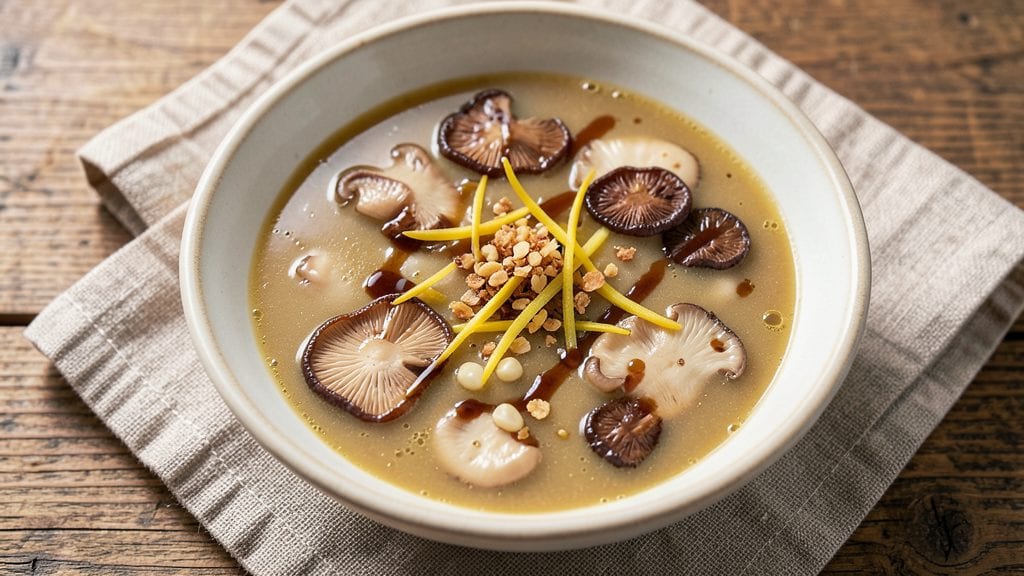
This oyster mushroom soup recipe transforms simple ingredients into a rich, velvety broth bursting with earthy umami and comforting depth. This recipe delivers a silky, rich broth that balances vegetal notes with subtle sweetness—ideal for vegetarians seeking restaurant-quality comfort.
The secret lies in properly sautéing the mushrooms to release their natural flavors before simmering with aromatic vegetables and a clear broth base.
The process begins with a light hand—minimal stirring to avoid breaking the mushrooms while they develop their characteristic chewy texture. I use a combination of fresh oyster mushrooms and dried shiitake for maximum depth, then build layers of flavor with ginger, garlic, and a splash of soy sauce.
The result is a soup that’s both deeply satisfying and adaptable, whether you prefer it clear or enriched with coconut milk for a modern twist.
What sets this soup apart is its versatility. The vegetarian base works beautifully with optional additions like tofu or seafood, and the broth can be adjusted for vegan diets by substituting vegetable stock.
Each spoonful carries the complexity of foraged mushrooms, making this dish feel like a refined culinary experience—without the fuss of traditional umami-building techniques.
Perfect for chilly evenings or as a light lunch, this soup requires only 30 minutes of active prep time, with the majority spent simmering. The key to success lies in patience during the sautéing phase, ensuring the mushrooms release their essence before the broth comes to a gentle boil.
Trust the process, and you’ll achieve a depth of flavor that rivals even the most celebrated mushroom dishes.
Ingredients for oyster mushroom soup
Earthy mushrooms, aromatic vegetables, and silky broth—this vegetarian soup delivers restaurant-quality depth with simple ingredients.
| Ingredient | Amount | Notes |
|---|---|---|
| Fresh Oyster Mushrooms 🍄 | 10 oz | Stems trimmed, thick slices |
| Dried Shiitake Mushrooms 🍄 | 4 whole | Rehydrated in warm water |
| Vegetable Stock 💧 | 4 cups | Homemade or low-sodium |
| Fresh Ginger Root 🌿 | 1 tbsp | Grated, finely chopped |
| Garlic Cloves 🧄 | 4 cloves | Minced, not pressed |
| Light Soy Sauce 🥢 | 1 tbsp | Kikkoman preferred |
| Sesame Oil 🫒 | 1 tsp | Toasted, for finishing |
| Green Onions 🧅 | 3 whole | White and green parts separated |
| Coconut Milk 🥥 | ½ cup | Full-fat, optional enrichment |
| Extra-Virgin Olive Oil 🫒 | 2 tbsp | High smoke point for sautéing |
| Sea Salt 🧂 | 1 ½ tsp | Fine grain, to taste |
| Black Peppercorns 🌶️ | ½ tsp | Freshly cracked |
| Cornstarch 🌾 | ½ tsp | For thickening (optional) |
| Fresh Thyme Leaves 🌿 | ¼ tsp | Dried substitute at 1/4 amount |
The mushrooms are the heart of this soup. Fresh oyster mushrooms should be plump and firm, with a vibrant white to pale gray color—avoid any with slimy stems. Dried shiitake adds a deeper umami layer; most Asian markets carry them in bulk, but the grocery store’s dried section works too. For the best flavor, rehydrate them in warm water for 20 minutes before using. The vegetable stock should be rich and well-seasoned—homemade is ideal, but brands like Pacific Foods or Imagine are reliable store-bought options. If you're feeling adventurous, consider adding a splash of mushroom powder (available at specialty stores) to intensify the earthy notes.
No fresh mushrooms? Canned oyster mushrooms in water work in a pinch, but drain and rinse them well to avoid a watery broth. Short on shiitake? Dried porcini mushrooms provide a similar depth, though they have a slightly different texture. The soy sauce can be swapped for tamari if gluten-free is a concern, and the sesame oil is purely for finishing—skip it if you prefer a cleaner flavor. For a creamier texture without coconut milk, blend in 1/2 cup silken tofu at the end. The cornstarch is optional but helps achieve that signature silky consistency; if omitting, simmer the broth longer to reduce it naturally.
This soup keeps beautifully in the fridge for 4-5 days, with flavors deepening over time. For longer storage, freeze the broth (without mushrooms) for up to 3 months)—reheat gently and add fresh mushrooms when serving. The mushrooms themselves can be prepped ahead and stored in an airtight container for 3 days. To reheat, warm over medium-low heat, adding a splash of water if the broth thickens too much. For extra richness, stir in a spoonful of nutritional yeast before serving—it adds a cheesy, umami kick without dairy.
Why You'll Love This Recipe
- No-Chop Nightmare: I swear by this recipe because the oyster mushrooms just plop into the pot—no slicing, no fuss. The dried shiitakes soak while you stir, and suddenly you’ve got a rich, umami-packed base without any prep work that’ll make you dread dinner.
- Umami Bomb: That combo of fresh oyster mushrooms and rehydrated shiitakes? It’s like a flavor explosion in a bowl. The ginger and garlic hit just right—warm, spicy, and deep—while the mushrooms add this meaty texture that makes it feel like a hug for your taste buds.
- Pot Luck Hero: Between us, this is my go-to for lazy Sundays or when friends drop by unannounced. It reheats beautifully, so I’ll make a big batch and freeze half—perfect for when I’m too tired to cook or need something hearty without the effort.
- Budget Magic: Fresh oyster mushrooms are cheaper than most proteins, and dried shiitakes last forever in the pantry. A single jar of stock stretches this into four servings, and the ginger/garlic add zero cost but maximum flavor. My wallet and my taste buds win.
Step-by-step instructions for oyster mushroom soup
Here's how to build a velvety umami-rich mushroom broth that balances earthy depth with silky texture.
Rehydrate and Prepare the Dried Shiitake Mushrooms
Place the 4 whole dried shiitake mushrooms in a small bowl and cover completely with warm (not boiling) water. Let them soak for 15-20 minutes until they've absorbed the water and expanded significantly. This rehydration process unlocks their deep umami flavor that will form the foundation of your soup.
While they soak, trim the stems from the 10 oz fresh oyster mushrooms and slice them into ¼-inch thick pieces. Set these aside - you'll use them later in the cooking process. The stems from both mushroom types can be reserved for stock if you're making a larger batch, but for this recipe, we'll focus on maximizing flavor in the soup itself.
Develop the Flavor Base with Aromatics
Heat the 2 tablespoons extra-virgin olive oil in a large pot over medium heat. Add the 1 tablespoon finely chopped fresh ginger root and 4 minced garlic cloves, cooking for 2-3 minutes until the ginger becomes fragrant and the garlic turns golden but doesn't brown. This aromatic base will carry the soup's savory profile.
Add the rehydrated shiitake mushrooms (squeeze out any excess water first) along with the sliced oyster mushrooms. Cook for 5-6 minutes, stirring occasionally, until the mushrooms release their moisture and begin to soften. The mushrooms should develop a slightly caramelized texture at the edges - this indicates they're releasing their maximum flavor into the pot.
Build the Umami Broth
Pour in the 4 cups vegetable stock and bring the mixture to a gentle simmer. Add the 1 tablespoon light soy sauce, 1.5 teaspoons sea salt, and 0.5 teaspoon freshly cracked black peppercorns. Stir well to combine all ingredients. The soup should now have a rich, earthy aroma with hints of umami from the mushrooms and soy sauce.
Simmer uncovered for 15-20 minutes until the mushrooms are completely tender and the flavors have melded together. You'll notice the liquid reduce slightly, concentrating the flavors. This is when you'll want to taste and adjust the seasoning - add more soy sauce if you desire more umami depth, or additional salt if needed. The soup should be seasoned to taste like a well-balanced broth with mushroom-forward flavor.
Refine the Texture and Finish
Remove the pot from heat and stir in the 0.5 cup coconut milk (if using) for added creaminess. For a silkier texture without coconut milk, whisk together the 0.5 teaspoon cornstarch with 2 tablespoons cold water and stir it into the hot soup. Simmer for an additional 2-3 minutes until the soup reaches your desired consistency - it should coat the back of a spoon but remain fluid enough to sip easily.
Stir in the 0.25 teaspoon fresh thyme leaves and let the soup steep off the heat for 5 minutes to allow the thyme to infuse its subtle herbal notes. This final step ensures all flavors are properly integrated before serving. The soup should now have a velvety texture with a perfect balance of earthy mushroom flavor and aromatic depth.
Garnish and Serve Immediately
Ladle the soup into serving bowls and drizzle each portion with 1 teaspoon toasted sesame oil. Thinly slice the 3 whole green onions (separating the white and green parts) and use them to garnish each bowl - the white parts can be sprinkled on top while the green parts can be served on the side for freshness. The contrast between the rich soup and bright green onions adds visual appeal and a fresh counterpoint to the earthy flavors.
Serve the soup immediately while hot, as the flavors continue to develop and meld together. Each spoonful should deliver a complex interplay of umami from the mushrooms, savory notes from the soy sauce, and aromatic depth from the ginger and garlic. The texture should be velvety with just enough body to coat your spoon, creating a satisfying mouthfeel with every bite.
Pro Tips For Making Oyster Mushroom Soup
- Soak Shiitakes First: Don’t skip soaking those dried shiitakes—soak them in hot water for 20 minutes (or until plump), then strain and save the liquid. That liquid is your secret umami boost, and skipping it makes the soup taste flat. I used to forget, and the broth always needed extra salt to compensate.
- Sear Oysters Hard: High heat, nonstick pan, and a splash of oil—sear those oyster mushrooms until they’re golden brown and crispy at the edges. Don’t rush it; they’ll release their natural sweetness and add texture. I once undercooked them, and the soup tasted like mush instead of magic.
- Mince Ginger Thin: Grate that ginger root super fine—almost like you’re making a paste. The finer it is, the more flavor it infuses into the broth without needing a ton of it. I learned this after burning through a whole ginger root and still tasting nothing but disappointment.
- Strain the Broth: After simmering, strain out the mushrooms and ginger before blending (if you’re blending) or serving. It keeps the soup clean and lets you control the texture. I used to skip this step, and my soup always looked like a mushroomy sludge. Trust me, it’s worth the extra minute.
Serving suggestions for leftovers
Presentation Perfection
Serve this soup in ceramic bowls with slightly flared rims to showcase the silky texture—think Le Creuset stoneware for that restaurant-worthy look. The bowls' warmth will keep the soup hot while enhancing its earthy tones. A drizzle of toasted sesame oil along the rim adds visual contrast and aroma. 🍜
Fresh Garnish Contrast
Top each bowl with thinly sliced scallions (white and green parts separated) and a sprinkle of toasted sesame seeds for texture and brightness. The green tops add a pop of color that balances the deep umami. I like using Japanese black sesame seeds for their nutty depth.
Bread Pairing
Pair with crusty sourdough or baguette slices toasted with garlic butter. The crispy texture cleanses the palate between spoonfuls. For a gluten-free option, try corn tortillas lightly toasted with olive oil and chili powder. The contrast of warm bread against creamy soup is irresistible.
Dipping Sauce Twist
Set out small bowls of spicy mayo (mix 2 tbsp mayo with ½ tsp sriracha) or hoisin sauce for dipping. The tangy or sweet-savory dips add another layer of flavor that complements the soup’s earthiness perfectly. I keep the sauces simple but flavorful.
Temperature Balance
Serve with a side of quick-pickled cucumbers (slice ½ cucumber into rounds, toss with 1 tbsp rice vinegar, ½ tsp sugar, and ¼ tsp salt for 15 minutes).
The cool crunch cuts through the soup’s richness. For extra indulgence, add a side of crispy fried shallots (store-bought works fine).
Make-Ahead Tip
If preparing ahead, serve the soup at room temperature with a small pot of hot water on the table. Simply ladle the soup into bowls and add hot water to reheat—this keeps the mushrooms tender and the broth silky.
The presentation stays elegant while ensuring every bite is hot and flavorful. ✨
Nutrition facts
Frequently asked questions
Why do dried shiitake mushrooms need to be rehydrated before using?
Rehydrating dried shiitake unlocks their concentrated umami flavor, which would otherwise remain dormant. The soaking process (15-20 minutes in warm water) expands their surface area, allowing the broth to extract maximum depth. This step transforms the mushrooms from flavor carriers to the soup's aromatic foundation.
Can I make this soup vegan?
Replace the vegetable stock with a high-quality vegan broth (like mushroom-based or soy sauce-infused) and omit coconut milk if using. For extra umami, add 1 teaspoon vegan fish sauce substitute or ½ teaspoon nutritional yeast when simmering. The texture remains velvety without dairy or animal products.
What if my mushrooms turn mushy during cooking?
Overcooking causes mushiness. Sauté mushrooms only until they release moisture (5-6 minutes) before adding broth. For extra texture, add them later: simmer the broth first, then stir in mushrooms just before serving. Alternatively, sauté until golden (not brown) to develop chewiness.
How can I adjust the soup's thickness?
For a silkier texture, whisk ½ teaspoon cornstarch with 2 tablespoons water and stir into the hot soup. Simmer 2-3 minutes more. For a lighter consistency, add ¼ cup hot water and stir. The broth should coat a spoon but remain pourable.
What's the best way to store leftovers?
Cool the soup completely, then store in an airtight container for 4-5 days in the fridge. For longer storage, freeze the broth (without mushrooms) for up to 3 months. Reheat gently on low heat, adding water if needed to restore consistency. Never reheat directly from frozen.