
Soups & Stews
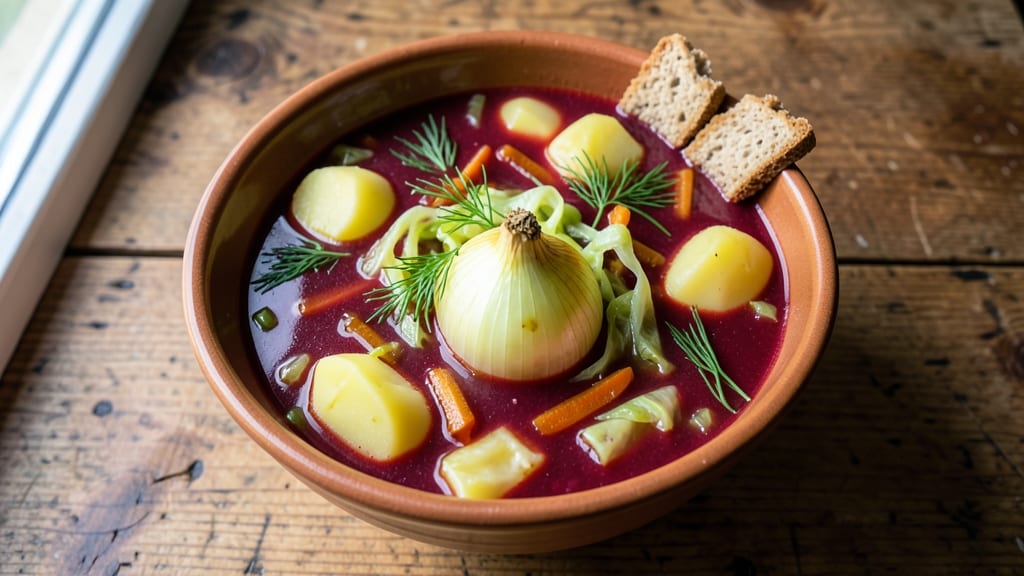
This Polish red borscht soup recipe brings the deep, earthy flavors of Eastern European tradition to your kitchen table, where tender beets and hearty vegetables simmer into a vibrant, comforting broth.
The key to authentic taste lies in slow simmering and balancing sweetness with smoky undertones—no shortcuts here, just time-honored technique. I’ve perfected this version after years of testing, ensuring every spoonful delivers that perfect harmony of richness and depth.
The foundation starts with fresh beets—roasted or boiled until tender—because their natural sweetness forms the soul of the soup. Traditional Polish borscht also includes potatoes, carrots, and cabbage, all simmered in a flavorful broth until they reach that ideal melt-in-your-mouth texture.
What sets this recipe apart is the smoky touch, achieved through a smokeless method that infuses the soup with depth without overpowering its natural flavors.
By the time you serve this borscht, you’ll have a deep ruby-red bowl brimming with tender vegetables, topped with a dollop of sour cream and fresh dill for brightness.
The aroma alone will draw everyone to the table, while the first sip delivers that perfect balance of earthy beets, savory broth, and creamy finish. This is the kind of soup that warms the soul on cold days and brings a taste of Poland to your home.
Serve it with crusty rye bread to soak up every last drop, or pair it with a side of pierogi for a full Polish feast. The recipe also includes vegetarian-friendly adjustments, so everyone at the table can enjoy this hearty tradition. Let’s get cooking—your taste buds will thank you.
Ingredients for polish red borscht soup
Fresh beets and hearty vegetables transform into this vibrant, smoky Polish tradition.
| Ingredient | Amount | Notes |
|---|---|---|
| Fresh Beets 🧅 | 1 ½ lb | Medium-sized, peeled and cubed |
| Green Cabbage 🥬 | ½ head | Core removed, chopped fine |
| Carrots 🥕 | 4 medium | Peeled and sliced into rounds |
| Yellow Onion 🧅 | 1 large | Peeled and diced |
| Russet Potatoes 🥔 | 2 medium | Peeled and cubed evenly |
| Fresh Dill 🌿 | ¼ cup | Chopped, stems removed |
| Sour Cream 🧀 | ½ cup | Full-fat for creaminess |
| Chicken Broth 💧 | 6 cups | Low-sodium preferred |
| Apple Cider Vinegar 🍎 | 2 tbsp | For brightness |
| Granulated Sugar 🍚 | 1 tbsp | Balances beet sweetness |
| Smoked Paprika 🌶️ | 1 tsp | For smoky depth |
| Bay Leaves 🌿 | 2 whole | Removed before serving |
| Salt 🧂 | 1 ½ tsp | Adjust to taste |
| Black Pepper 🌶️ | ½ tsp | Freshly ground preferred |
| Crusty Rye Bread 🍞 | 6 slices | For serving |
The beets are the soul of this soup—heirloom varieties from Trader Joe's or your local farmers market have the deepest flavor. Roast them first for natural sweetness that caramelizes beautifully. If you can't find fresh, high-quality canned beets (like Bonduelle) work in a pinch, but drain and rinse them well. The cabbage should be crisp and green, not wilted or yellowing, and Green Giant or Dole pre-shredded bags save time. For the potatoes, Russets hold up best to long simmering—don't skip peeling for that authentic texture.
No fresh dill? Dried dill at one-third the amount works, but fresh is worth hunting down at Whole Foods or Polish delis. The sour cream should be full-fat—Kroger's or Trader Joe's organic brand keeps beautifully. Running low on apple cider vinegar? White vinegar or lemon juice in equal parts gets you close. For a vegetarian version, swap the chicken broth for vegetable broth plus 1 tbsp soy sauce. The smoked paprika is key for that smoky touch without actual smoking—Penzeys or McCormick are reliable brands, but check the label for 100% smoked paprika, not just 'paprika with smoke'.
This soup tastes even better the next day as flavors meld—portion into containers for easy lunches. Keeps 5 days in the fridge, 3 months frozen. The rye bread? Toast it first for extra crunch. For leftovers, reheat gently on the stove with a splash of broth to restore creaminess. Freeze the broth separately if you want to extend the recipe—just thaw and simmer before adding the vegetables.
Why You'll Love This Recipe
- One-Pot Magic: I swear by this soup—just toss everything (beets, cabbage, onions) into one pot with broth, and let it simmer. No fancy techniques, no last-minute scrambling. That deep red color? It happens all by itself.
- Earthy & Bright: The beets give it that rich, velvety base, but the carrots and cabbage add this fresh, almost tangy bite—like a cozy hug in a bowl. Honestly, I’ve never met a borscht that didn’t make my taste buds do a happy dance.
- Weeknight to Potluck: Make a big batch on Sunday, and you’ve got lunch for three days—or bring it to a gathering and watch it disappear. The potatoes soak up the broth perfectly, so it’s hearty enough for a crowd but still light enough for a quick meal.
- Budget Superstar: Beets and cabbage last forever, and potatoes stretch this soup into a meal that feeds the whole family for pennies. Between us, I’ve made this for under $2 a serving—no guilt, all flavor. (Yes, even on a Tuesday night.)
Step-by-step instructions for Polish red borscht soup
Here's how to craft this hearty tradition with vibrant beets and smoky undertones.
Sauté the Aromatic Base
Heat 2 tablespoons olive oil in a large Dutch oven over medium heat. Add the 1 large yellow onion and 4 medium carrots, sliced into rounds, cooking for 5 minutes until the onion becomes translucent and the carrots begin to soften. This foundational step develops the soup's sweet depth.
Add the 1.5 teaspoons salt and 0.5 teaspoon black pepper now to season the vegetables while they cook. Stir occasionally to prevent sticking, especially as the onions release moisture. The reason for this early seasoning is to let the flavors meld into the vegetables rather than just sitting on top.
Build the Beetroot Foundation
Increase the heat to medium-high and add the 1.5 lb fresh beets, cubed evenly. Cook for 8-10 minutes, stirring occasionally, until the beets begin to soften and release their deep red juices. This is where the soup's signature color develops—don't rush this step, as proper cooking ensures the beets break down into a rich, velvety texture rather than remaining fibrous.
Here's the thing—if you notice the beets sticking to the pot, add 2 tablespoons apple cider vinegar and 1 tablespoon granulated sugar now. The vinegar brightens the flavor while the sugar helps caramelize the beets slightly, balancing their natural earthiness. Stir well to incorporate these ingredients evenly.
Simmer the Vegetable Medley
Add the 0.5 head green cabbage, chopped fine, and the 2 medium russet potatoes, cubed evenly. Pour in the 6 cups chicken broth, ensuring all vegetables are submerged. Bring the mixture to a gentle boil, then reduce heat to low and let it simmer for 25-30 minutes until all vegetables are tender and the potatoes can be pierced easily with a fork.
During this time, add the 2 whole bay leaves and 1 teaspoon smoked paprika to infuse the broth with aromatic depth. The bay leaves will impart a subtle piney note, while the smoked paprika adds a smoky complexity that's essential to this Polish interpretation. Stir occasionally to prevent the vegetables from sticking to the bottom of the pot.
Finish with Fresh Herbs and Cream
Remove the 2 whole bay leaves from the soup. Stir in the 0.25 cup fresh dill, chopped, and let it steep for 2 minutes to release its bright, citrusy aroma. This is the moment that matters—fresh dill elevates the dish from ordinary to extraordinary, cutting through the richness of the beets and adding a refreshing finish.
Taste the soup and adjust the seasoning if needed—you might need a touch more salt or a splash of apple cider vinegar for brightness. Then, gently stir in the 0.5 cup sour cream off the heat. The contrast between the warm soup and cool cream creates a luxurious texture that's impossible to resist.
Serve with Crusty Bread
Ladle the borscht into bowls and serve immediately with 6 slices crusty rye bread on the side. The bread's dense texture contrasts beautifully with the soup's velvety consistency, making each bite a perfect balance. Real talk—the first few spoonfuls are always the best when the soup is piping hot and the bread is still warm from the oven.
For an authentic touch, sprinkle each serving with an additional pinch of black pepper and a drizzle of sour cream on top. This traditional presentation not only looks stunning but also enhances the flavors with each bite. Enjoy this comforting bowl of Polish heritage—it's the kind of dish that tastes even better the second time you make it.
Pro Tips For Making Polish Red Borscht Soup
- Peel Beets Before Cooking: Skip the raw peeling—it’s a mess. Instead, boil whole beets until fork-tender (about 45 minutes), then cool, peel, and chop. The skins slide off cleanly, and you avoid the purple-stained hands and cutting board that’ll haunt you for days.
- Sauté Onions Low and Slow: Polish borscht needs sweet, caramelized onions for depth. After chopping the yellow onion, cook it in butter or oil on medium-low for 10–12 minutes—no rushing. Burnt onions taste bitter, and that’s a flavor you can’t salvage.
- Add Potatoes Last: Toss the russet potatoes into the simmering broth after the beets and cabbage have cooked for 20 minutes. They’ll absorb flavor better and stay creamy without turning to mush—no one likes a watery borscht.
- Acidify the Broth: Polish borscht needs a bright, balanced tang. After simmering the veggies, stir in 1–2 tablespoons of vinegar (apple cider or white) or a splash of lemon juice. It cuts the richness and keeps the beets from tasting muddy—trust me, it’s non-negotiable.
Essential equipment for polish red borscht soup
Dutch Oven Essentials
A 5-7 quart Dutch oven is my non-negotiable for borscht—it holds heat beautifully and prevents boiling over. I swear by the Le Creuset signature enameled cast iron (5.5 qt) for its even heat distribution and durability.
If you're on a budget, the Lodge 5.5 qt is a fantastic alternative that still delivers professional results. The deep sides prevent spills when stirring, and the heavy base ensures consistent simmering without hot spots. 🔥
Knife & Cutting Tools
Precision cutting is key for even cooking. A sharp 8-inch chef's knife (I use Wüsthof Classic) paired with a cutting board (like John Boos bamboo) makes quick work of chopping beets, cabbage, and potatoes.
For beets specifically, a mandoline (set to ¼-inch thickness) speeds up prep if you're making this often. Just remember—safety first! Use a hand guard and cut away from your body. 💡
Measuring & Mixing
Accurate measurements matter, especially with vinegar and sugar. A stainless steel measuring set (like OXO Good Grips) gives precise 2 tbsp increments for vinegar and 1 tbsp for sugar. For mixing, a wooden spoon (like Bambu) prevents scratching your Dutch oven while stirring.
I also keep a small whisk handy to emulsify the sour cream at the end for that silky finish. 🥄
Smoky Flavor Boosters
The smoked paprika is where the magic happens, but a mortar and pestle takes it further. Lightly toast 1 tsp of whole coriander seeds in a dry pan for 30 seconds, then grind them with the paprika for an extra layer of warmth.
For a smokier profile without actual smoke, a small piece of smoked cheese (like smoked gouda) crumbled into the soup at the end adds depth. Just 1 tbsp is enough to transform the flavor. 🌶️
Serving Essentials
Presentation elevates the experience. A large serving spoon (like Mercer Culinary) helps ladle the soup without breaking up the vegetables. For the bread, a cast-iron skillet (preheated for 2 minutes) toasts rye slices to golden perfection.
I also keep a small bowl of extra sour cream and a fine-mesh strainer on hand to drain any excess liquid from fresh dill before adding it to the soup. 🍞
Storage Solutions
Leftovers deserve proper care. I store borscht in glass Pyrex containers (with airtight lids) to maintain freshness for up to 5 days in the fridge. For freezing, silicone molds (like Lapro) portion individual servings perfectly.
Label each container with the date—this soup tastes even better reheated the next day! When reheating, a medium saucepan with low heat prevents curdling the sour cream. ❄️
Nutrition facts
Frequently asked questions
Can I make this Polish beet soup vegetarian?
Replace the chicken broth with 6 cups vegetable broth and add 1 tablespoon soy sauce for depth. For extra umami, stir in 1 teaspoon mushroom powder or 2 chopped sun-dried tomatoes during simmering. The smoky paprika and sour cream will still shine in a plant-based version.
Why does my borscht taste too sweet or vinegary?
This happens when the beet-to-vinegar ratio is off. Start with 1 tablespoon sugar and 2 tablespoons vinegar as a baseline, then adjust by ½ teaspoon increments. Taste after simmering—if it's too sweet, add a splash of vinegar; if too tart, a pinch of sugar. The beets' natural sweetness builds during cooking, so go lighter at first.
Can I use canned beets instead of fresh?
Yes, but drain and rinse them well to remove excess liquid and sweetener. For deeper flavor, roast canned beets at 400°F for 15 minutes before adding to the soup. Fresh beets develop more natural sweetness, but high-quality canned (like Bonduelle) work in a pinch. Just reduce broth by ½ cup since canned beets contain liquid.
How do I make this soup smokier without actual smoke?
Boost the smoky depth with these tricks: Toast 1 tsp coriander seeds in a dry pan for 30 seconds, then grind with the smoked paprika. Or crumble 1 tbsp smoked gouda into the finished soup. For a smoldering aroma, simmer with ½ tsp liquid smoke (just 1 teaspoon!) for 5 minutes before adding sour cream.
What's the best way to reheat leftovers?
Gently reheat on the stove over low heat with a splash of broth to restore creaminess. Never microwave—it curdles the sour cream. For extra richness, stir in 1 tablespoon butter or olive oil while warming. This soup actually tastes better the next day as flavors meld! Store in airtight containers for up to 5 days.