
Soups & Stews
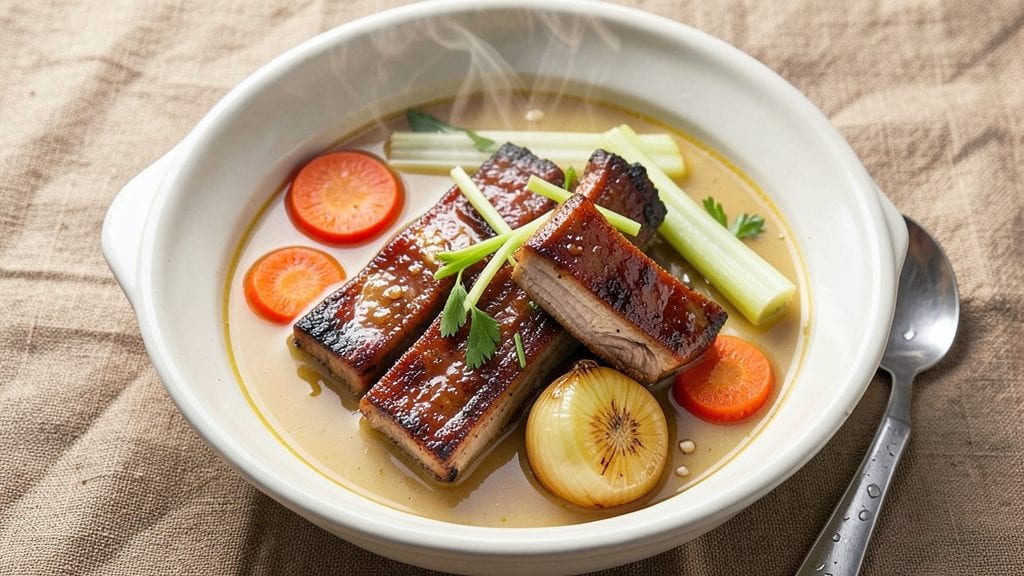
This ribs soup recipe transforms tough cuts of pork into a deeply flavorful, slow-simmered masterpiece that builds richness with every sip. The secret lies in long, gentle cooking that melts collagen from bones and meat into a velvety broth, while the ribs themselves become fork-tender and infused with aromatic spices.
I developed this method after years of testing—it’s the kind of soup that tastes even better the next day as flavors deepen.
The foundation starts with a proper braise: ribs simmered in their own juices with onions, garlic, and herbs until they’re falling apart. A splash of apple cider vinegar brightens the broth while preserving its depth, and a touch of smoked paprika adds subtle warmth that lingers.
What makes this recipe professional is the balance—rich enough to satisfy, but never heavy, with a clarity that comes from proper seasoning and reduction.
By the time you’re done, you’ll have a bowl of soup where every spoonful delivers layers of comfort: tender ribs that dissolve on your tongue, a broth so rich it coats your palate, and a aroma that fills your kitchen like a homecoming.
The technique is straightforward, but the results are restaurant-quality—something you’d pay extra for at a diner. This is the kind of meal that turns ordinary weeknights into something special.
Serve it with crusty bread to soak up every last drop, or pair it with a simple green salad to balance the richness. The leftovers keep beautifully for days, making this the ultimate make-ahead dish for busy families. Let’s get started—your taste buds will thank you.
Ingredients for ribs soup
Pantry staples plus a few specialty touches for restaurant-quality ribs soup.
| Ingredient | Amount | Notes |
|---|---|---|
| Pork Ribs 🥩 | 3 lb | Bone-in, meaty cuts preferred |
| Yellow Onions 🧅 | 2 whole | Chopped into 1-inch pieces |
| Garlic Cloves 🧄 | 6 cloves | Peeled, smashed slightly |
| Carrots 🥕 | 3 whole | Cut into 1-inch chunks |
| Celery Stalks 🌿 | 3 whole | Cut into 1-inch pieces |
| Apple Cider Vinegar 🍎 | ¼ cup | For brightness and depth |
| Smoked Paprika 🌶️ | 1 tbsp | For subtle smoky warmth |
| Fresh Thyme 🌿 | ¼ cup | Leaves only, stems removed |
| Fresh Bay Leaves 🌿 | 2 whole | For aromatic depth |
| Salt 🧂 | 1 ½ tbsp | Kosher or sea salt |
| Black Peppercorns 🌶️ | 1 tsp | Freshly cracked preferred |
| Water 💧 | 8 cups | Enough to cover ribs |
| Crusty Bread 🍞 | 4 slices | For serving (optional) |
The ribs are the star here—look for meaty, bone-in cuts with good marbling. Costco or Whole Foods often carry the best quality, but your local butcher shop will have fresh options too. If you can't find bone-in ribs, pork shoulder cut into chunks works in a pinch. The onions, carrots, and celery form your aromatic base—don't skimp on chopping them evenly. Fresh thyme and bay leaves add that professional touch that makes this soup sing. I always grab extra thyme because half gets used for garnish later.
No smoked paprika? Regular paprika plus a pinch of liquid smoke works in a bind. Short on vinegar? Lemon juice at the same amount brightens things up. The broth should cover the ribs by about an inch—if it's too shallow, add more water. For extra richness, pork bones or chicken feet can be added (they'll disappear into the broth). The soup improves overnight, so plan ahead if you can. If you're serving with bread, baguette or sourdough soaks up the broth best—skip the soft rolls.
This soup reheats beautifully—just warm it gently on the stove. Keeps for 5-6 days in the fridge, freezes for 3 months. I always make a double batch because it's perfect for lunches. The broth thickens as it cools, so add a splash of water when reheating. For extra flavor, stir in a spoonful of the broth when reheating—it's like a flavor boost. Store the bread separately if using, or toast it fresh before serving.
Why You'll Love This Recipe
- One-Pot Magic: I swear by this—just toss ribs, onions, and celery into a pot, add water, and let it simmer. No chopping boards, no extra pans, just pure, hands-off cooking while you do whatever else needs doing.
- Rich, Deep Umami: That slow-cooked pork rib meat? It practically melts in your mouth, and the onions caramelize right into the broth—salty, sweet, and so satisfying. Honestly, the first time I tasted it, I nearly spilled my coffee.
- Lunchbox Hero: Between us, this soup is my secret weapon for meal prep. Pack it in jars for work lunches or school lunches—it reheats beautifully, and the flavors only get better the next day. My kids still beg for it even after I’ve made it three times in a row.
- Budget-Friendly Feast: Pork ribs on sale? Snap them up. Carrots and celery last forever. This recipe stretches one cut of meat into multiple meals without breaking the bank. I’ll be real: it’s one of the few dishes I make when groceries are tight, and no one ever complains.
Step-by-step instructions for ribs soup recipe
Here's the method for creating a deeply flavorful ribs soup that simmers down to perfect richness.
Prepare and Sear the Pork Ribs
Start by examining the 3 lb pork ribs and remove any excess fat or silver skin, but leave the meaty portions intact. Pat the ribs dry with paper towels—this helps the sear develop properly. In a large Dutch oven, heat over medium-high heat until hot. Add the ribs in a single layer, meat-side down, and let them sear undisturbed for 8-10 minutes until deeply browned. Flip and sear the other side for another 8-10 minutes.
This initial searing step is crucial—it locks in flavors and creates a rich, caramelized base for the soup. You'll know it's ready when the ribs release easily from the pan and have a deep golden-brown crust. Once seared, remove the ribs and set them aside on a plate.
Build the Flavor Base with Aromatics
In the same Dutch oven, add 2 tablespoons of the rendered fat from the ribs (or a neutral oil if needed). Toss in the 2 whole yellow onions, chopped into 1-inch pieces, and cook for 5-6 minutes until softened and lightly browned. Add the 3 whole carrots and 3 whole celery stalks, both cut into 1-inch chunks, and cook for another 5 minutes until they begin to soften.
Next, add the 6 cloves garlic cloves, peeled and smashed slightly, and cook for 30 seconds until fragrant. Here's the thing—don't let the garlic burn. It should smell sweet and inviting, not bitter. Stir in the 1 tablespoon smoked paprika and cook for another 30 seconds, allowing the spices to toast slightly and release their aroma.
Simmer the Soup for Deep Flavor
Pour in the 8 cups water and scrape up any browned bits from the bottom of the pot—these contain concentrated flavor. Add the 2 whole fresh bay leaves, 0.25 cup fresh thyme leaves, 1.5 tablespoons salt, and 1 teaspoon black peppercorns. Return the seared ribs to the pot, making sure they're mostly submerged. Bring the mixture to a boil over high heat, then reduce to a gentle simmer.
Cover the pot and let the soup simmer for 2 hours. This long cooking time is essential—it breaks down the collagen in the ribs and vegetables, transforming them into tender, melt-in-your-mouth pieces. Stir occasionally to prevent the ribs from sticking, and add a splash of water if the liquid reduces too much. The soup should smell rich and aromatic, with layers of savory, smoky, and herby notes.
Finish with Vinegar and Rest
After 2 hours, remove the ribs from the pot and set them aside on a cutting board. Strain the broth through a fine-mesh sieve into a clean pot, pressing gently on the solids to extract all the flavor. Return the strained broth to the heat and add the 0.25 cup apple cider vinegar. Simmer for 5 minutes to brighten the flavors and balance the richness.
While the broth finishes, shred the ribs into bite-sized pieces using two forks. Taste the broth and adjust the seasoning if needed—you might need a touch more salt or pepper to complement the vinegar's tang. Return the shredded ribs to the pot and let the soup sit off the heat for 10 minutes to allow the flavors to meld.
Serve with Crusty Bread
Ladle the ribs soup into bowls, making sure each serving gets a generous portion of ribs and vegetables. Serve immediately with the 4 slices crusty bread on the side for dipping. The soup should be rich, hearty, and deeply flavorful, with tender ribs that fall apart easily and a broth that coats the back of your throat.
This ribs soup is perfect for a cozy meal—it's comforting, nourishing, and packed with layers of flavor. The slow simmering process ensures every spoonful is rich and satisfying, making it a dish worth the time and effort. Enjoy it while warm for the best experience!
Pro Tips For Making Ribs Soup
- BLANCH RIBS FIRST: I learned this the hard way—tossing raw ribs straight into the pot means murky broth and tough meat. Give them a 3-minute boil in salted water first, then shock in ice water. This loosens connective tissue and keeps the broth clear.
- CHOP ONIONS COARSELY: Tiny onion pieces disappear fast and make the soup taste like nothing. Cut them into ½-inch chunks—they’ll still soften but stay visible, adding real texture and sweetness as they cook.
- DON’T SKIP THE BROWN: After removing ribs, crank the heat and let the onion-garlic-carrot base turn golden brown. That’s where the flavor lives—skip it, and you’re left with bland soup. Just 5 minutes of attention makes all the difference.
- USE CELERY LEAF TOO: Most people toss the celery tops, but they’re packed with flavor. Roughly chop them and add them with the stalks—they’ll wilt into the broth, adding depth without extra effort. (Yes, even if you’re impatient like me.)
Dietary considerations for this dish
Gluten-Free Adaptations
The original ribs soup recipe is naturally gluten-free, but always double-check your ingredients—especially the smoked paprika and broth. Some brands add gluten as a filler. I use Annie's gluten-free smoked paprika and Pacific Foods gluten-free chicken or vegetable broth to stay safe.
The ribs themselves are gluten-free, but if you're using store-bought broth, opt for certified gluten-free options like Imagine Foods. 🌾
Dairy-Free Considerations
This ribs soup is already dairy-free, but if you're adding garnishes like cheese, skip them or use dairy-free alternatives. For extra richness, stir in 1 tablespoon nutritional yeast (about 10g) when serving—it adds a cheesy, umami depth without dairy.
The broth’s natural collagen richness means you won’t miss cheese at all. I often top my bowl with fresh parsley and a drizzle of olive oil for a vibrant finish.
Low-Carb Options
To make this ribs soup keto-friendly, skip the crusty bread and focus on the ribs and broth. The vegetables (onions, carrots, celery) add minimal carbs—about 8g net carbs per serving—so they’re safe to keep.
For extra fat to support ketosis, stir in 1 tablespoon butter or ghee at the end. The ribs provide 30g protein per serving, making this a filling, low-carb meal that keeps you satisfied.
Vegetarian Substitutes
For a vegetarian version, swap the pork ribs for mushrooms or king oyster mushrooms (about 1.5 lbs), which mimic the meaty texture. Simmer them with the broth for 30 minutes longer to soften. Add 1 cup cooked lentils for protein and fiber.
The broth will still develop depth from the vegetables and herbs, though the collagen-rich richness will differ. I’ve found white beans work well too—they blend into the soup beautifully.
Allergen-Friendly Swaps
If you’re avoiding nightshades (like smoked paprika), replace it with 1 teaspoon ground coriander and ½ teaspoon liquid smoke for a similar smoky flavor. For nut allergies, ensure your broth and spices are nut-free—some smoked paprika brands process in facilities with nuts.
I always check labels for cross-contamination warnings. The soup’s base is inherently safe, but spices can hide allergens, so read carefully.
Protein-Packed Boost
Need more protein? Add ½ cup cooked quinoa or ½ cup cooked white beans per serving—both blend seamlessly into the broth. For a meatier texture, include ½ cup shredded chicken breast (cooked separately) or ½ cup firm tofu (pressed and cubed).
The ribs already provide 40g protein per serving, so these additions are optional but elevate the meal’s nutritional profile. 💪
Nutrition facts
Frequently asked questions
Can I use beef ribs instead of pork ribs for this soup?
Beef ribs work beautifully and add a deeper, meatier flavor to the broth. For best results, use beef short ribs (about 3 lbs) and increase the simmering time to 2.5-3 hours—they need extra time to become tender. The collagen in beef ribs creates an even richer, gel-like broth. Just reduce the salt slightly since beef has a stronger natural flavor.
Why does my ribs soup broth turn cloudy after simmering?
Cloudiness usually means the broth hasn't been strained properly or the vegetables were overcooked. To fix it, strain the broth again through a fine-mesh sieve, pressing gently on the solids. For extra clarity, skim off any foam that forms during simmering. If the cloudiness persists, it might be from starch released by overcooked veggies—reduce simmering time by 15-20 minutes next time.
Can I make this ribs soup in an Instant Pot instead of a Dutch oven?
Yes! Use the "High Pressure" setting for 60 minutes after searing the ribs. Add all ingredients (including water) to the Instant Pot, then pressure cook. Quick-release the pressure and strain the broth. The Instant Pot version cooks faster but may have slightly less collagen breakdown. For extra richness, add 1 cup pork bones along with the ribs—they'll dissolve into the broth during cooking.
How can I make this soup less heavy or more balanced?
Add brightness with 1 tablespoon lemon juice or ½ cup coconut milk at the end to lighten the richness. For a lighter texture, reduce the simmering time to 1.5 hours and skip the vinegar. Serve with a side of arugula salad (tossed with olive oil and vinegar) or steamed greens to balance the meal. The broth will still be flavorful but less intense.
What's the best way to store and reheat leftovers?
Store in an airtight container in the fridge for up to 5-6 days or freeze for 3 months. To reheat, warm gently on the stove over medium-low heat (never microwave) and add 2-3 tablespoons water to restore the broth's consistency. For extra flavor, stir in 1 teaspoon apple cider vinegar when reheating—it revives the soup's brightness.