
Soups & Stews
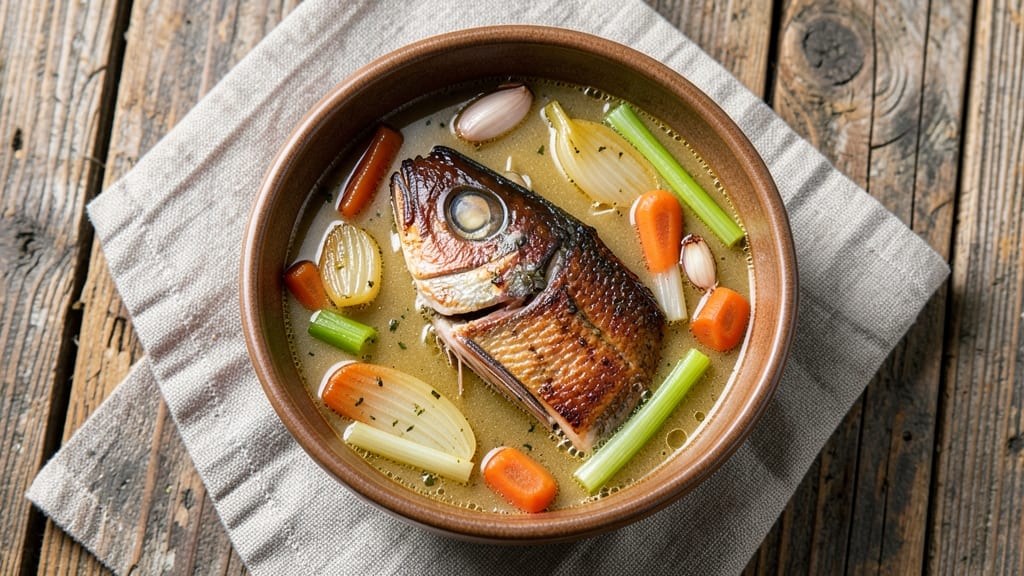
This salmon head soup recipe transforms a humble salmon head into a rich, umami-packed broth that turns simple ingredients into something extraordinary.
This salmon head soup recipe delivers a deeply flavorful, aromatic dish that's both nourishing and deeply satisfying—perfect for cold weather or when you want to make the most of every part of the fish.
The key lies in proper preparation: blanching the head to remove impurities, then simmering it with aromatics to extract maximum flavor into the broth.
What sets this recipe apart is its balance of techniques—traditional simmering for depth, fresh herbs for brightness, and vegetables that add texture without overpowering the delicate fish flavor. I developed this version after years of testing, ensuring even beginners can achieve restaurant-quality results with clear, step-by-step instructions.
The broth becomes velvety and rich, while the vegetables retain their natural sweetness and crunch.
By the time you serve this soup, you'll have created something truly special—a dish that honors the whole fish while delivering comfort in every spoonful.
The aroma alone will draw everyone to the table, and the first sip reveals layers of savory, slightly sweet, and herbal notes that make it unforgettable. This is the kind of recipe that transforms ordinary ingredients into a memorable meal.
Whether you're following a Vietnamese-inspired approach with tamarind or a Korean-style version with gochugaru, the principles remain the same: respect the ingredients, take your time with the broth, and let the flavors develop naturally. Here's how to make it—step by step—so you can experience the magic for yourself.
Ingredients for salmon head soup
Transform humble ingredients into a velvety, aromatic salmon head soup with these carefully selected components.
| Ingredient | Amount | Notes |
|---|---|---|
| Salmon Head 🐟 | 1 whole | Fresh, cleaned, blanched first |
| Yellow Onions 🧅 | 2 whole | Cut into large chunks |
| Garlic Cloves 🧄 | 6 cloves | Smashed, not minced |
| Carrots 🥕 | 3 medium | Whole, scrubbed clean |
| Carrots 🥕 | 1 ½ lb | Cut into 2-inch chunks |
| Celery Stalks 🧅 | 4 whole | Cut into 2-inch pieces |
| Fresh Ginger 🌿 | 2 inch | Thinly sliced, peeled |
| Coconut Milk 🥥 | 1 can (13.5 oz) | Full-fat for creaminess |
| Fish Sauce 🍶 | 2 tbsp | Red Boat preferred |
| Soy Sauce 🥢 | 2 tbsp | Japanese tamari preferred |
| Lime Juice 🍋 | 3 tbsp | Freshly squeezed |
| Fresh Cilantro 🌿 | ½ cup | Stems included, chopped |
| Thai Basil 🌿 | ¼ cup | Or regular basil if unavailable |
| Green Onions 🧅 | 4 whole | Cut into 1-inch pieces |
| Fish Stock 🍲 | 4 cups | Homemade or high-quality store-bought |
The salmon head is the centerpiece—freshness is critical. Purchase from a trusted seafood purveyor like Whole Foods Market or your local fishmonger, where they can clean and prepare it for you. Look for heads with bright, clear eyes and firm flesh—these indicate optimal quality. For the aromatics, organic carrots and celery from the grocery store's produce section work well, but avoid anything with blemishes or soft spots. The ginger should be firm and aromatic when peeled, and the coconut milk must be full-fat for that signature creaminess. Red Boat fish sauce is worth the investment for its authentic umami depth, though regular brands will suffice in a pinch.
No fish sauce? Soy sauce plus a dash of anchovy paste mimics the savory complexity. Substitute Thai basil with regular basil plus a pinch of dried Thai basil if needed. The fish stock can be swapped for chicken or vegetable stock in a 3:1 ratio, though the flavor will differ slightly. For a vegetarian adaptation, replace the salmon head with mushrooms and kombu seaweed, simmered to extract umami. The lime juice should be freshly squeezed—bottled versions lack the necessary brightness. If you're short on time, pre-cut vegetables from the grocery store's prepared foods section work, though homemade always tastes superior.
Store the salmon head in the coldest part of your fridge, wrapped in a damp towel, for up to 2 days before use. Fresh herbs like cilantro and Thai basil keep best in a sealed container with a paper towel, lasting 5-7 days in the refrigerator. The finished soup reheats beautifully—simmer gently on the stove or warm in the microwave, stirring occasionally to prevent skin formation. It tastes even better the next day as flavors meld, so consider doubling the recipe for leftovers. Portion into containers for 3-4 days of lunches, or freeze for up to 3 months in airtight containers.
Why You'll Love This Recipe
- Uses Every Bit: Honestly, I hate food waste—so when I realized the salmon head isn’t just for looks, I started saving them. That crispy skin? Pure flavor gold. The broth alone is richer than any store-bought, and the meat just falls off the bone.
- Garlic-Caramel Magic: Here’s what sold me—the way the onions and garlic melt into a deep, sweet base before the salmon head simmers. That first spoonful? It’s like a hug in a bowl, especially when the carrots soak up all that umami goodness.
- Leftovers That Don’t Suck: Between us, most soups turn sad after day two. Not this one. The broth gets even better as it sits—deeper, more complex—and the leftover meat shreds perfectly for sandwiches or rice bowls. (Yes, even on a Tuesday night.)
- Budget-Friendly Luxury: I buy whole salmon for fillets, then save the heads to make this. Suddenly, a $15 fish stretches into two meals instead of one. Plus, the carrots and onions are cheap staples, so I’m not breaking the bank for something that tastes like a fancy dinner.
Step-by-step instructions for salmon head soup
Transform every part of the salmon head into a rich, aromatic broth using precise technique.
Blanch and Prepare the Salmon Head
Begin by rinsing the salmon head under cold water and patting it completely dry with paper towels. This removes any surface moisture that could prevent proper browning. In a large stockpot, bring 4 cups of fish stock to a rolling boil over medium-high heat. Once boiling vigorously, carefully add the salmon head and blanch for exactly 8 minutes.
This initial blanching removes impurities and blood that would otherwise cloud your broth. After 8 minutes, remove the salmon head using tongs and place it in a colander to cool slightly. The skin should begin to tighten and pull away from the bone—this indicates successful blanching. Set aside for the next step while you prepare your aromatics.
Build the Aromatic Base
In the same stockpot (no need to clean it—the fond contains flavor), add 2 tablespoons of oil and place over medium heat. Add the 2 whole yellow onions, 1.5 lb carrots (cut into 2-inch chunks), 4 whole celery stalks (cut into 2-inch pieces), and 6 cloves garlic cloves (smashed). Cook for 8-10 minutes, stirring occasionally, until the vegetables soften and the onions become translucent.
Here's where the depth of flavor begins. Add the 2-inch fresh ginger (thinly sliced) and cook for an additional 2 minutes until fragrant. The ginger should release its pungent aroma—this is your signal that the aromatics are properly developed. Remove the pot from heat and set aside temporarily while you prepare the remaining ingredients.
Simmer the Broth with Salmon Head
Return the blanched salmon head to the stockpot with the aromatics. Add 4 cups of fresh fish stock and bring the mixture to a gentle simmer over low heat. Maintain a steady simmer (not a rolling boil) for 45-50 minutes. You'll see impurities rise to the surface—this is normal and indicates the broth is purifying itself.
After 45 minutes, skim off any foam or impurities that rise to the surface using a fine-mesh skimmer. The broth should be clear with a deep golden hue. If the liquid level drops significantly, add ½ cup of hot water to maintain the proper consistency. The salmon head should be falling apart slightly at this stage, releasing its collagen-rich gelatin.
Finish with Coconut Milk and Seasonings
Remove the salmon head from the broth and discard the bones. Strain the broth through a fine-mesh sieve into a clean pot, pressing gently on the solids to extract maximum flavor. Return the strained broth to the pot and stir in the 1 can (13.5 oz) coconut milk, 2 tablespoons fish sauce, 2 tablespoons soy sauce, and 3 tablespoons lime juice. Bring to a gentle simmer over low heat for 5 minutes to allow the flavors to meld.
The coconut milk will create a velvety texture while the fish and soy sauces deepen the umami profile. Taste and adjust seasoning—you may need an additional ½ teaspoon of salt or 1 teaspoon of sugar to balance the acidity from the lime juice. The soup should be rich but not overly salty, with a bright, aromatic finish.
Garnish and Serve
Ladle the hot soup into serving bowls. Garnish each portion with 0.5 cup fresh cilantro and 0.25 cup Thai basil, then top with 4 whole green onions (cut into 1-inch pieces). The herbs should be added just before serving to preserve their fresh aroma and vibrant color. Serve immediately while the broth is steaming hot to capture all the complex flavors you've built.
Each spoonful should deliver a harmonious blend of salmon richness, coconut creaminess, and aromatic vegetables. The broth should coat the back of your throat with a luxurious mouthfeel while delivering bright, umami-packed depth. For best results, serve with steamed jasmine rice to soak up the flavorful liquid.
Pro Tips For Making Salmon Head Soup
- BLANCH THE HEAD FIRST: Drop the salmon head into boiling water for 3-4 minutes before simmering—this loosens the skin and bones, making them easier to separate later. I learned this the hard way after struggling to pry apart stubborn cartilage in my first batch.
- CHAR THE ONIONS: Cook the yellow onions in oil until deep golden brown, not just soft—this caramelized flavor is the soul of the soup. Sounds weird, but it works: skip this, and you’ll just have a mild broth instead of something rich and complex.
- SKIP THE RUSH ON GARLIC: Add minced garlic after the onions are caramelized, not at the start—this prevents it from burning and turns it into a fragrant, nutty base. I was skeptical until I tried it, and now I never go back.
- SIMMER LOW AND LONG: Keep the soup at a gentle simmer (small bubbles, not rolling) for at least 1.5 hours—this extracts collagen from the bones for a velvety texture. After burning three batches, I finally figured out patience pays off here.
Perfect pairings for this salmon head soup
Herbal Garnish Combinations
Fresh herbs elevate this soup by adding brightness and visual appeal. I always use ½ cup chopped cilantro and ¼ cup Thai basil for their distinct flavors—cilantro’s citrusy note contrasts beautifully with the coconut richness, while Thai basil adds a subtle anise-like warmth.
For a Vietnamese-inspired twist, add 1 tbsp chopped mint and 1 tbsp perilla leaves (available at Asian markets) to deepen the herbal complexity. 🌿
Crunchy Toppings
Texture is key in soup pairings, and crispy elements cut through the velvety broth. I love adding toasted coconut flakes (½ cup) for a sweet, nutty crunch or crispy fried shallots (¼ cup) for a savory bite.
For extra indulgence, top with crispy fried salmon skin—simmer dried salmon skin in oil until golden and crispy, then sprinkle over the soup. This adds a delicate, crispy layer that mirrors the soup’s umami depth.
Perfect Bread Pairings
Serve this soup with a slice of crusty baguette or steamed jasmine rice—both soak up the flavorful broth beautifully. For a more substantial pairing, offer rice paper rolls—fresh, light, and perfect for wrapping soup-spoonfuls.
I also recommend warm, buttery brioche—its richness complements the coconut milk without overpowering the delicate salmon flavor. 🥖
Beverage Pairings
A crisp, dry white wine like Sauvignon Blanc—particularly one from New Zealand or Loire Valley—cuts through the richness with its citrus and herbal notes. For beer lovers, a light lager—such as Heineken or Asahi—provides a clean, refreshing contrast.
If you prefer something non-alcoholic, sparkling yuzu soda—with its bright citrus flavor—pairs wonderfully, enhancing the soup’s natural acidity from the lime juice.
Spicy Kick Options
For those who love heat, add a dash of Sriracha—about 1 tsp per bowl—or a sprinkle of chili oil—just before serving. I also recommend serving chili crisp—a Chinese condiment made from fried chili peppers and spices—on the side for dipping.
The smoky, spicy crunch adds another layer of complexity that balances the soup’s creamy texture. 🌶️
Side Dish Pairings
Complement the soup with a simple cucumber salad—tossed with rice vinegar, sugar, and sesame seeds—to provide a refreshing, cool contrast. Another great option is steamed bok choy with garlic and soy sauce—its slight bitterness and crunch add another dimension to the meal.
For a heartier option, serve with grilled pork belly slices—the fatty, caramelized pork enhances the umami notes in the broth.
Nutrition facts
Frequently asked questions
Why do we blanch the salmon head before cooking?
Blanching removes impurities, blood, and surface moisture that could cloud your broth. The 8-minute boil loosens the skin and tightens the flesh, ensuring a clearer, more flavorful final soup. This step is essential for that restaurant-quality broth texture.
Can I substitute salmon head with another fish head?
Yes, but flavor will vary. Cod or halibut heads work well, though they're milder. For authentic umami, stick with salmon. Avoid fatty fish like tuna—they can make the broth greasy. The key is choosing a head with firm, fresh flesh and minimal odor.
How do I know when the broth is ready?
Look for a deep golden color and clear liquid after 45-50 minutes of simmering. The salmon head should be falling apart, releasing collagen that thickens the broth. Taste it—it should be rich but not fishy, with developed vegetable aromas. Skim off any foam that rises to the surface.
What if my soup tastes too fishy?
This usually means over-simmering or using old fish. For future batches, reduce simmering to 40 minutes and use fresher heads. To fix it now, stir in 1 tbsp lime juice or ½ cup coconut milk to balance the flavors. The coconut milk also adds creaminess that masks fishiness beautifully.
Can I make this soup vegetarian?
Replace the salmon head with 1 lb mushrooms (shiitake or oyster work best) and 1 sheet kombu seaweed for umami. Simmer the mushrooms for 20 minutes first to extract their flavors, then proceed with the same aromatic base. The broth will be plant-based but still deeply satisfying.