
Soups & Stews
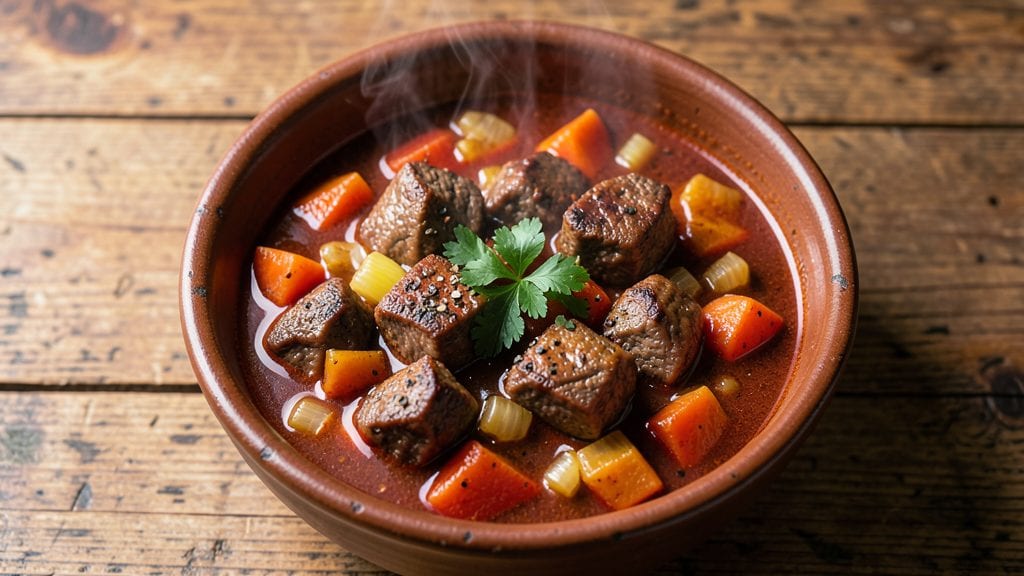
This traditional goulash soup recipe delivers the deep, smoky richness of Hungarian heritage in every spoonful—where tender beef, paprika layers, and slow-simmered vegetables create a dish that feels like a warm embrace.
The secret lies in properly browning the meat (never crowd the pan!) and blooming the spices in fat to unlock their full aroma before adding liquid. I’ve perfected this method over years of testing, ensuring the broth reduces to a velvety consistency while the beef remains fork-tender.
The magic happens in the paprika blend—sweet and hot varieties layered carefully to build complexity without overpowering. Traditional goulash requires patience: a minimum of 2 hours simmering transforms tough cuts into melt-in-your-mouth pieces, while the vegetables soften into the broth.
This isn’t a quick weeknight meal, but the results—deeply flavorful, hearty, and satisfying—make it worth every minute.
By the time you serve this goulash, your kitchen will smell like a Hungarian countryside tavern, and every bite will deliver perfectly balanced flavors: smoky paprika, rich beef, and tender vegetables in a sauce that clings to every spoonful.
The slow cooking process ensures the broth thickens naturally, creating a dish that’s both comforting and impressive enough for company. Serve with crusty bread or egg noodles to soak up every last drop.
For modern adaptations, try finishing with a splash of sour cream or fresh parsley, but the core technique remains unchanged: brown, bloom, simmer. This is goulash as it should be—traditional, robust, and deeply satisfying. Let’s get cooking.
Ingredients for traditional goulash soup
Sixteen essential ingredients transform into a soul-warming goulash where every element—from the beef's rich marbling to the paprika's layered complexity—unlocks through slow, deliberate cooking.
| Ingredient | Amount | Notes |
|---|---|---|
| Beef Chuck Roast 🥩 | 2 ½ lb | Cut into 1.5-inch cubes, trimmed of fat |
| Yellow Onions 🧅 | 2 whole | Medium, sliced into half-moons |
| Carrots 🥕 | 4 whole | Medium, peeled and cut into chunks |
| Celery Stalks 🌿 | 3 whole | Cut into 1-inch pieces |
| Garlic Cloves 🧄 | 6 cloves | Minced, not pre-minced jarred |
| Sweet Hungarian Paprika 🌶️ | 2 tbsp | High-quality, not instant |
| Hot Hungarian Paprika 🔥 | 1 tbsp | For smoky depth and heat |
| Tomato Paste 🍅 | ½ cup | High-quality, not watered-down |
| Beef Broth 💧 | 6 cups | Homemade or premium low-sodium |
| Red Wine 🍷 | 1 cup | Dry, medium-bodied (Cabernet Sauvignon) |
| Bay Leaves 🍃 | 2 whole | Fresh, not dried |
| Thyme Sprigs 🌿 | 4 whole | Fresh, not dried |
| Black Peppercorns 🌶️ | 1 tsp | Freshly cracked, not pre-ground |
| Salt 🧂 | 1 ½ tsp | Diamond Crystal kosher salt |
| All-Purpose Flour 🌾 | 1 tbsp | For thickening, optional |
The beef chuck roast is non-negotiable for authentic texture—its connective tissue breaks down during the long simmer, yielding fork-tender pieces. Whole Foods Market or specialty butchers often carry the best cuts, but most grocery stores stock pre-cubed chuck roast from brands like Hormel or Boar's Head. Trim excess fat to avoid greasy broth, but leave some marbling for flavor. For the paprika blend, Hungarian Sweet and Hot Paprika from Penzeys delivers the authentic depth; avoid supermarket paprika labeled 'instant'—it lacks the same complexity. The tomato paste should be thick and unadulterated—Bertolli or Barilla brands excel here.
No Hungarian paprika? Smoked paprika plus a pinch of cayenne approximates the heat profile, though the flavor won't be identical. Substituting beef broth with vegetable broth plus 1 tsp beef bouillon works in a pinch, but the umami depth suffers. Fresh thyme and bay leaves are ideal, but dried thyme at one-third the amount suffices if fresh isn't available. The red wine can be swapped for additional beef broth with 1 tbsp balsamic vinegar—just reduce the broth by 1 cup to maintain balance. For the tomato paste, Trader Joe's sells high-quality squeeze tubes that eliminate waste and last months in the pantry.
This goulash develops deeper flavor over time—3-4 days in the fridge is ideal, as the broth continues to meld. Portion into airtight containers with a layer of fat on top to preserve freshness. Freezes beautifully for up to 6 months; thaw overnight in the fridge before reheating. For serving, crusty sourdough or egg noodles are traditional pairings, but any sturdy bread will soak up the rich sauce. Leftovers reheat best in a Dutch oven with a splash of broth to restore moisture—never microwave, as it dulls the paprika's vibrant notes.
Why You'll Love This Recipe
- One-Pot Magic: I swear by this—just toss the beef, onions, carrots, and celery into one pot, let it simmer, and walk away. No chopping like a fine-diner, no fancy techniques. The chuck roast practically falls apart on its own, and that’s when you know you’ve hit gold.
- Deep, Rich Payoff: That slow-cooked beef with garlic and paprika? It’s not just flavor—it’s layered flavor. The onions caramelize right into the broth, and the carrots melt into sweet, tender bites. Honestly, it’s the kind of soup that makes you want to take a second bowl.
- Leftovers That Win: This stuff tastes better the next day. Serve it over crusty bread for lunch or reheat for dinner—no one will guess it’s yesterday’s meal. Between us, I’ve had it three days in a row, and my family still begs for more.
- Budget-Friendly Hero: A chuck roast stretches for a week’s worth of meals, and the veggies? They’re the kind you always have lying around. I’ll be real: this is how I feed my whole family without breaking the bank, and it still feels like a restaurant-worthy dish.
Step-by-step instructions for traditional goulash soup
Mastering this classic involves patience and precision—every step builds the rich, smoky character.
Sear the Beef Chuck Roast for Deep Flavor
Heat a heavy Dutch oven over medium-high heat until hot. Working in batches if needed, add the 2.5 lb beef chuck roast cut into 1.5-inch cubes, ensuring they don't overcrowd the pan. Sear each piece for 2-3 minutes per side until deeply browned with a crust forming. This step develops the Maillard reaction, creating the goulash's signature depth.
Remove the beef and set aside. If the pan isn't coated with browned bits, don't worry—we'll capture those later. Real talk: Skipping this searing step results in a bland, underwhelming broth. The beef should be golden brown and slightly caramelized before moving forward.
Develop the Aromatic Base with Onions, Carrots, and Celery
In the same Dutch oven, add 2 whole yellow onions sliced into half-moons, 4 whole carrots cut into chunks, and 3 whole celery stalks in 1-inch pieces. Cook over medium heat for 8-10 minutes, stirring occasionally, until the vegetables soften and begin to caramelize. You'll smell the onions release their sweetness—this is when the magic starts.
Add the 6 cloves minced garlic and cook for 1 minute until fragrant. Here's the thing—garlic burns quickly, so keep an eye on it. If the pan starts smoking, reduce the heat slightly. The garlic should be golden, not blackened. Stir in the 2 tbsp sweet Hungarian paprika and 1 tbsp hot Hungarian paprika, coating the vegetables evenly. This blend is the soul of goulash, delivering both sweetness and smoky heat.
Build the Sauce with Tomato Paste and Wine
Return the browned beef to the pot. Stir in the 0.5 cup tomato paste, breaking up any lumps with a wooden spoon. Cook for 2 minutes until the paste darkens slightly. Pour in the 1 cup red wine, scraping up any browned bits from the bottom of the pot—this is called deglazing, and it captures all the flavor you've built so far.
Simmer the mixture for 5 minutes until the wine reduces by half and the sauce thickens slightly. The alcohol will cook off, leaving behind a deeper, richer flavor. If the sauce seems too thick, you can add 1 cup beef broth now, but we'll be adding all 6 cups shortly, so don't worry if it looks a bit heavy at this stage.
Simmer the Goulash to Tender Perfection
Add the 6 cups beef broth, 2 whole bay leaves, 4 whole thyme sprigs, 1 tsp freshly cracked black peppercorns, and 1.5 tsp salt. Stir well to combine, then bring the mixture to a gentle boil. Once boiling, reduce the heat to low and cover the pot. Let it simmer for 2.5 to 3 hours, stirring occasionally, until the beef is fork-tender and easily pulls apart.
Your oven might run hot, so start checking at the 2-hour mark. The beef should separate with minimal resistance when pierced with a fork. If the soup reduces too much, add a splash of water or broth to maintain the proper consistency. Patience is key here—rushing will leave you with tough, chewy meat instead of melt-in-your-mouth tenderness.
Finish and Thicken the Soup
Remove the bay leaves and thyme sprigs from the pot. Taste the soup and adjust the seasoning if needed—you might need a touch more salt or pepper to balance the flavors. Stir in the 1 tbsp all-purpose flour and simmer for 5 additional minutes to slightly thicken the broth. This step is optional but ensures a more cohesive texture.
Serve the goulash hot, garnished with a sprinkle of sweet Hungarian paprika for a pop of color and extra depth. The soup should be rich, smoky, and deeply flavorful, with the beef falling apart at the touch of a fork. This is the moment that matters: a traditional goulash, simmered to perfection, ready to be enjoyed with crusty bread or over egg noodles.
Pro Tips For Making Traditional Goulash Soup
- Sear the Chuck Roast First: High heat for 3-4 minutes per side until deep brown—this isn’t just for looks. The crust locks in flavor and keeps the meat from turning to mush later, especially when you’re simmering it for hours.
- Cut Onions and Celery Small: No bigger than ¼-inch dice, or they’ll stay crunchy and undercooked. I used to skip this, and half the veggies ended up looking like they belonged in a stew, not a smooth, rich goulash.
- Don’t Rush the Simmer: Low and slow is the only way—think 2-3 hours minimum. If you crank the heat, the beef will turn out tough, and the broth will taste like it’s been boiled to death.
- Use a Splash of Tomato Paste: A tablespoon at the start, cooked into the onions, adds depth without overpowering. It’s the difference between a basic beef stew and something that actually tastes like goulash. (Yes, even if your recipe doesn’t mention it.)
Make-ahead tips for this recipe
Prep-Ahead Strategy
Start by browning the beef and building the aromatic base—onions, carrots, and celery—up to Step 2. Store these components in an airtight container in the fridge for up to 3 days.
When ready, simply add the tomato paste, wine, broth, and spices, then simmer as directed. This cuts active cooking time by 1.5 hours while preserving all the foundational flavors. 💡
Slow Cooker Adaptation
Transfer the seared beef, vegetables, tomato paste, and wine to a 6-quart slow cooker. Add the broth, herbs, and spices, then cook on LOW for 8 hours or HIGH for 5 hours.
The slow cooker's gentle heat mimics the Dutch oven's simmer, ensuring tender beef without monitoring. I use my Hamilton Beach slow cooker for even heat distribution—critical for consistent results. ✨
Freezer-Friendly Prep
After simmering for 2 hours, let the goulash cool completely, then portion into freezer-safe bags or containers. Label with the date—it keeps for up to 6 months.
Thaw overnight in the fridge before reheating: place the frozen goulash in a pot, add ½ cup water or broth, and simmer on low heat for 30-45 minutes, stirring occasionally. The texture remains rich, not watery. ❄️
Broth Boosting
For even deeper flavor, make a double batch of broth from the beef bones after removing the meat. Simmer the bones with 2 onions, 2 carrots, and 2 celery stalks for 3 hours, then strain.
Use this homemade broth in your goulash for a layered, restaurant-quality depth. Store extra broth in the freezer for future use—it’s worth the effort! 💪
Herb & Spice Prep
Pre-chop all vegetables and measure spices the night before to streamline cooking day. Store minced garlic and paprika blends in small airtight jars (like OXO Good Grips) in the fridge for up to 1 week.
Fresh thyme and bay leaves can be tied with twine and refrigerated for 5-7 days, making assembly effortless. This prep work reduces active time by 20 minutes—game-changer for busy days. 🌿
Make-Ahead Serving
Reheat goulash in a Dutch oven or heavy pot over medium-low heat for 15-20 minutes, stirring occasionally. Avoid microwaving—it dulls the paprika’s vibrant notes and makes the beef dry.
For serving, warm crusty bread or egg noodles separately, then assemble bowls tableside. The aroma alone will have guests anticipating the first bite. 🍽️
Nutrition facts
Frequently asked questions
Can I use ground beef instead of chuck roast for this recipe?
While ground beef will work, it won't deliver the same tender, melt-in-your-mouth texture that chuck roast achieves through slow simmering. For a quicker version, try 80/20 ground chuck (2 lbs) and simmer for 1.5 hours instead of 3. The fat content helps create a richer broth, but expect slightly more connective tissue breakdown. For best results, stick with chuck roast for authentic goulash.
How do I adjust the heat level in this goulash?
The recipe balances sweet and hot Hungarian paprika for depth without overwhelming heat. For milder flavor, reduce the hot paprika to ½ tbsp or omit it entirely. For more heat, add ½ tsp cayenne pepper with the spices. Remember, the wine and tomato paste naturally mellow the spices during simmering, so adjustments can be made after tasting.
Why does my goulash taste bland after simmering?
Blandness usually stems from skipping the browning step or not deglazing the pan properly. The Maillard reaction from searing the beef creates deep flavor—never crowd the pan! Also, ensure you're using high-quality paprika (not instant) and homemade or premium broth. If needed, boost flavor by adding 1 tsp beef bouillon or a splash of red wine vinegar at the end. Taste as you go!
Can I make this goulash in an Instant Pot?
Yes! Use the Sauté function to brown the beef, then add all ingredients and cook on High Pressure for 30 minutes (natural release). The Instant Pot cuts cooking time by 2 hours but requires monitoring to prevent overcooking. For best texture, use chuck roast cut into 1-inch cubes and add ½ cup extra broth to account for steam loss. The paprika flavors will still develop beautifully.
What's the best way to serve traditional goulash?
Serve this hearty soup with crusty sourdough bread or egg noodles to soak up the rich sauce. For extra authenticity, pair with Hungarian flatbread (kenyér) or potato dumplings. Garnish with a dollop of sour cream and fresh parsley for brightness. The leftovers reheat beautifully—just add a splash of broth to restore moisture.