
Soups & Stews
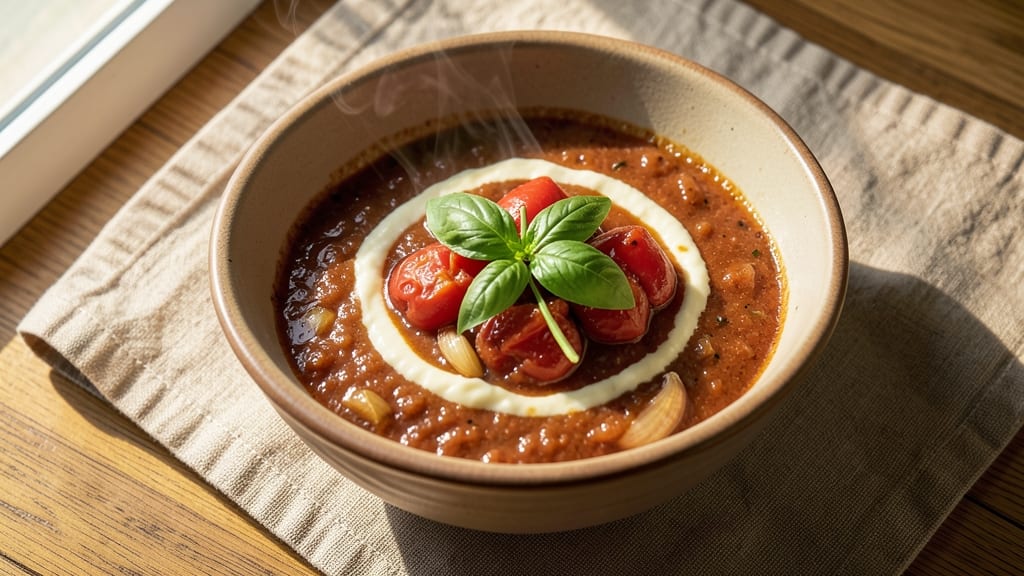
This traditional tomato soup recipe delivers the rustic richness that makes it a comfort food classic—slow-simmered until the flavors meld into velvety perfection.
The secret lies in building layers of depth through sautéed aromatics and a carefully balanced broth, creating a soup that tastes like a warm hug on a chilly day. I’ve perfected this version over years of testing, ensuring every spoonful captures that authentic, homey essence without shortcuts.
What sets this recipe apart is its slow-simmered approach, which transforms simple ingredients into something extraordinary. You’ll start with a classic roux for body, then layer in tomatoes, herbs, and broth, letting them develop complex flavors over 30 minutes on the stove.
The result? A soup so rich and aromatic, it pairs beautifully with crusty bread or grilled cheese sandwiches—just as it should in tradition.
The texture is where this soup truly shines: silky smooth with just enough rustic character to remind you it’s homemade. Fresh basil or a sprinkle of grated cheese adds the finishing touch, elevating it from ordinary to unforgettable.
This isn’t just soup; it’s a reliable, comforting staple that belongs in every cook’s repertoire.
Whether you’re serving it as a light lunch or a cozy dinner, this recipe delivers restaurant-quality warmth in your own kitchen. The method is straightforward, but the results are anything but—proof that tradition doesn’t have to mean complicated. Let’s get started on creating your own bowl of nostalgia.
Ingredients for traditional tomato soup
Pantry staples meet rustic tradition—just nine ingredients for soul-warming tomato soup perfection.
| Ingredient | Amount | Notes |
|---|---|---|
| Unsalted Butter 🧈 | ½ cup | Cold, cubed for roux |
| Yellow Onion 🧅 | 1 whole | Medium, finely diced |
| Garlic Cloves 🧄 | 4 cloves | Fresh, minced |
| All-Purpose Flour 🌾 | ¼ cup | For roux base |
| San Marzano Tomato Paste 🍅 | ½ cup | High-quality, no sugar added |
| Fresh Basil Leaves 🌿 | ¼ cup | Packed, chopped |
| Dried Thyme 🌿 | 1 tsp | Or 1 tbsp fresh |
| San Marzano Whole Canned Tomatoes 🍅 | 28 oz | Crushed by hand |
| Vegetable Broth 💧 | 4 cups | Homemade or quality store-bought |
| Sea Salt 🧂 | 1 ½ tsp | Diamond Crystal preferred |
| Black Pepper 🌶️ | ½ tsp | Freshly cracked |
| Fresh Basil Leaves 🌿 | ⅛ cup | Garnish, whole leaves |
| Parmesan Cheese 🧀 | ¼ cup | Freshly grated |
The tomatoes are non-negotiable here. San Marzano is the gold standard—sweet, meaty, and perfect for slow simmering. Grab a 28 oz can from the Italian section at Whole Foods or Trader Joe's if you're splurging. For the broth, homemade is ideal, but Pacific Foods or Imagine brands are solid shortcuts. The fresh basil? Farmers market leaves have the most vibrant flavor, but grocery store basil works if it's bright green and not wilted. Don't skip the thyme—it's the secret to that authentic rustic depth. And for the roux, use unsalted butter—salted can make the soup taste uneven.
No San Marzano tomatoes? Crushed tomatoes in a 28 oz can work in a pinch, but they lack that same richness. Fresh basil missing? Dried basil at one-third the amount gets you close, but it won't have that same bright pop. Short on time? Tomato sauce from a can (like Muir Glen) can replace the paste, but reduce the broth by half a cup to keep the texture right. The Parmesan is optional but worth it—Parmigiano-Reggiano grated fresh melts better than pre-grated. For the broth, if you're using bouillon cubes, Knox or Knorr are the most reliable. And if you're worried about the soup being too thick, just add a splash more broth at the end—it's easy to adjust.
This soup tastes even better the next day as the flavors meld. Store leftovers in the fridge for up to 5 days with a layer of olive oil on top to preserve that vibrant color. For freezing, portion into ice cube trays—just thaw and reheat. The roux keeps in the fridge for 3 days if you want to prep ahead, and the fresh herbs can be chopped and stored in an airtight container for 2 days. Garnish with extra basil and Parmesan right before serving—that's when it's at its peak.
Why You'll Love This Recipe
- No-Sweat Stovetop: I swear by this method—just butter, onions, and garlic slowly caramelizing until the kitchen smells like a warm hug. The flour roux (yes, just a splash of water) thickens it so smoothly, you won’t believe how little effort it takes. Honestly, I make this when I’m too tired to stand for long.
- San Marzano Magic: That single spoonful of tomato paste? It’s the secret weapon. The San Marzano’s natural sweetness and depth cut through the richness of the butter, giving you that real Italian taste—not canned tomato nonsense. Between us, this is the only soup that makes my picky husband ask for seconds.
- Weeknight & Leftovers: Perfect for when you’ve got friends dropping by or a lazy Sunday. Double the batch—it reheats like a dream, and the flavors only get better the next day. I’ve fed a crowd with this, served it in mugs for sick days, and even packed it for lunch. It’s my go-to for “I don’t wanna think” meals.
- Budget-Friendly Luxury: Butter and San Marzano paste might sound fancy, but they stretch so far. One jar of paste lasts me months, and a stick of butter makes this feel indulgent without breaking the bank. Plus, onions and garlic are dirt cheap—this soup is basically free money in a bowl. (Yes, even on a Tuesday night.)
Step-by-step instructions for traditional tomato soup
Here's the classic method that delivers restaurant-quality tomato soup with deep flavor and velvety texture.
Build the Roux for Richness
Melt the 0.5 cup unsalted butter in a heavy-bottomed pot over medium-low heat. Once fully melted, add the 0.25 cup all-purpose flour all at once and whisk vigorously to combine. This creates a roux that will form the creamy base of your soup.
Cook the roux for 3-4 minutes, stirring constantly, until it turns a pale golden color. You'll notice it smells nutty and develops a slight sheen—this indicates proper cooking. If it darkens too quickly, reduce the heat slightly. The roux is the foundation of your soup's texture, so don't rush this step.
Sauté Aromatics Until Fragrant
Add the 1 whole yellow onion and 4 cloves garlic cloves to the roux. Stir well to coat the vegetables in the buttery mixture, then increase heat to medium. Cook for 5-6 minutes, stirring occasionally, until the onions soften and turn translucent.
You'll know they're ready when the onions release their sweet aroma and the garlic begins to smell pungent. This step develops the soup's flavor depth. Be careful not to let the garlic burn—it should be fragrant but not browned. Remove from heat for just a moment if needed to prevent color change.
Develop the Tomato Base
Return the pot to medium heat and stir in the 0.5 cup San Marzano tomato paste and 1 tsp dried thyme. Cook for 2-3 minutes until the paste darkens slightly and becomes fully incorporated. This creates a concentrated tomato flavor that will carry through the entire soup.
Slowly pour in the 4 cups vegetable broth, whisking constantly to prevent lumps. Bring to a gentle simmer, then add the 28 oz San Marzano whole canned tomatoes (crushed by hand). The mixture should bubble gently—this simmering process allows the flavors to meld together beautifully.
Simmer for Deep Flavor
Reduce heat to low and let the soup simmer uncovered for 30-40 minutes. This slow cooking time is crucial for developing the soup's rich, complex flavor. Stir occasionally and taste after 20 minutes—you may need to add 1.5 tsp sea salt and 0.5 tsp black pepper to taste.
During this time, the soup will reduce slightly and the flavors will intensify. You'll notice the aroma becomes more concentrated and inviting. The soup should be thick but still spoonable—if it's too thick, add a splash of water or broth to reach your desired consistency.
Finish with Fresh Herbs and Cheese
Remove the pot from heat and stir in the 0.25 cup packed fresh basil leaves and 0.125 cup fresh basil leaves (for garnish). Let the soup sit for 5 minutes to allow the basil to infuse its bright flavor. Then stir in the 0.25 cup freshly grated Parmesan cheese until fully melted and smooth.
Taste and adjust seasoning one final time. The soup should be perfectly balanced—sweet from the tomatoes, rich from the roux, and bright from the basil. Ladle into bowls and garnish with additional Parmesan and fresh basil leaves. Serve immediately with crusty bread for the ultimate comfort food experience.
Pro Tips For Making Traditional Tomato Soup
- COOK ON MEDIUM-LOW: Don’t let that tomato paste burn—once it’s dissolved into the butter, drop the heat to medium-low and stir constantly. I learned this the hard way when my first batch turned into a charred, bitter mess that ruined the whole pot.
- SWEEP THE POT: After blooming the flour with butter, pour in the broth slowly while whisking vigorously. Let it simmer for 2-3 minutes to fully cook out the raw flour taste—this isn’t just stirring, it’s making sure every bit of flour gets hydrated.
- SALT THE BROTH FIRST: Season the broth before adding tomatoes or paste—this way, the soup’s flavor builds from the base up. Trust me, adding salt at the end just masks the depth you’re trying to create.
- USE WHOLE GARLIC: Mince those cloves instead of crushing them—this keeps the flavor concentrated and prevents bitterness. Toss them in at the very end, just before serving, so they don’t turn into garlic-flavored paste.
Regional styles of these flavors
Italian Rustic Version
The Italian approach to tomato soup often skips the roux entirely, focusing instead on a slow-cooked tomato and herb blend. Start by sautéing 1 diced onion and 3 garlic cloves in 2 tbsp olive oil over medium heat for 5 minutes.
Add 1 (28 oz) can San Marzano tomatoes, 1 tsp dried oregano, ½ tsp red pepper flakes, and 4 cups water. Simmer uncovered for 45 minutes, stirring occasionally. Finish with ¼ cup fresh basil and a splash of extra-virgin olive oil.
This version is lighter but equally flavorful—perfect with crusty ciabatta. 🍅
French Creamy Style
For a richer, creamier take, French tomato soup incorporates a béchamel base instead of a roux. Melt ½ cup butter, whisk in ½ cup flour, then gradually add 2 cups warm milk to create a smooth sauce.
Add 1 diced onion, 2 minced garlic cloves, and 1 (14 oz) can crushed tomatoes, then simmer for 20 minutes. Stir in 1 cup heavy cream and ½ cup grated Gruyère cheese before serving. Garnish with chives and a sprinkle of black pepper.
This version pairs beautifully with baguette slices or steamed mussels. 🥖
Southern U.S. Spiced Twist
In the American South, tomato soup often gets a smoky, spiced kick. Sauté 1 onion and 3 garlic cloves in 2 tbsp bacon grease (or butter), then add 1 tbsp smoked paprika, 1 tsp cayenne, and 1 (28 oz) can tomatoes.
Simmer for 30 minutes, then stir in 1 cup chicken broth and ½ cup heavy cream. Finish with ½ cup shredded cheddar and a dash of hot sauce. Serve with cornbread for a hearty, comforting meal. This version is bold and perfect for cooler evenings. 🌶️
Spanish-Inspired Gazpacho
For a refreshing, cold variation, blend 2 cups peeled tomatoes, 1 cucumber, 1 bell pepper, ½ onion, 2 garlic cloves, ¼ cup olive oil, and 2 tbsp sherry vinegar until smooth. Strain, then chill for at least 2 hours.
Serve in bowls with diced cucumber, olives, and a drizzle of olive oil. This Spanish gazpacho is light, bright, and ideal for summer gatherings. Pair it with garlic bread or grilled shrimp for a complete meal. 🥒
German-Inspired Tomato-Barley
A heartier German-style version swaps tomatoes for barley and root vegetables.
Sauté 1 onion, 2 carrots, and 2 celery stalks in 2 tbsp butter, then add ½ cup pearl barley, 1 (14 oz) can tomatoes, 4 cups vegetable broth, and 1 tsp caraway seeds. Simmer for 40 minutes until barley is tender.
Finish with fresh parsley and a squeeze of lemon. This soup is filling and perfect with dark rye bread. 🍞
Mexican Tomato Soup
For a zesty Mexican twist, sauté 1 onion, 3 garlic cloves, and 1 diced jalapeño in 2 tbsp oil. Add 1 (28 oz) can tomatoes, 1 tsp cumin, ½ tsp chili powder, and 4 cups broth.
Simmer for 25 minutes, then blend until smooth. Stir in ½ cup heavy cream and ½ cup cotija cheese. Garnish with cilantro, avocado slices, and a squeeze of lime. This version is vibrant and pairs well with tortilla chips or warm tortillas. 🌶️
Nutrition facts
Frequently asked questions
Why does this recipe use a roux instead of just blending tomatoes?
The roux creates that signature creamy texture that makes traditional tomato soup so satisfying. Without it, your soup would be more like a thin stew. The slow-cooked roux adds body and richness that canned soups can't match—it's what gives this recipe its velvety, restaurant-quality mouthfeel.
Can I make this soup without fresh basil?
Use 1 tablespoon dried basil instead, but add it at the very end so the flavor doesn't get bitter from overcooking. For extra brightness, a pinch of red pepper flakes or a splash of balsamic vinegar works too. The key is balancing the tomato's natural sweetness with something acidic or herbal.
How do I fix tomato soup that's too thick or too thin?
For thick soup, stir in 2-3 tablespoons of warm broth at a time until creamy. If it's too thin, simmer uncovered for 5-10 more minutes to reduce. Pro tip: If you're worried about thickness, taste after 20 minutes of simmering—you can always adjust then rather than waiting until the end.
What's the best way to reheat leftover tomato soup?
Gently reheat on the stove over low heat until just warm—never boil. Stir in a splash of water or broth if it thickens too much. For extra flavor, add a pat of butter or a sprinkle of Parmesan while reheating. Microwaving works in a pinch, but it can make the texture uneven.
Is this soup kid-friendly? Any modifications?
Yes! For picky eaters, blend it until completely smooth and serve with a side of buttered noodles. Skip the Parmesan if they're sensitive to dairy, and reduce the garlic slightly. The natural sweetness of the tomatoes usually wins kids over—just let them customize their bowl with extra bread or a drizzle of olive oil.