
Soups & Stews
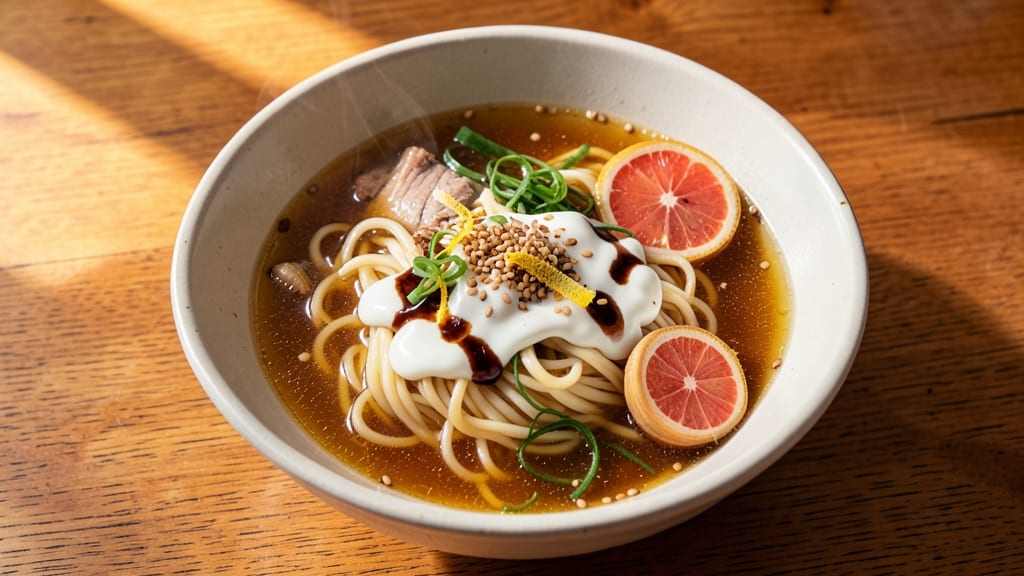
This Asian ramen soup recipe delivers the perfect balance of rich, umami-packed broth and chewy noodles that beg to be slurped. 💛 The secret lies in slow-simmered pork bones and aromatics that infuse the broth with deep, savory layers—just like your favorite ramen shop.
I developed this version after years of testing, ensuring every element comes together for that signature restaurant-quality experience at home.
The foundation starts with a foolproof broth made from pork bones, garlic, ginger, and a blend of soy sauce and miso for complexity. While the broth simmers, we prepare marbled eggs and chashu pork for classic ramen toppings that add texture and flavor.
Fresh ingredients like green onions, nori strips, and corn bring brightness and crunch to each bowl.
By the time you're ready to serve, you'll have a steaming bowl of ramen with a velvety broth that coats every noodle, tender pork slices, and perfectly marbled eggs.
The aroma alone will have everyone gathering around the table—this is comfort food at its finest, with the depth of tradition and the convenience of home cooking.
Whether you're serving a crowd or treating yourself to a solo meal, this recipe scales beautifully. The broth freezes well for future use, and you can customize toppings to suit your taste. Let's create restaurant-quality ramen together—one slurp-worthy bowl at a time.
Ingredients for asian ramen soup
Pork bones, fresh ginger, and aromatic soy sauce create the umami-packed broth foundation.
| Ingredient | Amount | Notes |
|---|---|---|
| Pork Bones 🍖 | 2 lb | Marbled for rich flavor |
| Ramen Noodles 🍜 | 8 oz | Fresh or dried, preferred |
| Garlic Cloves 🧄 | 6 cloves | Minced for aromatic base |
| Fresh Ginger 🌿 | ½ cup | Julienned or grated finely |
| Light Soy Sauce 🍶 | ½ cup | Kikkoman preferred |
| White Miso Paste 🧈 | 2 tbsp | For umami depth |
| Boneless Pork Shoulder 🍖 | 1 lb | For chashu, thinly sliced |
| Large Eggs 🥚 | 4 whole | Marbled for ramen eggs |
| Green Onions 🧅 | ½ cup | Sliced for garnish |
| Dried Nori Sheets 🍣 | 4 sheets | Cut into strips |
| Sweet Corn Kernels 🌽 | 1 cup | Fresh or frozen |
| Sesame Oil 🫒 | 1 tbsp | For finishing |
| Vegetable Oil 🫒 | 2 tbsp | For chashu cooking |
| Salt 🧂 | 1 tsp | Adjust to taste |
| Black Pepper 🌶️ | ½ tsp | Freshly ground |
The pork bones are everything here. Look for marbled bones at your local butcher—they're worth the extra cost. If you can't find them, substitute pork neck bones, but marbling gives that restaurant-quality richness. Fresh ginger is a must (the dried stuff just doesn't cut it), so grab a big knob from the produce section. For the soy sauce, Kikkoman is my go-to, but any good light soy will work. The miso? White miso from the Asian market adds that perfect umami layer—don't skip it.
No pork bones? Pork neck bones or even chicken thighs can work in a pinch, but the broth won't be as rich. Running out of fresh ginger? Dried ginger at half the amount, but it's not the same. The ramen noodles can be fresh or dried—just cook them according to package instructions. For the chashu pork, thinly sliced shoulder is ideal, but any lean pork will do. The eggs? Marbled eggs from the Asian market are perfect, but regular eggs work too—just add a pinch of salt to the water.
Broth freezes beautifully—portion into containers for quick ramen nights later. The chashu keeps 5 days in the fridge, and the marbled eggs stay fresh 1 week. Nori sheets last 6 months unopened, so stock up. Fresh corn? Use it within 2 days for best texture. This ramen tastes even better the next day as flavors meld—double batch if you can.
Why You'll Love This Recipe
- Porky Perfection in Minutes: I swear by the deep, savory richness of pork bones simmered low and slow—no fancy techniques, just patience. That first sip hits like a warm hug, and honestly? The hardest part is waiting for the broth to develop its magic.
- Garlic-Ginger Kiss: Between us, fresh ginger and minced garlic transform this into something ridiculously good. The aroma alone makes my kitchen smell like a Tokyo alleyway, and that first bite? Crispy noodle edges with a broth so balanced it’s almost unfair.
- Leftovers That Don’t Suck: This broth actually improves overnight—yes, really. I make a double batch on Sundays, and by Wednesday, it’s even better. Reheat it, toss in extra noodles, and suddenly you’ve got a cheap, filling lunch for the week.
- Budget-Friendly Soul Food: Pork bones and ramen noodles? That’s a powerhouse combo for under $10. Between us, this is the kind of meal that stretches your grocery budget without sacrificing flavor. My wallet and my taste buds both thank me.
Step-by-step instructions for Asian ramen soup
Here's how to build a deeply flavorful ramen broth from scratch.
🔥 Step 1: Render Pork Fat and Build the Broth Base
Place the 2 lb pork bones in a large stockpot and cover with cold water by about 2 inches. Bring to a boil over high heat, then immediately reduce to a gentle simmer. Skim off any foam that rises to the surface for the first 15 minutes—this ensures a clear broth. Let the bones simmer uncovered for 2 hours, maintaining a barely bubbling state. You'll know it's ready when the broth smells rich and meaty, with deep umami notes.
After 2 hours, add the 6 cloves minced garlic and 0.5 cup julienned fresh ginger. Stir gently to distribute the aromatics. The broth should now have a golden hue and a complex aroma. This foundational step creates the umami backbone of your ramen—don't rush it. The longer you simmer, the deeper the flavor, but 2 hours gives you that perfect balance between richness and clarity.
🍳 Step 2: Infuse with Umami and Season
Strain the broth through a fine-mesh sieve into a clean pot, pressing gently on the solids to extract maximum flavor. Return the broth to the stove and add 0.5 cup light soy sauce and 2 tbsp white miso paste, stirring to dissolve completely. Bring to a gentle simmer again, then reduce heat to maintain a low bubble. Let it simmer uncovered for 30 minutes to develop the flavors—this is where the magic happens.
Season with 1 tsp salt and 0.5 tsp freshly ground black pepper, adjusting to taste. The broth should now have a deep, savory aroma with layers of sweetness from the soy and funk from the miso. Taste it—it should be rich but balanced, not overly salty. If needed, add a splash of water to adjust consistency, but aim for a thick, syrupy texture that coats the back of a spoon.
👨🍳 Step 3: Prepare the Chashu Pork Shoulder
While the broth simmers, slice the 1 lb boneless pork shoulder into ¼-inch thick pieces. Heat 2 tbsp vegetable oil in a skillet over medium-high heat until shimmering. Add the pork in a single layer and sear for 2-3 minutes per side until deep golden brown and slightly charred. Transfer to a plate and set aside.
In the same skillet, add 1 cup sweet corn kernels and cook for 3-4 minutes until tender but still vibrant. Remove from heat and set aside with the pork. Here's the thing—this chashu adds tender, melt-in-your-mouth texture that contrasts beautifully with the chewy noodles. The caramelized edges bring an extra layer of depth to every slurp.
🥘 Step 4: Assemble the Ramen Bowls
Bring the broth back to a gentle simmer and add the seared pork and corn. Let everything warm through for 5 minutes. Meanwhile, cook the 8 oz ramen noodles according to package instructions until al dente—they'll finish cooking in the hot broth. Drain and divide among 4 bowls, reserving ½ cup noodle water for each serving.
Crack 1 whole large egg into each bowl and gently stir the hot broth into the egg to create marbled ramen eggs. The heat should gently cook the eggs into creamy, custard-like centers with delicate swirls. Top each bowl with 2 strips cut from dried nori sheets, 2 tbsp sliced green onions, and a drizzle of 1 tbsp sesame oil. The contrast of textures—chewy noodles, tender pork, silky egg, and crisp nori—makes every bite a symphony.
⏰ Step 5: Serve Immediately for Maximum Flavor
Ladle the hot broth over the noodles, adding 2-3 tablespoons of reserved noodle water to each bowl to create a luxuriously thick, slurp-worthy consistency. The first slurp should be hot, aromatic, and deeply satisfying—that's your reward for the effort. Serve with extra nori strips on the side and a sprinkle of black pepper for those who like a little heat.
This ramen isn't just a meal—it's an experience. The umami-packed broth, tender chashu, and creamy eggs come together in perfect harmony. And here's the best part: the flavors only get better as you eat, with each slurp revealing new layers of complexity. Enjoy it while it's steaming hot—ramen tastes best straight from the bowl!
Pro Tips For Making Asian Ramen Soup
- Char Bones First: Toss those pork bones in a screaming-hot pot for 10 minutes before adding water—this isn’t just for flavor, it’s for depth. I learned this the hard way after making broth that tasted like it was missing something. The crusty, caramelized bits dissolve into the broth later, giving it that rich, umami backbone.
- Mince Ginger Like Mad: Skip the thin slices—grate that ginger into a paste with a microplane or knife. It blends into the broth instead of floating like a sad garnish, and trust me, your soup will taste like it’s been simmering for hours, not 30 minutes. (Yes, even if you’re impatient like me.)
- Don’t Rush the Simmer: Keep that broth at a gentle simmer, not a rolling boil—otherwise, you’ll end up with cloudy, greasy broth that tastes like it’s fighting a losing battle. A low, steady bubble (barely any movement) is what turns pork bones into liquid gold. I know, I know, but trust the process.
- Toast Garlic Separately: Fry those garlic cloves in oil until they’re golden and fragrant before adding them to the broth—this stops them from turning bitter and adds a whole new layer of flavor. I was skeptical until I tried it, and now I can’t imagine making ramen any other way. (Pro move: Save the crispy bits for garnish.)
Best sauces and condiments for this dish
Classic Soy Sauce Base
Start with Kikkoman light soy sauce—it's my go-to for that authentic umami depth. For every bowl of ramen, use 1 tablespoon soy sauce in the broth (plus an extra ½ teaspoon when seasoning).
The key is balancing it with white miso paste (2 tbsp total) to add funky complexity. Trust me, this combo elevates your broth from good to restaurant-quality. 💛
Spicy Miso Variations
Craving heat? Swap ½ tablespoon white miso for red miso paste—it’s richer and slightly spicier. Add 1 teaspoon gochujang (Korean chili paste) for a Korean-style ramen kick.
For extra depth, stir in ½ teaspoon doubanjiang (fermented chili bean paste) during the final 5 minutes of simmering. The result? A bold, spicy-sweet broth that’s addictive. 🌶️
Umami Boosters
Take your broth to the next level with dashi powder (1 tsp) for extra umami punch. A splash of fish sauce (1 tsp) adds depth, while 1 tbsp oyster sauce (like Lee Kum Kee) brings a savory richness.
For a vegetarian twist, use mushroom powder (1 tsp) or soy sauce + a pinch of MSG for that signature umami hit. 💡
Finishing Touches
Drizzle 1 tbsp sesame oil over each bowl just before serving—it adds nutty aroma and ties all flavors together. A sprinkle of toasted sesame seeds or crushed red pepper flakes (for heat lovers) takes it to another level.
Don’t forget freshly ground black pepper—it brightens the broth and cuts through the richness. 🔥
Fusion Sauce Ideas
Want to experiment? Try a garlic-chili oil drizzle (mix 1 tbsp chili oil + minced garlic) for a Sichuan-inspired twist. For a creamy option, stir 1 tbsp coconut milk into the broth and top with lime wedges.
Even a honey-soy glaze (1 tbsp honey + 1 tbsp soy sauce) brushed on chashu adds sweetness that balances the saltiness. ✨
Store-Bought Shortcuts
Short on time? Use high-quality instant ramen seasoning packets (like Nissin) as a base, then boost with 1 tbsp soy sauce + 1 tsp miso. For broth, simmer pork or chicken bouillon cubes (like Knorr) with 1 tsp fish sauce for depth.
Just remember—homemade always wins for flavor, but these hacks save time. ⏰
Nutrition facts
Frequently asked questions
Can I make this ramen vegetarian?
Replace pork bones with mushroom stems, kombu seaweed, or shiitake mushrooms for umami. Use vegetable broth instead of pork broth and add 1 tsp mushroom powder or ½ tsp MSG to mimic the meaty depth. For protein, include tofu, tempeh, or seitan in place of chashu. The noodles and egg can stay the same—just use vegan noodles if needed.
How do I get that perfect slurp-worthy noodle texture?
Cook noodles 1 minute less than package instructions, then finish them in the hot broth. The broth's heat and starch from the noodles create that signature chewy-yet-slurpable texture. For extra chewiness, use fresh ramen noodles or rinse dried noodles briefly before cooking to remove excess starch.
Can I make the broth ahead of time?
Yes! The broth freezes beautifully for up to 3 months. Cool it completely, portion into containers, and freeze. When ready to use, thaw overnight in the fridge and reheat gently. For best results, add 1 tsp soy sauce + ½ tsp miso when reheating to restore flavor balance.
What's the best way to cook the marbled eggs?
Crack eggs directly into bowls of hot broth and stir gently for 3-4 minutes until the whites set but yolks remain creamy. The key is gentle stirring—don't overmix. For extra marbling, add a pinch of salt to the water when boiling eggs separately, then slice and place on top of noodles.
How do I adjust the spice level?
For mild ramen, reduce or omit the black pepper. For heat lovers, add 1 tsp gochujang to the broth or stir in ½ tsp chili flakes with the sesame oil. For a balanced kick, try 1 tsp doubanjiang (fermented chili bean paste) during the final 5 minutes of simmering.