
Soups & Stews
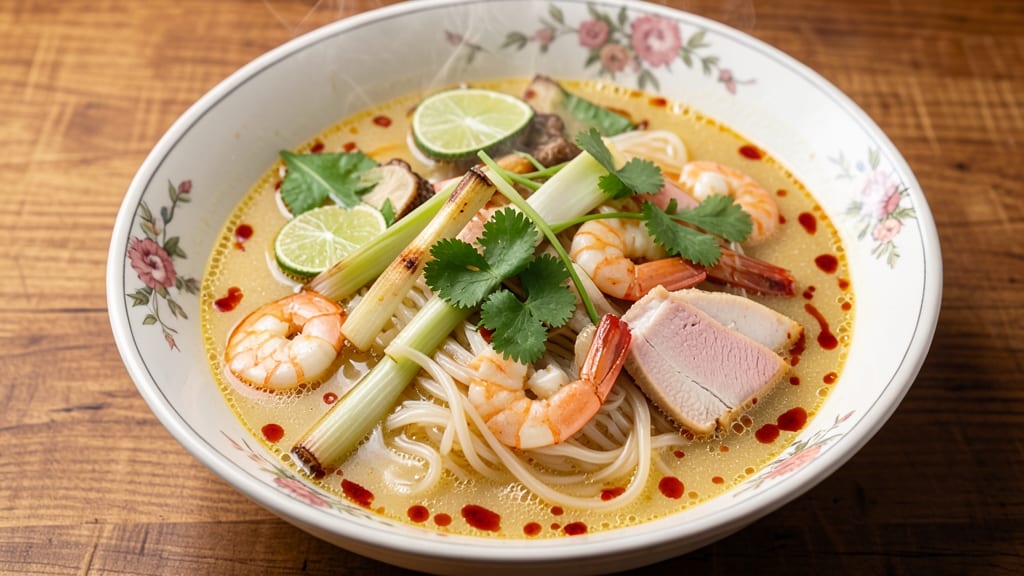
This bihun soup recipe delivers the perfect balance of silky rice noodles and aromatic lemongrass broth that transports you to Southeast Asia with every spoonful. The secret lies in the fragrant broth—simmered with lemongrass, galangal, and kaffir lime leaves—that infuses the noodles with bright, citrusy depth.
I developed this version after years of testing, ensuring the noodles stay just slippery enough while the broth remains rich and flavorful without being overpowering.
The beauty of this dish is its versatility—you can keep it traditional with shrimp or chicken, or adapt it to vegetarian preferences with mushrooms and tofu.
The broth is the star, but the toppings elevate it further: fresh herbs like cilantro and Thai basil, sliced chili peppers, and a squeeze of lime at the end.
This recipe serves as both a comforting meal and a gateway to exploring regional variations like Thailand’s kuay teow reua or Malaysia’s bihun goreng.
What makes this recipe stand out is the 30-minute preparation that yields restaurant-quality results at home. The broth builds flavor as it simmers, while the noodles cook just until they’re tender yet retain their signature slipperiness.
The final assembly is quick—simply tossing the hot noodles with the fragrant broth and your choice of protein or vegetables. The result is a bowl that’s light yet satisfying, perfect for weeknight dinners or special occasions.
For those looking to customize, consider adding a fried egg on top for richness or swapping in lemongrass chicken for extra depth. The broth can also be made ahead and reheated, making this a foolproof recipe for busy schedules.
Whether you’re a seasoned cook or a beginner, this bihun soup will become a staple in your collection.
Ingredients for bihun soup
Silky noodles, fragrant broth, and fresh toppings—this is your Southeast Asian comfort in a bowl.
| Ingredient | Amount | Notes |
|---|---|---|
| Bihun Rice Noodles 🍜 | 8 oz | Thin, flat rice noodles (vermicelli) |
| Lemongrass Stalks 🌿 | 3 whole | Bruised, outer leaves removed |
| Galangal Slices 🍃 | 2 pieces | Fresh, about 2 inches each |
| Kaffir Lime Leaves 🍋 | 4 whole | Fresh, torn in half |
| Shrimp 🦐 | ½ lb | Peeled, deveined, tail-on |
| Chicken Breast 🍗 | ½ lb | Boneless, skinless, sliced thin |
| Mushrooms 🍄 | 4 oz | Shiitake or oyster, sliced |
| Tofu 🧀 | 4 oz | Firm, cubed, pan-fried |
| Fish Sauce 🍶 | 1 tbsp | Red Boat preferred |
| Soy Sauce 🥫 | 1 tbsp | Light or regular |
| Brown Sugar 🍯 | 1 tbsp | Packed, light variety |
| Chicken Broth 💧 | 4 cups | Homemade or low-sodium |
| Fresh Cilantro 🌿 | ¼ cup | Chopped, for garnish |
| Thai Basil 🌿 | ¼ cup | Chopped, for garnish |
| Bird's Eye Chili 🌶️ | 2 whole | Sliced thin, for garnish |
| Lime Wedges 🍋 | 2 whole | For serving |
Lemongrass and galangal are the heart of this soup. Look for fresh stalks with vibrant green leaves—they should smell citrusy and bright. Galangal can be tricky to find, but Asian markets usually carry it. If you can't find it, ginger works in a pinch, though it won't taste identical. Kaffir lime leaves are a game-changer—they add that signature floral aroma. Freeze any extras in a bag with a paper towel to keep them fresh for weeks. For the shrimp, frozen works fine—just thaw and pat dry before cooking. Chicken or mushrooms/tofu make great swaps if you're vegetarian.
No fish sauce? Soy sauce plus a splash of vinegar gets you close. The broth is where the magic happens—don't skip the brown sugar, even if it seems sweet. It balances the acidity beautifully. Homemade chicken broth adds depth, but low-sodium store-bought works in a pinch. For the noodles, bihun or sen lek are ideal, but rice vermicelli is a solid substitute. The toppings? Fresh cilantro and Thai basil are non-negotiable—they bring that bright, herby finish. No Thai basil? Regular basil with a pinch of sugar mimics some of the flavor. Bird's eye chilies add heat, but slice just one or two if you're sensitive to spice.
This broth tastes even better the next day—make extra and store it in the fridge for up to 5 days. The noodles? Cook them just before serving so they stay slippery. Garnish with lime wedges right before eating—the acidity cuts through the richness. Leftovers keep for 2 days in the fridge, but the noodles get softer with time. For a quick meal, prep the broth ahead and keep it in the fridge. Reheat gently on the stove, then toss in fresh noodles and toppings when ready.
Why You'll Love This Recipe
- No Chopping Needed: I swear by this—just toss in whole lemongrass stalks and galangal slices. The broth infuses flavor without me having to dice anything, and honestly? The soup tastes richer for it.
- Herb-Packed Punch: That combo of kaffir lime leaves and shrimp? It’s like a bright, citrusy hug in a bowl. The noodles soak up the aroma, and the shrimp adds a sweet, tender bite that’s dangerously good.
- Lunchbox Magic: Between us, this is my secret weapon for meal prep. Cold or reheated, the noodles stay tender, and the broth’s depth makes it taste fresh. Pack it in jars—it’s perfect for work lunches or kids’ school meals.
- Budget-Friendly Feast: A handful of shrimp and a few stalks of lemongrass stretch into a full pot. I’ve made this feed four people for under $15, and the leftovers? Even better the next day. Minimal cost, maximum satisfaction.
Step-by-step instructions for bihun soup with fragrant lemongrass broth
Here's how to create a silky, aromatic bihun soup where each ingredient plays its part perfectly.
Prepare the Aromatic Broth Base
In a large pot, combine the 4 cups chicken broth, 3 whole lemongrass stalks (bruised by pounding gently with a rolling pin), 2 pieces galangal slices, and 4 whole kaffir lime leaves (torn in half). Bring to a gentle simmer over medium heat until the broth is steaming hot—you should smell that bright, citrusy lemongrass aroma immediately. This is your flavor foundation, so let it steep for 5 minutes before proceeding.
I always taste the broth at this stage—it should be clean and fragrant, with no metallic or bitter notes. If it tastes too bland, add ½ tablespoon fish sauce now. The galangal will add a peppery depth, while the kaffir lime leaves contribute that signature floral note. Keep the heat at a bare simmer to maintain these delicate aromatics.
Cook the Protein and Vegetables
While the broth simmers, heat a separate skillet over medium-high heat and add the 4 oz tofu (previously pan-fried until golden). Cook for 2 minutes per side until lightly crispy—this adds texture contrast to the soup. Remove and set aside. In the same skillet, add 1 tablespoon neutral oil and cook the 4 oz mushrooms for 3-4 minutes until they release their moisture and develop a golden edge.
Add the 0.5 lb chicken breast (sliced thin) and 0.5 lb shrimp to the skillet, cooking for 2-3 minutes until the chicken turns opaque and the shrimp curl slightly. Transfer all proteins and mushrooms to the broth. The residual heat will finish cooking them gently in the hot liquid. Here's where it gets good—the proteins will absorb that lemongrass aroma while staying tender.
Season and Sweeten the Broth
Return to the broth pot and add 1 tablespoon soy sauce, 1 tablespoon brown sugar, 1 tablespoon fish sauce, and the remaining ½ tablespoon fish sauce if needed. Stir gently and let it simmer for 5 minutes to allow the flavors to meld. The broth should now have a perfect balance—savory from the soy and fish sauce, with just enough sweetness to round out the galangal's peppery bite.
Taste and adjust seasoning: you want it bright but not overpowering. The brown sugar should caramelize slightly, adding a subtle depth. If the broth tastes too salty, add ½ cup water to dilute. The galangal and lemongrass should still be visible—remove them now if they're too soft, or leave them in for stronger flavor (they'll be easy to fish out later).
Cook the Bihun Noodles to Perfection
While the broth simmers, prepare the 8 oz bihun rice noodles by soaking them in 4 cups hot water for 8-10 minutes until they're pliable but still slightly firm. Drain immediately and rinse under cold water for 10 seconds to stop the cooking process—this prevents them from turning mushy in the hot broth. The noodles should be silky but still hold their shape when pressed between fingers.
Add the drained noodles to the broth and stir gently. The noodles will finish cooking in the hot liquid, absorbing the fragrant broth in about 2 minutes. Here's the secret: don't overcook them. They should be tender but still have a slight bite, with the broth clinging to each strand like a silky blanket. The noodles should float freely—if they stick together, stir more vigorously.
Finish and Serve with Garnishes
Remove from heat and let the soup sit for 2 minutes—this allows the flavors to settle and the noodles to absorb more broth. Divide among bowls and garnish with 0.25 cup chopped Thai basil, 0.25 cup chopped cilantro, 2 whole bird's eye chili (sliced thin), and serve with 2 whole lime wedges. The Thai basil adds a sweet, anise-like note that balances the broth's complexity, while the chili brings heat for those who want it.
Each spoonful should deliver that perfect harmony: the slippery bihun noodles, tender proteins, earthy mushrooms, and that bright, aromatic broth. The lime wedges are essential—they cut through the richness and add a final citrus brightness. Serve immediately while the broth is steaming and the noodles are at their peak texture. This soup tastes even better the next day, but the noodles will be even softer, so enjoy it fresh!
Pro Tips For Making Bihun Soup
- Char the Aromatics: Toss your lemongrass, galangal, and kaffir lime leaves in a dry pan over high heat for 30 seconds before adding liquid—just until you smell that grassy, citrusy burst. I used to skip this, and the broth always tasted flat until I realized these need to sing before they simmer.
- Soak Noodles Separately: Don’t toss the bihun directly into the boiling broth—soak them in warm water for 10 minutes first, then drain. This keeps them from turning mushy when they hit the hot liquid, and they’ll absorb the flavors better. (Yes, even if you’re impatient like me.)
- Shrimp Timing Matters: Add shrimp last—when the broth is just below a boil and the noodles are almost done. Overcook them, and they’ll turn rubbery; undercook, and you’re left with chewy centers. Two minutes max, and they’ll curl up perfectly.
- Strain the Broth: After simmering, strain out the lemongrass, galangal, and lime leaves—but save the solids. Crush them slightly with a mortar and pestle, then steep in a cup of hot broth for 5 minutes. The concentrated flavor will make your soup taste like it’s been simmering for hours. (Your future self will notice.)
Make-ahead tips for this bihun soup
Broth Prep Ahead
The broth is where this soup truly shines, and it tastes even better the next day. Simmer your broth with lemongrass, galangal, and kaffir lime leaves for 10 minutes, then strain out the aromatics.
Store the strained broth in an airtight container in the fridge for up to 5 days or freeze for 3 months. When ready to serve, simply reheat the broth gently on the stove—no need to add water, as it won’t dilute the flavors.
This is my go-to strategy for busy weeknights. 💫
Noodle Prep Shortcut
Save time by prepping the noodles just before serving. Soak the 8 oz bihun rice noodles in 4 cups hot water for 8-10 minutes until pliable. Drain, rinse briefly with cold water, and set aside. Keep them covered with a damp towel to prevent drying out.
When the broth is ready, simply toss in the noodles and cook for 2 minutes—they’ll finish cooking in the hot liquid. This keeps them silky without overcooking. ⏰
Protein Prep Options
Cook your protein ahead of time for a stress-free assembly. For shrimp, poach them in ½ cup water with 1 tsp fish sauce for 2 minutes, then chill in ice water to stop cooking. Store in the fridge for up to 2 days.
For chicken, slice thin and marinate in 1 tbsp soy sauce and ½ tbsp fish sauce for 30 minutes before cooking. Reheat gently in the broth just before serving. 🍗
Garnish Assembly
Prep all your garnishes in advance and store them separately. Chop ½ cup cilantro and ½ cup Thai basil and keep them in small containers in the fridge for up to 3 days. Slice the bird’s eye chilies and store in a sealed bag.
When serving, simply add the garnishes to each bowl—this keeps them fresh and vibrant. A squeeze of lime right before eating brightens the flavors instantly. 🍋
Full Meal Prep Strategy
For a complete make-ahead meal, prep everything except the noodles and garnishes. Store the broth, protein, and mushrooms in separate containers in the fridge. When ready to serve, reheat the broth, cook the noodles fresh, and assemble with the prepped toppings.
This method ensures your bihun soup stays silky and flavorful, with minimal last-minute effort. Perfect for feeding a crowd or meal prepping for the week! ✨
Nutrition facts
Frequently asked questions
Can I substitute bihun noodles with regular rice noodles?
Yes, you can use rice vermicelli as a substitute, but there are slight differences. Bihun noodles are thinner and have a more delicate texture, while rice vermicelli are slightly thicker. Soak the vermicelli for 5-7 minutes instead of 8-10 minutes to avoid mushiness. The flavor and cooking method remain the same, but the texture will be slightly chewier.
What can I use if I can't find galangal?
If galangal is unavailable, ginger is the best substitute, though it won’t be identical. Use 1 tablespoon grated ginger for each 2-inch piece of galangal called for in the recipe. The broth will still have depth, but the peppery, citrusy notes of galangal will be missing. For a closer match, try adding a pinch of black pepper to mimic galangal’s subtle heat.
How do I make this soup vegetarian?
Swap the shrimp and chicken for 4 oz firm tofu and 4 oz mushrooms (shiitake or oyster work best). Pan-fry the tofu until golden for added texture, then proceed with the recipe as written. For extra umami, add 1 teaspoon soy sauce to the broth. The broth’s aromatic base will still shine, making it a satisfying vegetarian dish.
Why did my noodles turn mushy?
Overcooking is the most common cause. Bihun noodles cook quickly in hot broth—just 2 minutes is all they need after draining. To prevent this, soak them in hot water for 8-10 minutes (not boiling), drain immediately, and rinse with cold water to stop cooking. Also, avoid stirring the noodles too vigorously in the broth, as this can break them down.
Can I make the broth less spicy?
Reduce or omit the bird’s eye chilies entirely, and skip adding extra chili to the broth. If the galangal or lemongrass feels too peppery, balance it with ½ teaspoon sugar or a splash of lime juice. The broth’s natural brightness will still shine without the heat. For a milder version, use mild green chilies instead.