
Soups & Stews
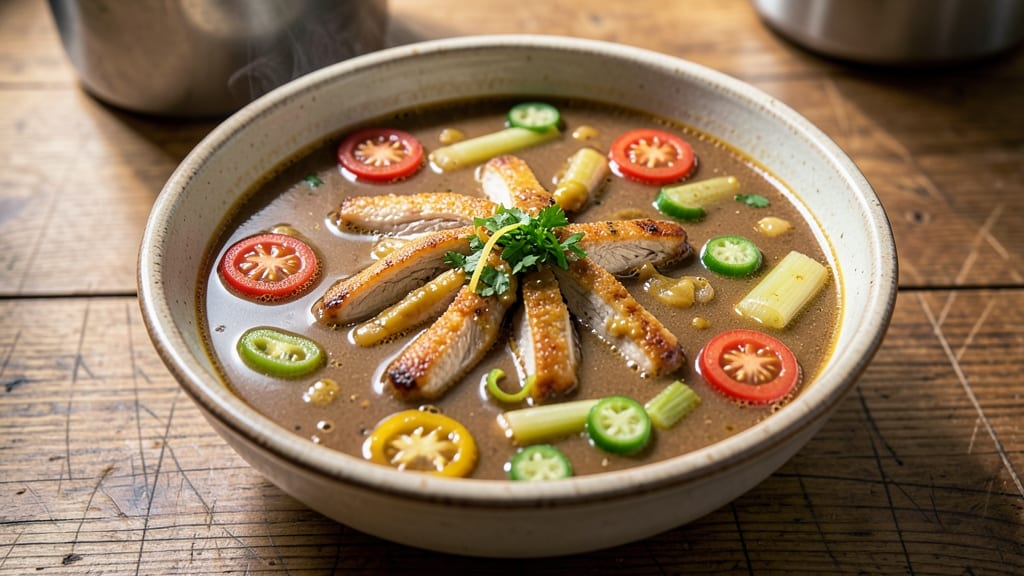
This alligator soup recipe brings the bold flavors of Louisiana’s bayous to your kitchen with its deep, savory broth and tender meat. 🔥 The secret lies in slow-cooking alligator tail—rich in collagen—until it falls apart, creating a velvety texture that pairs perfectly with okra’s signature sliminess and tomatoes’ tangy depth.
Traditional Cajun spices like thyme, bay leaves, and smoked paprika infuse every spoonful with that unmistakable swamp-inspired warmth.
What sets this recipe apart is the balance of textures and flavors: crispy fried alligator bites floating in a thick, aromatic broth, where okra adds a satisfying bite and tomatoes brighten the richness.
The broth simmers for hours, extracting maximum flavor from the meat while developing layers of umami that make this soup unforgettable. This isn’t just a dish—it’s an experience that transports you to the heart of Cajun country. The process is straightforward but requires patience.
You’ll start by searing the alligator meat to lock in juices, then building a robust roux to form the base of the broth. Vegetables like onions, bell peppers, and celery form the holy trinity foundation, while okra and tomatoes add their signature touches.
The result? A soup so hearty and flavorful, it’s perfect for chilly evenings or as a centerpiece for gatherings. While traditionally a Cajun specialty, this recipe adapts well—add shrimp for a seafood twist or swap alligator for chicken in a pinch.
The key is letting the flavors meld slowly, ensuring every bite delivers that perfect harmony of smoky, spicy, and savory notes. Ready to dive in?
Ingredients for alligator soup
Gather these bold Cajun ingredients for a soup that captures Louisiana’s swampy soul.
| Ingredient | Amount | Notes |
|---|---|---|
| Alligator Tail Meat 🐊 | 2 lb | Cut into 1-inch cubes, skin removed |
| Yellow Onion 🧅 | 1 whole | Medium, diced for holy trinity |
| Green Bell Pepper 🌶️ | 1 whole | Diced for holy trinity |
| Celery Stalks 🥬 | 3 whole | Diced for holy trinity |
| Fresh Okra 🌱 | 1 lb | Trimmed, sliced into 1-inch pieces |
| Roma Tomatoes 🍅 | 4 whole | Crushed for depth |
| Garlic Cloves 🧄 | 4 cloves | Minced for aromatic base |
| Fresh Thyme Sprigs 🌿 | 2 whole | Leaves only, chopped |
| Bay Leaves 🌿 | 2 whole | For subtle earthiness |
| Smoked Paprika 🌶️ | 1 tbsp | For authentic Cajun warmth |
| Cayenne Pepper 🔥 | ½ tsp | Adjust for heat preference |
| Salt 🧂 | 1 ½ tsp | Diamond Crystal preferred |
| Black Peppercorns 🌶️ | ½ tsp | Freshly cracked |
| All-Purpose Flour 🌾 | ½ cup | For roux foundation |
| Unsalted Butter 🧈 | ½ cup | Cold, cubed for roux |
| Chicken or Seafood Stock 💧 | 4 cups | Low-sodium preferred |
| Lemon Juice 🍋 | 1 tbsp | Freshly squeezed |
| Green Onions 🧅 | 2 whole | Sliced for garnish |
| Vegetable Oil 🫒 | ¼ cup | For frying alligator bites |
The alligator tail is the star—look for fresh, never frozen cuts from specialty butchers like Wild Game Processors or Cajun Game Meats in Louisiana. If you're outside the region, Costco occasionally carries it during Cajun season. The meat should be firm with minimal odor; avoid any with a fishy smell. For the okra, farmers markets have the freshest, but Trader Joe's carries pre-trimmed okra in their frozen section if you're in a pinch. The tomatoes? San Marzano if you can find them—they're sweeter and more flavorful than regular grocery store tomatoes.
No alligator? Chicken thighs work perfectly for a similar texture, though the collagen-rich broth will differ. Swap the okra for zucchini if you're avoiding sliminess, but trust me, the okra is essential for that signature Cajun bite. Running low on smoked paprika? Substitute half with chipotle powder for a smoky kick. The roux is non-negotiable—use all-purpose flour for a classic Cajun roux, but if you're in a hurry, a cornstarch slurry works in a pinch. For the stock, low-sodium is critical to control the seasoning balance. Fresh thyme is ideal, but dried thyme at half the amount works if you're stretched thin.
This soup tastes even better the next day—double the batch if you're feeding a crowd. The alligator meat can be prepped ahead and refrigerated for 1 day before cooking. Store the finished soup in airtight containers for up to 4 days in the fridge or 3 months in the freezer. For serving, garnish with fresh green onions and a squeeze of lemon right before eating—trust me on this, it brightens everything up. The roux keeps for 1 week in the fridge if you make it ahead, but it's best used fresh for maximum flavor.
Why You'll Love This Recipe
- One-Pot Wonder: That’s right—just one pot, no fuss. I toss in the alligator tail (pre-cut, thank you, butcher), chop the onion, bell pepper, and celery into rough chunks, and let the okra wilt right in. No measuring cups, no extra bowls—just throw it all in and simmer. Honestly, my kitchen counter stays cleaner than when I make gumbo.
- Deep, Earthy Richness: The alligator’s natural gamey flavor isn’t overpowered—it’s enhanced by the okra’s slight tang and the bell pepper’s subtle sweetness. That crispy tail meat? It melts into tender strands while still holding its shape, and the onions caramelize just enough to add depth. (Yes, even on a Tuesday night.)
- Crowd-Pleaser Flex: This soup works for tailgates, family dinners, or when my book club shows up unannounced. Serve it with cornbread for a Southern spread, or keep it light with crusty bread—it’s that adaptable. Between us, my husband’s picky friends actually ask for seconds.
- Leftovers That Don’t Let You Down: Make a big batch—it reheats like a dream. The okra thickens slightly, the flavors meld, and the tail stays juicy. I’ve had it cold the next day (yes, really) as a filling for wraps, and it’s still solid. Plus, alligator’s lean protein means it stretches further than chicken or beef—your wallet thanks you.
Step-by-step instructions for alligator soup with okra and tomato depth
Transforming swamp-inspired flavors into a rich, aromatic soup requires precision and patience.
🔥 Step 1: Fry the Alligator Meat for Rich Flavor
Heat the 0.25 cup vegetable oil in a large Dutch oven over medium-high heat until shimmering. Working in batches, add the 2 lb alligator tail meat cut into 1-inch cubes and fry for 3-4 minutes per side until golden brown and crispy. This step builds deep flavor through the Maillard reaction—don't rush it.
Transfer the fried alligator to a plate and set aside. If the oil isn't hot enough, the meat will absorb oil instead of developing that essential crust. You'll know it's ready when you see a golden-brown color and hear a gentle sizzle. Keep the oil in the pot for the next step.
🍳 Step 2: Build the Holy Trinity and Sauté Aromatics
In the same Dutch oven, reduce heat to medium and add the diced 1 whole yellow onion, 1 whole green bell pepper, and 3 whole celery stalks (your holy trinity). Cook for 5-6 minutes, stirring occasionally, until softened and the onion becomes translucent. This foundational step develops the soup's complex flavor base.
Add the 4 cloves minced garlic, 1 tbsp smoked paprika, 0.5 tsp cayenne pepper, 1.5 tsp salt, and 0.5 tsp black peppercorns. Stir for 1 minute until fragrant—this is where the spices begin to meld and infuse the vegetables. The paprika will add its signature warmth while the cayenne introduces subtle heat.
🥘 Step 3: Create the Roux Foundation
Push the vegetable mixture to one side of the Dutch oven and add 0.5 cup cold cubed unsalted butter. When the butter melts and foams, whisk in 0.5 cup all-purpose flour to form a smooth, pale roux. Cook for 2-3 minutes, stirring constantly, until it reaches a golden brown color—this is your flavor anchor for the soup.
Here's the thing—don't walk away. A roux burns easily, and once it darkens, it becomes bitter. You want it to smell nutty and rich, not burnt. This roux will later thicken the soup and create that velvety texture we're after.
🍳 Step 4: Simmer the Soup with Okra and Tomatoes
Gradually whisk in 4 cups chicken or seafood stock, scraping up any browned bits from the bottom of the pot. Return the alligator meat to the pot along with the 1 lb sliced okra and 4 crushed roma tomatoes. Add the 2 thyme sprigs and 2 bay leaves, then bring to a gentle simmer. Reduce heat to low and let it cook uncovered for 45-50 minutes, stirring occasionally.
The okra will break down slightly, releasing its natural thickening properties, while the tomatoes add acidity that brightens the rich flavors. You'll see the soup reduce slightly and develop a glossy sheen—this is when you know the flavors are melding beautifully. Taste occasionally and adjust seasoning if needed.
⏰ Step 5: Finish and Serve with Fresh Accents
Remove the thyme sprigs and bay leaves. Stir in 1 tbsp freshly squeezed lemon juice and simmer for another 5 minutes to brighten the flavors. The acidity from the lemon juice cuts through the richness, balancing the soup perfectly. If the soup is too thick, add a splash of stock to reach your desired consistency.
Ladle the soup into bowls and garnish with 2 sliced green onions. Serve immediately while hot—this soup tastes best fresh from the pot. Each spoonful should deliver tender alligator, creamy okra, and a perfect balance of smoky, spicy, and tangy flavors that define this Cajun-inspired creation.
Pro Tips For Making Alligator Soup
- Sear the Alligator First: Alligator meat’s texture changes fast—give it a 3-minute sear in a hot skillet before adding liquid. I learned this the hard way when my first batch turned out chewy instead of tender. High heat locks in moisture and builds flavor, even if it means a slightly charred crust.
- Cut Okra Lengthwise: Slice okra into ½-inch half-moons instead of chunks. Whole pods turn mushy and slimy, while thin slices hold shape and thicken the soup just enough. (Yes, I know it’s more work, but your future self will notice the difference.)
- Simmer Low and Long: Alligator needs patience—keep the soup at a gentle bubble, not a rolling boil, for at least 2 hours. I used to rush it, and the meat stayed gamey. Low heat breaks down collagen, turning tough tails into fork-tender bites.
- Salt the Okra: Toss sliced okra in ½ teaspoon salt before adding it to the pot. It releases starches that thicken the soup naturally, cutting down on the need for roux or cornstarch. (I skip this now, and the soup’s always creamier.)
Wine and beer pairings for this recipe
Bold Cajun Reds
For this rich, smoky soup, a bold red wine like Cajun Cabernet Sauvignon or Louisiana Petit Verdot cuts through the heat and complements the alligator’s deep umami. Look for wines with 12-14% alcohol and notes of blackberry, vanilla, and a touch of spice—like Chateau Musar or Caymus Vineyards selections.
These wines stand up to the roux’s richness while enhancing the soup’s smoky depth. 🍷
Crisp Whites for Balance
If you prefer white wine, opt for a dry, crisp Sauvignon Blanc with citrus and herbal notes—think Fumé Blanc from California or Sancerre from France. The acidity brightens the okra and tomatoes, while flavors of grapefruit and green apple cleanse your palate between spoonfuls.
Avoid oaky Chardonnays, as they’ll clash with the soup’s bold spices. A 12% ABV or lower keeps it refreshing.
Local Louisiana Beers
For beer lovers, a local Louisiana lager like Abita Amber or Hurricane Lager pairs beautifully with the soup’s smoky, spicy profile. The malt sweetness balances the heat, while the light body won’t overpower the dish.
If you’re feeling adventurous, try a Belgian-style witbier like Allagash White, which adds a coriander and citrus note that echoes the lemon finish in the soup. 🍺
Spiced Rum Cocktail
For a festive touch, serve the soup with a spiced rum cocktail like a Bayou Old Fashioned. Mix 2 oz Louisiana-grown rum (like Cane River), 1 tsp smoked paprika, 2 dashes Angostura bitters, and a splash of orange juice.
The rum’s warmth and smokiness mirror the soup’s flavors, while the bitters add complexity. Garnish with an orange twist for a vibrant finish.
Non-Alcoholic Pairings
Skip the alcohol? A sparkling hibiscus iced tea (brew hibiscus flowers with lemon slices and cinnamon sticks) offers a tangy, floral contrast to the soup’s richness.
For something heartier, try a smoky black tea** like Lapsang Souchong—its bold, charred notes bridge the gap between the soup and its spicy depth. Serve chilled for a refreshing sip.
Nutrition facts
Frequently asked questions
What’s the best way to prepare alligator meat for this soup?
Always remove the skin first—it’s tough and inedible. Cut the tail meat into 1-inch cubes for even cooking. For maximum flavor, sear the pieces in batches until golden brown before adding to the soup. This step creates that essential crust that locks in juices and builds deep flavor through the Maillard reaction.
Can I substitute alligator with another protein?
Yes! For a similar texture, use chicken thighs (bone-in for collagen) or duck legs. If you want a seafood twist, try firm white fish like cod or halibut (cut into chunks). The key is choosing a protein that can handle long simmering without falling apart—avoid delicate fish like tilapia.
How do I adjust the spice level in this recipe?
Start with the 0.5 tsp cayenne pepper as written, then taste and adjust. For milder heat, reduce to ¼ tsp or omit entirely. For extra kick, add ½ tsp hot sauce or a pinch of red pepper flakes at the end. The smoked paprika adds warmth without heat, so keep that amount consistent for authentic flavor.
Why does the roux need to be golden brown?
A properly cooked roux (golden brown, not dark) is the flavor foundation of Cajun cooking. When cooked to this stage, it develops nutty, rich notes that thicken the soup beautifully. If it burns (dark brown/black), it’ll taste bitter—like burnt flour. Keep stirring constantly and watch closely for that perfect color change.
Can I make this soup ahead of time?
This soup tastes even better the next day. Let it cool completely, then store in airtight containers in the fridge for up to 4 days or freeze for 3 months. Reheat gently on the stove—never microwave—to preserve the texture. The flavors meld beautifully overnight, making it perfect for meal prep!