
Soups & Stews
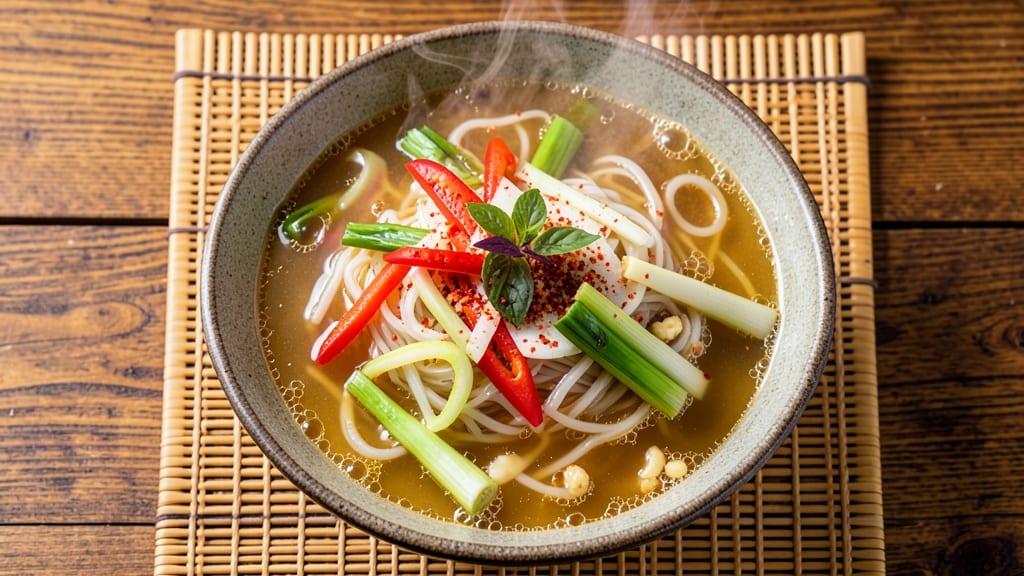
This Asian vegetable noodle soup recipe delivers the perfect balance of aromatic broth and silky rice noodles in under 45 minutes. The secret lies in a ginger-lemongrass base simmered with star anise and cinnamon, creating layers of warmth and freshness without relying on meat.
I developed this version after years of adapting pho techniques for vegetarian diets—it’s rich enough to satisfy but light enough for any meal.
The broth starts with a fragrant paste of ginger, lemongrass, garlic, and chili, toasted until fragrant before simmering with mushrooms, carrots, and celery. Meanwhile, rice noodles cook in a separate pot to maintain their signature chewiness.
What makes this recipe special is how the vegetables transform during cooking—carrots stay crisp-tender, mushrooms melt into the broth, and the noodles absorb just enough flavor to become irresistibly silky.
By the time you assemble everything, you’ll have a bowl of soup that’s deeply savory from the umami of mushrooms and miso, bright from fresh herbs and lime, and perfectly balanced in texture.
The garnishes—thinly sliced jalapeños, fresh cilantro, and a squeeze of lime—elevate each spoonful without overpowering the broth’s complexity.
This recipe works as a quick weeknight meal or a weekend project with optional protein additions like tofu or shrimp. The broth keeps well in the fridge for up to 5 days, making it ideal for meal prep. Let’s get cooking—your taste buds will thank you.
Ingredients for asian vegetable noodle soup
Fragrant ginger-lemongrass base meets umami mushrooms and silky noodles in this vegetarian pho-inspired bowl.
| Ingredient | Amount | Notes |
|---|---|---|
| Rice Noodles 🍜 | 8 oz | Flat, medium-width preferred |
| Vegetable Broth 💧 | 6 cups | Low-sodium preferred |
| Fresh Ginger 🧄 | 3 tbsp | Grated, peeled, fresh |
| Lemongrass Stalks 🌿 | 3 whole | Bruised, bottom 4 inches |
| Garlic Cloves 🧄 | 6 cloves | Peeled, minced |
| Red Chili Flakes 🌶️ | 1 tbsp | Adjust for heat preference |
| Star Anise Pods 🌟 | 2 whole | Lightly crushed |
| Cinnamon Sticks 🌳 | 1 whole | 2-inch piece |
| Shiitake Mushrooms 🍄 | 8 oz | Fresh, sliced |
| Carrots 🥕 | 2 medium | Julienned, 1/8-inch |
| Celery Stalks 🧅 | 2 whole | Thinly sliced |
| White Miso Paste 🧈 | 1 tbsp | White or shiro miso |
| Fresh Cilantro 🌿 | ¼ cup | Chopped, for garnish |
| Jalapeños 🌶️ | 1 whole | Thinly sliced, seeds removed |
| Lime Wedges 🍋 | 2 whole | For serving |
| Sesame Oil 🫒 | 1 tsp | For finishing |
| Soy Sauce 🍶 | 1 tbsp | Low-sodium preferred |
| Salt 🧂 | 1 tsp | Kosher or sea salt |
The ginger and lemongrass are non-negotiable for that signature aroma. Look for fresh lemongrass stalks with vibrant green leaves—none of that dried stuff. Whole Foods or Asian markets usually have the best selection. If you can't find fresh lemongrass, lemongrass paste from Trader Joe's works in a pinch, though it lacks the same depth. For ginger, organic is worth it—it's less likely to be waxed, and the flavor is brighter. The star anise and cinnamon? Spice aisle essentials—just make sure they're whole and smell fresh. Toast them lightly in a dry pan before adding to the broth for maximum aroma.
No fresh ginger? Powdered ginger at half the amount works, though it's not the same. Running out of lemongrass paste? Extra lime juice and a splash of coconut milk can mimic some of that citrusy brightness. The miso adds that umami kick—white miso is milder, while red adds more depth. For the noodles, rice noodles are a must—they have that perfect chewiness. If you can't find them, udon or soba noodles are decent substitutes, though they'll change the texture slightly. The jalapeños can be swapped for Thai bird's eye chili if you want more heat, but seeds removed keeps it manageable.
This broth tastes even better the next day—make a double batch and store it in the fridge for up to 5 days. The noodles? Cook them fresh when serving, or they'll turn mushy. Garnishes like cilantro and lime should go on right before eating—they wilt fast. If you're prepping ahead, store the broth and vegetables separately, then assemble everything when ready to serve. The sesame oil should be added just before serving to keep its nutty flavor intact.
Why You'll Love This Recipe
- No-Fuss Simmer: I swear by this recipe because it’s the kind of meal that hums along while you do everything else. Toss in pre-sliced veggies (or whatever’s in your crisper), let the ginger and lemongrass steep in the broth for 10 minutes—boom—you’ve got aromatic magic without the fuss of stir-frying. The rice noodles soften in minutes, not hours.
- Umami Bomb: Between the garlic cloves sizzling in the pan and the lemongrass-infused broth, this soup hits hard. Honestly, the first time I made it, I kept adding more garlic because I thought I’d missed a step. That deep, savory punch? It’s the kind of flavor that makes you slow down and savor every slurp.
- Leftover Hero: This soup begs to be made in batches. The broth stays vibrant for days, and the noodles? They’re happy to reheat without turning mushy. I’ll be real: I often make a double batch on Sundays, freeze half, and pull it out for lazy nights or when company drops by. Zero guilt, all satisfaction.
- Budget Bright Spot: Fresh ginger and lemongrass might sound fancy, but they stretch so far in this recipe. A single stalk of lemongrass and a thumb-sized knob of ginger flavor liters of broth—way cheaper than pre-made pastes or bouillon cubes. Plus, rice noodles are a steal compared to fresh pasta or meat-heavy soups. My wallet and my taste buds win.
Step-by-step instructions for fragrant Asian vegetable noodle soup
This aromatic broth builds layer upon layer of flavor—start with the aromatic base and work your way to silky noodles.
Build the Aromatic Broth Base
In a medium pot, combine the 6 cups vegetable broth, 3 whole lemongrass stalks (bruised and cut into 4-inch pieces), 2 whole star anise pods, 1 whole cinnamon stick, 1 tbsp red chili flakes, and 1 tsp salt. Bring to a gentle simmer over medium heat and let cook uncovered for 10 minutes—this allows the spices to steep and infuse the broth with their essential oils.
While waiting, peel and finely grate the 3 tbsp fresh ginger and mince the 6 cloves garlic. When the broth is fragrant and aromatic (you should smell bright citrusy lemongrass and warm spice notes), add the ginger and garlic. Simmer for another 5 minutes, stirring occasionally, until the garlic is just fragrant—not browned. This step ensures your broth has depth without bitterness.
Add Vegetables and Miso for Depth
Slice the 8 oz shiitake mushrooms into ¼-inch thick pieces, julienne the 2 medium carrots into 1/8-inch strips, and thinly slice the 2 whole celery stalks. Add these to the simmering broth along with the 1 tbsp white miso paste and 1 tbsp soy sauce. Stir well to dissolve the miso completely—it should create a velvety, umami-rich base.
Simmer the vegetables for 8-10 minutes until the carrots are tender but still hold their shape and the mushrooms have softened. The broth should now be rich, slightly sweet from the carrots, and deeply savory from the miso. Taste and adjust seasoning—add a pinch more salt if needed, or a splash of water if the broth has reduced too much.
Prepare the Noodles and Final Touches
While the broth simmers, slice the 1 whole jalapeño (seeds removed) into thin rings and chop the 0.25 cup fresh cilantro. Soak the 8 oz rice noodles in warm water for 10-15 minutes until pliable but still slightly firm to the bite—over-soaking makes them mushy. Drain and set aside.
Return the broth to a gentle simmer and add the drained noodles. Cook for 2-3 minutes, stirring gently to prevent sticking, until the noodles are tender and coated in the fragrant broth. Remove from heat and let sit for 1 minute—this allows the flavors to meld.
Finish and Serve with Fresh Elements
Divide the noodle soup among 4 bowls. Drizzle each serving with 1 tsp sesame oil and top with the sliced jalapeños and chopped cilantro. Serve immediately with the 2 whole lime wedges on the side—squeeze a little over each bowl to brighten the flavors and cut through the richness.
The soup should be vibrant, with silky noodles floating in a fragrant broth that balances sweet, savory, and spicy notes. Each bite should deliver a harmonious mix of umami from the miso, brightness from the lemongrass and lime, and a subtle heat from the chili flakes. Enjoy while warm for the best texture and flavor experience.
Pro Tips For Making Asian Vegetable Noodle Soup
- BLANCH LEMONGRASS FIRST: I learned this the hard way—smashing raw lemongrass stalks into broth makes it bitter. Instead, split them lengthwise and give them a 30-second blanch in boiling water first. This softens the fibers and unlocks their aroma without the harshness. (Yes, even if you're impatient like me.)
- SALT THE BROTH EARLY: Vegetable broth needs time to absorb salt. Add your full 1 teaspoon (or more) before adding ginger or garlic—let it simmer for 5 minutes first. This prevents a flat, afterthought taste. Trust me, your spoonful of fish sauce later won’t fix it.
- DON’T SOAK NOODLES TOO LONG: Rice noodles turn to mush if you over-soak. Test one after 2 minutes in warm water—it should soften but still hold shape. Drain immediately and rinse with cold water to stop cooking. (Your future self will thank you when they’re not gluing the pot together.)
- CHAR THE GINGER-GARLIC BASE: Skip the gentle simmer—sear your sliced ginger and minced garlic in oil over medium-high heat until garlic is golden (about 2 minutes). The nutty aroma this creates is the thing that matters most in this soup. (Sounds weird, but it works.)
Troubleshooting perfect results
Broth Too Weak
If your broth lacks depth, it’s likely because the aromatics didn’t steep long enough. Simmer the base (lemongrass, star anise, cinnamon) for 15 minutes uncovered—this extracts maximum flavor.
I also recommend adding 1 extra tablespoon of miso paste or a splash of fish sauce (if not strictly vegetarian) for umami. For extra richness, blend ½ cup cooked mushrooms into the broth before straining. 💡
Noodles Mushy
Overcooking rice noodles is the #1 culprit for mushy texture. Soak them in warm water for exactly 10-12 minutes—they should be pliable but still slightly firm. For cooking, use just 2 minutes in the broth (not 3-4).
Pro tip: Rinse drained noodles under cold water for 10 seconds before adding to the broth to stop the cooking process immediately. ❄️
Vegetables Overcooked
Carrots and celery should stay crisp-tender. Add them to the broth only 5 minutes before the noodles—this ensures they’re cooked but still hold their shape. For mushrooms, slice them slightly thicker (¼-inch) and simmer for just 6-8 minutes total.
If using frozen veggies, thaw and pat them dry first to prevent broth dilution. 🥕
Lemongrass Not Fragrant
Stale lemongrass ruins the whole dish. Bruise the stalks by pounding with the side of your knife before adding to the broth. If using dried lemongrass, double the amount (but fresh is always better).
For extra aroma, add 1 tbsp lime zest when simmering the broth. I keep a small bundle of lemongrass in my freezer for quick access. 🌿
Broth Too Spicy
Adjust heat by reducing chili flakes to ½ tbsp or removing seeds from jalapeños. For a smoother broth, strain it through a fine-mesh sieve before adding noodles.
If the heat lingers, balance it with more lime juice (which also brightens the flavor). A pinch of sugar can also help mellow the spice. 🌶️
Noodles Stick Together
Sticking happens when noodles aren’t stirred enough. Use chopsticks or a wide spatula to gently separate them while cooking. For extra slipperiness, add 1 tsp toasted sesame oil to the broth when adding noodles.
I also recommend using a wider pot (like a Dutch oven) to give noodles more space to move freely. 🍜
Nutrition facts
Frequently asked questions
Can I use dried lemongrass instead of fresh?
Fresh lemongrass is ideal for that bright citrusy aroma, but you can substitute with 1 tbsp dried lemongrass powder if needed. For best results, double the amount and add it directly to the broth during the initial simmer. Fresh is always preferred, though!
How do I make this soup spicier?
Add 1 extra tbsp of red chili flakes to the broth or swap jalapeños for Thai bird's eye chilies (seeds in for maximum heat). For a smoky kick, stir in ½ tsp smoked paprika when adding the miso. Always taste first—spice builds as it cooks!
What's the best way to store leftovers?
Store the broth and cooked vegetables separately in airtight containers for up to 5 days. Reheat gently on the stove, then cook fresh noodles separately and add them to the hot broth. Garnishes like cilantro and lime should always be added fresh when serving.
Can I add protein to this vegetarian soup?
Toss in ½ lb firm tofu (pressed and cubed) or shrimp (10 minutes before serving) for extra protein. For a meaty texture, mushroom stems or tempeh work beautifully. Just adjust cooking times accordingly—protein should be fully cooked before serving.
Why does my broth look cloudy?
Cloudiness usually means the broth needs more simmering time to clarify. Strain through a fine-mesh sieve or let it simmer uncovered for 10-15 extra minutes to evaporate excess moisture. For a smoother finish, chill the broth overnight and skim off any fat that rises to the top.