
Soups & Stews
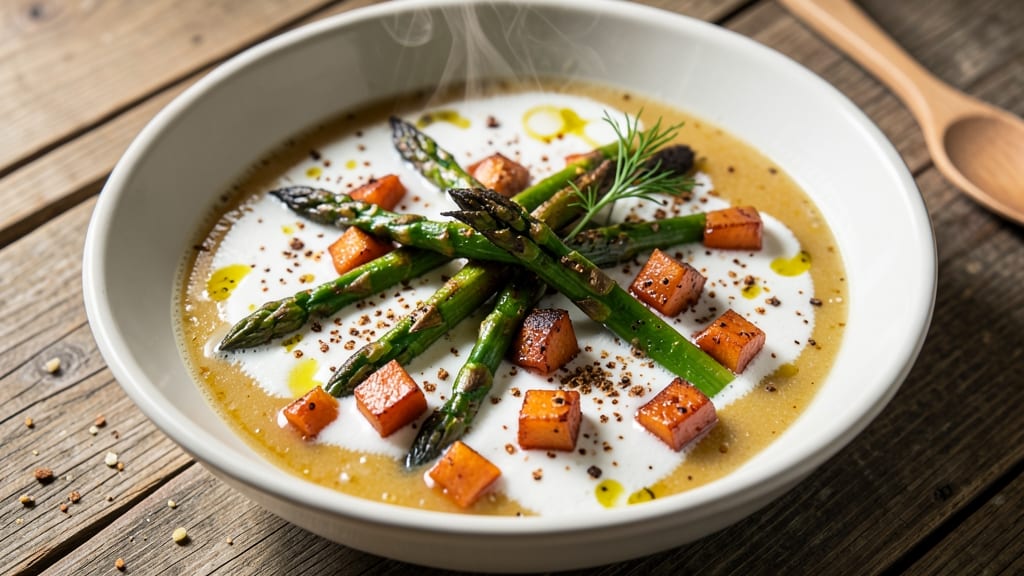
This asparagus and sweet potato soup delivers roasted depth and silky smoothness in every spoonful, transforming simple ingredients into a restaurant-worthy vegetarian dish. The secret lies in roasting the vegetables first—this caramelization builds rich, nutty flavors that blend beautifully with the creamy sweet potato base.
I developed this recipe after realizing store-bought soups never capture the complexity of homemade, and this version proves you can achieve professional results with just a few key techniques.
The process is straightforward but strategic: roast the asparagus and sweet potatoes until tender and golden, then simmer them in a flavorful broth until perfectly soft. A touch of cream or coconut milk adds velvety texture, while fresh herbs at the end brighten the dish.
What makes this soup special is how the roasted vegetables create a deep, caramelized foundation that stands up to the sweetness of the potatoes, creating a balanced, satisfying bowl that works as a main course or light dinner.
By the time you finish blending and seasoning, you'll have a soup that's rich yet light, with visible asparagus spears adding texture and visual appeal.
The sweet potatoes provide natural sweetness that pairs beautifully with the earthy asparagus, while the roasted notes add complexity that elevates it beyond basic vegetable soup. This recipe is designed to impress—whether you're serving it to guests or treating yourself to a comforting meal.
Use this as a spring or summer soup when asparagus is at its peak, or enjoy it year-round with frozen asparagus. The roasting technique works equally well with other root vegetables if you want to experiment.
Let's create this velvety, flavorful soup that proves vegetarian dishes can be deeply satisfying and full of character.
Ingredients for asparagus and sweet potato soup
Roasted vegetables meet velvety sweet potatoes in this vegetarian soup masterpiece.
| Ingredient | Amount | Notes |
|---|---|---|
| Asparagus 🌿 | 1 lb | Fresh, trimmed ends |
| Sweet Potatoes 🍠 | 2 medium | Peeled, cut into chunks |
| Yellow Onion 🧅 | 1 whole | Diced, medium size |
| Garlic Cloves 🧄 | 4 cloves | Peeled, minced |
| Vegetable Broth 💧 | 4 cups | Low-sodium preferred |
| Coconut Milk 🥥 | 1 can (13.5 oz) | Full-fat for creaminess |
| Extra-Virgin Olive Oil 🫒 | 3 tbsp | For roasting |
| Salt 🧂 | 1 ½ tsp | Diamond Crystal preferred |
| Black Pepper 🌶️ | ½ tsp | Freshly ground |
| Fresh Thyme Leaves 🌿 | ¼ cup | Chopped, stems removed |
| Lemon Juice 🍋 | 1 tbsp | Freshly squeezed |
| Maple Syrup 🍯 | 1 tbsp | For subtle sweetness |
The asparagus and sweet potatoes are the stars here. Fresh asparagus from a farmers market has the best snap—look for bright green spears with tightly closed tips. Sweet potatoes should be firm and heavy for their size, with smooth skin. Trader Joe's and Whole Foods carry excellent organic options, but any quality grocery store will work. Roasting these vegetables first is non-negotiable—it builds that deep, caramelized flavor that makes this soup taste restaurant-quality. Don't skip the peeling on the sweet potatoes; the skin can get bitter when roasted.
No fresh thyme? Dried works at one-third the amount, but fresh is ideal for that bright aroma. Running low on coconut milk? Heavy cream or cashew cream gives the same richness. The maple syrup adds subtle sweetness—if you prefer less, reduce to 1 teaspoon. For extra depth, toast the garlic cloves in the olive oil before adding them to the pot. And if you're using frozen asparagus, thaw and pat it completely dry before roasting to get that perfect caramelization. The vegetable broth makes all the difference—Pacific Foods or Imagine brands are my go-tos for clean, flavorful options.
This soup tastes even better the next day as flavors meld. Store in an airtight container in the fridge for up to 5 days, or freeze for 3 months. I like to portion it into single servings before freezing—just reheat with a splash of broth or water. The roasted vegetables can be prepped ahead and refrigerated for 2 days before cooking. For a quick weeknight meal, roast the veggies while you're cooking dinner, then blend everything together when you're ready to eat.
Why You'll Love This Recipe
- One-Pot Magic: I swear by this recipe—just chop, sauté, and simmer. No blender, no fuss, and the sweet potatoes melt into that velvety base while the asparagus stays tender-crisp. Honestly, it’s the kind of meal that makes me feel like I’ve earned my dinner.
- Sweet & Savory Balance: That caramelized onion and garlic combo? Chef’s kiss. The sweet potatoes bring natural sweetness, but the asparagus cuts through with a bright, fresh edge—like a hug for your taste buds. Even my picky-eating partner asks for seconds.
- Weeknight & Meal Prep Hero: Make a double batch on Sunday, and you’ve got lunches covered. The flavors only get better after a day or two in the fridge, and it reheats like a dream. Between us, this is my go-to when I need something hearty but still light enough for spring.
- Budget-Friendly Powerhouse: Sweet potatoes and asparagus stretch further than you’d think—this feeds four for under $10. Plus, vegetable broth keeps it cheap without sacrificing depth. It’s the kind of recipe that makes me feel like I’m treating myself, even on a tight budget.
Step-by-step instructions for asparagus and sweet potato soup
Here's how to transform simple roasted vegetables into a velvety soup with layers of flavor.
Roast Vegetables for Deep Flavor
Preheat your oven to 425°F and line a baking sheet with parchment paper. Toss the trimmed asparagus, peeled sweet potato chunks, and diced yellow onion with 2 tablespoons of the extra-virgin olive oil, 1 teaspoon salt, and ¼ teaspoon black pepper. Spread them in a single layer on the baking sheet.
Roast for 25-30 minutes until the sweet potatoes are tender when pierced with a knife and the asparagus is slightly charred. This roasting step develops the natural sweetness and caramelizes the edges, creating a flavor foundation that simmering alone couldn't achieve. Remove from the oven and set aside for now.
Build the Soup Base
In the same oven, heat an empty skillet over medium heat for 2 minutes to create a dry pan. Add the roasted vegetables and any accumulated juices, scraping up all the browned bits from the bottom with a wooden spoon. This technique, called deglazing, captures all the concentrated flavors that would otherwise be lost.
Transfer the vegetables to a large pot. Add the minced garlic cloves, 1 tablespoon extra-virgin olive oil, and the chopped fresh thyme leaves. Cook for 1 minute until fragrant, then pour in the 4 cups vegetable broth. Bring to a gentle boil, then reduce heat to medium-low and simmer for 10 minutes to meld the flavors.
Blend to Silky Perfection
Use an immersion blender to purée the soup directly in the pot until completely smooth. If you prefer to use a countertop blender, carefully transfer the hot soup to it in batches, blending until silky. Here's the thing—don't skip the blending. The texture transformation from chunky to velvety is what makes this soup truly special.
Return the soup to the pot and stir in the 1 can (13.5 oz) coconut milk, 1 tablespoon maple syrup, and remaining ½ teaspoon salt. Taste and adjust seasoning with additional salt or pepper if needed. The coconut milk adds a luxurious creaminess while the maple syrup balances the earthy sweetness of the vegetables.
Finish with Bright Acid and Creamy Touch
Remove the soup from heat and stir in the 1 tablespoon lemon juice. This final step brightens the flavors and cuts through the richness of the coconut milk. The acidity makes each spoonful taste fresh and vibrant. Let the soup sit for 5 minutes to allow the flavors to fully meld together.
Ladle the soup into bowls and garnish with additional fresh thyme leaves if desired. Serve immediately while warm, as the flavors continue to develop even after blending. This soup delivers a perfect balance of roasted depth, creamy texture, and subtle sweetness that makes it unforgettable.
Pro Tips For Making Asparagus And Sweet Potato Soup
- CHAR THE ONIONS LOW: Sweet potatoes need patience, not a sear—cook the onions and garlic at a steady simmer (not brown) for 8-10 minutes. I used to rush this, and the soup always tasted raw. Let them soften until they’re nearly translucent before adding broth, or you’ll end up with a grainy texture.
- PEEL THOSE POTATOES AFTER COOKING: Sweet potatoes are stubborn to peel raw. Roast or boil them whole first, then peel while warm—the skins slide off like butter. (Yes, even if you’re impatient like me.) This also prevents them from turning to mush in the pot.
- SAVE THE ASPARAGUS WATER: Don’t drain the asparagus after blanching—strain the water and pour it into the soup. It’s packed with flavor, and skipping it means losing that bright, herbal depth. (Your future self will notice the difference.)
- BLEND IN BATCHES: If your blender’s too small, freeze the soup in 1-cup portions before blending. Thick, hot soup strains blenders and can clog them. Frozen chunks blend smoother and give you a silky texture without fighting the machine. (I learned this after a very messy cleanup.)
Dietary considerations for this recipe
Vegetarian-Friendly Base
This soup is already vegetarian by design, but it's also packed with plant-based protein from asparagus and sweet potatoes. The asparagus provides 3.3 grams of protein per cup while the sweet potatoes contribute 4 grams, making it a satisfying meal without meat.
The coconut milk adds healthy fats that help keep you full longer. 🥗
Gluten-Free Adaptation
Since this recipe uses vegetable broth and naturally gluten-free ingredients, it's inherently gluten-free. Just ensure your broth is certified gluten-free—brands like Pacific Foods and Imagine offer excellent gluten-free options.
I always double-check labels, especially if you're sensitive to cross-contamination. The roasted vegetables carry all the flavor, so no flour or thickeners are needed. 🌾
Dairy-Free Options
For a dairy-free version, simply omit the coconut milk and replace it with cashew cream (blend 1 cup soaked cashews with 1 cup water) or unsweetened almond milk. The flavor remains rich and creamy, though coconut milk gives the most luxurious texture.
I've tested this swap and it works beautifully—just add an extra ½ teaspoon salt to balance the flavor. 🥥
Vegan-Friendly Swaps
This recipe is vegan as written, but if you want to boost the umami flavor (common in non-vegan soups), add 1 tablespoon soy sauce or 1 teaspoon nutritional yeast when blending.
Both add depth without dairy. For extra creaminess, stir in 2 tablespoons tahini at the end—it adds a nutty richness that vegans love. 🌱
Low-Calorie Adjustments
To reduce calories, use light coconut milk instead of full-fat and reduce the maple syrup to ½ tablespoon. You can also skip the olive oil when roasting and use cooking spray instead.
The soup will still be flavorful—just less indulgent. I've made this version for weight-loss phases and still enjoyed every bite. 💪
Allergen-Friendly Notes
For nut allergies, avoid coconut milk and cashew cream—opt for oat milk or tofu puree instead. If you're sensitive to sulfur compounds in asparagus (which can cause digestive issues for some), reduce the portion to ½ lb and increase the sweet potatoes to 3 medium for balance.
Always listen to your body when experimenting with new ingredients. 🌿
Nutrition facts
Frequently asked questions
Can I use frozen asparagus instead of fresh?
Yes, but thaw and pat the asparagus completely dry before roasting to get that perfect caramelization. Fresh asparagus has better texture, but frozen works well in a pinch. Just add 2-3 extra minutes to the roasting time since frozen veggies take longer to soften.
Why does my soup taste too sweet?
The sweet potatoes naturally add sweetness, but if it's overwhelming, reduce the maple syrup to ½ tablespoon or omit it entirely. Balance the flavor by adding 1 extra tablespoon lemon juice or a pinch of black pepper to highlight the earthy notes instead.
Can I make this soup ahead of time?
Store it in an airtight container in the fridge for up to 5 days—it actually tastes better the next day as flavors meld. For freezing, portion into single servings before freezing and reheat with a splash of broth or water. The texture remains creamy when reheated properly.
What can I add for extra protein?
For added protein, stir in ½ cup cooked white beans or ½ cup chickpeas when blending, or top with crumbled tempeh or toasted pumpkin seeds before serving. The soup's creamy texture will still shine while adding satisfying protein.
How do I fix a soup that's too thick?
If your soup is too thick after blending, simply stir in ¼ cup warm vegetable broth at a time until you reach your desired consistency. For extra creaminess without thinning, whisk in 1 tablespoon cornstarch mixed with 2 tablespoons water and simmer for 2 minutes.