
Soups & Stews
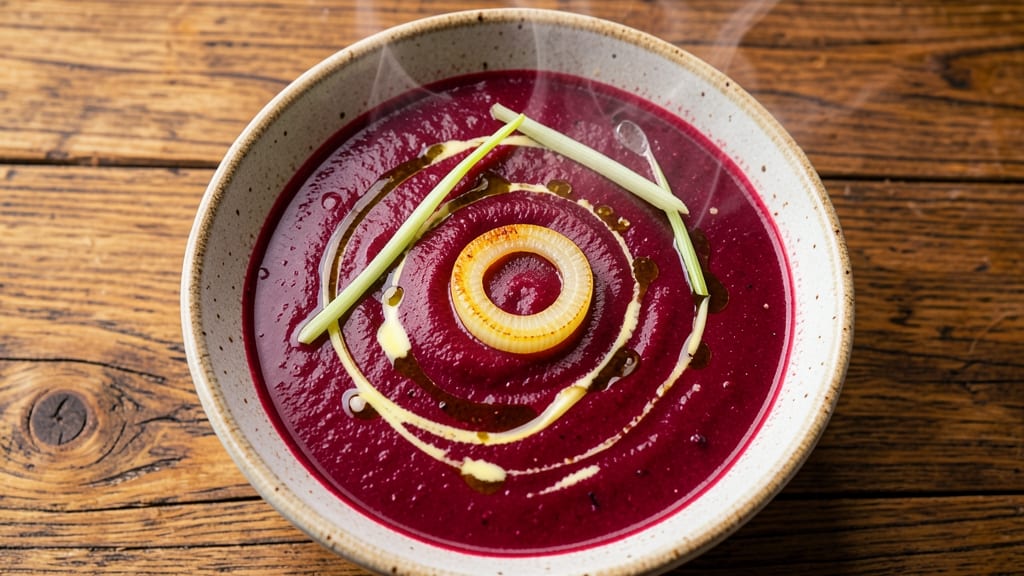
This vegetarian beetroot soup recipe transforms humble beets into a velvety masterpiece that balances earthy sweetness with creamy richness. The secret lies in roasting the beets first—this caramelizes their natural sugars while softening them perfectly for blending.
I've perfected this method over years of testing, ensuring every spoonful delivers that signature smooth texture without compromising depth of flavor.
The process starts with aromatic vegetables—onions, garlic, and celery—sautéed until fragrant, forming the flavor foundation. Roasted beets join the pot with vegetable broth, simmering until tender before blending to a silky consistency.
A splash of apple cider vinegar brightens the sweetness, while a touch of cream (or coconut milk for vegan) adds luxurious body. The result? A soup that's both comforting and sophisticated, with none of the bitterness that plagues rushed recipes.
What makes this recipe truly special is its adaptability. Swap the cream for coconut milk, add a pinch of smoked paprika for depth, or keep it chunky by blending only half the soup. Garnishes like crème fraîche, fresh dill, or toasted pumpkin seeds elevate it further.
Each bowl delivers that perfect marriage of sweet, earthy beets and velvety smoothness—proof that vegetarian soups can be restaurant-quality without compromise.
Perfect for chilly days or as a nutritious starter, this soup comes together in about 45 minutes with minimal active work. The roasting can even be done ahead, making it an ideal make-ahead meal.
Whether you're feeding a crowd or treating yourself, this recipe delivers consistent, foolproof results that will have everyone asking for seconds.
Ingredients for beetroot soup recipe vegetarian
Roasted beets meet aromatic vegetables and velvety cream for a sophisticated vegetarian soup.
| Ingredient | Amount | Notes |
|---|---|---|
| Medium Beets 🍠 | 1 ½ lb | Roasted with skins on |
| Yellow Onion 🧅 | 1 whole | Diced, medium size |
| Celery Stalks 🥬 | 3 whole | Trimmed, chopped |
| Garlic Cloves 🧄 | 4 cloves | Fresh, minced |
| Vegetable Broth 💧 | 4 cups | Low-sodium preferred |
| Apple Cider Vinegar 🍏 | 2 tbsp | For brightness |
| Heavy Cream 🥛 | ½ cup | Full-fat for richness |
| Extra-Virgin Olive Oil 🫒 | ¼ cup | For roasting and sautéing |
| Smoked Paprika 🌶️ | ½ tsp | For depth of flavor |
| Salt 🧂 | 1 ½ tsp | Kosher or sea salt |
| Black Pepper 🌶️ | ½ tsp | Freshly ground |
| Fresh Dill 🌿 | ¼ cup | Chopped, for garnish |
| Pumpkin Seeds 🥜 | ¼ cup | Toasted, for garnish |
The beets are the heart of this soup, and roasting them unlocks their natural sweetness. Look for medium-sized beets—they roast evenly and maintain their shape. Organic beets from Whole Foods Market or your local farmers' market tend to have richer flavor, but conventional beets work fine too. The key is to roast them until tender but not mushy; this ensures a silky texture when blended. For the aromatic vegetables, Yellow Sweet Onions add subtle sweetness, while celery provides a crisp, fresh contrast. Garlic, of course, deepens the savory profile—never skip the mincing step, as it releases more flavor.
No heavy cream? Full-fat coconut milk delivers a similarly luxurious texture and pairs beautifully with beets. For a tangier soup, increase the apple cider vinegar to 3 tablespoons—it cuts through the richness perfectly. Smoked paprika can be swapped for regular paprika, though it will lack the subtle smokiness. If you prefer a chunkier texture, blend only half the soup and leave the rest whole. For the vegetable broth, Low-Sodium Swanson or homemade is ideal; avoid high-sodium options to prevent over-salting. The fresh dill and pumpkin seeds are optional garnishes but add a bright, nutty finish that elevates the dish.
Roasted beets keep well in the fridge for up to 5 days if stored in an airtight container with a splash of broth. The finished soup reheats beautifully—simmer gently to preserve its silky texture. For meal prep, portion into containers and refrigerate for up to 4 days or freeze for 3 months. When reheating from frozen, thaw overnight in the fridge before simmering. Garnishes like fresh dill and toasted pumpkin seeds can be added fresh after reheating to maintain their vibrancy.
Why You'll Love This Recipe
- Roast & Forget Prep: I swear by roasting the beets first—it cuts chopping time in half and makes peeling them a breeze. The oven does all the work while you chop the onion and celery, and honestly? That caramelized sweetness from the roasted beets? Worth every minute.
- Earthy Umami Bomb: The combo of roasted beets, sautéed garlic, and celery in that vegetable broth creates a depth that’s hard to beat. It’s rich but not heavy, and the onion adds just enough sharpness to keep it interesting—not cloying, not boring.
- Leftover Goldmine: This soup actually improves the next day. The flavors meld even better, and it reheats like a dream. I make a big batch on Sundays, and by Wednesday, it’s still my go-to lunch—no sad, watery leftovers here.
- Budget Pantry Hero: You’re using basic veggies that last, and the broth stretches for multiple servings. Between us, I’ve made this soup for under $2 per serving, and it still feels like a proper meal—not an afterthought. That’s the kind of value I live for.
Step-by-step instructions for beetroot vegetarian soup
Transform humble ingredients into a velvety soup where earthy beets meet creamy richness.
🔥 Step 1: Roast the Beets Until Tender
Preheat your oven to 400°F. Scrub the 1.5 lb medium beets clean, leaving skins intact, then wrap each tightly in aluminum foil. Place them on a baking sheet and roast for 45-50 minutes until completely tender when pierced with a knife. The skins should peel away easily once cooled.
This roasting method concentrates the beets' natural sweetness while softening them perfectly. I always test doneness by gently squeezing - they should yield like overripe fruit. Let them cool slightly before peeling, then chop into ½-inch cubes for even distribution in the soup.
🍳 Step 2: Sauté Aromatics in Olive Oil
Heat 2 tablespoons of the extra-virgin olive oil in a large pot over medium heat. Add the 1 whole diced yellow onion and 3 chopped celery stalks, cooking for 5-6 minutes until softened and translucent. Add the 4 minced garlic cloves and ½ teaspoon smoked paprika, stirring for 30 seconds until fragrant.
The paprika here adds subtle depth that complements the beets' earthiness. Don't let the garlic burn - it should smell sweet and nutty, not bitter. This aromatic base forms the flavor foundation for your soup.
🥘 Step 3: Build the Soup Base
Add the chopped beets to the pot along with the 4 cups vegetable broth and 1.5 teaspoons salt. Bring to a gentle boil, then reduce heat to medium-low and simmer uncovered for 20-25 minutes until the beets are completely tender and the flavors meld. Stir occasionally to prevent sticking.
Taste the mixture now - you should detect the beets' natural sweetness emerging. If the broth appears too thin, reduce it by 5 minutes uncovered. This simmering time ensures maximum flavor extraction from all ingredients.
𰱟 Step 5: Finish with Cream and Garnish
Return the pot to medium-low heat and stir in the ½ cup heavy cream until warmed through but not boiling. Remove from heat and stir in the ¼ cup chopped fresh dill. Taste and adjust seasoning with additional salt if needed. Ladle into bowls and garnish with ¼ cup toasted pumpkin seeds.
The cream adds luxurious richness while the dill provides fresh contrast. Serve immediately while warm, as the flavors continue to develop. Each spoonful should deliver that perfect balance of earthy beets, creamy texture, and subtle vinegar brightness.
Pro Tips For Making Beetroot Soup Recipe Vegetarian
- ROAST BEETS FIRST: I learned this the hard way—boiling whole beets is a pain. Roast them at 400°F (200°C) for 45-55 minutes with olive oil, salt, and pepper until fork-tender. The flavor deepens, and peeling becomes effortless—no more stubborn skins or waterlogged texture.
- CHOP ONIONS SMALL: Don’t be lazy with the onion. Dice it into 1/8-inch pieces so it dissolves completely into the soup instead of sitting as chunks. If you’re impatient, pulse it briefly in a food processor—just don’t overdo it, or you’ll end up with mush.
- SIMMER NOT BOIL: After adding broth, keep the heat at a gentle simmer (small bubbles, occasional swirls). Boiling can turn your soup bitter and break down the beets into a gluey mess. If it’s too thick later, you can always thin it with water—better to start smooth.
- SALT THE BROTH LATE: Add the full salt amount only after the soup has simmered for 10 minutes. Early salting concentrates flavors as water evaporates, which can make the broth taste harsh before balancing out. Trust me, your taste buds will notice the difference.
Regional styles of beetroot soup recipe vegetarian
French Borscht Style
In France, beetroot soup often takes on a lighter, more refined character known as borscht—though with a distinctly Gallic twist. The French version omits cream entirely, instead finishing with a splash of crème fraîche at the table.
I love adding a pinch of nutmeg and a bay leaf during simmering for warmth, then finishing with fresh tarragon instead of dill.
The broth is typically made with chicken stock (though vegetarian versions use mushroom broth), and the beets are often roasted with a splash of red wine for depth. 🍷
German Rote Grütze
German beetroot soup, or Rote Grütze, leans into rustic comfort with a thicker, almost stew-like texture. The key difference? Diced apples (about 1 medium apple) are added with the beets, creating a sweet-tart balance.
Germans also incorporate a handful of juniper berries (about 1 teaspoon crushed) for a piney aroma, and finish with sour cream and chopped chives. The soup is often served with crusty rye bread to soak up every last bit. 🥖
Italian Stracciatella
Italy transforms beetroot into Stracciatella, a soup that’s as much about texture as flavor. The Italians use beet greens (about 2 cups chopped) along with the roots, adding a peppery bite.
The broth is enriched with a splash of white wine (about ¼ cup dry vermouth) and finished with Parmigiano-Reggiano (about ¼ cup grated) instead of cream. The soup is typically chunky, with beets cut into ½-inch dice—no blending required.
Garnish with toasted pine nuts for crunch. 🌿
British Beetroot & Horseradish
British beetroot soup often includes a teaspoon of prepared horseradish (about 1 teaspoon) for a sharp, spicy kick that cuts through the sweetness.
The British also favor a splash of stout beer (about ½ cup Guinness) in the broth for depth, and finish with a dollop of whipped crème fraîche and a sprinkle of flaky sea salt.
The texture leans toward smooth but not silky, with beets blended just until creamy. Serve with buttered soda bread for the full experience. 🍺
Middle Eastern Za’atar Twist
In the Middle East, beetroot soup becomes a vibrant za’atar-infused dish. Start by roasting the beets with a tablespoon of za’atar spice (about 1 tbsp) mixed into the olive oil.
The soup is finished with a drizzle of olive oil and crumbled feta (about ¼ cup) instead of cream. Add a handful of chopped parsley and toasted sesame seeds for garnish. The za’atar adds a nutty, herby complexity that pairs beautifully with the earthy beets. 🌶️
Scandinavian Dill & Rye
Scandinavian beetroot soup is all about bright, fresh flavors and hearty textures. The Swedes and Norwegians add a generous handful of fresh dill (about ⅓ cup chopped) and a splash of rye vinegar (about 1 tbsp) for tang.
The soup is often thickened with a mashed potato (about 1 small potato) blended in for body, and served with open-faced rye bread topped with smoked salmon (for non-vegetarians) or marinated herring. The result is a soup that’s both comforting and refreshingly bold. ❄️
Nutrition facts
Frequently asked questions
Why do you roast the beets instead of boiling them?
Roasting caramelizes the beets' natural sugars, creating deeper sweetness and a more complex flavor profile. Unlike boiling, which can dilute the taste and leave beets watery, roasting concentrates their earthy richness while softening them perfectly for blending. This method also makes peeling easier since the skins slip right off after roasting.
Can I make this soup vegan?
Replace the ½ cup heavy cream with ½ cup full-fat coconut milk for a rich, creamy texture. For extra richness, add 1 tablespoon nutritional yeast to mimic the umami depth of dairy. The rest of the recipe remains exactly the same, and the soup will still be velvety smooth.
How can I adjust the soup's thickness?
For a thicker soup, simmer the broth uncovered for 5-10 extra minutes to reduce it naturally. If you prefer it smoother, blend it longer or add 1 small mashed potato to thicken it. For a lighter texture, stir in 2 tablespoons additional broth after blending. The key is to taste as you go!
What if my soup tastes too sweet?
The apple cider vinegar balances sweetness, but if your beets are particularly sweet, add 1 extra teaspoon vinegar or ½ teaspoon smoked paprika to deepen the savory notes. A pinch of salt also enhances flavor perception. For a tangier profile, try adding 1 teaspoon lemon juice at the end.
Can I make this soup ahead of time?
Yes! The roasted beets can be prepped 3 days ahead and stored in an airtight container. The finished soup keeps in the fridge for 4 days or freezes for 3 months. Reheat gently on the stove, stirring occasionally to prevent scorching. Garnishes like fresh dill and toasted seeds should be added after reheating to keep them vibrant.