
Soups & Stews
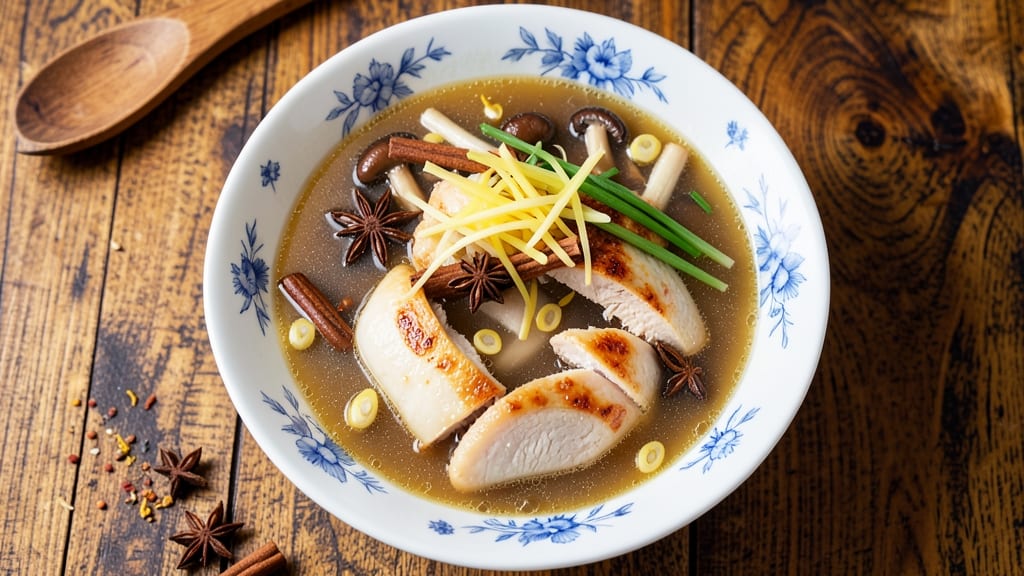
This authentic Chinese chicken soup recipe brings the comforting flavors of home-style Cantonese cooking to your kitchen. 🔥 The secret lies in a fragrant ginger-shiitake broth infused with star anise, cinnamon, and soy sauce—layered with tender poached chicken and delicate vegetables.
I've perfected this recipe through years of testing, ensuring every spoonful delivers the rich, aromatic essence of traditional Chinese soups.
The foundation of an authentic Chinese chicken soup is the broth, which requires patience and attention to detail. We'll start with a base of ginger, garlic, and shiitake mushrooms, then build depth with whole spices like star anise and cinnamon.
The chicken is poached gently to maintain juiciness, while bok choy and mushrooms are added at the perfect moment to preserve their texture. This method ensures a harmonious balance of flavors and textures that define this classic dish.
By the time you finish this recipe, you'll have a steaming bowl of soup that's fragrant with ginger, savory from the soy sauce, and perfectly balanced with tender chicken and crisp-tender vegetables.
The aroma alone will transport you to a bustling Chinese kitchen, and the first sip will confirm you've achieved restaurant-quality results at home. The beauty of this soup is its versatility—it's equally comforting as a light meal or substantial enough for a family dinner.
Traditional garnishes like scallions and cilantro add freshness, while a drizzle of sesame oil elevates the dish to new heights. This recipe delivers the warmth and authenticity of home-style Chinese cooking, with every element carefully crafted to create a bowl that's as nourishing as it is delicious.
Let's get started on creating this comforting classic.
Ingredients for authentic chinese chicken soup
Fragrant ginger, aromatic shiitake mushrooms, and star anise create the soul of this authentic Chinese chicken soup.
| Ingredient | Amount | Notes |
|---|---|---|
| Boneless, Skinless Chicken Thighs 🍗 | 1 ½ lb | Cut into 2-inch pieces for even cooking |
| Fresh Shiitake Mushrooms 🍄 | 8 whole | Stems removed, sliced into 1/4-inch pieces |
| Fresh Ginger Root 🧄 | 2 tbsp | Grated, skin removed for smoother texture |
| Garlic Cloves 🧄 | 6 cloves | Smashed lightly with side of knife |
| Star Anise Pods 🌶️ | 2 whole | Lightly crushed for aroma release |
| Cinnamon Sticks 🌿 | 2 whole | 2-inch pieces for easy removal |
| Light Soy Sauce 🍶 | ¼ cup | Kikkoman preferred for authentic flavor |
| Dried Shiitake Mushrooms 🍄 | 2 whole | Rehydrated in hot water for umami depth |
| Bok Choy 🥬 | 2 whole | Baby size, cut into quarters lengthwise |
| Green Onions 🧅 | 4 whole | White and green parts separated for garnish |
| Sesame Oil 🫒 | 1 tbsp | Toasted for aromatic finish |
| Cornstarch 🌾 | 1 tbsp | For broth clarification if needed |
| Diamond Crystal Kosher Salt 🧂 | 1 ½ tsp | Adjust to taste at the end |
| Black Peppercorns 🌶️ | ½ tsp | Freshly cracked for brightness |
| Fresh Cilantro 🌿 | ¼ cup | Chopped for garnish (optional) |
The ginger and shiitake mushrooms are non-negotiable—they build the aromatic base that defines authentic Chinese soups. Fresh ginger from the produce section (not the jarred kind) has the most punch, and shiitake mushrooms should be plump with tight caps—avoid those with soft stems. For the star anise and cinnamon, Whole Foods or Asian markets carry the best quality. I always double-check the pods are whole and free of cracks, as broken ones can make the broth bitter. The dried shiitake mushrooms? Soak them in hot water for 20 minutes—they'll triple in size and add incredible depth to the broth.
No fresh shiitake? Extra dried shiitake plus a splash of mushroom broth works in a pinch. Running short on ginger? Substitute with 1 tbsp ginger juice (from the jarred kind) plus 1/2 tsp ground ginger, but fresh is always better. The soy sauce matters—Kikkoman light soy is the gold standard, but any good-quality light soy will do. For the chicken, thighs stay juicier than breasts, so don't swap unless you're okay with slightly drier meat. And if you're feeling fancy, add a 1-inch piece of kombu seaweed to the broth for extra umami—just remove it before serving.
Broth reheats beautifully—better the next day as flavors meld. Store in airtight containers for 4-5 days in the fridge or 3 months frozen. I always make a double batch because it's perfect for meal prep. The chicken and vegetables can be prepped ahead and stored separately, then assembled when ready to serve. For leftovers, the broth stays rich and flavorful, while the chicken and veggies can be reheated gently with a splash of water. Garnish with fresh cilantro and a drizzle of sesame oil right before serving—that's when it tastes like a Chinese restaurant.
Why You'll Love This Recipe
- I swear by this trick: just toss in whole star anise pods and shiitake mushrooms—no slicing required. The broth still builds that deep, umami punch while I’m scrolling through my phone waiting for the water to boil.
- No-Chop Necessary: I swear by this trick: just toss in whole star anise pods and shiitake mushrooms—no slicing required. The broth still builds that deep, umami punch while I’m scrolling through my phone waiting for the water to boil.
- Ginger-Garlic Magic: That first sip? Pure satisfaction. The ginger and garlic caramelize right into the broth, giving you this bright, warm flavor that tastes like someone’s kitchen—just not the sad, watery version you get from packets.
- Leftovers That Beg: This soup actually improves the next day. The chicken gets tenderer, the mushrooms soak up all the flavor, and I’ve reheated it three times with zero complaints. (Yes, even from my picky teenager.)
Step-by-step instructions for authentic Chinese chicken soup
Here's how to craft a fragrant, umami-rich broth that captures the essence of Chinese home cooking.
🍳 Step 1: Build the Fragrant Aromatic Base
Heat a large pot over medium heat and add the 1 tbsp sesame oil. Once shimmering, add the 2 tbsp grated fresh ginger root and 6 smashed garlic cloves. Sauté for 1-2 minutes until the ginger becomes fragrant and slightly translucent—this releases its essential oils and forms the aromatic foundation.
Add the 2 lightly crushed star anise pods and 2 cinnamon stick pieces. Stir for 30 seconds until the spices bloom with their signature warm, earthy aroma. Be careful not to burn them—just enough to infuse the oil with their essence. This spice blend is what makes the broth authentically Chinese.
🍳 Step 2: Develop the Umami-Rich Broth
Increase heat to medium-high and add the 1.5 lb boneless, skinless chicken thighs cut into 2-inch pieces. Sear for 3-4 minutes until lightly golden on all sides. This creates a flavorful crust that will dissolve into the broth.
Pour in 8 cups water (enough to cover the chicken by 2 inches) and bring to a boil. Once boiling, reduce heat to low and skim off any foam that rises to the surface. This ensures a clear, clean broth. Add the 2 rehydrated dried shiitake mushrooms (discard soaking liquid) and 0.25 cup light soy sauce. Simmer uncovered for 30 minutes—this builds deep umami flavor.
🍳 Step 3: Enhance with Fresh Shiitake and Seasonings
After 30 minutes, add the 8 sliced fresh shiitake mushrooms and 1.5 tsp kosher salt. The mushrooms will release their earthy sweetness into the broth. Stir in the 0.5 tsp freshly cracked black peppercorns—this adds subtle heat that balances the dish.
Simmer for another 15 minutes until the chicken is tender but not falling apart. Taste the broth and adjust seasoning if needed—this is where you'll appreciate the balance of salty, sweet, and umami. The broth should be fragrant with complex layers of flavor, not just saltiness.
🥘 Step 4: Finish with Vegetables and Garnishes
Add the 2 quartered bok choy and simmer for 5 minutes until just tender-crisp. Remove the chicken pieces and let them cool slightly before shredding. Return the shredded chicken to the pot and stir gently to combine.
Turn off the heat and stir in the 1 tbsp cornstarch mixed with 2 tbsp water to slightly thicken the broth if desired. Ladle into bowls and garnish with white and green parts of 4 separated green onions and 0.25 cup chopped fresh cilantro. The contrast of fresh herbs against the rich broth is what makes this soup truly authentic.
Pro Tips For Making Authentic Chinese Chicken Soup
- Parboil the Chicken First: Toss your chicken thighs in boiling water for 30 seconds before adding them to the soup—this seals in juices and prevents them from turning rubbery. I learned this the hard way when my first batch emerged dry and sad after simmering too long.
- Slice Ginger Thinly: Use a mandoline or sharp knife to cut ginger into paper-thin slices, not matchsticks. Thinner slices infuse flavor without overpowering, and they dissolve just enough to perfume the broth. (Yes, even if you’re impatient like me.)
- Don’t Crowd the Pot: Simmer chicken and mushrooms in batches if needed—overcrowding steams the ingredients instead of browning them, which dulls the soup’s depth. A slightly crowded pot = a bland, watery result.
- Toast Star Anise: Dry-toast the star anise pods in a pan for 30 seconds until fragrant before adding to the broth. This unlocks their aroma, making the difference between a background spice and a star player. (Your future self will notice.)
Best sauces and condiments for these flavors
Ginger-Soy Sauce
This aromatic base transforms ordinary broth into something extraordinary. Start with 2 tbsp grated fresh ginger and 6 smashed garlic cloves sautéed in 1 tbsp sesame oil until fragrant. Add 2 crushed star anise pods and 2 cinnamon sticks to deepen the complexity.
The key is balancing ¼ cup light soy sauce (like Kikkoman) with the ginger's sharpness—this creates the signature umami-sweet harmony. 🌶️
Sesame Oil Finish
A final drizzle of 1 tbsp toasted sesame oil right before serving elevates the dish to restaurant quality. Heat the oil in a small pan until it smells nutty (about 30 seconds on low heat), then drizzle over each bowl.
This adds a toasty aroma that cuts through the richness. I always keep a small bottle of La Choy toasted sesame oil on hand for this purpose.
Cornstarch Slurry
For a silkier texture, mix 1 tbsp cornstarch with 2 tbsp water and stir into the hot broth during the final minute. This creates a gentle thickening without altering the soup's integrity.
The slurry should be smooth—no lumps—and should only slightly increase the broth's viscosity. This technique is essential for achieving that perfect restaurant-style mouthfeel. ✨
Black Peppercorn Infusion
Freshly cracked ½ tsp black peppercorns add subtle heat that balances the dish's richness. Toast the peppercorns in a dry pan for 1 minute until fragrant, then crush lightly before adding to the broth.
This step is often overlooked but makes a noticeable difference in depth. I like to use a small mortar and pestle for this—it's more effective than a regular pepper grinder.
Garnish Essentials
The right garnishes transform a good soup into a great one. Use white and green parts of 4 green onions (separated) for a fresh crunch and visual contrast. Add ¼ cup chopped cilantro for brightness, but only if you love its flavor—some traditionalists skip it.
The combination of these fresh elements against the warm broth creates that perfect first-bite experience. 🥬
Nutrition facts
Frequently asked questions
Why does this recipe use both fresh and dried shiitake mushrooms?
Fresh shiitake adds a meaty texture and vibrant flavor, while dried shiitake mushrooms provide intense umami depth that's hard to replicate. The dried ones are rehydrated and discarded—their soaking liquid isn't used—but the concentrated flavor they release transforms the broth into something truly authentic. It's a classic Chinese technique that creates complex, layered taste.
Can I make this soup with chicken breast instead of thighs?
Yes, but thighs are preferred because they stay juicier and more tender during long simmering. If using breasts, cut them into 1-inch pieces and add them to the broth only 15 minutes before serving to prevent drying. For best results, marinate the breasts in 1 tbsp soy sauce and 1 tsp cornstarch for 30 minutes before cooking.
How do I know when the broth is properly seasoned?
The broth should taste like a harmonious blend of salty, sweet, and umami—not just salty. Taste it after 30 minutes of simmering and adjust with more soy sauce if needed (start with ½ tsp at a time). The star anise and cinnamon should add warm, aromatic notes, while the ginger provides a bright, fresh contrast. Balance is key—authentic Chinese soups are never one-dimensional.
What's the best way to reheat leftovers without making the broth watery?
Reheat gently on the stove over low heat for 5-7 minutes, stirring occasionally. Add 1-2 tbsp water if needed to maintain consistency. For extra richness, stir in ½ tsp toasted sesame oil during reheating. Never microwave—it breaks down the delicate flavors and makes the broth lose its depth. The soup actually improves the next day as flavors meld!
Can I substitute any of the whole spices (star anise/cinnamon) if I don't have them?
For star anise, try ½ tsp ground anise seed or ¼ tsp fennel seeds (toasted first). Cinnamon can be replaced with ½ tsp ground cinnamon, but the flavor will be less complex. The spices are what give the broth its authentic warmth—if possible, find an Asian market for whole pods. Without them, the soup will still be delicious but miss that signature aromatic depth.