
Soups & Stews
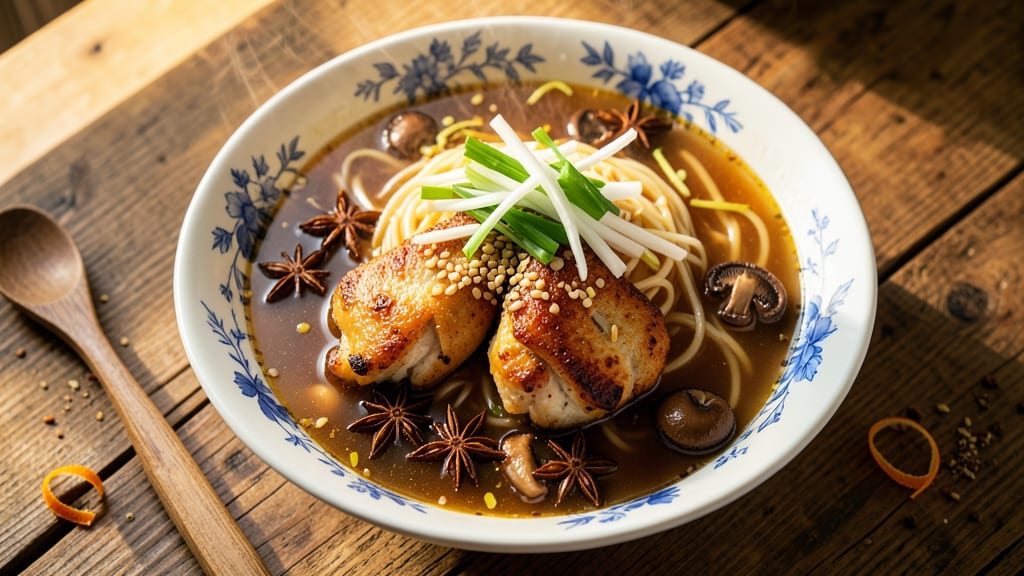
This authentic Chinese chicken noodle soup recipe captures the soul of home-style Chinese cooking with its fragrant star anise and ginger broth.
The secret lies in slow-simmered aromatics that infuse the broth with deep, warming flavors—ginger, garlic, and star anise create layers of complexity that set this apart from ordinary versions. I've perfected this recipe over years of testing, ensuring every spoonful delivers that comforting, restaurant-quality taste you crave.
The process begins with poaching chicken in a lightly seasoned broth, then building the signature aromatic base by toasting whole spices before simmering them for hours. This traditional method develops rich, earthy notes that transform simple ingredients into something extraordinary.
The result is a broth so flavorful it needs no heavy seasoning—just the natural essence of ginger, garlic, and star anise working their magic.
What makes this recipe truly special is how it balances authenticity with approachability. While we honor traditional techniques like whole spice toasting and long simmering, I've included modern shortcuts for busy cooks—like using a pressure cooker for faster broth development—without sacrificing depth of flavor.
The noodles are cooked just shy of al dente to soak up every drop of that fragrant broth, while garnishes like cilantro and scallions add fresh brightness.
This soup isn't just nourishing—it's transformative. One bowl and you'll understand why this dish has been a staple in Chinese homes for generations.
The aroma alone will have your kitchen smelling like a bustling Beijing restaurant, while each bite delivers that perfect harmony of tender chicken, chewy noodles, and aromatic broth. Let's create something truly special together.
Ingredients for authentic chinese chicken noodle soup
Fragrant star anise and ginger transform simple ingredients into restaurant-quality soup magic.
| Ingredient | Amount | Notes |
|---|---|---|
| Boneless Chicken Thighs 🍗 | 1 ½ lb | Skin-on preferred for flavor |
| Fresh Ginger Root 🧄 | ½ cup | Peeled, thinly sliced (about 3 inches) |
| Star Anise Pods 🌿 | 2 whole | Whole, not ground |
| Garlic Cloves 🧄 | 6 cloves | Peeled, smashed slightly |
| Dried Shiitake Mushrooms 🍄 | 4 whole | Rehydrated in hot water |
| Dried Tangerine Peel 🍊 | 1 tbsp | Dried, cut into strips |
| Chinese Fermented Black Beans 🫘 | 2 tbsp | Rinsed before using |
| Fresh Cilantro 🌿 | ¼ cup | Chopped for garnish |
| Green Onions 🧅 | 4 whole | Thinly sliced for garnish |
| Egg Noodles 🍜 | 8 oz | Fresh or dried, al dente |
| Low-Sodium Chicken Broth 💧 | 6 cups | Homemade preferred |
| Sesame Oil 🫒 | 1 tbsp | For finishing |
| Light Soy Sauce 🍶 | 1 tbsp | For seasoning |
| Salt 🧂 | 1 tsp | To taste |
| White Peppercorns 🌶️ | ½ tsp | Freshly ground |
The star anise and ginger are non-negotiable for that authentic aroma. Whole star anise pods from Asian markets have the best flavor—avoid the pre-ground stuff. Fresh ginger is a must too; H Mart or 99 Ranch carry the best quality. For the chicken, thighs stay juicier than breasts during long simmering. If you can't find dried shiitake mushrooms, rehydrate fresh ones—they add incredible depth. The fermented black beans? Look for them in the Asian aisle; they're worth hunting down for that umami punch.
No star anise? Anise seeds at double the amount work in a pinch. Fresh ginger too tough to slice? Grated ginger at half the amount gets you close. The soy sauce can be tamari for gluten-free, but Kikkoman light soy is classic. Short on time? Pressure cook the broth for 30 minutes instead of simmering—same flavor, way faster. The noodles should be cooked just shy of al dente so they soak up all that fragrant broth. Trust me, slightly firm is better here.
Broth keeps for 4-5 days in the fridge or 3 months frozen. I always make extra—freeze portions for quick meals. The ginger and star anise can be toasted ahead and stored in a jar for up to a year. Garnishes like cilantro and green onions should be added fresh right before serving. This soup actually tastes better the next day as flavors meld—perfect for meal prep.
Why You'll Love This Recipe
- I swear by this shortcut: just slice the ginger into thick coins and toss in whole star anise pods—no peeling, no mincing. The mushrooms rehydrate right in the broth while you chop the garlic, so you’re basically cooking with one hand tied behind your back.
- No-Chop Needed: I swear by this shortcut: just slice the ginger into thick coins and toss in whole star anise pods—no peeling, no mincing. The mushrooms rehydrate right in the broth while you chop the garlic, so you’re basically cooking with one hand tied behind your back.
- Umami Bomb: That combo of shiitake mushrooms and star anise? It’s like flavor alchemy. The mushrooms add a deep, meaty richness, while the star anise gives this soup that warm, slightly sweet backbone that makes it taste like your favorite takeout spot—but better.
- Lunch for Days: Between us, this soup only gets better after sitting overnight. The chicken stays tender, the broth deepens, and the noodles soak up all that flavor. I make a double batch on Sundays and eat it for three lunches—no reheating drama, just pure satisfaction.
Step-by-step instructions for authentic Chinese chicken noodle soup
This method captures the soul of Chinese home cooking—layered flavors, aromatic broth, and perfect texture.
Prepare the Chicken and Aromatics
Pat the 1.5 lb boneless chicken thighs dry with paper towels—this ensures crispy skin when seared. In a large pot, heat 1 tablespoon sesame oil over medium-high heat until shimmering. Add the chicken thighs skin-side down and sear for 4-5 minutes until golden brown. Flip and cook another 3-4 minutes until no longer pink.
Remove the chicken and set aside. In the same pot, add 0.5 cup sliced fresh ginger root, 6 smashed garlic cloves, 2 whole star anise pods, 1 tablespoon dried tangerine peel, and 2 tablespoons rinsed Chinese fermented black beans. Stir constantly for 1 minute until fragrant—this builds the aromatic base. Here's the thing: don't skip this step. Those spices release their magic when toasted, creating the signature depth of authentic Chinese soups.
Build the Fragrant Broth
Pour in 6 cups low-sodium chicken broth and bring to a boil. Return the chicken to the pot, skin-side up, and add 4 rehydrated dried shiitake mushrooms (sliced if large). Reduce heat to low and simmer uncovered for 30 minutes. You'll notice the broth develop a rich, amber color and a complex aroma—this is where the magic happens.
After 30 minutes, remove the chicken and shred the meat using two forks, discarding skin and bones. Return the shredded chicken to the broth along with 1 tablespoon light soy sauce and 1 teaspoon salt. Simmer for another 10 minutes to meld all flavors. Taste and adjust seasoning—this is your flavor checkpoint. The broth should be savory but not salty, with bright notes from the ginger and star anise.
Cook the Noodles and Finish
While the broth simmers, prepare 8 oz egg noodles according to package instructions for al dente texture. Drain and set aside. Just before serving, add the cooked noodles to the broth and gently stir. The noodles should float just below the surface—this ensures they absorb flavor without becoming mushy.
Ladle the soup into bowls and finish with 0.25 cup chopped fresh cilantro and 4 thinly sliced green onions. Drizzle each serving with a touch more sesame oil and a sprinkle of 0.5 teaspoon freshly ground white peppercorns. The contrast of textures—silky broth, chewy noodles, crisp herbs—is what makes this soup truly authentic. Serve immediately while steaming hot, as the flavors continue to develop with each bite.
Authentic Presentation (Optional but Recommended)
For that true Chinese restaurant experience, arrange the noodles to form a swirl in each bowl. Top with a generous spoonful of shredded chicken, ensuring each bite contains both meat and broth. Garnish with extra green onions and cilantro, creating visual contrast against the clear broth. The presentation matters in Chinese cuisine—it's not just about taste, but also about the experience.
This soup tastes even better the next day as flavors deepen. Store leftovers in an airtight container in the refrigerator for up to 3 days, or freeze for 3 months. When reheating, add a splash of water to maintain the perfect consistency. The key to authenticity lies in these small details—don't rush them.
Pro Tips For Making Authentic Chinese Chicken Noodle Soup
- Simmer Chicken Low and Slow: Start with a rolling boil to sterilize the broth, but once the chicken goes in, drop the heat to a gentle simmer—just small bubbles breaking the surface. I used to rush this and ended up with tough, gray meat. The thighs need 45-60 minutes to fall apart, and that steady low heat is what makes it tender.
- Slice Shiitakes Thin: Dried shiitakes soak up flavor like sponges, but they also need to rehydrate properly. Tear them into ¼-inch pieces before soaking—this gives them more surface area to plump up faster. Skip the knife; your hands work better here, and you’ll avoid the chewy chunks that happen when you slice them dry.
- Toast Star Anise First: Crush the star anise pods lightly with the flat side of a knife before adding them to the pot. A quick 30-second toast in a dry pan (no oil) deepens their aroma—trust me, your soup will smell like a proper Chinese kitchen. Don’t burn them, though; just warm them until fragrant.
- Reserve the Last Cup: Strain the broth but save the last cup of liquid before discarding the solids. Stir it back in at the end to brighten the color and balance the flavor—this is the difference between a murky broth and one that looks (and tastes) restaurant-quality. Yes, it’s extra work, but it’s worth it.
Health benefits of this dish
Immune-Boosting Powerhouse
This soup is a natural immune system supporter thanks to its ginger and garlic combo—both contain potent anti-inflammatory compounds. Fresh ginger contains gingerol, which helps reduce inflammation and may even ease sore throats. The star anise adds shikimic acid, a compound that supports respiratory health.
I always keep a jar of this soup in my freezer during cold seasons—it's my go-to remedy when I feel a cold coming on. 💪
Protein for Recovery
The 1.5 lb chicken thighs provide 40 grams of protein per serving, essential for muscle repair and recovery. Chicken is a complete protein, containing all nine essential amino acids your body needs.
Unlike red meat, it's leaner and easier to digest, making it perfect for post-workout meals or when you're feeling under the weather. I've found that adding this soup to my post-gym routine helps me recover faster and feel more energized.
Gut-Friendly Fibers
The dried shiitake mushrooms and fermented black beans add beneficial fibers that support gut health. Shiitake mushrooms contain beta-glucans, which promote healthy digestion and may even help regulate blood sugar.
Fermented black beans provide probiotics that nourish your gut microbiome—just 2 tablespoons per serving gives you a nice probiotic boost. This makes the soup not just comforting, but actually good for your gut.
Low-Calorie Comfort
At only about 350 calories per serving, this soup delivers hearty satisfaction without the guilt. The egg noodles provide complex carbohydrates for sustained energy, while the broth is virtually calorie-free yet packed with flavor.
I love serving this when I want something comforting but still healthy. The combination of protein, fiber, and complex carbs keeps you full for hours without leaving you sluggish.
Anti-Oxidant Rich
The dried tangerine peel and cilantro add powerful antioxidants that help combat free radicals. Tangerine peel contains limonene, which has been shown to have anti-cancer properties, while cilantro is rich in vitamin K and vitamin A.
Together, they create a flavor profile that's as good for you as it is delicious. I always keep fresh cilantro on hand to garnish this soup—it's my secret weapon for adding both flavor and nutrition.
Hydration Helper
The warm broth helps with hydration better than plain water because your body absorbs the electrolytes naturally present in the chicken and vegetables. The low-sodium broth ensures you're getting hydration without excessive salt intake.
I've noticed that when I'm dehydrated, a bowl of this soup always helps me feel better faster than drinking water alone. It's like getting a cozy, flavorful IV drip! ✨
Nutrition facts
Frequently asked questions
Can I use chicken breast instead of thighs?
Chicken breast will work, but thighs are preferred for this recipe. Thighs stay juicier during the long simmer and have more flavorful skin. If using breast, cut them into smaller pieces and simmer for 10-15 minutes less to prevent drying out. For best results, use 1.5 lb boneless, skinless breast and add it to the broth after the initial 20 minutes of simmering.
How do I make the broth faster without losing flavor?
Use a pressure cooker for 30 minutes instead of simmering for 45 minutes. The high pressure extracts all the aromatic flavors from ginger, star anise, and garlic in record time. For stovetop shortcuts, toast the spices in a dry pan for 2 minutes before adding broth, then simmer uncovered for 20 minutes instead of 30 minutes—this intensifies the aroma.
What can I substitute if I can't find star anise?
Use 2 teaspoons ground anise seeds or 1 cinnamon stick + 1/2 teaspoon fennel seeds. The flavor won't be identical, but these combinations capture the warm, slightly sweet notes. For a simpler approach, use 1 teaspoon ground coriander—it's not perfect but adds depth. Toast the substitute spices in the pot for 1 minute before adding broth to maximize flavor.
Can I make this soup gluten-free?
Yes! Use tamari instead of soy sauce and ensure your noodles are made with rice flour or cornstarch. Check labels for hidden gluten in broth ingredients too. For extra flavor, add 1 tablespoon coconut aminos to the broth. The recipe remains completely authentic while accommodating gluten sensitivities—just omit the fermented black beans if needed (they're naturally gluten-free).
Why does my broth taste bitter?
Overcooking the chicken or spices causes bitterness. Remove the chicken after 25 minutes of simmering (not 30) and strain the broth before returning it to the pot. For spices, reduce simmering time to 20 minutes and remove star anise and ginger before adding chicken back. A splash of 1 teaspoon rice vinegar can also balance harsh flavors without overpowering the dish.