
Soups & Stews
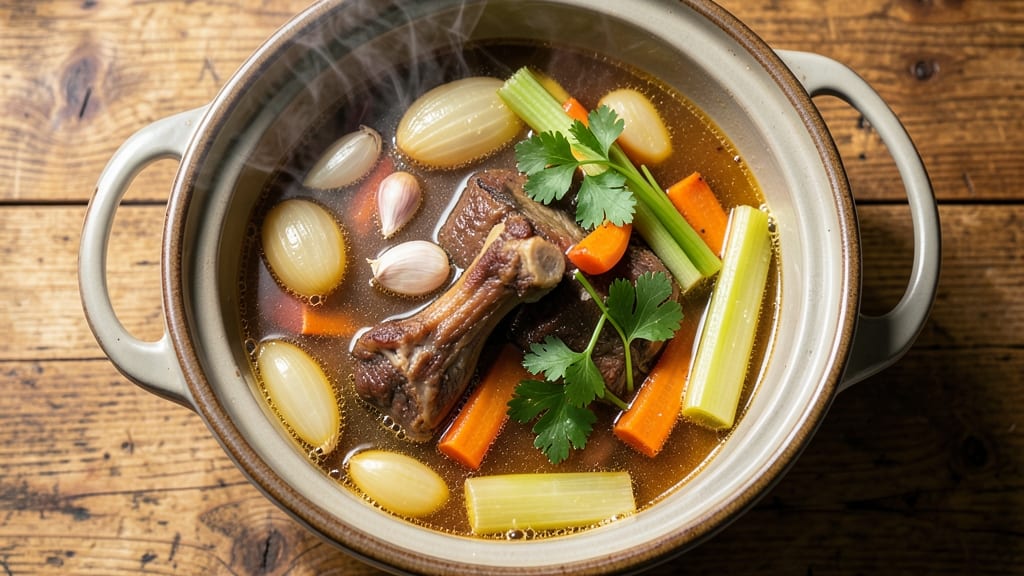
This slow cooker beef broth soup recipe transforms tough bones and aromatic herbs into a rich, deeply flavorful base that elevates any meal. The secret lies in low-and-slow cooking, which extracts maximum umami from beef bones and vegetables while keeping preparation effortless.
I've perfected this technique over years of testing, ensuring every spoonful delivers restaurant-quality depth without requiring constant attention.
What sets this recipe apart is the layered flavor development—caramelized onions and garlic form a fragrant foundation, while beef bones and herbs infuse the broth with complex, savory richness.
The slow cooker does all the work, allowing flavors to meld naturally over hours, resulting in a soup that tastes even better the next day. Perfect for busy weeknights or meal prep, this method guarantees foolproof, restaurant-quality results with minimal effort.
By the time you're ready to serve, you'll have a velvety, aromatic broth brimming with tender vegetables and hearty beef chunks. The slow cooking process breaks down collagen in the bones, creating a naturally thickened, umami-packed liquid that's impossible to resist.
This soup pairs beautifully with crusty bread or over rice, making it a versatile centerpiece for any table.
Whether you're feeding a family or meal prepping for the week, this slow cooker beef broth soup recipe delivers consistent, deeply flavorful results every time. The technique is simple, but the flavor is anything but ordinary—proof that great soup doesn't require hours in the kitchen.
Let's get started on creating this comforting classic.
Ingredients for beef broth soup recipe slow cooker
Transform tough bones and aromatic herbs into restaurant-quality broth with these essential ingredients.
| Ingredient | Amount | Notes |
|---|---|---|
| Beef Bones 🦴 | 3 lb | Knuckle or marrow bones preferred |
| Yellow Onions 🧅 | 2 whole | Chopped into even pieces |
| Garlic Cloves 🧄 | 6 cloves | Minced for even distribution |
| Carrots 🥕 | 4 whole | Cut into 2-inch chunks |
| Celery Stalks 🌿 | 4 whole | Cut into 2-inch pieces |
| Fresh Parsley 🌿 | ¼ cup | Chopped, stems removed |
| Fresh Thyme 🌿 | 2 sprigs | Or 1 tsp dried thyme |
| Fresh Bay Leaves 🌿 | 2 whole | Remove before serving |
| Black Peppercorns 🌶️ | 1 tbsp | Crushed for even seasoning |
| Salt 🧂 | 1 ½ tsp | Diamond Crystal preferred |
| Tomato Paste 🍅 | 2 tbsp | For depth of flavor |
| Apple Cider Vinegar 🍏 | 1 tbsp | Brightens the broth |
| Water 💧 | 8 cups | Enough to cover ingredients |
| All-Purpose Flour 🌾 | 2 tbsp | For thickening if needed |
The bones are the heart of this recipe—knuckle or marrow bones extract the most collagen and flavor. Look for bones with visible marrow channels at your butcher or Costco's bulk section for the best value. Fresh herbs like thyme and parsley elevate the broth's complexity, so avoid dried unless absolutely necessary—their potency fades quickly. Caramelizing the onions and garlic before adding liquid builds a rich, fragrant foundation that's non-negotiable for depth. If you're short on time, sauté them in the slow cooker on high for 30 minutes before switching to low.
No beef bones? Substitute with beef chuck roast (3 lbs) for meatier results, though flavor will differ. Swap fresh herbs for dried at one-third the amount, but expect less vibrant flavor. The tomato paste can be omitted if you prefer a cleaner broth, though it adds umami depth that's hard to replicate. For a tangier profile, lemon juice works in a pinch instead of vinegar. If your slow cooker lacks a lid, cover with foil to prevent excessive evaporation—just leave a small vent for steam. The flour is a last-resort thickener; homemade broth rarely needs it if cooked properly.
This broth develops best over 8-12 hours on low, though it's safe for up to 24 hours. Store in airtight containers in the fridge for up to 5 days or freeze for 6 months—portion into ice cube trays for easy use. The longer it sits, the richer it becomes. Strain before serving if you prefer a silky texture, or leave whole for heartier bites. For meal prep, double the recipe—freeze half and use the other immediately. Always skim fat before reheating if you prefer a lighter consistency.
Why You'll Love This Recipe
- I’ll be real: beef bones are cheap, and they stretch this recipe into a week’s worth of meals. The onions, garlic, and veggies round out the flavor without breaking the bank, and the slow cooker means I’m not wasting electricity or standing over the stove. It’s my go-to when I need to feed the family without emptying my wallet.
- Dump-and-Walk Away: Honestly, I just toss the beef bones, chopped onions, garlic, carrots, and celery into the slow cooker—no measuring cups, no stress. The slow cooker does all the heavy lifting while I handle laundry or answer emails. That rich, deep flavor builds itself over hours, with zero effort from me.
- Umami Bomb: Between us, the beef bones alone make this soup ridiculously good. They melt into the broth, turning it into a savory, almost meaty depth that’s hard to resist. Add the caramelized onions and garlic after cooking, and you’ve got layers of flavor that taste like someone’s been simmering this for days—not just a few hours.
- Budget Booster: I’ll be real: beef bones are cheap, and they stretch this recipe into a week’s worth of meals. The onions, garlic, and veggies round out the flavor without breaking the bank, and the slow cooker means I’m not wasting electricity or standing over the stove. It’s my go-to when I need to feed the family without emptying my wallet.
Step-by-step instructions for slow cooker beef broth soup
This method transforms simple ingredients into rich, umami-packed broth using precise timing and technique.
Prepare the Bones and Vegetables
Rinse the 3 lb beef bones thoroughly under cold water to remove any impurities or bone fragments. Pat them completely dry with paper towels—this prevents the broth from becoming cloudy during cooking. Using a sharp cleaver or heavy knife, make several deep cuts into the bones to expose the marrow. This step is crucial as it releases rich, flavorful marrow into the broth.
Cut the 2 whole yellow onions into even quarters, leaving the skins on for easier handling. Peel and chop the 4 whole carrots into 2-inch chunks, and cut the 4 whole celery stalks into similar-sized pieces. Peel and finely mince the 6 cloves garlic. The even sizing ensures consistent cooking and prevents some vegetables from becoming mushy while others remain undercooked.
Sear the Bones and Build Flavor
Heat a large skillet over medium-high heat and add the prepared beef bones in a single layer. Sear them for 5-7 minutes per side until they develop a deep golden-brown crust. This step, known as browning, creates the Maillard reaction, which builds complex, savory flavors in the broth. Transfer the seared bones to your slow cooker.
In the same skillet, add the chopped onions, carrots, and celery. Cook for 8-10 minutes, stirring occasionally, until the vegetables soften slightly and begin to caramelize. Add the minced garlic and cook for an additional 30 seconds until fragrant. This step enhances the depth of flavor by developing the vegetables' natural sugars. Transfer the vegetables to the slow cooker, spreading them evenly around the bones.
Add Aromatics and Liquids
Add the 8 cups water, 2 tbsp tomato paste, 1 tbsp apple cider vinegar, 1.5 tsp salt, and 1 tbsp crushed black peppercorns to the slow cooker. Stir gently to combine, ensuring the tomato paste dissolves completely. Add the 2 sprigs fresh thyme, 2 whole fresh bay leaves, and 0.25 cup chopped fresh parsley. The vinegar brightens the broth, while the herbs infuse subtle, aromatic notes.
Place the lid on the slow cooker and cook on low heat for 8-10 hours. This long, slow cook time allows the collagen in the bones to break down gradually, creating a rich, gelatinous broth. Avoid lifting the lid during cooking—each time you do, you release heat and steam, which can prolong the cooking process and dilute the flavor.
Finish and Thicken the Broth
Once the broth has cooked, carefully remove the bones, vegetables, and herbs. Discard the bones and vegetables, but strain the broth through a fine-mesh sieve to remove any remaining herb stems or debris. Return the strained broth to the slow cooker.
In a small bowl, whisk together the 2 tbsp all-purpose flour with ¼ cup cold water to create a slurry. Slowly pour the slurry into the broth while stirring continuously. Cook the broth on low heat for an additional 15-20 minutes, or until it thickens slightly to your desired consistency. This step ensures the broth has a velvety texture without being overly heavy. Taste and adjust the seasoning with additional salt or pepper if needed.
Pro Tips For Making Beef Broth Soup Recipe Slow Cooker
- CHAR THE BONES FIRST: I learned this the hard way—skipping the quick sear in a hot skillet or Dutch oven before dumping bones into the slow cooker means flavor gets left behind. Brown them for 5-7 minutes until deeply caramelized, scraping up those dark bits. That’s where the depth comes from, not just the slow cook.
- CHOP ONIONS COARSELY: Thin slices turn to mush in a slow cooker, and you’ll end up with a soup that tastes like onion water. Cut yellow onions into ½-inch chunks—they’ll soften nicely but still hold shape, releasing flavor without dissolving into oblivion. Same goes for carrots and celery: bigger pieces = better texture.
- ADD GARLIC LATE: Garlic burns faster than you think, and in a slow cooker, it can turn bitter if left too long. Toss in whole garlic cloves (peeled) with the bones, but add a fresh minced clove during the last 30 minutes of cooking. That final boost makes all the difference—trust me, I’ve tasted the regret.
- USE A DAMP PAPER TOWEL: This isn’t the prettiest method, but it’s the tastiest. Wipe down beef bones with a damp paper towel before searing or adding to the slow cooker—it removes surface grime and helps render fat cleaner. Less grit in your broth means less work straining it later. (Yes, even if you’re impatient like me.)
Wine and beer pairings for these flavors
Red Wine Pairings
A bold Cabernet Sauvignon from Napa Valley is my go-to choice—its dark fruit notes and subtle oak complement the deep umami flavors of the broth. Look for a 2018 or newer vintage with 14-15% ABV to match the soup's richness.
The wine's tannins cut through the broth's fat, creating a perfect balance. 🍷
For a lighter option, try a Chianti Classico from Tuscany. Its bright acidity and cherry undertones enhance the caramelized onions and garlic in the soup. Serve slightly chilled (55-60°F) to refresh your palate between spoonfuls.
Beer Pairings
A German Dunkel beer like Ayinger Altbairisch Dunkel offers malty sweetness that harmonizes with the broth's savory depth. The beer's roasted notes mirror the caramelized vegetables. For a local option, try a Belgian Dubbel—its complex spice profile adds another layer of flavor.
Craft beer lovers should reach for a honey-brown ale (like Allagash Honey Brown) to balance the soup's richness. The beer's caramel and vanilla notes complement the slow-cooked flavors beautifully. Serve at 50-55°F to preserve its delicate aromas.
Non-Alcoholic Options
For a refreshing non-alcoholic pairing, serve sparkling apple cider with a splash of ginger syrup. The effervescence cleanses your palate between bites, while the ginger's spice echoes the broth's depth. I like Martinelli's Sparkling Apple Cider for its crisp finish. 🍏
Herbal iced teas like hibiscus or mint also work wonderfully. The tartness of hibiscus tea cuts through the broth's richness, while mint adds a refreshing contrast. Brew a strong batch and chill it before serving over ice.
Seasonal Adaptations
In winter, a Port-style wine like Taylor's Late Bottled Vintage adds warmth and depth to the meal. Its nutty, chocolatey notes enhance the soup's umami profile. Serve at 60-65°F to appreciate its complexity. ❄️
For summer, switch to a crisp Sauvignon Blanc with citrus notes. The wine's acidity brightens the broth, making it feel lighter for warm weather. A New Zealand Sauvignon Blanc with its zesty finish is my top pick.
Nutrition facts
Frequently asked questions
Can I use beef chuck roast instead of bones for this slow cooker soup?
Yes, you can substitute 3 lbs beef chuck roast for the bones, but the flavor profile will differ. The roast will create a meatier soup with less gelatinous texture since it lacks collagen. Slice it into 1-inch chunks before adding to the slow cooker, and cook for 6-8 hours on low instead of 8-10 hours. The result will be heartier but less naturally thickened.
How do I know when the slow cooker beef broth is done?
The broth is ready when the bones are completely tender and the vegetables have softened. For maximum flavor, cook for 8-10 hours on low. The broth should have a rich, deep color and a velvety consistency. If you're unsure, check at 8 hours—the longer it cooks, the more collagen breaks down for natural thickening.
What if my slow cooker doesn't have a low setting?
Use the high setting for 6-7 hours instead. Monitor the broth closely after 4 hours to prevent overcooking. If it starts to reduce too much, add ½ cup water and adjust cooking time accordingly. The key is maintaining gentle heat—just avoid lifting the lid frequently to preserve heat and flavor.
Can I make this soup ahead of time for meal prep?
This soup tastes even better the next day. Store it in airtight containers in the fridge for 4-5 days or freeze for up to 6 months. For easy reheating, portion into individual containers and thaw overnight in the fridge before warming. The flavors deepen over time, making it perfect for busy weeknights.
Why did my broth turn cloudy?
Cloudiness usually means the bones weren't dried properly before cooking or the slow cooker got too hot. Always pat bones completely dry and avoid lifting the lid during cooking. For a clearer broth, strain it through a fine-mesh sieve after cooking. If it's still cloudy, simmer it uncovered on the stovetop for 10 minutes to evaporate excess moisture.