
Soups & Stews
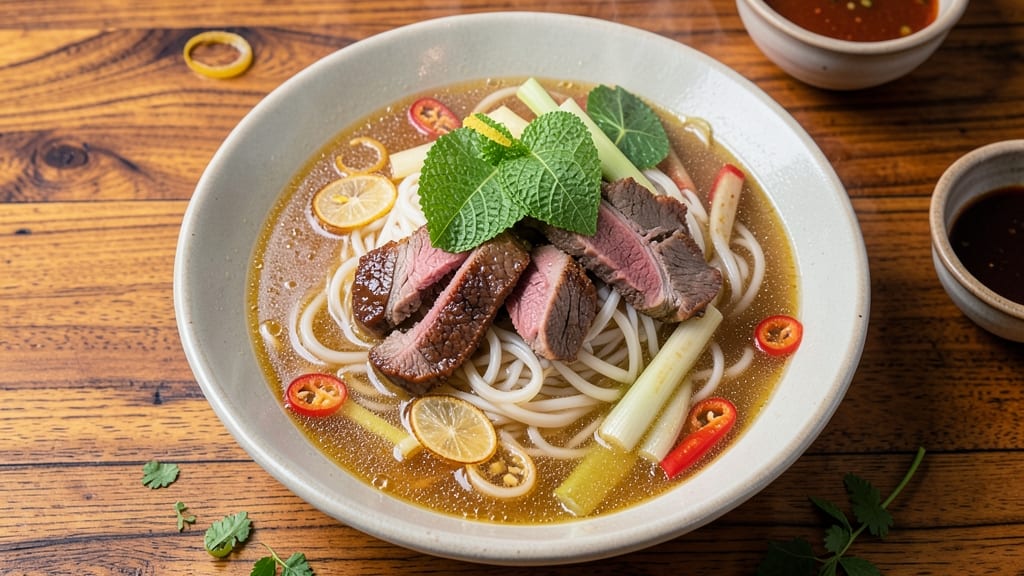
This authentic Thai beef noodle soup recipe brings the fragrant, complex flavors of street-side eateries into your kitchen. The secret lies in the aromatic broth—steeped with lemongrass, galangal, and kaffir lime leaves—where every spice plays a role in creating that signature balance of sour, spicy, and umami.
I've perfected this recipe through years of testing, ensuring the broth stays clear while packing maximum flavor, just like the versions that make Thai food stalls legendary.
The process starts with a clarified broth, where beef simmers long enough to become tender yet remains distinct from the rich, fragrant liquid. Traditional techniques like toasting whole spices and layering aromatics in stages elevate the dish beyond typical takeout versions.
While authentic Thai cooking often requires galangal (a root similar to ginger), I've included a substitute option for those who can't find it—though nothing truly replaces the earthy depth it brings.
What makes this recipe stand out is the harmony of textures and flavors: silky beef, chewy rice noodles, and a broth so fragrant it transforms a simple meal into an experience.
The final touches—bright lime wedges, fresh cilantro, and chili flakes—let you adjust the heat and acidity to your taste. This isn't just soup; it's a restaurant-quality bowl that transports you to Bangkok with every spoonful.
Serve it with steamed jasmine rice and a side of quick-pickled vegetables to complement the richness. The beauty of this recipe is its flexibility—make it mild for families or fiery for heat lovers, but always keep the broth the star. Here's how to create it at home.
Ingredients for authentic thai beef noodle soup
These aromatic ingredients transform simple beef and noodles into restaurant-quality Thai soup.
| Ingredient | Amount | Notes |
|---|---|---|
| Beef Chuck Roast 🥩 | 1 ½ lb | Pre-cut into 1-inch cubes |
| Lemongrass Stalks 🌿 | 3 whole | Bruised and cut into 2-inch pieces |
| Galangal Root 🌿 | 2 oz | Peeled and sliced thinly |
| Kaffir Lime Leaves 🍋 | 4 whole | Torn into pieces |
| Shallots 🧅 | 4 whole | Peeled and halved |
| Garlic Cloves 🧄 | 6 cloves | Smashed but not minced |
| Thai Chili Peppers 🌶️ | 2 whole | Adjust for heat preference |
| Coconut Milk 🥥 | 1 cup | Full-fat for creaminess |
| Fish Sauce 💧 | 2 tbsp | Red Boat brand preferred |
| Palm Sugar 🍯 | 1 tbsp | Or light brown sugar |
| Rice Noodles 🍜 | 8 oz | Flat, medium-width |
| Fresh Cilantro 🌿 | ½ cup | Chopped for garnish |
| Lime Wedges 🍋 | 3 whole | For serving |
| Vegetable Oil 🫒 | 2 tbsp | High smoke point |
| Salt 🧂 | 1 ½ tsp | Kosher or sea salt |
Galangal is the soul of this soup—it's that earthy, peppery root that's like ginger's cooler cousin. Thai markets usually carry it, but if you can't find it, ginger plus a pinch of turmeric is the closest you'll get. I always buy extra because it freezes beautifully. The lemongrass should be vibrant green and firm—no brown spots. For the beef, chuck roast is non-negotiable—it stays tender while the broth develops depth. If you're feeling fancy, ask your butcher to cube it for you.
No kaffir lime leaves? Substitute lime zest plus a bay leaf, but you'll miss that unique citrusy aroma. Running out of fish sauce? Soy sauce plus a splash of Worcestershire works in a pinch, though it won't taste identical. The coconut milk needs to be full-fat—none of that light stuff. Palm sugar is ideal, but light brown sugar dissolves just as well. For the chili peppers, leave the seeds in for heat or remove them for a milder broth. The rice noodles should be fresh—dried ones get mushy when cooked in broth.
This broth tastes even better the next day, so make extra. Store it in the fridge for up to 5 days or freeze for 3 months. The noodles cook in minutes, so keep them separate until serving. For a quick meal, prep all ingredients ahead and assemble when ready to eat. The lime wedges and cilantro should be added fresh right before serving—they brighten everything up. Keep the galangal and lemongrass in the freezer once opened for future batches.
Why You'll Love This Recipe
- I swear by this method: just sear the beef, toss in the whole lemongrass and galangal (no peeling needed), and let the broth work its magic. The shallots caramelize right in the pot—no chopping, no stress, just hands-off simmering while you handle the rest of dinner.
- Foolproof Prep: I swear by this method: just sear the beef, toss in the whole lemongrass and galangal (no peeling needed), and let the broth work its magic. The shallots caramelize right in the pot—no chopping, no stress, just hands-off simmering while you handle the rest of dinner.
- Umami Bomb: That beef chuck roast? It melts into tender, rich shreds while the galangal and kaffir lime leaves infuse the broth with a citrusy, peppery depth you won’t find anywhere else. Honestly, the first sip makes me pause—it’s like a hug in a bowl, but with actual flavor.
- Leftovers That Shine: This soup only gets better the next day. The beef stays juicy, the broth deepens, and I’ll often repurpose it into quick noodle bowls or even a hearty breakfast hash. My freezer’s always stocked with portions because reheating it is effortless—just add fresh herbs if you’re feeling fancy.
Step-by-step instructions for authentic Thai beef noodle soup
Follow these essential steps to create a rich, aromatic broth that captures Thailand's soul in every spoonful.
Build the Fragrant Broth Base
Heat the 2 tablespoons vegetable oil in a large pot over medium-high heat. Add the 4 whole shallots and 6 cloves garlic cloves, cooking for 2-3 minutes until the shallots turn golden and fragrant. This is your flavor foundation—don't rush it.
Add the 3 whole lemongrass stalks (cut into 2-inch pieces) and 2 oz galangal root (sliced thinly). Stir for 1 minute until the galangal releases its piney aroma. The lemongrass will infuse the broth with its signature citrusy note, while the galangal adds that distinctive Thai earthiness. If you're using fresh galangal, you'll notice it's similar to ginger but with a more peppery kick.
Toss in the 4 whole kaffir lime leaves (torn into pieces) and 2 whole Thai chili peppers (adjust for heat preference). Cook for another 1-2 minutes until everything is lightly charred but not burned. These aromatic ingredients will transform your broth from ordinary to extraordinary. The kaffir lime leaves add a floral, citrusy depth that's unmistakably Thai.
Sear the Beef and Develop Deep Flavor
Push the aromatics to one side of the pot and add the 1.5 lb beef chuck roast (pre-cut into 1-inch cubes) to the empty space. Let the beef sear undisturbed for 3-4 minutes until it develops a rich brown crust. This step is crucial—it locks in flavor and prevents the beef from becoming tough.
Once browned on all sides, return the aromatics to the pot and add 4 cups water. Bring to a rolling boil, then reduce heat to low and simmer for 1 hour. Skim off any foam that rises to the surface during the first 15 minutes—this ensures a clear, clean broth. The beef should be fork-tender by the end of this time, and the broth will have developed a deep, complex flavor from all the aromatic ingredients.
Add the 1 tbsp palm sugar and 1.5 tsp salt to the simmering broth. Stir gently and continue simmering for another 15 minutes. The sugar will balance the acidity of the broth, while the salt enhances all the flavors. Taste the broth now—it should be rich, aromatic, and slightly sweet with a hint of spice.
Finish with Coconut Milk and Seasonings
Strain the broth through a fine-mesh sieve into a clean pot, pressing gently on the solids to extract all the flavor. Discard the solids. Return the broth to medium heat and add the 1 cup coconut milk. Stir in the 2 tbsp fish sauce and let the mixture simmer for 5 minutes. The coconut milk will create a velvety texture while the fish sauce adds that signature umami depth that defines Thai cuisine.
Taste and adjust seasoning if needed. You're aiming for a balance of sweet, salty, sour, and spicy. The broth should be rich but not overpowering, with a subtle heat from the chili peppers. If it needs more heat, add a pinch of chili flakes or a splash of fish sauce. If it needs more sweetness, add a tiny bit more palm sugar.
Cook the Noodles and Assemble
Bring a separate pot of water to a boil and add the 8 oz rice noodles. Cook according to package instructions (usually 3-5 minutes) until the noodles are al dente—they should be tender but still have a slight bite. Drain and rinse briefly with cold water to stop the cooking process, then divide among 4 bowls.
Ladle the hot broth over the noodles, making sure each serving gets plenty of the flavorful liquid. Top each bowl with 2 tablespoons chopped fresh cilantro and serve immediately with 3 lime wedges on the side. The acidity from the lime will brighten all the flavors and cut through the richness of the coconut milk.
Here's the thing—this soup tastes even better the next day as the flavors meld together. If you have leftovers, store them in the refrigerator for up to 3 days. When reheating, add a splash of water or coconut milk to prevent the broth from becoming too thick. The noodles will absorb the broth beautifully, creating a comforting, authentic taste of Thailand in every bite.
Pro Tips For Making Authentic Thai Beef Noodle Soup
- CHAR THE SHALLOTS FIRST: I learned this the hard way—sautéing raw shallots in oil until they’re deep golden (not just soft) builds the base flavor. Skip this, and your broth will taste flat. Use about 2 tablespoons of oil and keep the heat medium-high until they’re almost caramelized—yes, even if it smells like you’re burning them.
- SLICE THE GALANGAL THIN: Galangal’s tough fibers disappear when sliced paper-thin (1-2mm). I used to chunk it, and the texture was all wrong. Run it through a mandoline or carefully slice with a sharp knife—this releases its citrusy punch without turning the broth bitter.
- LOW AND SLOW FOR TENDER BEEF: Chuck roast needs patience—simmer it at 180°F (82°C) for at least 3 hours, or until it shreds easily. After browning, cover the pot and let it cook uncovered to avoid a skin. Trust me, rushing this step means tough, chewy beef.
- USE LEMONGRASS STALKS WISELY: Split the lemongrass stalks lengthwise and bruise them with the side of your knife before adding to the broth. This releases oils without turning the soup into a fibrous mess. Remove them after 20 minutes—they’re done contributing then.
Troubleshooting this dish
Broth Too Cloudy?
If your broth looks murky instead of clear, you likely didn't skim enough foam during the initial simmer. Use a fine-mesh skimmer to remove foam for the first 15 minutes of cooking—this traps impurities.
For extra clarity, strain the broth through a cheesecloth-lined sieve after simmering. Pro tip: Chill the broth overnight and skim off any congealed fat before reheating. 🌡️
Beef Tough or Overcooked?
Overcooking beef is the #1 mistake—it turns rubbery! Remove the beef when it reaches 195°F internal temperature (about 1 hour of simmering). Let it rest in the broth off heat for 10 minutes before serving.
For extra tenderness, add 1 tbsp cornstarch to 2 tbsp water, stir into the broth, and simmer 5 minutes to thicken slightly.
Flavor Too Mild?
Your broth needs more depth! Boost umami by adding 1 tbsp soy sauce or ½ cup mushrooms (shiitake or oyster) to the initial simmer. For brightness, increase fish sauce to 3 tbsp or add 1 tbsp lime juice.
Don’t forget—galangal and lemongrass are flavor powerhouses; use fresh, not dried substitutes.
Noodles Mushy or Gummy?
Rice noodles are delicate—overcooking is the enemy. Test them 1 minute before the package suggests, drain immediately, and rinse with cold water. For extra chew, soak dried noodles in warm water for 10 minutes before cooking.
Never reheat cooked noodles in broth—they’ll turn to glue! Serve them fresh with hot broth.
Broth Too Thin?
Simmer uncovered to reduce naturally, or thicken with a cornstarch slurry (1 tbsp cornstarch + 2 tbsp cold water). For a richer texture, stir in ¼ cup coconut milk at the end. Avoid adding too much sugar—it can make the broth cloying. Taste as you go; balance is key!
Spice Level Off?
Adjust heat by adding 1-2 fresh Thai chilies (seeds in = more heat). For smoky depth, toast 1 tsp coriander seeds in a dry pan, then grind and stir into the broth.
A splash of fish sauce (½ tbsp) or lime juice brightens flavors instantly. Remember: Thai food balances all five tastes—sweet, sour, salty, bitter, and spicy!
Nutrition facts
Frequently asked questions
Can I substitute chicken or pork for the beef?
While beef is traditional, you can use chicken thighs (bone-in for flavor) or pork shoulder—both work well! For chicken, reduce simmering time to 30 minutes to avoid dryness. Pork needs 1.5 hours to tenderize. The broth will have a lighter flavor, so add 1 extra tablespoon of fish sauce to compensate. Never use lean meats—they won't develop rich flavors.
How do I find galangal if my store doesn't carry it?
Galangal is essential for authenticity, but you can improvise! Mix 1 oz fresh ginger with ½ teaspoon turmeric for a close substitute (though it won't be identical). For deeper flavor, add 1 teaspoon coriander seeds toasted and ground. If using dried galangal, double the amount but soak it in warm water for 10 minutes before adding. Thai markets or Asian grocery stores always stock fresh galangal—call ahead to check availability.
Can I make this soup in an Instant Pot or slow cooker? For the Instant Pot, sear the beef and aromatics first, then add 4 cups water and pressure cook for 40 minutes (natural release). For a slow cooker, combine everything (except noodles) and cook on low for 6-8 hours. The slow cooker version will be even more tender but may need extra fish sauce to compensate for flavor dilution.
Why does my broth taste bitter?
Bitterness usually comes from overcooked aromatics or beef. Skim foam aggressively during the first 15 minutes of simmering to remove impurities. If using dried spices, reduce amounts by half. For immediate fixes, add 1 teaspoon palm sugar or ½ cup coconut milk to balance. A splash of lime juice (1 tbsp) also brightens flavors. Never boil the broth vigorously—keep it at a gentle simmer to prevent harsh flavors.
How do I make this vegetarian?
Replace beef with mushrooms (shiitake or oyster) or tofu (extra-firm, pressed). For umami depth, add 1 tbsp soy sauce and ½ cup vegetable broth to the initial simmer. Use 1 tbsp miso paste instead of fish sauce. Keep all other aromatics (galangal, lemongrass, kaffir lime) for authentic flavor. The broth will be lighter but still fragrant—serve with extra lime and fresh herbs to enhance brightness.