
Soups & Stews
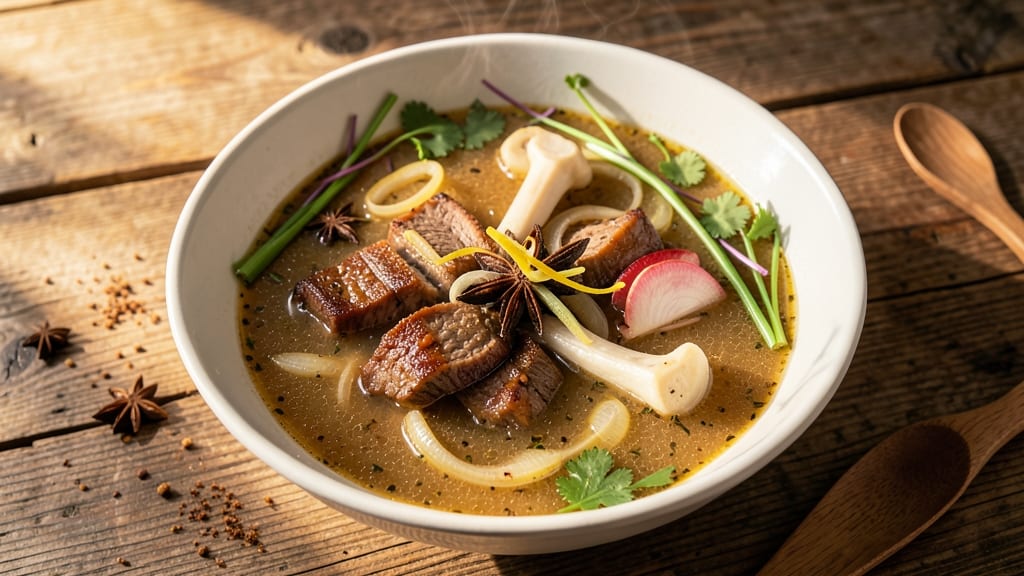
Asian beef bone soup transforms tough bones into a fragrant, collagen-rich broth that's the heart of any celebratory meal. 🌟 The secret lies in slow simmering—extracting deep umami flavors from marrow and connective tissue while balancing five-spice warmth with ginger's bright bite. This isn't just soup; it's a labor of love that rewards patience with silky beef chunks and a broth so rich it deserves a spoonful straight from the pot.
Traditional techniques like charring bones for depth and layering aromatics (star anise, cinnamon, fennel) create complexity most home cooks miss. I've streamlined the process without sacrificing authenticity—using a pressure cooker for 4 hours instead of 8—while keeping the soul intact.
The result? A broth so fragrant it fills your kitchen, and beef so tender it melts at the touch.
Serve this over steamed rice with quick-pickled vegetables and a drizzle of sesame oil for the full experience. The broth's natural richness makes it perfect for ladling over noodles or as a base for stir-fries the next day.
Every spoonful delivers layers of savory, spicy, and sweet—proof that slow cooking transforms humble ingredients into something extraordinary.
The beauty of this recipe is its versatility. Make a big batch for family gatherings or freeze portions for lazy weeknights. The broth alone is worth the effort, but the tender beef and aromatic vegetables elevate it to centerpiece status. Let's create something that tastes like home.
Ingredients for asian beef bone soup
Six pounds of bones and aromatic spices create this fragrant five-spice broth that tastes like home.
| Ingredient | Amount | Notes |
|---|---|---|
| Beef Bones (Marrow and Knuckle) 🦴 | 4 lb | Chopped into 2-inch pieces |
| Yellow Onions 🧅 | 2 whole | Quartered, charred for depth |
| Garlic Cloves 🧄 | 8 cloves | Smashed, not minced |
| Fresh Ginger 🌿 | 2 tbsp | Grated, skin-on for texture |
| Five-Spice Powder 🌶️ | 2 tsp | Authentic Chinese blend |
| Star Anise Pods 🌟 | 2 whole | Lightly crushed |
| Cinnamon Sticks 🍃 | 2 whole | 2-inch pieces |
| Fennel Seeds 🌾 | 1 tsp | Toasted for aroma |
| Carrots 🥕 | 4 whole | Cut into 3-inch chunks |
| Daikon Radish 🥬 | 2 lb | Cut into 2-inch pieces |
| Beef Chunks 🥩 | 2 lb | 2-inch cubes, silverskin removed |
| Sesame Oil 🫒 | 1 tbsp | For finishing |
| Kosher Salt 🧂 | 2 tsp | Adjust to taste |
| Black Peppercorns 🌶️ | 1 tsp | Crushed |
| Green Onions 🧅 | 4 whole | Sliced for garnish |
The bones are the foundation—marrow and knuckle deliver the richest collagen. Asian markets often have pre-chopped beef bones, but if you're buying whole, ask for the fatty cuts. Char the onions and ginger first (direct flame or broiler) for that smoky depth. Penzeys or Spicewalla for authentic five-spice—regular grocery store blends lack complexity. The daikon radish adds natural sweetness without overpowering the broth's savory base. Pro tip: rinse the bones briefly before charring to remove any surface impurities.
No five-spice powder? Mix 1 tsp each of cinnamon, cloves, fennel seeds, star anise, and Szechuan peppercorns for a DIY version. Sub daikon for regular white radish if needed, but you'll lose some of that mild sweetness. Running short on sesame oil? Toasted sesame seeds ground into paste work in a pinch. The beef chunks should be 2-inch cubes—any smaller and they'll overcook before the broth's ready. For extra richness, add 1/2 cup goji berries with the aromatics (they'll plump up beautifully).
This broth gets better with time—3-4 days in the fridge concentrates the flavors. Store in glass jars with a layer of oil on top to preserve freshness. Freeze in 2-cup portions for easy reheating. The beef chunks reheat beautifully—just warm gently with a splash of broth. Garnish with green onions and a drizzle of sesame oil right before serving. Leftovers? Use the broth as a base for stir-fries or rice bowls—it's that versatile.
Why You'll Love This Recipe
- Minimal Chopping Required: The onions and ginger just need rough slicing—no fancy dicing here. I swear, the bones do most of the work while you sip tea and let the five-spice powder work its magic.
- Rich Without Effort: That first sip? Pure satisfaction. The marrow bones melt into creamy pools while the knuckles stay tender, and the garlic-ginger base builds layers of warmth—no fancy technique, just deep flavor.
- Weeknight to Holiday: Same pot, endless uses. Make a big batch for lazy nights, then reheat for potlucks or family gatherings. The five-spice powder keeps it interesting, so it never feels repetitive.
- Budget Bone Broth: Cheaper than takeout, richer than store-bought. Those knuckle bones turn into gold—save the broth for noodles, stir-fries, or even a quick sauce. My wallet (and taste buds) thank me every time.
Step-by-step instructions for asian beef bone soup
Here's how to build a rich, aromatic broth that'll make your bones melt and flavors pop.
🔥 Step 1: Char the Onions for Deep Flavor
Heat a dry skillet over medium-high heat and add the 2 whole yellow onions, cut into quarters. Cook them cut-side down for 8-10 minutes until they develop deep black char marks and sweet caramelized edges. The char adds a smoky depth that's essential for authentic flavor.
Here's the thing—don't rush this step. You're looking for those dark spots where the natural sugars caramelize and the onions become almost crispy at the edges. Once charred, set them aside for now—they'll release their flavor into the broth later. I like to use tongs to flip them occasionally so they brown evenly on all sides.
🍳 Step 2: Build the Spice Base in the Broth Pot
In a large stockpot, combine the 4 lb beef bones (marrow and knuckle), 2 tbsp fresh ginger (skin-on), 8 smashed garlic cloves, 2 tsp five-spice powder, 2 whole star anise pods, 2 whole cinnamon sticks, and 1 tsp fennel seeds. Add 8 cups cold water—enough to just cover the bones.
Bring to a gentle boil over medium-high heat, then immediately reduce to a low simmer. Watch carefully—you want just tiny bubbles breaking the surface, not a rolling boil. This simmering process extracts collagen from the bones and develops the complex flavors. Skim off any foam that rises to the surface during the first 15 minutes—this ensures a clear broth.
🥘 Step 3: Simmer the Bones for Maximum Flavor
Simmer uncovered for 3 hours, maintaining that gentle simmer. Here's where the magic happens—the bones release their marrow and collagen, creating a naturally rich broth. I check the water level every 30 minutes and add hot water as needed to keep the bones covered.
After 3 hours, remove the bones with tongs and set aside to cool slightly. Strain the broth through a fine-mesh sieve into a clean pot, pressing on the solids to extract every last bit of flavor. Discard the solids. Return the strained broth to the pot and add the charred onions. Simmer for another 20 minutes to infuse their smoky goodness.
🍳 Step 4: Add Vegetables and Beef Chunks
Add the 4 whole carrots (cut into 3-inch chunks), 2 lb daikon radish (cut into 2-inch pieces), and 2 lb beef chunks (2-inch cubes) to the broth. Bring to a gentle boil, then reduce heat to medium-low and simmer uncovered for 1 hour.
Here's the trick—keep the broth at a steady simmer. You want the vegetables to soften but not disintegrate, and the beef to become fork-tender. The daikon radish should be easily pierced with a fork, and the beef should pull apart easily. Taste the broth and adjust seasoning with 2 tsp kosher salt and 1 tsp crushed black peppercorns as needed.
🔪 Step 5: Finish and Serve with Fresh Garnish
Remove the pot from heat and stir in the 1 tbsp sesame oil. This adds a nutty aroma and rich finish that ties all the flavors together. Ladle the soup into bowls, dividing the broth and vegetables evenly among 6 servings.
Garnish each serving with 4 whole green onions (sliced) and serve immediately. The soup should be steaming hot, with silky beef chunks that melt in your mouth and a broth so flavorful it practically tastes like it's been simmering for days. This is the kind of soup that gets better as leftovers—just reheat gently and add a splash of water if needed.
Pro Tips For Making Asian Beef Bone Soup
- CHAR THE BONES FIRST: Skip the slow simmer until the broth is ready—start with a 10-minute sear in a hot pot over medium-high heat. This cracks the marrow bones open and caramelizes the knuckles, giving your soup that deep, nutty richness from the get-go. (Yes, it’ll look messy, but that’s how you know it’s working.)
- SLICE GINGER THINLY: Forget the big chunks—peel and slice fresh ginger into paper-thin sheets (about 1/16-inch thick). They’ll infuse the broth faster and dissolve without bitterness, letting the five-spice powder shine instead of competing with raw ginger flavor.
- DON’T BOIL THE ONIONS: After browning the bones, toss in whole yellow onions (peeled) and simmer uncovered for 20 minutes until they’re soft and golden, not mushy. This turns them sweet and caramelized—no need to chop them up later, and the broth stays clear.
- ADD FIVE-SPICE LATE: I used to toss it in with the bones, but now I wait until the broth is halfway done (about 2 hours in). The spices need time to bloom properly, and adding them too early can make the broth taste flat or metallic. Sprinkle it in, stir, and let it steep for the last 30 minutes.
Troubleshooting this recipe
Broth Too Cloudy?
If your broth looks cloudy after simmering, it’s likely from impurities or proteins released from the bones. Skim off any foam during the first 15 minutes of simmering, and after straining, press the solids gently with a spoon to extract flavor without transferring sediment.
For extra clarity, add 1 tbsp apple cider vinegar during the last 30 minutes of simmering—it helps coagulate proteins for a cleaner broth. 🌟
Beef Not Tender Enough
Undercooked beef chunks are usually the culprit. Extend the simmering time by 30-60 minutes if needed, ensuring the broth stays at a gentle simmer. For tougher cuts, consider adding 1 tbsp baking soda to the broth (neutralize with vinegar later)—it tenderizes collagen.
Alternatively, braise the beef separately for 2 hours before adding it to the broth. 💪
Weak or Bland Flavor
Flavor fades when bones aren’t simmered long enough or spices aren’t toasted first. Lightly toast whole spices (star anise, cinnamon, fennel) in a dry pan for 1 minute before adding them to the broth.
For extra depth, char the bones in a hot skillet for 2-3 minutes per side before simmering. If the broth still tastes flat, add 1 tbsp fish sauce or 1 tsp soy sauce at the end for umami. 🌶️
Broth Too Salty
Over-salting is common when using store-bought broths or adding too much soy sauce. Dilute the broth by adding 1 cup hot water per quart and simmer for 10 minutes to even out the saltiness.
For a natural fix, add ½ cup cornstarch mixed with ¼ cup water to the broth, simmer for 5 minutes, then strain—this removes excess salt without thinning the broth. 🧂
Vegetables Mushy or Overcooked
Vegetables like daikon and carrots can turn to mush if simmered too long. Add them only 30 minutes before the beef is done, or use a steamer basket in the broth to cook them separately.
For firmer textures, blanch vegetables in boiling water for 2 minutes before adding them to the broth. 🥕
Pressure Cooker Shortcuts
If using a pressure cooker, reduce simmering time to 2-3 hours on high pressure, but monitor closely—overcooking can make the broth bitter. Skip the charring step (flavor develops differently under pressure) and add all spices and aromatics at the start.
For extra richness, add 1 cup red wine or 2 tbsp tomato paste with the bones. ⚡
Nutrition facts
Frequently asked questions
Can I substitute beef bones with other bones for this recipe?
While beef marrow and knuckle bones are ideal for their rich collagen, you can use pork trotter bones or chicken feet for a similar gelatinous texture. For chicken, increase simmering time to 4-5 hours to extract maximum flavor. Avoid fish bones—they create a different, lighter broth.
How do I make this soup vegetarian?
Replace beef bones with shiitake mushrooms (4 cups, sliced) and mushroom stems (for umami depth). Add 1 tbsp soy sauce and 1 tsp miso paste to mimic meaty flavors. Simmer for 3 hours instead of 2, and use agar-agar (1 tsp) to thicken the broth for that bone-like richness.
What's the best way to store leftovers?
Store the soup in glass containers with a layer of oil on top to preserve freshness. It keeps well in the fridge for 3-4 days or freezes for 3 months. For reheating, warm gently on low heat and add a splash of water if needed. The broth actually improves after 24 hours—flavors meld beautifully!
Can I make this soup in a slow cooker?
Yes! Use the same ingredients but cook on low for 8 hours or high for 5 hours. Skip charring (flavor develops differently) and add all spices at the start. For extra depth, brown the beef chunks in a skillet first. The slow cooker's gentle heat makes it foolproof for busy days.
What sides pair best with this soup?
Serve with steamed jasmine rice or hot glutinous rice to soak up the rich broth. Add quick-pickled cucumbers or kimchi for tangy contrast, and steamed bok choy for freshness. For a heartier meal, include wonton noodles or rice cakes in the broth.