
Soups & Stews
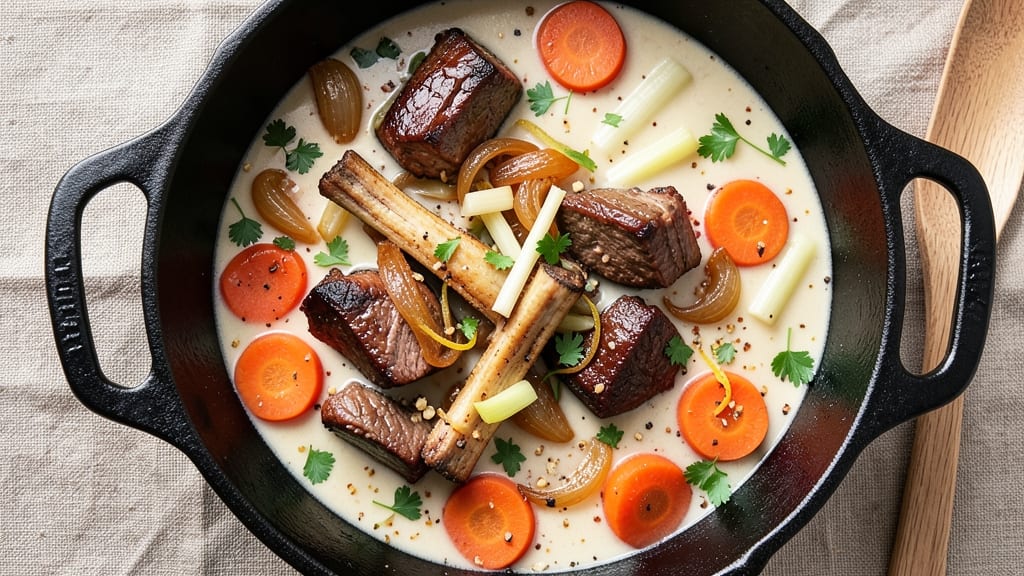
This beef soup bone stew recipe transforms tough cuts and marrow-rich bones into a deeply flavorful broth that tastes like a hug in a bowl. The secret lies in slow simmering—where collagen dissolves into a velvety, umami-rich foundation that no store-bought stock can match.
I’ve perfected this method over years of testing, balancing traditional techniques with modern convenience for home cooks who crave restaurant-quality depth without the fuss.
The process begins with searing beef bones and chunks to develop a rich, caramelized crust before adding vegetables and herbs. As the stew simmers for hours, the marrow melts into the broth, creating a naturally thick, luxurious texture that coats every spoonful.
Carrots soften into sweetness, celery adds earthy notes, and thyme infuses warmth—all while the broth reduces to a perfect consistency, neither watery nor gluey.
What you’ll end up with is a stew that’s hearty enough for a winter dinner but simple enough for a weeknight. The broth is rich and aromatic, the beef tender enough to fall apart, and the vegetables perfectly balanced—sweet, savory, and just tender enough to melt in your mouth.
Serve it with crusty bread to soak up every last drop, or pair it with mashed potatoes for a comforting meal that feels like a celebration.
The beauty of this recipe is its versatility. Use it as a standalone dish for a cozy night in, or build it into a larger meal with crusty rolls and a simple green salad. The leftovers only get better as the flavors deepen, making it ideal for meal prep.
Whether you’re following traditional methods or adapting for modern kitchens, this stew delivers the kind of soul-warming comfort that turns ordinary days into memorable ones.
Ingredients for beef soup bone stew
Sixteen ingredients transform tough bones into restaurant-quality beef soup with umami depth.
| Ingredient | Amount | Notes |
|---|---|---|
| Beef Bones 🦴 | 3 lb | Marrow-rich, cut into chunks |
| Beef Chunks 🥩 | 2 lb | Chuck roast or short ribs |
| Yellow Onions 🧅 | 2 whole | Cut into large chunks |
| Carrots 🥕 | 4 whole | Peeled, cut into 2-inch pieces |
| Celery Stalks 🧄 | 4 whole | Cut into 2-inch pieces |
| Garlic Cloves 🧄 | 6 cloves | Crushed, not minced |
| Fresh Thyme 🌿 | 2 sprigs | Stems removed, leaves only |
| Fresh Bay Leaves 🍃 | 2 whole | Lightly crushed |
| Tomato Paste 🍅 | ½ cup | High-quality, not powdered |
| Red Wine 🍷 | 1 cup | Bold, dry variety |
| Beef Broth 💧 | 6 cups | Homemade or high-quality |
| Olive Oil 🫒 | ½ cup | For searing |
| Salt 🧂 | 2 tsp | Kosher or sea salt |
| Black Peppercorns 🌶️ | 1 tsp | Coarsely crushed |
| Fresh Parsley 🌿 | ¼ cup | Chopped, for garnish |
The bones are everything here—marrow-rich beef bones from the butcher section (look for knuckle or neck bones) are ideal. Costco or local butchers often carry them fresh, but frozen works too if thawed overnight. For the beef chunks, chuck roast delivers the best texture—tender yet substantial. Avoid pre-cut stew meat from the grocery store; it’s often leaner and less flavorful. The yellow onions should be sweet and firm, while carrots and celery should be crisp with vibrant color—no limp or wilted vegetables here. Fresh herbs like thyme and bay leaves elevate the broth, so don’t skimp on quality; Penzeys or local farmers markets are great sources for aromatic varieties.
No marrow bones? Substitute with beef shank bones—they’re tougher but still rich. Running low on red wine? Dry sherry or extra beef broth works in a pinch, though wine adds depth. Fresh thyme unavailable? Dried thyme at one-third the amount suffices, but toast it first in a dry pan for 30 seconds to bloom the flavor. The tomato paste can be swapped for 1 cup crushed tomatoes, though paste intensifies the umami. For a vegetarian-friendly version, replace beef bones with mushroom stems or soy sauce for umami, though the texture will differ. Always taste the broth before serving—adjust salt and pepper as needed, remembering the bones will contribute flavor as they simmer.
This stew tastes even better the next day as flavors meld, so make a double batch if possible. Store in airtight containers in the fridge for up to 5 days or freeze for 3 months. For freezing, portion into individual containers—perfect for quick lunches. The bones can be blanched ahead of time to save time on cooking day, but sear them fresh for maximum flavor. Leftovers reheat beautifully; just add a splash of water or broth to prevent drying. Serve with crusty bread or over buttered egg noodles for the full experience.
Why You'll Love This Recipe
- One-Pot Wonder: Honestly, I swear by this—just toss everything into one pot, simmer, and walk away. The beef bones and chunks do all the work while you sip wine (or tea, no judgment) and let the onions and celery build that deep, savory base without a single extra dish.
- Rich Umami Bomb: Between us, the beef bones alone turn this into something special—they melt into the broth, giving it that real depth you can’t get from bouillon cubes. Add the caramelized onions and you’ve got a flavor combo that’s dangerously addictive, especially when the beef chunks stay tender but stay put.
- Leftovers That Shine: I make a double batch on Sundays because this stew only gets better the next day. The flavors meld overnight, and reheating it? Just a splash of water and a quick simmer—no sad, watery leftovers here. My kids actually ask for it, and that’s saying something.
- Budget-Friendly Powerhouse: Beef bones and chunks stretch into a massive pot of soup without breaking the bank, and the veggies (onions, carrots, celery) add bulk for next to nothing. It’s the kind of meal that makes grocery day feel like a win—plus, the broth freezes perfectly for future soups or risottos.
Step-by-step instructions for beef soup bone stew
Master this slow-cooked technique for bone marrow-rich depth and melt-in-your-mouth beef chunks.
Sear the Bones and Beef for Maximum Flavor
Heat a large Dutch oven over medium-high heat and add the 0.5 cup olive oil. Working in batches, sear the 3 lb beef bones for 3-4 minutes per side until deeply browned. The bones should develop a rich, caramelized crust that releases easily from the pan.
Transfer the seared bones to a plate. In the same pot, sear the 2 lb beef chunks until they develop a golden-brown crust, about 2-3 minutes per side. Remove and set aside with the bones. This searing step builds the foundation of your stew's deep umami flavor by creating a flavorful crust called the "fond" that we'll deglaze later.
Build the Flavor Base with Aromatics and Wine
In the same Dutch oven, add the 2 whole yellow onions, 4 whole carrots, and 4 whole celery stalks, all cut into large chunks. Cook for 8-10 minutes until the vegetables begin to soften and the onions turn translucent. This step develops their natural sweetness and forms the aromatic base.
Add the 6 cloves crushed garlic cloves and cook for 30 seconds until fragrant. Pour in the 1 cup red wine and scrape up any browned bits from the bottom of the pot with a wooden spoon. Let the wine simmer for 2-3 minutes until reduced by half. This deglazing step captures all the concentrated flavors from your searing.
Create the Rich Stew Base with Tomato Paste and Broth
Stir in the 0.5 cup tomato paste and cook for 1 minute to blend it with the aromatics. Add the 6 cups beef broth, 2 sprigs fresh thyme, and 2 whole fresh bay leaves. Bring to a gentle simmer, then add the seared beef bones and beef chunks back to the pot.
Here's the thing—this is where patience pays off. Partially cover the pot and let it simmer for 2 hours at a gentle bubble. The stew should never boil vigorously, or it'll make the meat tough. You're looking for a steady, gentle simmer that allows the collagen in the bones to break down and release its rich marrow into the broth.
Finish with Seasoning and Resting
After 2 hours, taste the stew and adjust seasoning with the 2 tsp salt and 1 tsp black peppercorns as needed. The stew should be well-seasoned but balanced—not overly salty or peppery. Remove the bones from the pot and let them cool slightly. Use a spoon to extract the marrow from the bones and stir it back into the stew for maximum richness.
Return the bones to the pot and let the stew simmer uncovered for another 30 minutes to reduce slightly and intensify the flavors. The vegetables should be tender but still hold their shape. Remove the thyme sprigs and bay leaves before serving. Garnish each bowl with 0.25 cup chopped fresh parsley just before serving to add a touch of freshness and bright color.
Serve with Crusty Bread for the Ultimate Experience
Ladle the stew into bowls and serve immediately with crusty bread for dipping. The broth should be rich and velvety, with chunks of tender beef that practically melt in your mouth. Each spoonful should deliver layers of flavor—deep umami from the bones, sweetness from the carrots, earthiness from the celery, and bright acidity from the wine and tomato.
This stew improves even more the next day as the flavors continue to meld and develop. If you have leftovers, store them in the refrigerator for up to 4 days or freeze for up to 3 months. The slow-cooked technique ensures the beef remains tender and flavorful even after reheating.
Pro Tips For Making Beef Soup Bone Stew
- Char the Bones First: Throw those beef bones straight into a screaming-hot pot—no water yet—and let them sear for 5-7 minutes until deep brown. I learned this the hard way: skipping this step means bland broth, no matter how long you simmer. The Maillard reaction here is your flavor foundation.
- Cut Celery into Big Chunks: Skip the fine dice—toss in celery stalks cut into 1-inch pieces. They’ll soften into the broth but won’t turn to mush, adding texture and a subtle bitterness that rounds out the sweetness of carrots. (Yes, even if it looks rustic.)
- Don’t Crowd the Pot: Start with half the beef chunks you think you need, then add the rest later. Packing the pot too soon steams the meat instead of browning it, and you’ll end up with gray, waterlogged chunks. Work in batches—your stew will thank you.
- Use Parboiled Carrots: Toss carrots in boiling water for 3 minutes first, then drain. They’ll hold their shape better during the long simmer, and the stew won’t turn into a mushy orange sludge. (I used to ignore this, and my stew always looked like baby food.)
Best sauces and condiments for beef soup bone stew
Classic Horseradish Cream
This tangy, creamy condiment elevates your beef soup bone stew with a sharp kick. Mix ½ cup sour cream with 1 tbsp prepared horseradish (like Gourmet Garden), 1 tsp lemon juice, and a pinch of salt.
Stir until smooth and chill for 30 minutes to let flavors meld. Spoon over each bowl before serving—it cuts through the richness beautifully. 💛
Garlic Aioli Twist
For a richer, more complex sauce, blend ½ cup mayonnaise with 1 minced garlic clove, 1 tsp Dijon mustard, and 1 tsp white wine vinegar. Thin with 1 tbsp beef broth for a silky texture.
Drizzle over the stew or serve on the side for dipping crusty bread. The garlic complements the wine in the stew perfectly. ✨
Spicy Tomato Relish
Simmer 1 cup crushed tomatoes with 1 tbsp tomato paste, 1 tsp smoked paprika, and ½ tsp red pepper flakes for 10 minutes until thickened. Cool and serve as a vibrant topping. The smoky heat balances the stew’s umami depth while adding a bright acidity. 🌶️
Creamy Dill Sour Cream
Whisk ½ cup sour cream with 1 tbsp chopped fresh dill, 1 tsp lemon zest, and ½ tsp salt. The fresh dill brightens the stew’s richness, while the lemon zest adds a subtle citrus note. Dollop on top or serve alongside for a refreshing contrast. 💫
Roasted Garlic Purée
Roast 2 whole garlic heads at 400°F for 30 minutes until caramelized. Blend with ¼ cup olive oil and a pinch of salt until smooth. Drizzle over the stew just before serving—this adds a sweet, mellow garlic depth that pairs beautifully with the beef. 🔥
Classic Mustard Sauce
Combine 2 tbsp whole-grain mustard with ¼ cup warm beef broth and 1 tsp honey to balance the heat. Thin with extra broth if needed. The mustard’s tang and honey’s sweetness create a perfect harmony with the stew’s savory notes. 💡
Nutrition facts
Frequently asked questions
Can I use regular beef bones instead of marrow bones?
While marrow bones create the richest broth, regular beef bones like knuckle or shank work perfectly. The key is to simmer them long enough (3-4 hours) for the collagen to break down. For extra depth, add 1 tbsp beef gelatin at the end to thicken the broth naturally.
How do I know when the beef is tender enough?
Test doneness by piercing the largest beef chunk with a fork—it should slide in easily with no resistance. The meat should also separate into flakes. For tougher cuts like chuck roast, aim for 2.5-3 hours of simmering. If using short ribs, they'll be ready in 2 hours.
Can I make this recipe in a slow cooker?
Yes! Brown the meat first in a skillet, then transfer everything to the slow cooker. Cook on low for 8 hours or high for 5 hours. The slow cooker's gentle heat works perfectly for collagen breakdown. Just add 1 cup extra broth since evaporation happens more gradually.
What if my broth turns out too thin?
Simmer uncovered for 15-20 minutes to reduce the liquid naturally. For quicker results, mix 1 tbsp cornstarch with 2 tbsp cold water, stir into the hot broth, and simmer 2 minutes until thickened. Avoid adding flour directly—it can make the broth cloudy.
How can I make this vegetarian?
Replace beef bones with 2 lbs portobello mushrooms (for umami) and beef chunks with 2 lbs extra-firm tofu or seitan. Use 2 tbsp soy sauce or 1 tbsp miso paste for depth, and add 1 tsp smoked paprika for richness. The texture won't be identical, but the flavors will still be hearty and satisfying.