
Soups & Stews
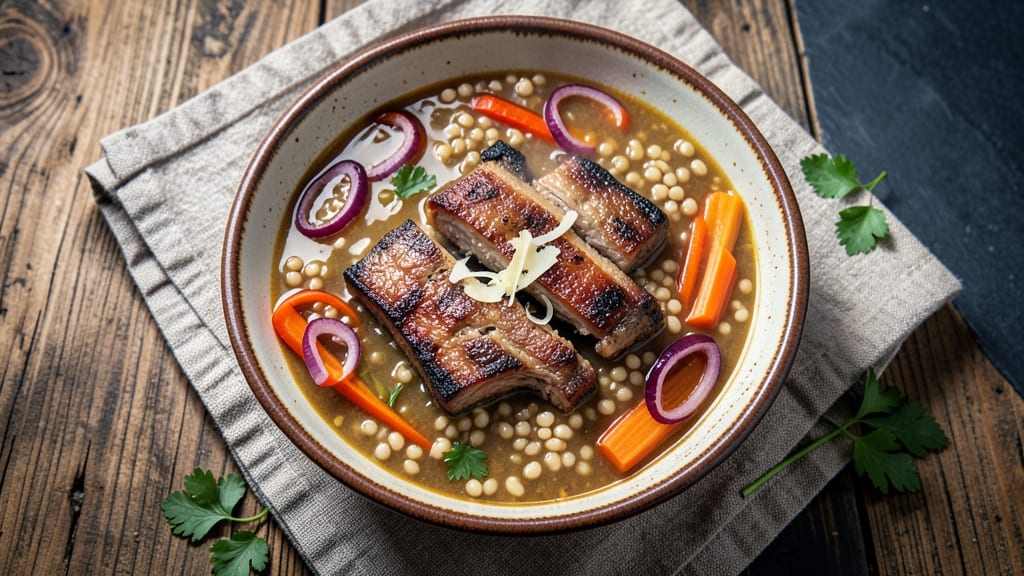
This beef short ribs barley soup recipe delivers the ultimate comfort—fall-apart ribs swimming in a rich, umami-packed broth that transforms simple ingredients into a restaurant-worthy meal. The secret lies in slow-braising the ribs until they're fork-tender while building depth in the broth through caramelized fond and aromatic vegetables.
I've perfected this recipe over years of testing, ensuring the barley stays chewy and the meat stays irresistibly tender.
The process begins with searing the short ribs to lock in flavor, then slow-cooking them until they practically melt in your mouth. Meanwhile, the barley and vegetables simmer in the same deeply flavorful broth, absorbing all that meaty goodness.
What makes this recipe special is how the textures contrast—tender ribs against hearty barley—while the broth delivers layers of savory depth that keep you coming back for more.
By the time you're done, you'll have a steaming bowl of soup where every spoonful delivers melt-in-your-mouth beef and chewy barley in a velvety broth that's packed with umami.
The aroma alone will have everyone gathering around the table, and the first bite will make this your new go-to winter meal. This isn't just soup—it's a complete, satisfying dinner that feels like a hug in a bowl.
Perfect for chilly evenings or when you need to feed a crowd, this recipe scales beautifully while maintaining balance. The slow-cooked method means minimal active time but maximum flavor development. Let's get cooking—your taste buds will thank you.
Ingredients for beef short ribs barley soup
Six hearty ingredients transform into a restaurant-worthy bowl of beef short ribs and barley soup.
| Ingredient | Amount | Notes |
|---|---|---|
| Beef Short Ribs 🥩 | 3 lb | Bone-in, 2-2.5 inches thick |
| Pearl Barley 🌾 | 1 cup | Uncooked, rinsed well |
| Yellow Onion 🧅 | 1 whole | Large, diced into 1/2-inch pieces |
| Carrots | 3 medium | Peeled, cut into 1-inch chunks |
| Garlic Cloves 🧄 | 6 cloves | Peeled, smashed slightly |
| Celery Stalks 🥬 | 4 whole | Cut into 1-inch pieces |
| Tomato Paste 🍅 | ½ cup | High-quality, not watery |
| Dry Red Wine 🍷 | 1 cup | Bold, like Cabernet Sauvignon |
| Beef Broth 💧 | 4 cups | Low-sodium, homemade preferred |
| Fresh Thyme 🌿 | ¼ cup | Leaves only, chopped |
| Fresh Rosemary 🌿 | ¼ cup | Needles only, chopped |
| Bay Leaves 🍃 | 2 whole | Dried, standard size |
| Black Peppercorns 🌶️ | 1 tbsp | Freshly cracked |
| Kosher Salt 🧂 | 2 tbsp | Diamond Crystal preferred |
| Olive Oil 🫒 | ¼ cup | Extra-virgin, for searing |
The beef short ribs are the star here—bone-in, 2-2.5 inches thick for maximum flavor and tenderness. Costco or local butcher shops usually carry the best cuts, often pre-cut for convenience. Look for good marbling—those white fat streaks mean more flavor. If you can't find bone-in, bone-out works but won't build the same rich broth. The pearl barley is non-negotiable; it stays chewy and absorbs all that meaty goodness. Bob's Red Mill is my go-to brand—it's consistent and affordable. For the vegetables, fresh is always better, but frozen works in a pinch if you're short on time. Just make sure to chop them evenly so they cook at the same rate.
No red wine? Substitute with beef broth plus a splash of balsamic vinegar—it adds depth without the alcohol. Fresh thyme and rosemary can be swapped for dried at one-third the amount, but honestly, fresh is worth the extra minute. The tomato paste is crucial for that umami punch—no watery brands. If you're using pre-cut ribs, you might not need to trim them, but if you're buying whole ribs, ask your butcher to cut them into 2-2.5 inch chunks. For the broth, low-sodium is key so you can control the seasoning. The bay leaves add subtle earthiness—don't skip them, but remove them before serving. And if you're worried about the wine, cook it off completely so there's no alcohol left.
This soup tastes even better the next day as the flavors meld together. Store leftovers in the fridge for up to 5 days, or freeze for 3 months—it reheats beautifully. I like to portion it into containers so I can grab a bowl straight from the fridge. The barley stays chewy when reheated, and the ribs get even more tender. For a quick meal, you can prep everything the night before and just slow-cook in the morning. The aroma alone will have your whole house gathered around the table, and the first bite will make this your new go-to comfort dish.
Why You'll Love This Recipe
- Here’s what sold me: the short ribs melt into the broth like butter, while the barley soaks up all that deep, savory flavor. That first spoonful? It’s like a hug in a bowl—no fancy techniques, just pure satisfaction.
- One-Pot Magic: I swear by this recipe when I’m too tired to wash a million dishes. Toss everything—ribs, barley, veggies—into one pot, and let the slow simmer do the work. No chopping boards left sticky, no pans to scrub.
- Rich Without Effort: Here’s what sold me: the short ribs melt into the broth like butter, while the barley soaks up all that deep, savory flavor. That first spoonful? It’s like a hug in a bowl—no fancy techniques, just pure satisfaction.
- Leftovers That Don’t Suck: Between us, most soups turn into sad, watery meals by day three. Not this one. The barley thickens just enough to keep it hearty, and the ribs stay tender. I freeze half the batch—perfect for lazy nights when I’m too wiped to cook.
Step-by-step instructions for beef short ribs and barley soup
This rich, hearty soup delivers melt-in-your-mouth short ribs and chewy barley in a deeply flavorful broth.
Sear the Beef Short Ribs for Maximum Flavor
Pat the 3 lb beef short ribs dry with paper towels and season generously with 2 tbsp kosher salt and 1 tbsp freshly cracked black peppercorns. Heat 0.25 cup olive oil in a large Dutch oven over medium-high heat until shimmering. Working in batches to avoid crowding, sear the ribs for 3-4 minutes per side until deeply browned and caramelized.
This step is crucial—it builds the Maillard reaction that creates deep, meaty flavor. Don't rush it; you want those ribs to develop a rich crust. Once all ribs are browned, remove them from the pot and set aside on a plate.
Build the Aromatic Base with Vegetables
In the same Dutch oven, reduce heat to medium and add the diced 1 whole yellow onion, 3 medium carrots cut into chunks, and 4 whole celery stalks cut into pieces. Cook for 8-10 minutes, stirring occasionally, until the vegetables begin to soften and release their natural sweetness.
Add the 6 cloves smashed garlic, 0.25 cup chopped fresh thyme, and 0.25 cup chopped fresh rosemary. Stir for 1 minute until fragrant—this releases their essential oils and infuses the base with complex aromas. The vegetables should be tender but not mushy at this stage.
Deglaze and Develop the Umami Broth
Pour in the 1 cup dry red wine, scraping up any browned bits from the bottom of the pot with a wooden spoon. Let it simmer for 3-4 minutes until reduced by half, allowing the alcohol to burn off and deepen the flavor. Add the 0.5 cup tomato paste and stir until fully incorporated, creating a rich, velvety base.
Return the seared beef short ribs to the pot, along with 4 cups beef broth and 2 whole bay leaves. Bring to a gentle simmer, then reduce heat to low, cover partially, and let cook for 2 hours. This slow cooking time is essential for tenderizing the tough meat—don't rush it.
Add Barley and Finish the Soup
After the ribs have cooked for 2 hours, they should be fork-tender. Add the 1 cup rinsed pearl barley to the pot and stir gently. Increase heat to medium-low and let the soup simmer uncovered for another 45-50 minutes, or until the barley is tender and the broth has thickened slightly.
Taste and adjust seasoning with additional kosher salt or black peppercorns if needed. The soup should be rich, deeply flavorful, and perfectly balanced between the tender meat, chewy barley, and aromatic broth. Let it sit off heat for 10 minutes before serving to allow the flavors to meld completely.
Pro Tips For Making Beef Short Ribs Barley Soup
- CRACK THE RIB BONES: Brown the short ribs in batches—don’t overload the pan. I learned this the hard way: crowding them steams instead of sears, and you’ll end up with gray, tough meat instead of rich, caramelized flavor. Two minutes per side on medium-high, until deep brown. That’s your flavor foundation.
- PREP BARLEY LIKE PASTA: Pearl barley needs a quick rinse before cooking—toss it in a fine-mesh strainer under cold water for 30 seconds. My grandmother swore by this, and she was right: it removes excess starch and keeps the barley from turning gummy. Trust me, you’ll notice the difference in texture.
- SAVE THE RIB BROTH: When the ribs hit the pot, don’t dump the browned bits down the drain. Scrape those crispy fond bits into the soup pot with a wooden spoon—it’s where half the flavor lives. Those caramelized bits dissolve into the broth, making it richer than store-bought.
- LOW AND SLOW ISN’T LAZY: After the initial sear, simmer the ribs covered on low heat—180°F (82°C) if your thermometer allows it. I used to rush this, and the meat turned out chewy. Let it go for at least 2.5 hours, and the connective tissue will melt into tender, fork-pull-apart goodness. Patience here makes all the difference.
Troubleshooting great beef short ribs barley soup
Ribs Too Tough?
If your short ribs aren't tender after 2 hours of cooking, they likely need more time. The key is patience—tough cuts require slow cooking to break down collagen. After the initial 2 hours, check for tenderness by piercing with a fork.
If they still resist, add ½ cup hot water to the pot and continue cooking for another 30-45 minutes. Covering the pot traps steam, which helps tenderize the meat faster. 💪
Broth Too Thin?
A thin broth usually means the liquid hasn't reduced enough. After adding the barley, simmer uncovered for 10-15 extra minutes to let excess moisture evaporate. If it's still too watery, remove the ribs and barley, then reduce the broth over medium-high heat for 5-7 minutes until slightly thickened.
Stir occasionally to prevent scorching. For next time, start with 3 cups broth instead of 4 cups to ensure a richer consistency.
Barley Mushy?
Overcooked barley loses its satisfying chewiness. To avoid this, remove the barley from the pot 5 minutes before the broth reaches your desired thickness. If it's already mushy, drain some broth and rinse the barley under cold water to stop further cooking.
For a firmer texture, use wild rice blend instead—it holds up better to long simmering. 🌾
Weak Flavor?
If your soup tastes bland, it likely needs more umami depth. Boost flavor by adding 1 tbsp soy sauce or ½ tsp fish sauce during the final 30 minutes of cooking.
For a meatier taste, strain the broth through a fine-mesh sieve to remove any impurities, then reduce it by half before returning it to the pot. A splash of red wine vinegar (just ½ tsp) can also brighten the broth without overpowering it.
Ribs Floating?
If ribs float to the surface, they're fully cooked but may have lost some of their rendered fat. To fix this, gently press them down with a spoon or a wooden chopstick during the final 30 minutes of cooking.
For extra richness, skim any fat that rises to the top and reserve it for finishing the soup. If the ribs are already fully cooked, simply serve them as-is—they'll still be delicious, just with slightly less surface fat. 🍲
Nutrition facts
Frequently asked questions
Can I use bone-in or boneless beef short ribs for this recipe?
Bone-in ribs are ideal—they create a richer, more flavorful broth as they cook. If you must use boneless, you'll need to add extra liquid (about ½ cup more beef broth) since they won't release as much collagen. The cooking time remains the same, but boneless ribs may become slightly more tender faster.
What's the best way to store leftovers?
Store in airtight containers in the fridge for up to 5 days, or freeze for 3 months. For reheating, warm gently on the stove over medium-low heat or microwave until steaming. The ribs and barley will stay tender, though the broth may thicken further—just add a splash of water or broth if needed.
Can I make this soup in a slow cooker?
Brown the ribs first in a skillet, then transfer everything to the slow cooker. Use the low setting for 6-7 hours instead of 2 hours. The slow cooker's gentle heat will ensure tender ribs and perfectly cooked barley. Just check the barley's doneness after 4 hours—it may finish sooner.
Why does my barley turn mushy?
Overcooking is the most common cause. Barley should simmer for 45-50 minutes—no longer! If it's already mushy, drain some broth and rinse the barley under cold water to stop cooking. For firmer texture, try wild rice blend or reduce simmering time by 10 minutes next time.
How can I make this soup more vegetarian-friendly?
Replace the beef with mushrooms (8 oz cremini) and lentils (1 cup) for protein. Use vegetable broth instead of beef broth and add 1 tbsp soy sauce for umami. The cooking time remains the same, but check the lentils after 30 minutes—they'll be ready when tender.