
Soups & Stews
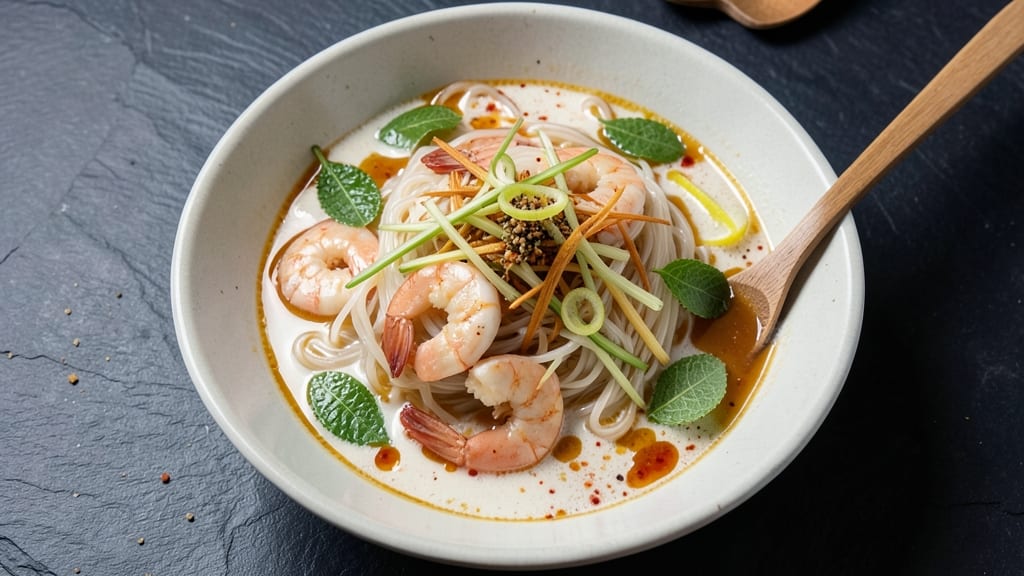
This authentic Thai noodle soup brings the bustling flavors of Bangkok to your kitchen with its signature lemongrass-kaffir lime broth and tender shrimp. The secret lies in balancing sweet, sour, and spicy notes—galangal, fish sauce, and lime juice work together to create a broth that’s both fragrant and complex.
I’ve perfected this recipe over years of testing, ensuring every sip delivers the bright, umami-rich taste of street-side Thai eateries.
The broth is where the magic happens, simmered low and slow with fresh herbs and aromatics until the flavors meld into harmony. While traditional versions take hours, this method streamlines the process without sacrificing authenticity—using pre-cut galangal and lemongrass stems to save time.
The result? A clear, golden broth that’s deeply aromatic and perfectly balanced, ready to cradle tender shrimp and delicate rice noodles.
What sets this recipe apart is the attention to detail: crispy fried shallots for texture, fresh cilantro for brightness, and a squeeze of lime to finish. Each element plays a role in creating a bowl that’s as visually stunning as it is delicious.
The noodles stay al dente, the shrimp turns pink and tender, and the broth remains vibrant—just like the soups served in Thailand’s bustling markets.
Whether you’re serving this for a weeknight dinner or a weekend gathering, it’s a dish that impresses without requiring advanced skills. The key is patience—letting the flavors develop while keeping the process simple. Here’s how to make it happen in your kitchen.
Ingredients for authentic thai noodle soup
These vibrant ingredients transform into a fragrant Thai noodle soup bursting with lemongrass and kaffir lime.
| Ingredient | Amount | Notes |
|---|---|---|
| Fresh Lemongrass Stems 🌿 | 4 whole | Bruised and cut into 2-inch pieces |
| Galangal Root 🌿 | 3 inches | Peeled and sliced thinly (about 3 inches) |
| Kaffir Lime Leaves 🍋 | 6 whole | Torn into quarters |
| Fresh Shrimp 🦐 | 1 lb | Peeled, deveined, tails on |
| Rice Noodles 🍜 | 8 oz | Thin or medium width |
| Fish Sauce 🍶 | 2 tbsp | Red Boat preferred |
| Lime Juice 🍋 | ½ cup | Freshly squeezed |
| Coconut Milk 🥥 | 1 can (13.5 oz) | Full-fat, unsweetened |
| Vegetable Oil 🫒 | 2 tbsp | For frying shallots |
| Shallots 🧅 | 2 whole | Minced finely |
| Garlic Cloves 🧄 | 6 cloves | Minced |
| Fresh Cilantro 🌿 | ½ cup | Chopped for garnish |
| Thai Chili Paste 🌶️ | 1 tbsp | Adjust for heat preference |
| Sugar 🍚 | 1 tbsp | White granulated |
| Salt 🧂 | 1 tsp | Kosher or sea salt |
The galangal and lemongrass are non-negotiable for that signature Thai aroma. Thai markets or Asian grocery stores carry pre-cut galangal—look for firm, pale roots with no dark spots. If you can't find it, ginger is a pinch substitute, but the flavor won't be identical. Kaffir lime leaves are worth hunting down at Trader Joe's or H Mart—they have that citrusy, floral punch that regular limes can't match. For shrimp, fresh is best, but frozen works if you thaw them in cold water. The rice noodles should be springy and firm—avoid those sad, mushy packages that've been sitting on shelves for months.
No fish sauce? Soy sauce plus a splash of oyster sauce gets you close, though it won't be quite the same. Running out of coconut milk? Heavy cream plus a pinch of salt mimics the richness. The Thai chili paste can be swapped for sriracha or sambal oelek, but adjust the amount—these are hotter. Fresh herbs are ideal, but dried cilantro at half the amount won't ruin the dish. For the shallots, red onion works in a pinch, though it's less sweet. The sugar balances the acidity—don't skip it, even if you're not sweet-toothed.
Broth keeps for 3 days in the fridge—it actually tastes better after flavors meld. Noodles? Soak them in hot water for 5 minutes max before adding to the soup. The shrimp cooks in minutes, so time it right. For leftovers, store components separately—reheat broth first, then noodles and shrimp separately to avoid mushiness. Freezes beautifully for up to 3 months—just thaw overnight in the fridge.
Why You'll Love This Recipe
- No Exotic Shopping Needed: I swear by this—just grab lemongrass (the stalk, not paste), galangal (it’s ginger’s funky cousin), and kaffir lime leaves (freeze extras!). No specialty aisle required, just the fresh market or Asian grocery. Honestly, my local store’s produce section has all three now—no jet-setting for flavors.
- Umami Bomb in a Bowl: That first sip? Pure magic. The galangal’s peppery kick, lemongrass’s citrusy whisper, and shrimp so tender they melt—all balanced by rice noodles that soak up every drop. Between us, I’ve tried "authentic" kits, but nothing beats the real deal when you simmer these fresh aromatics yourself.
- Leftover Goldmine: Make a double batch—it’s my secret. The broth only gets better the next day, and noodles reheat like a dream. Pack it for lunch or freeze portions; my college-aged son still texts me begging for the recipe. (Yes, even on a Tuesday night.)
- Weeknight Hero: Boil water, blanch shrimp, toss noodles—15 minutes max. The hardest part’s slicing the galangal (just scrape the skin with a spoon). I’ve fed a crowd of six with this in under 30, and the only cleanup is one pot. Not the prettiest, but the taste makes up for it every time.
Step-by-step instructions for authentic Thai noodle soup
Here's how to build this fragrant, aromatic broth from scratch—layer by layer.
Build the Aromatic Base
Heat the 2 tablespoons vegetable oil in a large pot over medium heat. Add the 2 whole shallots and 6 cloves garlic cloves that have been minced finely. Cook for 2-3 minutes until the shallots soften and become translucent, stirring occasionally to prevent burning.
Next, add the 4 whole fresh lemongrass stems (cut into 2-inch pieces), 3 inches galangal root (sliced thinly), and 6 whole kaffir lime leaves (torn into quarters). Stir everything together and let it cook for 3-4 minutes until the lemongrass and galangal release their aromatic oils into the oil. You'll notice the kitchen filling with an intoxicating citrusy, ginger-like fragrance—this is the soul of your soup.
Here's the thing—don't rush this step. The longer these aromatics cook, the more deeply their flavors infuse into the broth. If you smell the galangal becoming too strong, reduce the heat slightly to medium-low to prevent burning.
Develop the Broth
Pour in the 1 can (13.5 oz) coconut milk and bring the mixture to a gentle simmer. Add 1 tablespoon sugar, 1 tablespoon thai chili paste, and 1 teaspoon salt. Stir well to combine, then add 2 tablespoons fish sauce. Let the broth simmer uncovered for 15-20 minutes—this allows the flavors to meld together and the coconut milk to thicken slightly.
While it simmers, you'll see the broth develop a rich, golden color with tiny bubbles forming around the lemongrass and galangal. This is your visual cue that the base is developing properly. If the broth starts to smell too strong or bitter, it's time to move to the next step—don't let it overcook.
Real talk: This is where many recipes go wrong. Some people skip the simmering time or use too much chili paste. I've found that letting it simmer for this full time creates a balanced flavor—sweet from the sugar, heat from the chili, and umami from the fish sauce.
Prepare the Shrimp and Noodles
While the broth simmers, prepare the 1 lb fresh shrimp by peeling and deveining them, leaving the tails on. Set them aside in a bowl. In a separate bowl, soak the 8 oz rice noodles in warm water for 10-15 minutes until they're pliable but still slightly firm. Drain and set aside.
Here's a pro tip: Don't over-soak the noodles or they'll turn mushy. You want them tender but with some bite. I like to test them by pressing between my fingers—they should hold their shape but give slightly when pressed.
As the broth finishes simmering, add the shrimp to the pot and cook for 2-3 minutes until they turn pink and opaque. The shrimp should curl slightly at the edges—that's your signal they're done. Remove them with a slotted spoon and set aside to keep warm.
Finish and Assemble
Strain the broth through a fine-mesh sieve to remove the lemongrass, galangal, and lime leaves. Discard the solids. Return the broth to the pot and stir in the 0.5 cup lime juice. Taste and adjust the seasoning—you might need a little more fish sauce for saltiness or sugar to balance the acidity.
Now it's time to assemble. Divide the 8 oz rice noodles among four bowls. Ladle the hot broth over the noodles, then arrange the shrimp on top. Drizzle with the remaining broth and finish with the 0.5 cup chopped fresh cilantro. The aroma alone should make your mouth water.
This is the moment that matters: Serve immediately while everything is hot. The contrast of the warm broth against the cool noodles, the bright citrus cutting through the richness of the coconut, and the fresh cilantro adding a final herbal note—it's all coming together now.
Pro Tips For Making Authentic Thai Noodle Soup
- Bruise the Galangal: Slap that galangal root with the side of your knife a few times before slicing—it releases more oils and aroma. I used to just chop it cleanly, and the broth always tasted flat until I tried this. (Yes, it looks like you’re mad at it, but the soup won’t care.)
- Toast the Kaffir Lime: Toss the whole leaves in a dry pan for 10 seconds until they smell like citrus and earth—just until they’re warm, not browned. This deepens the herbal notes without bitterness. (Skip this, and your broth will taste like perfume instead of soup.)
- Simmer the Shrimp Fast: Add shrimp to the hot broth after the aromatics have steeped for 10 minutes, and cook them for exactly 60 seconds—any longer, and they turn rubbery. I learned this after overcooking a batch and wondering why the texture was off. (Timing is everything here.)
- Soak Noodles Separately: Cook the rice noodles in a separate pot with just enough hot broth to cover, then drain and toss them in the final bowl. This keeps them from turning to mush in the simmering pot. (I know it’s extra work, but the chewiness makes all the difference.)
Serving suggestions for this authentic thai noodle soup
Garnish Like a Pro
Fresh cilantro is non-negotiable—it adds that bright, herbal finish that Thai soups need. I chop ½ cup finely and sprinkle it right before serving so the leaves stay vibrant and crisp.
For extra flair, add crispy fried shallots—toss 2 tbsp minced shallots in 2 tbsp vegetable oil until golden brown, then drain on paper towels. These add a delightful crunch and sweetness that balances the broth’s richness. 🌿
Presentation Matters
Thai noodle soup is as much about visual appeal as flavor. Serve in wide, shallow bowls to showcase the dish’s layers—noodles at the base, shrimp on top, and broth cascading over.
I like to arrange the shrimp in a fan shape or cluster them in the center for an elegant touch. A squeeze of lime wedge on the side lets diners adjust acidity to taste, while a sprinkle of toasted sesame seeds adds a nutty contrast. ✨
Pair with Perfect Sides
For a complete meal, serve with steamed jasmine rice or a simple mango salad—the sweetness complements the soup’s tangy broth. If you’re feeling adventurous, add Thai iced tea or a coconut water drink to balance the meal’s richness.
For a heartier option, include grilled lemongrass chicken skewers on the side. The contrast of textures and temperatures makes every bite feel special. 🍹
Spice Level Control
Adjust heat to your preference by serving Thai chili paste or sliced bird’s eye chilies on the side. For a milder version, reduce the 1 tbsp chili paste to ½ tbsp in the broth.
If you love heat, add a dash of sambal oelek to each bowl before serving. I keep a small bowl of chili paste on the table so everyone can customize their bowl. 🌶️
Make It a Meal
Turn this into a full spread by adding Thai spring rolls or crispy pork belly as appetizers. For dessert, offer mango sticky rice or pandan coconut jelly to round out the meal with sweet, creamy flavors.
The key is balancing textures—crunchy, tender, and smooth elements keep every bite exciting. Trust me, your guests will thank you for the thoughtful presentation. 💫
Nutrition facts
Frequently asked questions
Can I substitute galangal with ginger?
You can use ginger in a pinch, but it won't be the same! Galangal has a more citrusy, peppery flavor that's essential for authentic Thai noodle soup. If substituting, use half the amount of ginger and add a pinch of black pepper to mimic galangal's complexity. For best results, try to find fresh galangal at Asian markets—it's worth the hunt!
How do I make this soup vegetarian?
Swap shrimp for tofu or mushrooms—firm tofu works best when pan-fried until crispy. Replace fish sauce with soy sauce plus a splash of coconut aminos for umami. For extra protein, add bok choy or bean sprouts. The broth will still be rich and fragrant, just without the seafood.
Why is my broth cloudy instead of clear?
Cloudiness usually means the broth needs more simmering time. Strain the broth through a fine-mesh sieve to remove any fine particles, then simmer uncovered for an extra 10-15 minutes to clarify. Avoid boiling—this can break down the coconut milk and make the broth greasy. Patience is key for that crystal-clear, restaurant-quality result!
Can I make this soup ahead of time?
Prepare the broth and store it in the fridge for up to 3 days—it actually tastes better as flavors meld. Keep noodles and shrimp separate until ready to serve. Reheat the broth gently, then cook shrimp and noodles fresh. For freezing, store broth and components separately for up to 3 months. Thaw overnight in the fridge before reheating.
What's the best way to adjust spice levels?
Start with the 1 tbsp Thai chili paste called for, but serve extra on the side so everyone can customize. For milder heat, reduce to ½ tbsp in the broth. Love spice? Add sliced bird’s eye chilies or a dash of sambal oelek to each bowl before serving. The lime juice also helps balance heat—add more if needed!