
Soups & Stews
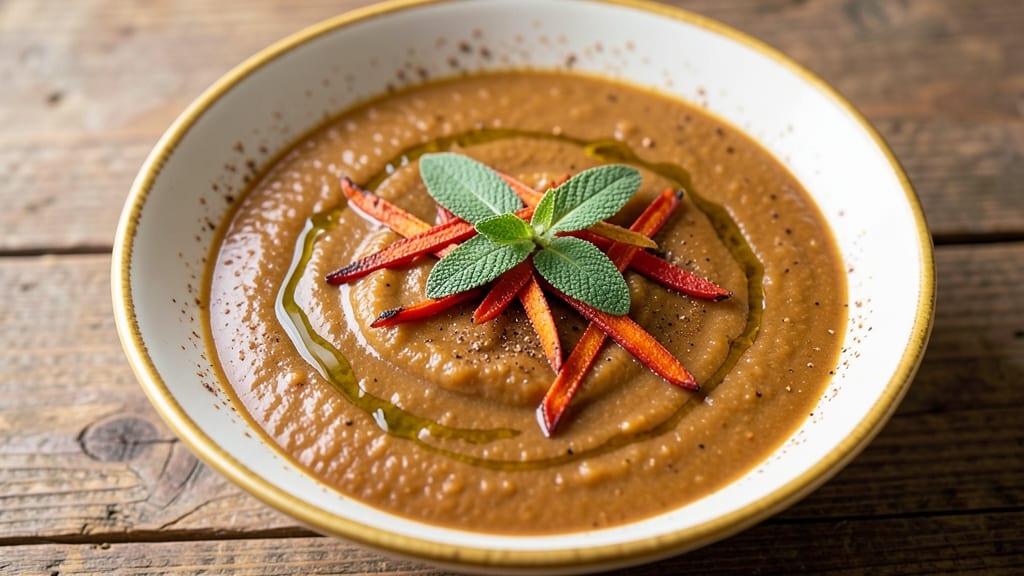
This autumn harvest butternut squash soup transforms humble ingredients into velvety, spiced comfort that defines fall. 🍂 The secret lies in roasting the squash—caramelizing its natural sweetness while developing deep, nutty flavors that no blender alone can achieve.
I perfected this recipe after years of testing, balancing roasted depth with silky smoothness that feels like a warm hug on chilly evenings.
The process is simpler than it sounds: roast the squash until tender and golden, then blend with aromatic broth, fresh sage, and a touch of nutmeg for warmth. The result is a soup that's rich yet light, with just enough body to coat a spoon but never feel heavy.
This isn't your basic squash soup—it's a celebration of autumn's harvest, where every ingredient plays a role in creating that perfect balance of sweet, savory, and spiced.
What makes this recipe truly special is its versatility. Serve it as-is for a clean, elegant bowl of comfort, or stir in coconut milk for added creaminess and depth. Top with toasted pumpkin seeds for crunch, crispy sage leaves for aroma, or a drizzle of apple cider reduction for brightness.
Each variation keeps the soul of the dish intact while offering something new to discover.
The best part? This soup tastes even better the next day as flavors meld together. Make a big batch—it's perfect for meal prep, potlucks, or cozy nights in.
The roasting technique ensures maximum flavor extraction, while the blending method creates that signature silky texture that makes every spoonful irresistible. Ready to experience autumn in a bowl?
Ingredients for autumn harvest butternut squash soup
Roasted squash, aromatic spices, and velvety broth—this harvest-inspired soup is pure autumn comfort in a bowl.
| Ingredient | Amount | Notes |
|---|---|---|
| Medium Butternut Squash 🎃 | 3 lb | Peeled, seeded, cut into 1-inch cubes |
| Vegetable Broth 💧 | 4 cups | Low-sodium preferred, homemade or store-bought |
| Fresh Sage Leaves 🌿 | ¼ cup | Chopped, stems removed |
| Ground Nutmeg 🌶️ | ½ tsp | Freshly grated for best flavor |
| Ground Cinnamon 🌶️ | ½ tsp | Warm, aromatic variety |
| Olive Oil 🫒 | 2 tbsp | Extra-virgin for richness |
| Garlic Cloves 🧄 | 3 cloves | Minced for aromatic depth |
| Salt 🧂 | 1 ½ tsp | Diamond Crystal preferred |
| Black Pepper 🌶️ | ½ tsp | Freshly cracked for texture |
| Coconut Milk 🥥 | 1 cup | Full-fat for creaminess (optional) |
| Pumpkin Seeds 🌰 | ¼ cup | Toasted for crunchy garnish |
| Apple Cider Vinegar 🍎 | 1 tbsp | For brightness (optional) |
The squash is everything here. Look for small to medium-sized butternut squash—they're sweeter and easier to handle. Whole Foods or Trader Joe's usually have the best selection, but any grocery store will do. If you're buying a large one, cut it in half lengthwise before roasting—it cooks more evenly. Pro tip: Save those seeds! Toss them with olive oil and salt, then toast in the oven for a crunchy garnish. The roasting time varies by squash size, but aim for tender, golden cubes—about 45-60 minutes at 400°F.
No fresh sage? Dried works at one-third the amount, but it won't have that same earthy aroma. Swap the coconut milk for Greek yogurt or heavy cream if you prefer a tangier, richer texture. Short on pumpkin seeds? Toasted pecans or walnuts bring a similar crunch. The apple cider vinegar adds a bright pop—if you don't have it, a splash of lemon juice does the trick. For extra depth, toast the cinnamon and nutmeg with the garlic before adding to the soup. Penzeys has the best spice blends if you want to splurge, but regular grocery store spices work too.
This soup tastes even better the next day—flavors meld beautifully. Store leftovers in an airtight container for up to 5 days. For freezing, portion into containers and keep for 3 months. The roasted squash can be prepped ahead and stored in the fridge for 2 days before roasting. Double the batch—it's perfect for potlucks or cozy weeknight dinners. Garnish with extra sage leaves or a drizzle of olive oil right before serving to keep everything fresh.
Why You'll Love This Recipe
- One-Pot Wonder: I swear by this soup because it’s actually one-pot—no chopping boards, no extra pans. Just roast the squash, blend it with broth, and toss in those warm spices. Honestly, the cleanup is so minimal I’ll take it over anything else.
- Spice Magic: That nutmeg and cinnamon combo? It’s the secret weapon. The sage leaves add this earthy freshness that makes it taste like fall in a bowl—creamy but bright, never heavy. Between us, it’s the kind of flavor that makes people ask for seconds before you even finish serving.
- Meal Prep Hero: This soup tastes just as good warmed up the next day as it does fresh. I make a big batch on Sundays, freeze half, and pull it out for lazy nights or when company drops by. The roasted squash flavor actually deepens after sitting, so leftovers feel like a treat.
- Budget-Friendly Warmth: Butternut squash is my go-to affordable veggie—cheaper than potatoes, sweeter than carrots, and way more impressive. A single squash stretches into multiple servings, and the spices cost pennies. It’s the kind of dish that feels special without breaking the bank. (Yes, even on a Tuesday night.)
Step-by-step instructions for autumn harvest butternut squash soup
Here's how to transform humble squash into velvety, spiced perfection that tastes like autumn in a bowl.
🔥 Step 1: Roast the Squash Until Caramelized
Preheat your oven to 400°F and line a large baking sheet with parchment paper. Toss the 3 lb medium butternut squash cubes with 2 tbsp olive oil, 1.5 tsp salt, 0.5 tsp black pepper, 0.5 tsp ground cinnamon, and 0.5 tsp ground nutmeg until evenly coated. Spread them in a single layer with space between each cube—this ensures even browning.
Roast for 30-35 minutes until the edges are deep golden brown and the squash yields slightly when pressed with a fork. I like to flip them halfway through for even color. The caramelization here builds the soup's depth of flavor—don't rush this step. You'll know it's perfect when the squash smells sweetly nutty and pulls away from the baking sheet easily.
🍳 Step 2: Build the Spiced Broth Base
While the squash roasts, heat 1 tbsp olive oil in a large pot over medium heat. Add the 3 cloves minced garlic cloves and sauté for 30 seconds until fragrant but not browned. Add the 0.25 cup chopped fresh sage leaves and cook for another 1 minute until just wilted—this releases their piney aroma.
Pour in the 4 cups vegetable broth and bring to a gentle simmer. Stir in the 1 tbsp apple cider vinegar and let it cook for 5 minutes to infuse the broth with all those warm spices. Here's the thing—this step ensures your soup has bright acidity and aromatic depth before the squash even joins the party.
🥘 Step 3: Blend to Silky Perfection
Add the roasted squash cubes to the simmering broth and let everything cook together for 5 minutes until the squash is heated through. Here's where the magic happens: use an immersion blender to puree the soup directly in the pot until completely smooth. If you prefer using a countertop blender, work in batches and be careful with the hot liquid—it'll spit!
The texture should be velvety with no visible chunks—this is your blender-silky promise delivered. If it's too thick, add 2-4 tbsp vegetable broth to reach your desired consistency. Return the pot to low heat and stir in the 1 cup coconut milk (if using) until fully incorporated. This is where the soup transforms from hearty to luxurious.
🔥 Step 4: Finish with Warm Spices and Crunch
Taste and adjust seasoning—you might need a pinch more salt or a crack of pepper. The soup should be perfectly balanced with sweet squash, warm spices, and that bright vinegar note. For the final touch, toast the 0.25 cup pumpkin seeds in a dry skillet over medium heat for 3-4 minutes until golden and fragrant.
Ladle the soup into bowls and top each serving with a sprinkle of toasted pumpkin seeds. The contrast of crunchy seeds against the silky soup is what makes this dish sing. Serve immediately while the spices are still aromatic and the seeds are crisp—this soup tastes best fresh from the pot!
Pro Tips For Making Autumn Harvest Butternut Squash Soup
- ROAST THE SQUASH FIRST: I learned this the hard way—boiling butternut squash leaves it waterlogged and bland. Roast it whole at 400°F (200°C) for 45-55 minutes until the flesh is tender when pierced with a knife. The caramelized edges add depth that no other method can match.
- PEEL AND DICE SMART: Cut the squash lengthwise, scoop out the seeds, then slice into ½-inch cubes—no need to peel if you’ve roasted it properly. The skin softens and adds texture, but if you prefer smooth soup, peel only the tough spots. Just don’t skip the dice; even chunks won’t blend as smoothly.
- SIMMER LOW AND LONG: After roasting, simmer the squash in broth for at least 20 minutes at a gentle boil. Rushing this step means grittiness and underdeveloped flavor. The longer it cooks, the richer the nutmeg and cinnamon taste—don’t be tempted to speed it up.
- BLOOM THE SPICES: Toast the ground nutmeg and cinnamon in a dry pan for 30 seconds before adding to the soup. This wakes up their aromas and prevents a metallic taste. A pinch of each is enough—too much can overpower the natural sweetness of the squash.
Essential equipment for autumn harvest butternut squash soup
Roasting Pan Essentials
Start with a rimmed baking sheet—I use All-Clad Stainless Steel because it handles high heat without warping. The rim prevents drips from escaping, keeping your oven clean. For extra insurance, line it with silicon baking mats (like Amazon Basics) to avoid sticking.
A wire cooling rack placed on top helps crisp the squash edges faster by allowing air circulation. 🔥
Blender Game-Changers
An immersion blender (like Ninja Foodi) is my secret weapon for this recipe—it blends right in the pot, eliminating transfer steps and keeping everything hot. If you prefer batch blending, use a high-powered blender (I recommend Vitamix) to handle the hot liquid smoothly.
For safety, never fill beyond the maximum fill line—hot soup expands and can cause spills. 🥣
Spice Toasting Tools
Toast whole spices like cinnamon sticks or nutmeg seeds in a small dry skillet over medium heat for 1-2 minutes until fragrant. A mortar and pestle works best for grinding fresh spices to a fine powder.
For pumpkin seeds, I use a non-stick skillet (like Calphalon) to prevent burning. Always keep a small bowl nearby to catch any spice dust for easy cleanup. 🌶️
Broth Infusion Kit
A fine-mesh strainer (like OXO Good Grips) helps remove any sage stems or garlic bits before blending. For deeper flavor, infuse the broth with a small bundle of fresh herbs (sage + thyme) tied with kitchen twine.
A wooden spoon is ideal for stirring—it won’t scratch your pot like metal. I also keep a small pitcher handy to add extra broth if the soup gets too thick. 💧
Serving Essentials
Use preheated soup bowls to keep the soup hot longer. A ladle with a long handle (like Ozeri Touch) makes serving easier, especially for large gatherings. For garnishes, a small sieve helps dust spices evenly, while a microplane grates fresh nutmeg perfectly.
Don’t forget a serving spoon for the toasted pumpkin seeds—it keeps them contained. 🍽️
Nutrition facts
Frequently asked questions
Why roast the butternut squash instead of boiling it?
Roasting caramelizes the natural sugars in the squash, creating deep, nutty flavors that boiling can't match. The skin becomes tender and slightly crispy, adding texture, while the edges develop that perfect golden-brown color. This technique builds complex flavor that makes your soup taste like a true autumn harvest celebration.
Can I make this soup without coconut milk?
The coconut milk adds creaminess, but you can substitute with Greek yogurt, heavy cream, or even cashew cream for a dairy-free option. If omitting entirely, the soup will still be rich from the roasted squash and spices—just slightly lighter in texture. Adjust seasoning as needed since coconut milk adds subtle sweetness.
How do I fix soup that's too thick after blending?
Simply stir in 2-4 tablespoons of vegetable broth at a time until you reach your desired consistency. If the soup separates after adding coconut milk, gently reheat it on low heat while stirring continuously. For extra richness, you can also whisk in a splash of warm water or milk to smooth it out without thinning too much.
What's the best way to store leftovers?
Transfer the soup to an airtight container and refrigerate for up to 5 days. For freezing, portion into containers and store for 3 months. The flavors actually improve overnight as the spices meld together. When reheating, warm gently on the stove over medium-low heat and stir occasionally to prevent scorching.
Can I use other winter squash varieties?
Yes! Delicata or acorn squash work beautifully—they have similar sweetness and texture. For a milder flavor, try hubbard squash, but expect a slightly denser soup. Just adjust cooking times as needed since different varieties have varying densities. The roasting technique remains the same for best results.