
Soups & Stews
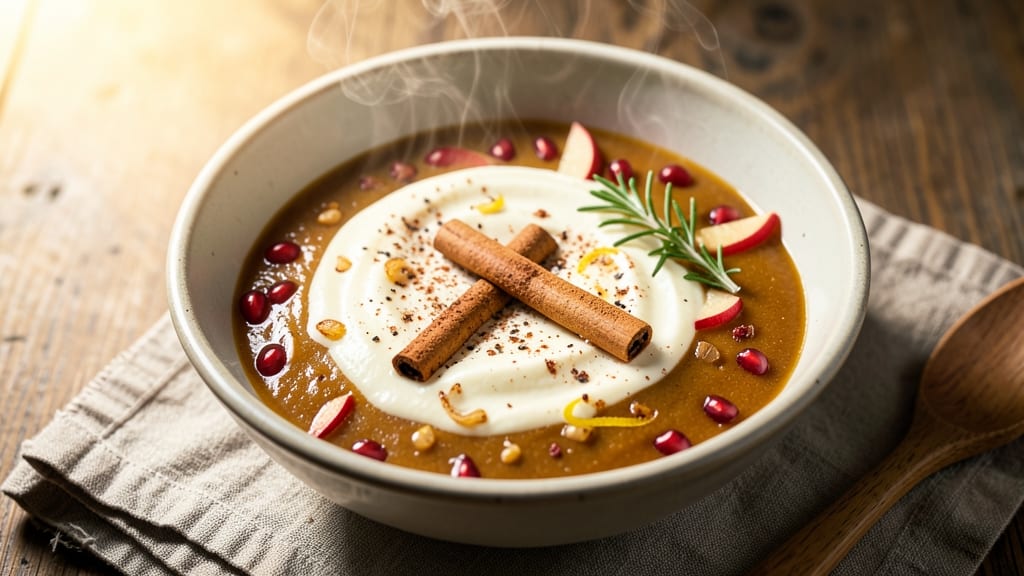
This autumn butternut squash soup recipe transforms humble ingredients into a velvety, spiced masterpiece that captures fall's essence in every spoonful. Roasting the squash caramelizes its natural sweetness while developing deep, nutty flavors that blend seamlessly with warm cinnamon and nutmeg.
The result is a soup so rich and comforting it feels like a hug on a crisp autumn evening.
The secret to this recipe lies in its simplicity—just a few key ingredients work together to create restaurant-quality depth. You'll start by roasting the squash until tender and golden, then building layers of flavor with sautéed onions, garlic, and fresh herbs.
A touch of cream (or coconut milk for vegan) creates that signature velvety texture without overpowering the squash's natural taste.
What makes this soup truly special is how it balances sweet and savory, spiced warmth and creamy smoothness. The cinnamon and nutmeg infuse the broth with autumnal spice, while a final touch of toasted pumpkin seeds adds crunch and visual appeal.
It's the kind of dish that transforms a simple weeknight dinner into a memorable experience—easy enough for weeknights but impressive enough for guests.
Perfect for meal prep, this soup tastes even better the next day as the flavors meld together. Serve with crusty bread or a sprinkle of fresh sage for extra aroma. Here's how to make it—simple steps for velvety perfection every time.
Ingredients for autumn butternut squash soup
Six ingredients create this velvety autumn soup—roasted squash, warm spices, and creamy depth.
| Ingredient | Amount | Notes |
|---|---|---|
| Medium Butternut Squash 🎃 | 2 whole | Peeled, seeded, cubed (about 4 cups) |
| Yellow Onion 🧅 | 1 whole | Medium, diced (about 1 cup) |
| Garlic Cloves 🧄 | 4 cloves | Peeled, minced |
| Vegetable Broth 💧 | 4 cups | Low-sodium preferred |
| Heavy Cream 🥛 | 1 cup | Full-fat for richness |
| Ground Cinnamon 🌿 | 1 tsp | Freshly ground preferred |
| Ground Nutmeg 🌿 | ½ tsp | Freshly grated if possible |
| Fresh Thyme Leaves 🌿 | ¼ cup | Or 1 tsp dried thyme |
| Extra-Virgin Olive Oil 🫒 | 2 tbsp | For roasting and sautéing |
| Salt 🧂 | 1 tsp | Kosher or sea salt |
| Black Pepper 🌶️ | ½ tsp | Freshly ground |
| Pumpkin Seeds 🥜 | ¼ cup | Toasted for garnish |
| Fresh Sage Leaves 🌿 | ⅛ cup | Chopped, for garnish |
The butternut squash is the heart of this soup—look for small to medium squash with a firm, heavy feel and smooth skin. Whole Foods or local farmers markets often carry the freshest varieties, but the regular grocery store works too. Avoid squash with soft spots or wrinkled skin. For roasting, cut it in even cubes so it cooks uniformly. The onions and garlic should be fresh—yellow onions with crisp edges and garlic cloves that aren't sprouting. Penzeys or local spice shops carry high-quality ground cinnamon and nutmeg, but the grocery store spices are fine if they're not ancient.
No fresh thyme? Dried works at one-third the amount—just make sure it's labeled as culinary thyme, not ornamental. Running out of heavy cream? Full-fat coconut milk gives a similar richness, though with a slightly different flavor profile. For the pumpkin seeds, Trader Joe's or bulk bins offer the best prices. Toast them in a dry pan for 3-4 minutes until fragrant—that aroma is worth the minute. The sage leaves can be swapped for fresh parsley if needed, though it'll change the flavor slightly. And if you're watching salt, reduce the kosher salt to 0.75 tsp and add a pinch of Diamond Crystal kosher salt at the end for brightness.
Roasted squash keeps for 5 days in the fridge, but the soup is best made fresh. The finished soup reheats beautifully—just warm on the stove over medium-low heat, stirring occasionally. For meal prep, portion into airtight containers and store for up to 4 days. Freeze for up to 3 months by portioning into freezer-safe containers. The toasted pumpkin seeds and sage leaves are best added fresh when serving, so save those until the last minute. This soup tastes even better the next day as the flavors meld together—perfect for making ahead.
Why You'll Love This Recipe
- No-Cook Prep Trick: I swear by cutting the squash in half and roasting it whole—skin on—while I chop the onion and garlic. One tray, 40 minutes, zero cleanup. (Yes, even on a Tuesday night.)
- Creamy Without Guilt: That heavy cream makes it rich, but the roasted squash and caramelized onions balance it perfectly. Honestly, it’s the kind of soup that tastes fancy but won’t leave you feeling weighed down.
- Leftovers That Last: This soup actually improves the next day. The flavors meld into something deeper, and it reheats like a dream. I make a double batch—one for dinner, one for lunches I’ll grab with my thermos.
- Budget-Friendly Luxury: Butternut squash is cheap in season, and a single onion and head of garlic stretch across multiple meals. Between us, this is the soup I turn to when I want to feel pampered but still keep my wallet happy.
Step-by-step instructions for autumn butternut squash soup
Here's how to create a velvety, spiced soup with deep autumnal flavors and perfect texture.
Roast the Butternut Squash and Onion
Preheat your oven to 400°F and line a baking sheet with parchment paper. Toss the 2 whole medium butternut squash (peeled, seeded, and cubed) and 1 whole yellow onion (diced) with 1 tablespoon of the extra-virgin olive oil, 1 teaspoon salt, 0.5 teaspoon black pepper, 1 teaspoon ground cinnamon, and 0.5 teaspoon ground nutmeg. Spread them evenly on the baking sheet.
Roast for 30-35 minutes, stirring halfway, until the squash is tender and caramelized with golden edges. The squash should pierce easily with a fork, and the onion should be soft and slightly browned. This roasting step develops deep, nutty flavors that set this soup apart from boiled versions.
Sauté Garlic and Thyme
While the squash roasts, heat the remaining 1 tablespoon extra-virgin olive oil in a large pot over medium heat. Add the 4 cloves minced garlic and sauté for 30 seconds until fragrant—don't let it brown or it'll turn bitter. Add the 0.25 cup fresh thyme leaves and stir for another 10 seconds to release their aromatic oils.
This quick sautéing step builds the herbal foundation of your soup. The thyme's earthy notes complement the squash beautifully, while the garlic adds a subtle warmth that balances the spices. Keep the heat medium—garlic burns faster than you think.
Simmer the Squash and Broth
Once the roasted squash is tender, transfer it to the pot with the sautéed garlic and thyme. Add the 4 cups vegetable broth and bring to a gentle boil. Reduce heat to medium-low and simmer for 10 minutes, stirring occasionally. The mixture should bubble softly without vigorous boiling.
This simmering step allows all the flavors to meld together. You'll notice the soup becoming thicker as the squash breaks down further. If it looks too thick, add a splash of water or broth to reach your desired consistency.
Blend Until Silky Smooth
Using an immersion blender, blend the soup directly in the pot until completely smooth. For best results, work in batches if needed to avoid splattering. If you prefer using a countertop blender, carefully transfer the hot soup (using caution with the steam) and blend until silky.
The texture should be velvety with no visible chunks. If it's too thick after blending, thin it with a bit more broth or water. This is where the soup transforms from rustic to restaurant-quality—smooth yet still packed with flavor.
Finish with Cream and Garnish
Return the blended soup to the pot and stir in the 1 cup heavy cream. Keep the heat at low and let it warm through for 2-3 minutes, stirring occasionally. The cream should heat gently but not curdle—watch carefully as it comes to temperature.
Taste and adjust seasoning with additional salt, pepper, or spices if needed. Ladle the soup into bowls and garnish with 0.25 cup toasted pumpkin seeds and 0.125 cup chopped fresh sage leaves. The seeds add crunch and a nutty contrast, while the sage brings fresh herbal brightness to each spoonful.
Pro Tips For Making Autumn Butternut Squash Soup
- ROAST THE SQUASH FIRST: I learned this the hard way—boiling butternut squash for soup makes it waterlogged and bland. Roast it whole at 400°F (200°C) for 45-50 minutes first; the caramelized edges add depth, and the flesh falls apart effortlessly when blended. Cut it in half, scoop out seeds, and roast cut-side down—no peeling needed.
- SWEAT THE ONION LOW: Skip the sizzle. Cook your yellow onion in a tablespoon of butter or oil over medium-low heat for 8-10 minutes until translucent but not browned. Rushing this step burns the onions and makes the soup taste bitter—trust me, your nose will know when it’s ready.
- SALT THE BROTH LATE: Hold off on salting the vegetable broth until after you’ve blended the soup. The roasted squash and caramelized onions already pack flavor, and adding salt too early can dilute their impact. Taste the blended soup first, then adjust—you’ll need less than you think.
- STIR IN CREAM OFF HEAT: Heavy cream curdles faster than you’d believe when added to hot soup. Remove the pot from heat, let it cool for 2-3 minutes, then whisk in the cream while stirring constantly. If you’re impatient like me, at least temper it by mixing a spoonful of hot soup into the cream first before adding the rest.
Storing and reheating this dish
Refrigerator Storage
Store your butternut squash soup in an airtight glass container for up to 4 days in the refrigerator. The flavors actually deepen overnight as the spices meld together beautifully. I like using Pyrex containers because they keep the soup fresh longer and are microwave-safe for easy reheating. 🥣
Before storing, let the soup cool completely to room temperature—this prevents condensation from forming inside the container. Once cooled, press plastic wrap directly onto the surface to minimize exposure to air, which helps maintain the soup's velvety texture.
Freezer Storage
For longer storage, portion the soup into freezer-safe containers or heavy-duty freezer bags, leaving 1-inch headspace for expansion. Label with the date and freeze for up to 3 months. The soup's texture remains creamy when thawed properly—just reheat gently on the stove. ❄️
When freezing, avoid adding the pumpkin seeds or sage garnish—they'll lose their texture. Instead, toast fresh seeds and chop fresh sage when ready to serve. For best results, freeze in quart-sized portions for easy meal prep.
Stovetop Reheating
My preferred method is reheating on the stovetop over medium-low heat. Pour the soup into a pot and warm it gently, stirring occasionally, for 5-7 minutes until heated through. This method preserves the soup's silky texture better than microwaving. 🔥
If the soup looks thick after reheating, add 1-2 tablespoons of vegetable broth to restore its original consistency. Taste and adjust seasoning—it often needs a pinch of salt or a sprinkle of cinnamon after reheating.
Microwave Reheating
For quick reheating, transfer the soup to a microwave-safe bowl and heat on 50% power for 2-3 minutes, stirring halfway. This gentle approach prevents overheating and keeps the cream from separating. Add a splash of water if the soup appears too thick. 💡
I recommend covering the bowl loosely with a microwave-safe lid or damp paper towel to help retain moisture. Stir well after heating—some areas may be hotter than others, and the cream can sometimes separate slightly during microwaving.
Nutrition facts
Frequently asked questions
Can I substitute sweet potato for butternut squash?
Yes, but expect a slightly different flavor profile. Sweet potatoes add natural sweetness and a creamier texture, but they lack the nutty depth of butternut squash. For a 1:1 swap, use the same quantity but reduce the cinnamon by 0.25 teaspoon—sweet potatoes are naturally sweeter. Roast both together for balanced flavor.
How do I make this soup vegan?
Replace the heavy cream with 1 cup full-fat coconut milk (canned, not cartoned) for a rich, creamy texture. Use vegan vegetable broth and ensure all spices are certified vegan. The coconut milk adds a subtle tropical note that pairs surprisingly well with autumn spices.
Why did my soup turn out too thick?
This usually happens if you didn't blend thoroughly or used too much cream. Thin with 2-3 tablespoons of broth or water while reheating. For next time, blend in 10-second bursts with an immersion blender to ensure smoothness. If using a countertop blender, process until completely silky.
Can I make this soup in a slow cooker?
Roast the squash and onion as directed, then transfer everything to your slow cooker. Add the broth and simmer on LOW for 4-5 hours or HIGH for 2-3 hours until tender. Blend after cooking, then stir in the cream. The slow cooking enhances the spices' warmth while keeping the soup's natural sweetness.
What's the best way to reheat leftover soup?
Stovetop reheating preserves texture best: Warm over medium-low heat for 5-7 minutes, stirring occasionally. If microwaving, use 50% power for 2 minutes and stir halfway. Add a splash of broth if too thick. Never boil—this can cause the cream to separate or the soup to curdle.