
Soups & Stews
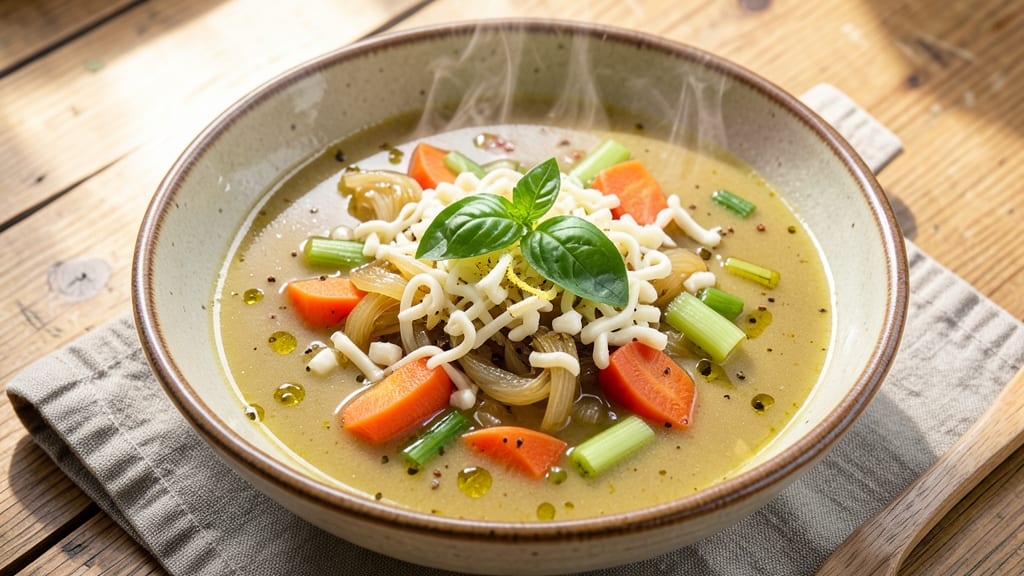
This Barilla vegetable soup recipe transforms simple ingredients into a hearty, herb-infused meal that feels like a warm embrace on chilly days. The secret lies in Barilla pasta—its al dente texture absorbs the rich vegetable broth while adding satisfying bite.
I developed this recipe after realizing most store-bought versions lacked the depth of homemade, so I focused on building flavor through slow simmering and aromatic herbs.
The magic happens in three simple stages: sautéing onions and garlic until fragrant, simmering seasonal vegetables in vegetable broth until tender, then adding Barilla pasta to cook directly in the broth.
This method ensures every spoonful delivers both vegetables and pasta in perfect harmony. The result is a soup that's nourishing, comforting, and packed with umami from Parmesan and fresh basil.
What makes this recipe special is its versatility—use whatever vegetables you have on hand, from carrots and celery to zucchini or mushrooms. The Barilla pasta becomes the perfect vehicle for the vegetable flavors, creating a satisfying, complete meal.
Each bowl is packed with nutrients while delivering that classic Italian comfort you crave when temperatures drop.
Perfect for weeknight dinners or meal prep, this soup reheats beautifully and tastes even better the next day as flavors meld. The herb-infused broth makes it restaurant-quality without the effort. Let's create this comforting classic that will become your new go-to recipe.
Ingredients for barilla vegetable soup
Six simple ingredients transform into restaurant-quality Barilla vegetable soup that warms your soul.
| Ingredient | Amount | Notes |
|---|---|---|
| Barilla Pasta 🍝 | ¾ lb | Penne or farfalle shape preferred |
| Yellow Onion 🧅 | 1 whole | Medium size, diced finely |
| Garlic Cloves 🧄 | 4 cloves | Fresh, minced for aroma |
| Carrots 🥕 | 2 medium | Peeled, cut into 1/2-inch chunks |
| Celery Stalks 🧅 | 3 whole | Trimmed, cut into 1/2-inch pieces |
| Vegetable Broth 💧 | 6 cups | Low-sodium preferred, homemade ideal |
| Zucchini 🍆 | 1 medium | Seedless, cut into 1/2-inch slices |
| Canned Diced Tomatoes 🍅 | 1 can (15 oz) | San Marzano preferred, undrained |
| Fresh Basil Leaves 🌿 | ¼ cup | Packed, torn by hand |
| Parmesan Cheese 🧀 | ½ cup | Freshly grated, aged 24+ months |
| Olive Oil 🫒 | ¼ cup | Extra-virgin, fruity variety |
| Dried Thyme 🌿 | 1 tsp | Or 1 tbsp fresh thyme |
| Salt 🧂 | 1 ½ tsp | Diamond Crystal preferred |
| Black Pepper 🌶️ | ½ tsp | Freshly cracked |
The Barilla pasta is where this soup shines—its al dente texture absorbs the vegetable broth perfectly. Grab Barilla penne or farfalle from the Italian section at Whole Foods or Trader Joe's for that authentic bite. Fresh basil is non-negotiable here—farmers market leaves have more punch than grocery store containers. For the Parmesan, aged 24+ months makes all the difference. Look for wedges at specialty cheese shops or the deli counter, not pre-grated. The vegetable broth? Homemade is ideal, but Imagine or Pacific Foods low-sodium versions work in a pinch.
No fresh thyme? Dried works at one-third the amount. Short on zucchini? Substitute mushrooms or green beans for equal volume. The carrots and celery can be swapped for other seasonal vegetables—turnips, potatoes, or butternut squash all work beautifully. For extra umami, add a splash of soy sauce or miso paste. The tomatoes? San Marzano cans are worth the splurge—they're sweeter and less acidic. If you can't find them, any quality diced tomatoes will do, just drain well to avoid watering down the broth.
This soup tastes even better the next day as flavors meld—make extra! Store in airtight containers for 4-5 days in the fridge or freeze for 3 months. For meal prep, portion into individual containers so you can grab and heat. The Parmesan keeps best in the fridge, wrapped in parchment paper, while fresh herbs should be used within 3 days. Reheat gently on the stove with a splash of water to maintain that creamy texture.
Why You'll Love This Recipe
- I’ll be real: this recipe feeds four for under $8. The onion, carrots, and celery stretch forever, the garlic adds depth without cost, and Barilla pasta is cheap but not cheap-tasting. It’s the kind of meal that makes me feel like I’m treating myself, even when I’m just stretching a grocery budget.
- Pantry Magic: I swear by this soup because it uses what I always have—no last-minute grocery runs. Dice the onion, mince the garlic, chop the carrots and celery (that’s my "soup trinity" right there), toss in Barilla pasta, and boom. No fancy ingredients, just pure, hearty flavor that feels like a hug in a bowl.
- Garlic-Glazed Goodness: Here’s what sold me—the way the garlic caramelizes just enough to coat every noodle and veggie. That crispy edge with the creamy center? Chef’s kiss. The Barilla pasta soaks up the broth like a sponge, and the carrots stay just tender enough to bite into—not mushy, not sad.
- Lunchbox Hero: Between us, this soup is my go-to for meal prep. I make a big batch on Sundays, and by Wednesday, I’m still pulling out leftovers for lunch. The pasta holds up better than store-bought versions, and the flavors actually improve the next day. Pack it cold or reheat it—either way, it’s a win.
Step-by-step instructions for herb-infused vegetable soup
This one-pot wonder delivers restaurant-quality comfort with minimal effort—just follow these simple steps.
Sauté the Vegetable Base
Heat the 0.25 cup olive oil in a large pot over medium-high heat until shimmering. Add the 1 whole finely diced yellow onion, 2 medium peeled and chopped carrots, and 3 trimmed celery stalks cut into ½-inch pieces. Sauté for 5-6 minutes until the vegetables soften and the onion becomes translucent.
Here's the thing—don't rush this step. You want those vegetables to release their natural sweetness and develop a slight caramelization. If they stick, stir more gently. Add the 4 minced garlic cloves and 1 tsp dried thyme, cooking for another 30 seconds until fragrant. This aromatic base is the soul of your soup.
Build the Flavor Foundation
Pour in the 6 cups vegetable broth and bring to a gentle boil. Once boiling, reduce heat to medium-low and add the 1 can (15 oz) undrained diced tomatoes and 1 medium zucchini cut into ½-inch slices. Stir well to combine, then add the 1.5 tsp salt and 0.5 tsp freshly cracked black pepper. Let the soup simmer uncovered for 15 minutes—this gives the flavors time to meld beautifully.
I like to taste the broth at this stage. If it needs more depth, a pinch of salt or a splash of lemon juice can elevate it. The tomatoes should break down slightly, releasing their juices and creating a rich, velvety base. This is where the magic happens—patience pays off with layers of flavor.
Cook the Pasta to Al Dente Perfection
Add the 0.75 lb Barilla pasta (penne or farfalle shape) to the simmering soup. Stir gently to distribute the pasta evenly. Cook for 8-10 minutes, stirring occasionally, until the pasta is al dente—just slightly firm to the bite. You want it to finish cooking in the residual heat when you remove it from the stove.
Real talk: Don't overcook the pasta. It'll continue cooking as it sits in the hot broth, and you want that perfect bite. Test a piece by tasting it—it should have a slight resistance. If the soup looks too thick, add ½ cup hot broth to loosen it. The pasta should float freely without clumping.
Finish with Fresh Herbs and Cheese
Remove the pot from heat and stir in the 0.25 cup packed fresh basil leaves, torn by hand, and 0.5 cup freshly grated Parmesan cheese. Let the soup sit for 2-3 minutes—this allows the basil to release its bright, aromatic oils and the Parmesan to melt into a creamy finish. Taste and adjust seasoning if needed; sometimes a little more salt or pepper makes all the difference.
Here's the moment that matters: Ladle the soup into bowls immediately. The contrast of the warm, herb-infused broth with the crispy Parmesan on top creates an experience that's pure comfort. Garnish each serving with an extra sprinkle of Parmesan and a few basil leaves for that restaurant-quality touch.
Pro Tips For Making Barilla Vegetable Soup
- Sweat, Don’t Burn: Yellow onion and celery need to soften, not char—low and slow for 8-10 minutes with a splash of water if they stick. I learned this the hard way when my soup tasted bitter from overcooked veggies.
- Slice Carrots Thin: Quarter-lengthwise, then thinly slice—this guarantees even cooking and melty texture. Thick chunks stay crunchy while everything else turns to mush.
- Salt the Pasta Water Hard: Taste it—it should taste like the sea. Under-seasoned water means bland pasta, and no amount of broth seasoning fixes that. Trust me, you’ll notice the difference.
- Toast the Garlic: After sweating the onions, add minced garlic and cook until golden—just 30 seconds—before adding broth. It adds depth without burning. (Yes, even if you’re impatient like me.)
Essential equipment for great barilla vegetable soup
Large Pot Essentials
Start with a 6-8 quart Dutch oven or heavy-bottomed soup pot—I swear by my Le Creuset 6-quart for even heat distribution. The deep sides prevent splattering when adding broth, and the thick base ensures consistent simmering. For a budget-friendly option, Calphalon stainless steel works beautifully too. 🔥
Knife & Cutting Tools
A sharp chef's knife (I use Wüsthof 8-inch) and cutting board are non-negotiable for efficient prep. For the ½-inch vegetable chunks, a mandoline speeds things up if you're prepping large batches.
Just remember: safety first—use the guard and never force cuts. The celery and carrots should be uniform for even cooking.
Wooden Spoon Advantage
Wooden spoons are my go-to for stirring this soup—they won't scratch your pot like metal utensils. A long-handled one (like OXO Good Grips) gives better control when simmering. Avoid plastic—the high heat can warp it, and you'll lose that satisfying wooden texture against your pot. 🌟
Measuring Tools
Precision matters with broth and pasta ratios. Use a liquid measuring cup for the 6 cups vegetable broth (glass is best for heat resistance) and a kitchen scale for the 0.75 lb Barilla pasta—it's more accurate than volume measurements.
For herbs, a small measuring cup works perfectly for the 0.25 cup basil. I keep my OXO measuring spoons handy for the 1 tsp thyme and 1.5 tsp salt.
Garnish Presentation
Elevate your soup with a microplane for fresh Parmesan and small tongs for placing basil leaves. A ladle with a strainer helps portion soup neatly while keeping pasta in bowls. For extra flair, I use a small bowl to hold extra Parmesan at the table—it makes serving feel special.
The fresh herbs should be added last to preserve their vibrant color and aroma.
Optional Immersion Blender
For a silky texture, an immersion blender (like Cuisinart) lets you blend some portions while keeping others chunky. Pulse 2-3 times in spots for a hybrid texture—this works beautifully if you want a smoother base but still want visible veggies.
Just be cautious with hot liquids and use the provided gloves. 💡
Nutrition facts
Frequently asked questions
Can I use Barilla pasta other than penne or farfalle?
This recipe works beautifully with any Barilla pasta shape—try rotini for fun twists or spaghetti for a rustic feel. Just adjust cooking times slightly: smaller shapes like orzo cook in 5-6 minutes, while larger shapes like rigatoni may need 10-12 minutes. The key is achieving al dente texture before removing from heat.
How do I make this soup vegetarian without meat broth?
This recipe is already vegetarian, but for extra depth, use a rich vegetable broth made with mushrooms, carrots, and celery. For umami, add 1 tbsp soy sauce or 1 tsp miso paste when adding the broth. The Parmesan and tomatoes already provide plenty of savory flavor, but these boosters take it to the next level.
Can I make this soup ahead of time?
Yes! This soup tastes even better the next day as flavors meld. Store in an airtight container in the fridge for 4-5 days or freeze for 3 months. When reheating, add 2-3 tbsp water per bowl to maintain creaminess. The pasta absorbs liquid as it cools, so a splash helps restore that perfect texture.
What if I don't have fresh basil?
No problem! Use dried basil (reduce to 1 tsp) or swap for Italian parsley or cilantro for a different flavor profile. For extra aroma, add a pinch of red pepper flakes or a splash of lemon juice at the end. The Parmesan will still provide that rich, cheesy finish you love.
Why did my soup turn out too thick?
This usually happens when pasta absorbs too much broth. Fix it by adding ½ cup hot water or broth and stirring gently. For prevention, cook pasta slightly under the recommended time (start with 7 minutes instead of 8-10) and stir frequently during the last 5 minutes of cooking. The soup should coat a spoon lightly but still allow easy stirring.