
Soups & Stews
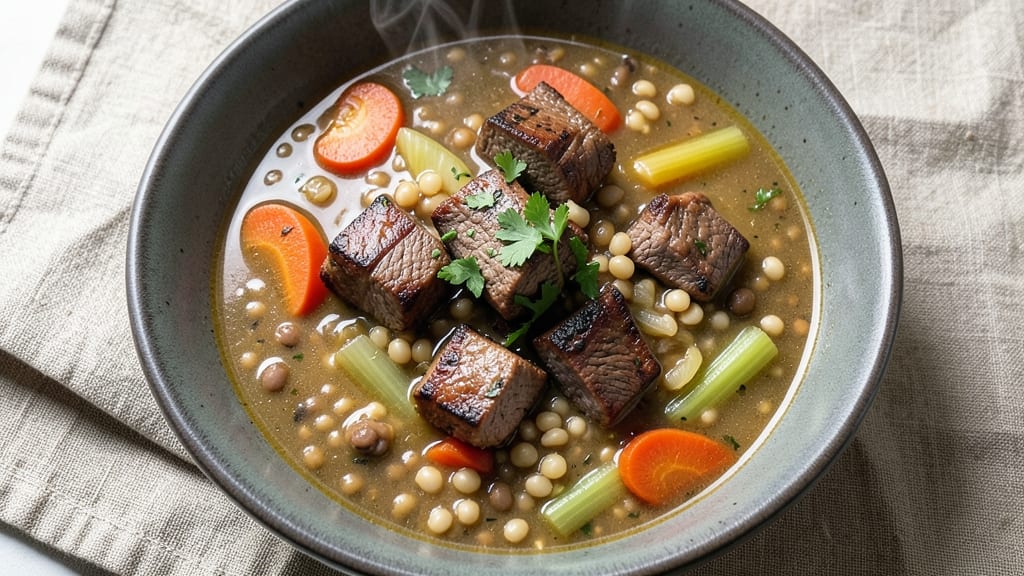
This beef barley lentil soup recipe delivers restaurant-quality comfort in a single pot, combining tender beef, hearty lentils, and chewy barley for a protein-packed meal that warms the soul.
The key lies in proper browning of the beef and slow simmering—technique that transforms tough cuts into melt-in-your-mouth perfection while developing deep, savory flavors. I've perfected this version to balance traditional methods with modern convenience, ensuring every spoonful delivers both nutrition and satisfaction.
What sets this soup apart is its textural harmony: crisp-tender lentils, chewy barley, and fork-tender beef chunks all bathed in a rich, aromatic broth.
The recipe builds flavor through caramelized vegetables and toasted spices, then lets everything meld during a long, gentle simmer—the secret to developing that restaurant-quality depth without requiring hours of active cooking. With just one pot to manage, cleanup becomes effortless while the results remain impressive.
The final bowl presents a visually appealing medley of ingredients, where golden-brown beef contrasts with the deep red lentils and pearly barley.
Each bite offers a satisfying mix of textures—creamy lentils, chewy grains, and tender meat—all unified by a broth that's rich yet balanced, with just enough acidity from the tomatoes to brighten the ensemble. This is the kind of soup that disappears quickly from the table, leaving everyone asking for seconds.
Perfect for weeknight dinners or meal prep, this recipe scales effortlessly while maintaining its hearty character. The one-pot approach makes it ideal for busy schedules, yet the careful attention to technique ensures it never feels like a shortcut.
Whether serving a family or feeding a crowd, the consistent results and deep flavors make this soup a weekly staple worth perfecting.
Ingredients for beef barley lentil soup
Restaurant-quality beef barley lentil soup starts with these carefully selected ingredients designed for depth and texture.
| Ingredient | Amount | Notes |
|---|---|---|
| Chuck Roast 🥩 | 1 ½ lb | Cut into 1-inch cubes |
| Brown Lentils 🌾 | 1 cup | Dried, rinsed well |
| Pearl Barley 🌾 | ½ cup | Uncooked, rinsed |
| Yellow Onion 🧅 | 1 whole | Medium, diced |
| Carrots 🥕 | 3 pieces | Peeled, sliced into rounds |
| Celery Stalks 🧅 | 3 pieces | Trimmed, chopped |
| Garlic Cloves 🧄 | 4 cloves | Minced, fresh preferred |
| Tomato Paste 🍅 | 2 tbsp | High-quality, not watery |
| Beef Broth 💧 | 4 cups | Low-sodium preferred |
| Red Wine 🍷 | ½ cup | Dry, bold variety |
| Fresh Thyme 🌿 | 1 tbsp | Leaves only, chopped |
| Bay Leaves 🍃 | 2 whole | Dried, standard size |
| Ground Black Pepper 🌶️ | 1 tsp | Freshly cracked |
| Kosher Salt 🧂 | 1 ½ tsp | Diamond Crystal preferred |
| Olive Oil 🫒 | 2 tbsp | Extra-virgin, for searing |
The chuck roast is non-negotiable for this recipe—its marbling and connective tissue create that melt-in-your-mouth texture when slow-cooked. Look for cuts with visible fat marbling at Whole Foods or your local butcher shop, as this ensures proper tenderness. Pre-cut cubes save time, but if buying whole, ask for it to be cubed on-site. The barley and lentils should be pearl and brown varieties respectively, as they hold their shape beautifully while absorbing flavors. For the best quality, purchase these from the bulk bins at Trader Joe's or Costco, where they're typically fresher than pre-packaged options.
No fresh thyme on hand? Dried thyme at one-third the amount works perfectly, though fresh delivers that bright herbal note. Substituting red wine with an extra splash of balsamic vinegar plus 1/4 cup beef broth maintains acidity without altering the flavor profile. For the tomato paste, San Marzano brands available at specialty stores offer superior quality, though any high-quality paste will suffice. The carrots and celery can be swapped for their frozen counterparts in a pinch—just thaw and drain them thoroughly before use. If you're watching sodium, low-sodium beef broth is essential, as regular versions can make the soup overly salty.
This soup develops best when made a day ahead, as the flavors deepen significantly during overnight chilling. Store leftovers in an airtight container in the refrigerator for up to 5 days, or freeze portions for 3 months. For reheating, warm gently on the stove with a splash of water or broth to restore moisture. The barley and lentils will continue cooking slightly, so keep an eye on them to prevent mushiness. Portion into individual containers for easy grab-and-go meals during the week, making this a perfect meal prep staple.
Why You'll Love This Recipe
- One-Pot Wonder: I swear by this recipe because it’s actually one-pot—no chopping boards, no extra pans. Just dump the chuck roast, lentils, and barley into the same pot with onions and carrots, then walk away. The onions caramelize while you’re doing whatever, and by the time you come back, the whole kitchen smells like a cozy Sunday.
- Deep, Savory Magic: That chuck roast? It falls apart just right—tender but still chewy enough to hold a spoonful. The lentils soak up the broth like a sponge, and the barley adds this perfect hearty bite. Honestly, the first time I made it, my roommate took the last bowl and didn’t even apologize.
- Leftovers That Beg for More: This soup only gets better after a day or two in the fridge. The flavors meld into this rich, umami bomb that’s way easier to reheat than takeout. I make a double batch on Sundays because by Wednesday, I’m digging through the fridge like a kid at a candy store.
- Budget-Friendly Powerhouse: Chuck roast on sale? Lentils for a dollar a bag? This is the kind of meal that stretches your grocery budget without stretching your patience. Between us, I’ve fed six people for under $15 with this—plus, the leftovers turn into next-day lunches or a quick freezer stash for lazy days. No guilt, all comfort.
Step-by-step instructions for beef barley lentil soup
A rich, hearty soup that builds flavor through careful layering and slow simmering.
Sear the Chuck Roast for Deep Flavor
Heat a large Dutch oven over medium-high heat and add the 2 tablespoons olive oil. Once shimmering, add the 1.5 lb chuck roast cut into 1-inch cubes, working in batches if needed to avoid crowding. Sear each piece for 3-4 minutes per side until deeply browned and developed a caramelized crust. This step creates the foundation of flavor that will infuse throughout the soup.
Transfer the seared roast to a plate and set aside. Don't drain the browned bits—they're packed with flavor that will dissolve into the broth. Here's the thing: skipping this step results in a much milder soup. The Maillard reaction happening now is what gives this dish its depth.
Sauté the Aromatic Vegetables
In the same Dutch oven, add the diced 1 whole yellow onion, sliced 3 pieces carrots, and chopped 3 pieces celery stalks. Cook over medium heat for 8-10 minutes, stirring occasionally, until the vegetables soften and the onion becomes translucent. Add the minced 4 cloves garlic and cook for an additional 30 seconds until fragrant.
This vegetable trio forms the classic "holy trinity" of soup building. The onions should be tender but not browned—you want them to melt into the broth rather than add bitterness. If the vegetables stick, add a splash of beef broth to deglaze. The garlic should sizzle audibly when added, indicating it's ready to release its full flavor.
Build the Flavor Base
Stir in the 2 tablespoons tomato paste and cook for 1-2 minutes until it darkens slightly and loses its raw taste. Pour in the 0.5 cup red wine and scrape up any browned bits from the bottom of the pot with a wooden spoon. This deglazing captures all the flavor compounds that would otherwise stick to the pan.
Add the seared chuck roast back to the pot along with the 1 cup brown lentils, 0.5 cup pearl barley, 4 cups beef broth, 1 tablespoon fresh thyme, 2 whole bay leaves, 1 teaspoon ground black pepper, and 1.5 teaspoons kosher salt. Stir well to combine all ingredients. The wine should cook off completely, leaving behind just its concentrated essence. This is where the soup's complex flavor profile begins to develop.
Simmer Until Tender and Flavorful
Bring the mixture to a boil over high heat, then immediately reduce to a gentle simmer. Cover partially and cook for 1.5 hours, stirring occasionally. The soup should bubble gently but not vigorously. This slow cooking time allows the tough chuck roast to become fork-tender while the barley and lentils absorb the rich broth.
After 1.5 hours, check for doneness. The chuck roast should pull apart easily with a fork, and the barley and lentils should be tender but still hold their shape. If the soup appears too thick, add up to 1 cup water to reach your desired consistency. The longer it simmers, the more the flavors meld together—this is where patience pays off with restaurant-quality results.
Adjust Seasoning and Serve
Remove the 2 whole bay leaves and taste the soup. Adjust seasoning with additional kosher salt or ground black pepper as needed. The soup should be rich and well-seasoned, with the meat falling apart easily and the barley and lentils holding their texture. If the soup tastes too acidic from the wine, a pinch of sugar can help balance the flavors.
Ladle the soup into bowls and serve immediately. The aroma should be intoxicating—earthy from the lentils, nutty from the barley, with deep beefy richness. Each spoonful should deliver a perfect balance of protein, fiber, and umami flavor. For extra texture, garnish with fresh parsley or a drizzle of crème fraîche if desired.
Pro Tips For Making Beef Barley Lentil Soup
- Sear the Chuck First: That raw chuck roast won’t magically brown in broth—get it sizzling hard in a dry pot for 3-4 minutes per side before adding liquids. I learned this the hard way when my first batch tasted like boiled beef instead of rich, caramelized flavor. The crust locks in juices and builds depth.
- Rinse Lentils Twice: Skip this, and your soup will taste like mud. Brown lentils hold starch—rinse them in a fine-mesh strainer under cold water until the water runs clear, then repeat. Pearl barley doesn’t need rinsing, but the lentils? Non-negotiable for texture and taste.
- Don’t Crowd the Pot: If your ingredients are packed like sardines, the onions and carrots will steam instead of caramelize. Start with a single layer of chopped veggies in the pot, then add the broth—this lets them develop real flavor before the grains and beef join the party.
- Brown the Barley First: Pearl barley tastes bland straight from the package. Toast it in the pot with a splash of oil over medium heat for 5 minutes until it smells nutty and smells like toasted cereal. Sounds weird, but it works—your soup will have a depth that store-bought barley just can’t match.
Essential equipment for this dish
Dutch Oven Essentials
A 6-quart Dutch oven is the workhorse of this recipe—its thick walls distribute heat evenly for consistent simmering while the tight-fitting lid traps steam to tenderize the beef and barley.
I swear by the Le Creuset Stoneware Dutch Oven for its durability and heat retention, though the All-Clad Stainless Steel version works beautifully if you prefer non-reactive cookware. For budget-conscious cooks, the Cuisinart MultiClad Pro offers excellent performance without the premium price. 🔥
Precision Thermometer
Monitoring the beef's internal temperature ensures perfect doneness without overcooking. A meat thermometer like the ThermoWorks Smoke or Thermoworks Thermapen lets you check the thickest piece of beef—it should reach 195-203°F for fork-tender results.
The Instant Read Thermometer from Taylor is my go-to for its speed and accuracy. Pro tip: Insert the probe into the beef without touching the pot to get an accurate reading.
Wooden Spoon
A heat-resistant wooden spoon (I use OXO Good Grips) is indispensable for stirring without scratching your Dutch oven's surface. The natural material prevents flavor transfer from metal utensils and helps scrape up those flavorful browned bits during deglazing.
Avoid plastic spoons—they can melt under prolonged heat exposure. For extra durability, opt for maple or beech wood spoons, which handle high temperatures better than standard utensils.
Fine-Mesh Strainer
If you prefer a smoother broth texture, a fine-mesh strainer (like the OXO Good Grips Strainer) lets you remove the barley and lentils after cooking while keeping the broth intact.
This technique works especially well for meal prep—simmer the soup, strain it, then reheat the broth separately before adding the grains back in. For a quick solution, the collapsible silicone strainer from EZ Tools is a space-saving option that handles hot liquids safely.
Kitchen Timer
Timing is everything in this recipe, and a kitchen timer prevents overcooking while ensuring the beef reaches perfect tenderness. My OXO Good Grips Timer has a sleek design and loud alarm, but even a simple digital countdown timer works.
Set it for 1.5 hours from when the soup returns to a simmer—this is critical for developing the deep, complex flavors. Pro move: Place your timer near your cooking station so you don’t miss the perfect moment to taste and adjust the seasoning.
Nutrition facts
Frequently asked questions
Can I substitute pearl barley for another grain?
Yes, but texture will change. For a quicker cook, use 1/2 cup farro (cooks in 20 minutes1/2 cup orzo (cooks in 10 minuteswild rice blend (simmer 15 minutesfreekeh. Pearl barley's nutty flavor and firm bite are ideal, but these alternatives work well in a pinch. Just adjust cooking time accordingly.
How do I make this soup vegetarian?
Replace the beef with 1.5 lbs mushrooms (cremini or portobello) seared until browned, plus 1 cup crumbled tempeh or 1 can white beans for protein. Use vegetable broth and swap red wine for 1/2 cup balsamic vinegar. The lentils and barley will still provide plenty of protein and fiber. The flavor profile will be earthier but equally satisfying!
Why does my soup turn out too thick or too thin?
Thickness comes from the barley and lentils absorbing liquid. If too thick, add 1/2 cup water or broth at a time while simmering. If too thin, simmer uncovered for 10-15 minutes longer to reduce naturally. The ideal consistency should coat a spoon lightly but still allow easy stirring. For meal prep, strain and reheat the broth separately to adjust thickness later.
Can I make this in an Instant Pot?
Sear the beef first in a skillet, then transfer to your Instant Pot with all ingredients. Cook on high pressure for 25 minutes, then natural release for 10 minutes. The barley and lentils may need an additional 5 minutes on sauté mode if they're undercooked. The pressure cooker cuts time significantly while maintaining deep flavors. Just be sure to check doneness with a fork!
What's the best way to store and reheat leftovers?
Store in an airtight container in the fridge for up to 5 days or freeze for 3 months. To reheat, warm on the stove over medium-low heat with 1-2 tablespoons water or broth to restore moisture. Microwaving works too—heat for 2 minutes, stir, then 30 seconds