
Soups & Stews
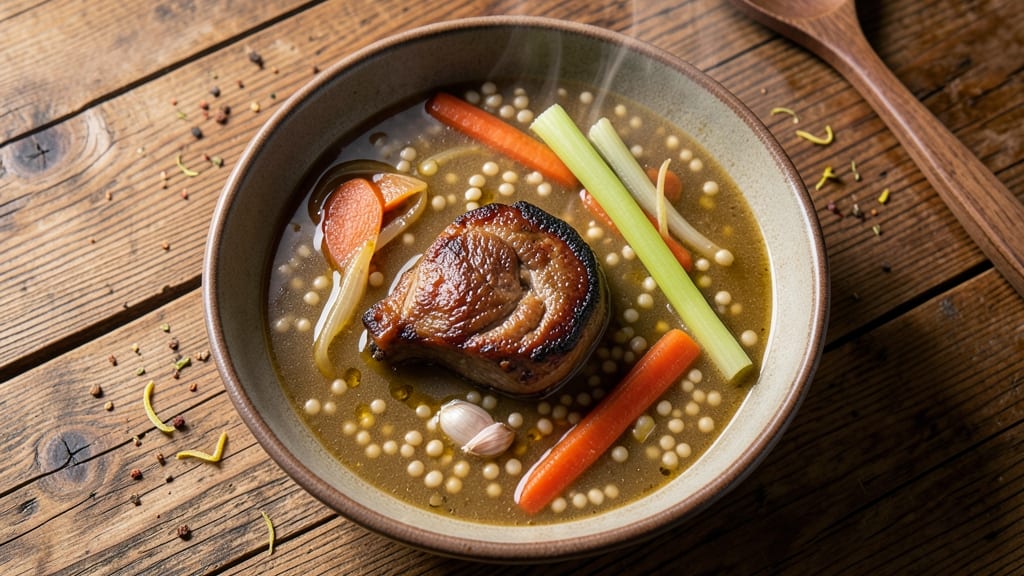
This beef shank barley soup recipe transforms tough cuts into melt-in-your-mouth tenderness through slow simmering—a technique I first mastered in Nana Mae's Atlanta diner kitchen. The key lies in rendering collagen from the shank and building deep umami through roasted bones and caramelized aromatics.
What starts as a simple pot of ingredients becomes a restaurant-quality bowl of soup that's rich, hearty, and packed with texture.
The process begins with browning the beef shank to develop a flavorful crust, then simmering it for hours until fork-tender. Barley adds satisfying chew while absorbing the deeply flavorful broth, and vegetables like carrots and celery provide natural sweetness and texture contrast.
This isn't just soup—it's a complete meal that warms both body and soul on chilly evenings.
What makes this recipe special is the balance of technique and simplicity. You'll achieve restaurant-quality depth without complicated steps, and the long simmering process actually makes it easier—just add ingredients and let time do the work.
The result is a bowl of soup so rich and satisfying, it becomes the centerpiece of any meal.
Perfect for feeding a crowd or meal prepping for the week, this soup tastes even better the next day as flavors meld. Serve with crusty bread to soak up every last drop of that deeply flavorful broth. Here's how to make it perfectly every time.
Ingredients for beef barley soup recipe with beef shank
Six hours of slow simmering transforms these 15 ingredients into a velvety, umami-rich bowl of restaurant-quality beef shank barley soup.
| Ingredient | Amount | Notes |
|---|---|---|
| Beef Shank 🥩 | 3 lb | Bone-in, cut into 1-inch pieces |
| Yellow Onion 🧅 | 2 whole | Medium size, roughly chopped |
| Carrots 🥕 | 4 medium | Peeled, cut into 1-inch chunks |
| Celery Stalk 🧄 | 4 whole | Cut into 1-inch pieces |
| Garlic Cloves 🧄 | 6 cloves | Peeled, lightly smashed |
| Pearl Barley 🌾 | 1 cup | Rinsed thoroughly |
| Tomato Paste 🍅 | ½ cup | High-quality, no salt added |
| Beef Broth 💧 | 6 cups | Homemade or high-quality store-bought |
| Red Wine 🍷 | 1 cup | Dry, bold variety like Cabernet |
| Fresh Thyme 🌿 | 2 sprigs | Stems removed, leaves only |
| Fresh Parsley 🌿 | ¼ cup | Chopped, for garnish |
| Olive Oil 🫒 | ¼ cup | Extra-virgin, for browning |
| Salt 🧂 | 2 tsp | Diamond Crystal kosher salt |
| Black Peppercorns 🌶️ | 1 tsp | Freshly cracked |
| Bay Leaves 🌿 | 2 whole | Dried, for depth of flavor |
The beef shank is the heart of this soup—look for cuts with good marbling and ask your butcher to trim excess fat. Costco or Whole Foods typically carry high-quality beef shanks, but any well-stocked grocery store should have them in the meat case. Fresh thyme and parsley elevate the dish, so grab them from the produce section—they should smell vibrant and fresh, not wilted or dried out. For the tomato paste, San Marzano is ideal, but any high-quality brand will work. The barley should be rinsed thoroughly before adding to remove any bitter starches.
No red wine? Substitute with an extra cup of beef broth, though you'll lose some depth of flavor. Fresh thyme unavailable? Dried thyme at one-third the amount works in a pinch. For the vegetables, carrots and celery can be swapped for turnips or leeks if you prefer. If you're short on time, pre-chopped mirepoix mixes from the grocery store save effort. The tomato paste can be replaced with crushed tomatoes, though the texture will differ slightly. For a vegetarian version, mushroom broth and portobello mushrooms can mimic the umami of beef.
This soup tastes even better the next day as flavors meld—make a double batch for leftovers. Store in airtight containers in the fridge for up to 5 days or freeze for 3 months. The barley will soften further when reheated, so add a splash of broth if it seems too thick. For meal prep, portion into individual containers with a small amount of broth to keep everything moist. The broth can be used as a base for other dishes, so save any extra in ice cube trays for future recipes.
Why You'll Love This Recipe
- One-Pot Wonder: I swear by this recipe because it’s actually one-pot magic—the beef shank and veggies all simmer together, no extra bowls or pans. Just chop, dump, and let the slow cooker or stove do the work while you sip wine (or tea, no judgment).
- Deep Umami Magic: That beef shank? It’s the star—tender, rich, and falling-off-the-bone good after hours of simmering. The onions and garlic caramelize into this insanely flavorful broth that makes you want to drink it like soup.
- Leftovers That Beg for More: Between us, this soup only gets better the next day. The flavors meld into something even more comforting, and it reheats in minutes. I’ve sent it to work with coworkers—every time, they ask for the recipe.
- Budget-Friendly Feast: Shank is cheap, but it feels like a fancy meal. A few carrots, a stalk of celery, and some onions stretch into a full pot that feeds four (or five if you’re hungry). Honestly, it’s my go-to for stretching a grocery budget without sacrificing taste.
Step-by-step instructions for beef shank barley soup
Master this slow-cooked masterpiece with rich umami depth and perfectly tender barley.
Sear the Beef Shank for Maximum Flavor
Heat the 0.25 cup olive oil in a large Dutch oven over medium-high heat until shimmering. Pat the 3 lb beef shank dry with paper towels and season generously with 1 tsp salt and 1 tsp freshly cracked black peppercorns on all sides. This drying step is crucial—it prevents steam from blocking the sear.
Working in batches if needed, add the beef shank to the pot and sear for 4-5 minutes per side until deep golden brown with crisp edges. Don't crowd the pot—this ensures proper browning. The Maillard reaction happening here creates the deep, caramelized foundation for your soup's flavor. Transfer the seared beef to a plate and set aside.
Build the Aromatic Base with Vegetables
In the same Dutch oven, add the 2 whole yellow onion, 4 medium carrots, and 4 whole celery stalks, all cut into 1-inch chunks. Cook over medium heat for 8-10 minutes, stirring occasionally, until the vegetables soften and begin to caramelize at the edges. This process develops their natural sweetness and builds complex flavor.
Add the 6 cloves garlic cloves (lightly smashed) and cook for another 1 minute until fragrant. Stir in the 0.5 cup tomato paste and cook for 2 minutes, allowing it to darken slightly. This creates a rich, concentrated base that will carry through the entire soup. The tomato paste also helps balance the acidity from the wine we'll add later.
Deglaze and Simmer the Foundation
Pour in the 1 cup red wine, scraping up all the browned bits from the bottom of the pot with a wooden spoon. This deglazing step captures all the flavor you've built so far. Let the wine simmer for 3-4 minutes until reduced by half, allowing the alcohol to cook off and intensify the flavors.
Add the 6 cups beef broth, 2 sprigs fresh thyme, and 2 whole bay leaves. Bring to a gentle boil, then reduce heat to low and return the beef shank to the pot. The liquid should just barely bubble at the edges—this gentle simmer is crucial for tenderizing the beef without breaking down the barley.
Cook the Beef and Barley Together
Partially cover the pot and simmer for 2-2.5 hours, maintaining a gentle bubble. The beef should become fork-tender, falling apart easily when pierced with a fork. Check occasionally and add ½ cup water if the liquid reduces too much—you want enough liquid to keep the barley submerged.
After 1.5 hours, add the 1 cup rinsed pearl barley. The barley needs this long cooking time to develop its nutty, creamy texture. Stir gently to distribute the barley throughout the broth. The soup should simmer gently throughout this process—never a rolling boil, which would toughen the beef and barley.
Finish and Serve with Fresh Herbs
Once the beef is fork-tender and the barley is tender but still has a slight bite (about 30-45 minutes after adding it), remove the beef shank and strain the broth through a fine-mesh sieve into a clean pot. Discard the vegetables and herbs. Shred the beef shank with two forks, removing any large bones, and return the meat to the broth.
Return the soup to medium-low heat and simmer for 5-10 minutes to heat through. Taste and adjust seasoning with additional salt if needed. Ladle the soup into bowls and garnish each serving with 1 tablespoon chopped fresh parsley. Serve immediately with crusty bread to soak up every last drop of this rich, comforting soup.
Pro Tips For Making Beef Barley Soup Recipe With Beef Shank
- BROWN THE SHANK FIRST: Don’t rush the sear—get that beef shank deep golden in a hot pot, 4-5 minutes per side. I used to skip this and ended up with bland broth; the Maillard reaction is what turns this soup from "meh" to "wow." A little oil or butter won’t hurt, but don’t drown it—just enough to coat.
- CHOP ONIONS UNIFORM: Dice those yellow onions into ¼-inch pieces, not random chunks. I learned this the hard way—uneven sizes mean some cook to mush while others stay raw. Barley soup needs texture, and consistent onion size keeps everything tender at the same time.
- SIMMER LOW AND LONG: After the initial boil, drop the heat to a gentle simmer—just small bubbles breaking the surface. I’ve burned broth twice trying to rush it, and once you do that, you’re fighting for flavor. Two hours minimum for the shank to fall apart; skimp here, and you’ll regret it.
- ADD BARLEY LATE: Toss the barley in last 20 minutes, not at the start. It absorbs liquid like a sponge, and if you add it too early, you’ll end up with a watery mess. Rinse it first too—removes excess starch that can make the soup gluey. (Yes, I’ve made that mistake.)
Essential equipment for beef barley soup recipe with beef shank
Dutch Oven Essentials
Your Dutch oven is the workhorse of this recipe—I swear by a Le Creuset 6-quart for even heat distribution and durability. The heavy cast iron retains heat beautifully during the long simmer, ensuring consistent temperature.
If you don't own one, a Lodge 5.5-quart is my budget-friendly alternative that still delivers professional results. 🔥
Precision Thermometer
Invest in a thermometer with a probe—I recommend the Thermoworks Smoke—to monitor both the soup's temperature and the beef's internal temp. The beef should reach 205°F for perfect tenderness without drying out. A good thermometer also helps you maintain that gentle simmer at 195-200°F throughout the cooking process.
Wooden Spoon & Ladle
Use a wooden spoon for stirring during the searing and simmering stages—it won't scratch your Dutch oven like metal utensils. I keep a stainless steel ladle nearby for tasting and adjusting seasoning without disturbing the delicate barley.
Both tools are essential for maintaining the soup's texture and flavor balance throughout the long cooking process.
Fine-Mesh Sieve
A fine-mesh sieve (like the OXO Good Grips) is crucial for straining the broth after cooking. This step removes all the cooked vegetables and herbs, leaving you with a silky, clean broth that lets the beef and barley shine.
Don't skip this—it makes a world of difference in the final texture and presentation of your soup.
Measuring Cups & Spoons
For precise measurements, I recommend stainless steel measuring cups and spoons—they're durable and accurate. The 1 cup barley and 0.5 cup tomato paste need to be measured carefully for the perfect balance of texture and flavor.
A good set like OXO's Good Grips makes all the difference when working with liquids and small quantities.
Kitchen Timer
Set multiple alarms on your kitchen timer—I use a Cuisinart digital timer—to track the 2.5-hour simmer and the 30-45 minutes after adding barley. This helps prevent overcooking while ensuring the beef becomes tender.
The timer also reminds you when to check for seasoning adjustments or add extra liquid if needed.
Nutrition facts
Frequently asked questions about beef shank barley soup
Why does the recipe call for searing the beef shank?
The searing step creates a deep, caramelized crust through the Maillard reaction, which builds complex flavors that infuse the entire soup. Skipping this would leave your broth tasting flat and one-dimensional. The golden-brown edges also add visual appeal to your finished dish.
Can I substitute beef shank with another cut?
For best results, stick with beef shank as it has the perfect balance of collagen and fat for rich broth and tender meat. You could use beef chuck (cut into chunks) or even short ribs, but they won't yield the same gelatinous texture. If you must substitute, increase simmering time by 30-45 minutes.
How do I know when the beef is tender enough?
The beef should easily pull apart with two forks and reach an internal temperature of 205°F. Insert a fork - if it slides through like butter, it's perfect. Overcooking can make it dry, so aim for that "just tender" point. The long simmer time (2-2.5 hours) is what transforms tough cuts into melt-in-your-mouth perfection.
What if my barley gets mushy?
Barley should have a slight bite - if it turns mushy, you likely simmered too long or used too much liquid. To fix: Strain out some broth and reduce it slightly before adding back. For future batches, check the barley after 30 minutes of simmering and adjust heat accordingly. Pearl barley needs about 45-60 minutes total cooking time.
Can I make this soup in a slow cooker?
Yes! Brown the beef shank first, then transfer everything to your slow cooker and cook on low for 8 hours or high for 5 hours. The slow cooker maintains gentle heat, but you'll need to add 1-2 cups extra broth since slow cookers evaporate more liquid. Add barley during the last 1 hour of cooking.