
Soups & Stews
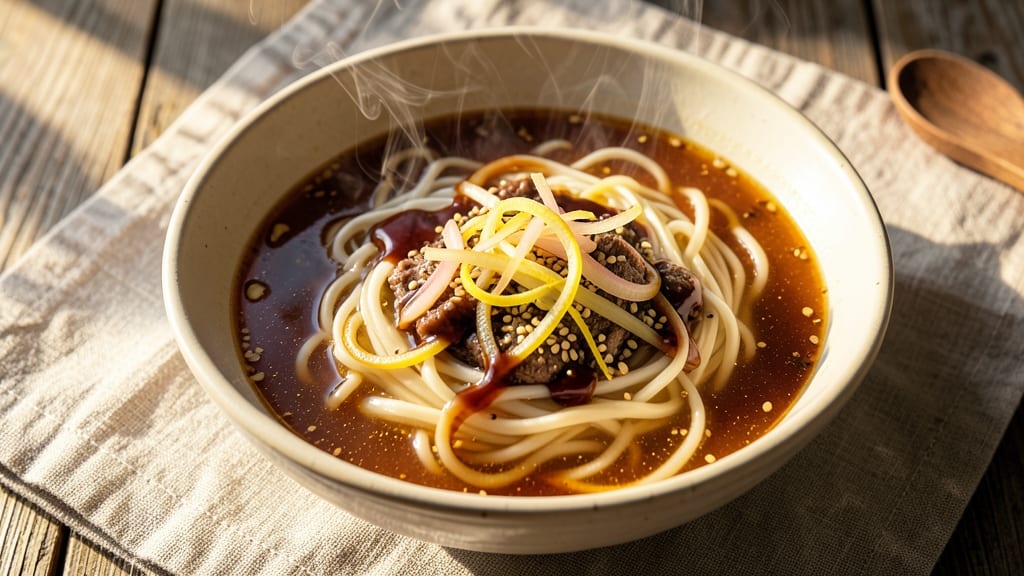
This beef broth udon noodle soup delivers the ultimate comfort in a single pot, blending deep umami flavors with silky noodles and tender beef.
The secret lies in a slow-simmered broth that extracts maximum richness from beef bones and aromatics, creating a base so flavorful it transforms simple ingredients into a restaurant-worthy meal. I’ve perfected this recipe to balance traditional techniques with modern convenience—no fancy equipment required, just patience and attention to layering flavors.
The foundation is all in the broth: beef bones simmered for hours with ginger, garlic, and soy sauce develop a velvety depth that coats every spoonful. While the broth works its magic, fresh udon noodles cook in just minutes, their chewy texture holding up perfectly to the rich broth.
The result is a harmonious blend of textures—slippery noodles, tender beef, and crisp vegetables—all united by that irresistible umami broth.
What makes this recipe truly special is its versatility. Customize it with your favorite toppings like soft-boiled eggs, sliced mushrooms, or fresh herbs for added brightness. The broth’s intensity means you can adjust spice levels or garnishes without sacrificing depth.
Whether you’re craving a quick weeknight meal or a cozy weekend project, this soup delivers warmth, satisfaction, and that hard-to-resist first-bite comfort.
Ready in under an hour, this one-pot udon noodle soup is perfect for chilly evenings or when you need a meal that feels like a hug. The slow-simmered broth ensures maximum flavor extraction, while the udon noodles absorb all that richness for a truly indulgent experience.
Let’s get cooking—your taste buds will thank you.
Ingredients for beef broth udon noodle soup
Pantry staples meet restaurant-quality umami in this one-pot udon masterpiece.
| Ingredient | Amount | Notes |
|---|---|---|
| Beef Bones 🦴 | 2 lb | Marrow and knuckle bones preferred |
| Fresh Udon Noodles 🍜 | 8 oz | Dried or fresh, 8 oz total |
| Yellow Onion 🧅 | 1 whole | Medium size, sliced |
| Fresh Ginger 🌿 | 2 tbsp | Minced, peeled |
| Garlic Cloves 🧄 | 6 cloves | Peeled, smashed |
| Soy Sauce 🍶 | ¼ cup | Light or dark preferred |
| Sesame Oil 🫒 | 1 tbsp | Toasted, for finishing |
| Dried Shiitake Mushrooms 🍄 | 4 whole | Rehydrated, sliced |
| Green Onion 🧅 | 3 whole | Sliced, for garnish |
| Water 💧 | 8 cups | Filtered preferred |
| Thinly Sliced Beef 🥩 | 8 oz | Sirloin or flank preferred |
| Salt 🧂 | 1 ½ tsp | Diamond Crystal preferred |
| Black Pepper 🌶️ | ½ tsp | Freshly ground |
| Sesame Seeds 🌾 | 1 tbsp | Toasted, for garnish |
The beef bones are non-negotiable for depth—marrow and knuckle bones from Costco or your butcher deliver the richest flavor. Look for bones with good meat still attached; they’ll break down beautifully during simmering. Fresh udon noodles (or high-quality dried) are a game-changer—Trader Joe’s carries excellent pre-packaged ones, but Asian markets often have fresher options. The shiitake mushrooms? Dried is best—they rehydrate perfectly and add earthy complexity. Ginger and garlic should be freshly minced (no jars of pre-minced here—trust me).
No beef bones? Substitute with 2 lbs beef chuck roast, cut into chunks, but expect less gelatinous broth. Running low on soy sauce? Coconut aminos work in a pinch, though the flavor won’t be identical. Fresh udon noodles unavailable? Dried udon cooks just as well—simply adjust cooking time by 1-2 minutes. The sesame oil is for finishing only—don’t let it heat up or it’ll turn bitter. For extra umami, add 1 tbsp fish sauce (if not vegetarian) or 1 tsp mushroom powder to the broth.
Broth keeps 5 days refrigerated or 3 months frozen—portion into ice cube trays before freezing for easy reheating. Udon noodles? Use within 2 days of opening for best texture. Garnishes like green onions and sesame seeds stay fresh 1 week in the fridge. Double the broth recipe and freeze half—you’ll thank yourself later when you’re craving instant comfort.
Why You'll Love This Recipe
- I swear by this rule: the fewer things you chop, the faster you eat. Just toss in whole garlic cloves (peeled, of course) and a few onion wedges—no dicing, no fuss. The broth does all the work while you sip your tea.
- Fewer Ingredients, Bigger Payoff: I swear by this rule: the fewer things you chop, the faster you eat. Just toss in whole garlic cloves (peeled, of course) and a few onion wedges—no dicing, no fuss. The broth does all the work while you sip your tea.
- Umami Bomb in a Bowl: That beef bone broth? Chef’s kiss. The slow-simmered collagen turns the noodles silky, while the ginger and garlic layers add depth without overpowering. It’s the kind of soup where the first bite makes you pause mid-slurp.
- Weeknight to Weekend Flex: Make a big pot on Sunday, and you’ve got lunch or dinner covered for days. The broth stays rich when reheated, and the udon holds up like a champ—perfect for when you’re too tired to think but still need real food.
Step-by-step instructions for beef broth udon noodle soup
Here's how to craft a deeply flavorful udon soup with rich beef broth and tender noodles.
Prepare the Beef Bones and Aromatics
Begin by rinsing the 2 lb beef bones thoroughly under cold water to remove any impurities. Place them in a large stockpot and cover with 8 cups water. Bring to a rolling boil over high heat, then reduce to a gentle simmer and skim off any foam that rises to the surface for the first 10 minutes. This ensures a clear, clean broth foundation.
While the bones simmer, slice the whole yellow onion into thick wedges and peel the 2 tbsp fresh ginger. Smash the 6 cloves garlic with the side of your knife to release their oils. Add these aromatics to the pot along with the 4 whole dried shiitake mushrooms (no need to rehydrate them first—they'll soften in the broth). Let everything simmer uncovered for 45 minutes, allowing the flavors to meld deeply into the broth.
Build the Umami-Packed Broth
After the initial 45 minutes, add the 8 oz thinly sliced beef to the simmering broth. Stir gently to submerge the meat completely. Pour in the 0.25 cup soy sauce and sprinkle in the 1.5 tsp salt and 0.5 tsp black pepper. These ingredients will work together to create a deeply savory, balanced broth.
Continue simmering uncovered for another 45 minutes, skimming any additional foam that rises. The broth should now have a rich, caramelized color and a deep, aromatic scent. If the liquid level drops below halfway up the bones, add hot water as needed to maintain adequate coverage. This step transforms simple ingredients into a complex, layered flavor profile that's the heart of this comforting soup.
Cook the Udon Noodles
While the broth simmers, prepare the 8 oz fresh udon noodles according to package instructions. Most udon noodles cook in 4-5 minutes in boiling water, but check the package for exact timing. Once cooked, drain them immediately and rinse briefly under cold water to stop the cooking process. This prevents them from becoming mushy in the hot broth.
Here's the thing—don't overcook the udon. They'll continue to soften slightly in the hot broth, but you want them to maintain a pleasant bite. Divide the cooked noodles among four bowls and set them aside. The noodles should be al dente with a slight resistance when bitten—this texture is key to the perfect udon experience.
Assemble and Finish the Soup
Carefully ladle the hot beef broth over the udon noodles in each bowl, dividing it evenly among the four servings. The broth should cover the noodles completely, creating a steaming, inviting presentation. Swirl the noodles gently in the broth to distribute any settled seasonings at the bottom.
Drizzle each bowl with 1 tbsp toasted sesame oil and sprinkle with 1 tbsp toasted sesame seeds. The sesame oil adds a nutty richness while the seeds provide a delightful crunch. Finally, garnish with slices of the 3 whole green onion for freshness and color. Each bowl should now look like a warm, comforting hug in soup form.
Pro Tips For Making Beef Broth Udon Noodle Soup
- Char the Bones First: I learned this the hard way—skipping the char ruins the depth. After browning the beef bones in batches (yes, even if it takes time), scrape up those blackened bits—they’re packed with flavor. A hot cast-iron skillet or grill pan works best; don’t rush it, or you’ll just burn them without developing that smoky base.
- Slice Ginger Paper-Thin: Sounds weird, but it works: julienne that ginger into near-translucent slices. Thick chunks sit like rocks in broth, while thin slices dissolve into silky sweetness without overpowering. Use a sharp knife or mandoline—your future self will notice the difference when the broth tastes balanced.
- Don’t Boil the Udon: I used to cook udon noodles straight in the broth, and they turned to mush. Instead, blanch them in boiling water for exactly the time on the package (usually 2-3 minutes), then shock in ice water. They’ll hold their shape and soak up broth like a sponge—no more soggy disappointment.
- Save the Broth Starter: After skimming fat from your beef broth, resist the urge to pour it all down the drain. Strain it, cool it, and freeze half for next time. A cup of well-made broth as a base for your next batch cuts cooking time by 30 minutes and guarantees richer flavor—no need to start from scratch every time.
Serving suggestions for beef broth udon noodle soup
Garnish Game-Changers
Fresh soft-boiled quail eggs (cooked for 6 minutes) add a silky yolk that blends beautifully with the broth. I like to halve them and place them on top—just before serving so the yolk stays runny.
For extra crunch, add crispy fried shallots (toss sliced shallots in 1 tbsp cornstarch and fry in 350°F oil for 2 minutes until golden). 🌟
Spicy Kick Options
If you love heat, stir 1 tsp chili crisp or ½ tsp gochujang paste into each bowl before serving. For a smoky twist, add ½ tsp toasted chili flakes mixed with 1 tsp honey to create a sweet-spicy drizzle.
I also love adding thinly sliced jalapeños for a fresh, fiery crunch.
Vegetable Toppings
Wilted baby bok choy (blanched for 30 seconds in boiling water) adds a delicate sweetness. For heartier bowls, toss in shredded cabbage and thinly sliced carrots that have been quick-pickled in 1 tbsp rice vinegar + ½ tsp sugar for 10 minutes. The acidity cuts through the richness perfectly.
Protein Swaps
Swap the beef for shredded chicken (poached in the broth for 15 minutes) or tofu (pan-fried until golden). For a seafood twist, add shrimp (cooked for 2 minutes in the hot broth just before serving). Each protein absorbs the broth differently, creating unique textures and flavors.
Bowl Presentation
Use wide, shallow bowls to showcase the noodles and broth. For a rustic touch, serve in stoneware bowls that retain heat. I like to arrange toppings in concentric circles—noodles in the center, broth surrounding, and garnishes on top.
A drizzle of white sesame oil (instead of toasted) adds a lighter finish that lets the broth shine.
Side Pairings
Serve with steamed edamame sprinkled with flaky sea salt for a protein boost. For a complete meal, add miso-glazed eggplant (brush slices with 1 tbsp white miso paste and roast at 400°F for 20 minutes). The earthy flavors complement the udon perfectly. 🍜
Nutrition facts
Frequently asked questions
Can I use dried udon noodles instead of fresh?
Dried udon noodles work perfectly—just check the package for cooking time (usually 5-7 minutes in boiling water). Rinse them briefly under cold water after cooking to stop the process and prevent mushiness in the broth. The texture will be slightly firmer than fresh, but still delicious when served hot.
How do I make the broth richer without beef bones?
For maximum depth, use 2 lbs beef chuck roast cut into chunks instead of bones. Simmer it for 2 hours to break down the meat, then strain and return it to the broth. Add 1 tbsp fish sauce or 1 tsp mushroom powder for extra umami. The result won't be as gelatinous, but still deeply flavorful.
Can I prepare the broth ahead of time?
Yes! The broth keeps for 5 days refrigerated or 3 months frozenlow heat or in the microwave, stirring occasionally. For best results, freeze in ice cube trays—just pop out what you need for each serving.
Why did my udon turn mushy when added to the broth?
This happens when noodles overcook in the hot broth. Always cook udon 1 minute less than package instructions, then rinse with cold water immediately. Serve the broth at 185°F or slightly below to avoid further cooking. For extra insurance, divide noodles into bowls first, then ladle broth over them.
What's the best way to reheat leftovers?
Reheat gently on low heat in a covered pot with 1-2 tbsp water to prevent drying. Never microwave directly—it makes noodles rubbery. For best texture, add fresh green onions and sesame seeds after reheating. If the broth seems too thick, stir in a splash of hot water to restore its silky consistency.